
TL;DR: Alopecia areata is an autoimmune condition where the immune system attacks hair follicles. In Nigeria, first-line treatment is intralesional corticosteroid injections, available at teaching hospitals and dermatology clinics. Topical minoxidil, topical steroids, and DNCB sensitization are also used. Newer JAK inhibitors exist but are expensive and rarely available locally. Spontaneous regrowth happens in mild cases.
What is alopecia areata and how common is it in Nigeria?
Alopecia areata is an autoimmune disease. Your own immune system treats hair follicles as foreign, launches an attack, and the follicles temporarily shut down. Hair falls out in patches, most often on the scalp, though the beard, eyebrows, eyelashes, and body hair can all be affected. The follicle itself is not destroyed, which is why regrowth is genuinely possible.
Globally, the lifetime risk is about 2 percent, making it one of the most common autoimmune diseases there is [1]. Nigerian dermatology data puts alopecia areata among the top causes of hair loss presenting at teaching hospital clinics, alongside telogen effluvium and androgenetic alopecia. A Nigerian teaching hospital study found alopecia areata accounted for roughly 11 percent of hair loss cases seen in its dermatology unit, though that figure shifts by center and region [2].
The condition affects men and women equally. It can start at any age, but onset before 30 is common. Stress, thyroid disease, and a family history of autoimmunity all raise the risk, but plenty of people with alopecia areata have none of those. Nobody fully understands why it starts when it does.
Patch alopecia (one or a few round bald patches) is the mildest and most common form. Alopecia totalis means complete scalp hair loss. Alopecia universalis means loss of all body hair. Treatment options and realistic outcomes differ a lot depending on which form you have, and that matters when you are deciding whether to seek care or wait.
How is alopecia areata diagnosed in Nigeria?
Diagnosis is clinical. A trained dermatologist examines the patches, checks for the characteristic "exclamation mark" hairs at the patch border (tapered at the base, wider at the tip), and looks for nail pitting, which appears in up to 20 percent of cases [1]. No blood test diagnoses alopecia areata, though doctors often order thyroid function tests and a full blood count to rule out concurrent autoimmune conditions.
Dermoscopy, a handheld magnifying tool used to examine scalp skin closely, is increasingly available at Nigerian teaching hospitals and some private dermatology clinics. It improves diagnostic accuracy without requiring a biopsy. Scalp biopsy is reserved for uncertain cases, and it can be done in any center with a pathology lab.
The conditions most often confused with alopecia areata in Nigeria include tinea capitis (ringworm, caused by a fungal infection), traction alopecia from tight braids and weaves, and secondary syphilis. Getting the right diagnosis matters because the treatments are completely different. Tinea capitis requires antifungals, not steroids, and giving steroids to a fungal infection will make it worse. If you are unsure of the diagnosis, push for a dermatology referral before starting any treatment.
What are the standard first-line treatments for alopecia areata?
The treatment with the most consistent evidence for patchy alopecia areata is intralesional corticosteroid injection. A dermatologist injects triamcinolone acetonide directly into the bald patches, typically at a concentration of 5 to 10 mg/mL, at 4 to 6 week intervals. Regrowth usually starts within 4 to 8 weeks of the first injection. Multiple sessions are almost always needed. The American Academy of Dermatology lists intralesional corticosteroids as the preferred first-line therapy for adult patchy alopecia areata affecting less than 50 percent of the scalp [3].
Triamcinolone acetonide (Kenacort is the brand name most Nigerians will recognise) is available in Nigeria and is not expensive on its own. The cost is in the clinic visit and dermatologist time. Expect to pay roughly 5,000 to 20,000 naira per session at a private clinic, less at a teaching hospital, depending on the center and number of injections given.
Topical corticosteroids are the practical alternative when injections are not accessible or when treating children, who tolerate needles poorly. High-potency topical steroids like clobetasol propionate 0.05% cream or ointment applied daily to the patches are commonly prescribed. Response rates are lower than with injections, but the treatment is easy to use at home. Side effects with prolonged use include skin thinning and, if used on large areas, some systemic absorption.
Topical minoxidil for men (and women) is used as an adjunct, not a standalone. Minoxidil 5% solution or foam applied twice daily can stimulate follicle activity and improve the cosmetic result when used alongside steroids [3]. It does not address the autoimmune cause. Check out the minoxidil side effects article before starting, because scalp irritation and, rarely, unwanted facial hair growth are real issues.
Systemic (oral) corticosteroids can produce rapid regrowth but the relapse rate once the course ends is high, and the side-effect profile of long-term oral steroids is significant enough that most dermatologists reserve them for severe, rapidly progressing disease.
Are JAK inhibitors available in Nigeria, and do they work?
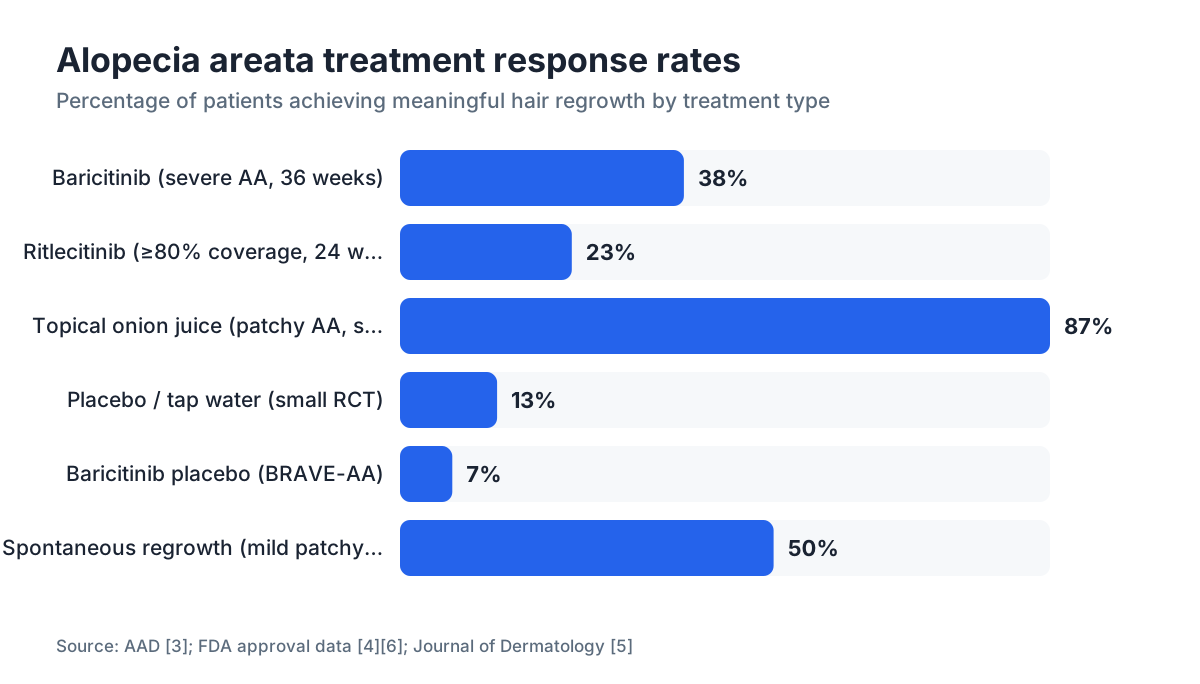
JAK inhibitors are the biggest change in alopecia areata treatment in a generation. Baricitinib (Olumiant) received FDA approval specifically for severe alopecia areata in June 2022, the first drug ever approved by the FDA for this indication [4]. Ritlecitinib (Litfulo) followed in 2023, approved for patients 12 and older. Clinical trial data for baricitinib showed that roughly 35 to 40 percent of patients with severe alopecia areata achieved significant scalp coverage at 36 weeks, compared to 5 to 10 percent on placebo [4].
The honest answer for Nigeria is that these drugs are not routinely available. They are not registered by the National Agency for Food and Drug Administration and Control (NAFDAC) as of mid-2025, and the cost without insurance is prohibitive even where they can be sourced. Baricitinib costs well over $20,000 USD per year in the United States. Some Nigerian dermatologists at major teaching hospitals have obtained these drugs through named-patient import or compassionate-use channels for individual severe cases, but this is not a standard pathway.
Oral tofacitinib, another JAK inhibitor not specifically approved for alopecia areata but used off-label, has some availability in Nigeria as a rheumatology drug (it is approved for rheumatoid arthritis). Dermatologists at Lagos University Teaching Hospital and other centers have used it off-label for severe alopecia. This is not a DIY path; the monitoring requirements, including blood counts, liver function, and lipid levels, are real, and the drug requires a specialist.
If you have severe alopecia areata and are in Nigeria, the most practical route to JAK inhibitors is a referral to a dermatologist at a major teaching hospital who can handle the import process or consider off-label tofacitinib with proper monitoring.
What is DNCB or SADBE therapy, and is it used in Nigeria?
Contact immunotherapy is a niche but legitimate second-line treatment for extensive or treatment-resistant alopecia areata. Dinitrochlorobenzene (DNCB) and squaric acid dibutyl ester (SADBE) are chemicals applied to the scalp to deliberately provoke a mild allergic reaction. The theory is that this redirects the immune attack away from hair follicles. The AAD lists topical immunotherapy as a second-line option for adults with more than 50 percent scalp involvement [3].
DNCB has been used in Nigeria, primarily at academic dermatology centers. It is cheap to produce and does not require expensive imports. The downside is that DNCB is a known mutagen in laboratory testing, which has pushed many clinicians globally toward SADBE instead, though SADBE is harder to source in Nigeria.
Response rates in published studies vary from 30 to 80 percent, depending on how "response" is defined and how severe the disease was at baseline. The treatment takes months and causes deliberate, controlled contact dermatitis (redness, itching, blistering) on the scalp, which patients find uncomfortable but manageable. It is not a home treatment. If your dermatologist does not offer this and your disease is extensive, asking for a referral to a center that does is worth doing.
What about traditional and herbal remedies used in Nigeria?
This is where you need to be careful. A significant number of Nigerians with alopecia areata try herbal preparations, black seed oil (Nigella sativa), onion juice, and various local botanicals before or alongside medical treatment. Some of these have small studies behind them. A randomized controlled trial published in the Journal of Dermatology found that topical crude onion juice led to regrowth in 86.9 percent of patients with patchy alopecia areata, compared to 13.3 percent with tap water as a control [5]. That study is small, and it has not been replicated at scale, but it is a real study with real results, not folklore.
Nigella sativa oil has anti-inflammatory properties in vitro and some small clinical data in alopecia areata, though nothing large enough to recommend it as a primary treatment. If someone with mild, patchy alopecia wants to try onion juice or black seed oil while waiting for a dermatology appointment, they are unlikely to cause harm and might see some benefit.
What you should not do is delay proven treatment for severe or rapidly worsening disease while trying home remedies. Alopecia totalis and universalis are much harder to treat once the disease has progressed, and the window for steroid injections is better earlier.
Be skeptical of any seller or clinic promising a "cure" with herbal preparations. Alopecia areata has no cure. Remission is common, but nobody can guarantee it, and anyone claiming a herbal product will definitely regrow your hair is selling you something.
Where can you actually get treatment in Nigeria?
Teaching hospitals are the most reliable access point. The dermatology departments at Lagos University Teaching Hospital (LUTH), University College Hospital (UCH) Ibadan, University of Nigeria Teaching Hospital (UNTH) Enugu, Ahmadu Bello University Teaching Hospital (ABUTH) Zaria, and Obafemi Awolowo University Teaching Hospital (OAUTH) Ile-Ife all see hair loss patients and have dermatologists trained in managing alopecia areata. Waiting times can be long and you may need a referral letter, but specialist consultation fees are subsidized.
Private dermatology clinics in Lagos, Abuja, and Port Harcourt offer faster access. Costs are higher but specialists listed under the Dermatological Association of Nigeria (DAN) have comparable training. DAN can help you find a certified dermatologist in your state.
Avoid unregistered clinics and cosmetic centers that advertise "hair loss cures." Nigeria's trichology and scalp care market has many providers without dermatology training. Injecting triamcinolone without proper technique risks skin atrophy, hypopigmentation, and infection.
If you are trying to figure out what type of hair loss you have before booking an appointment, the free AI hair analysis at MyHairline can help you tell patterned hair loss, patch hair loss, and shedding disorders apart, giving you a clearer picture to bring to a dermatologist. It does not replace a clinical diagnosis but can help you ask the right questions.
How much do alopecia areata treatments cost in Nigeria?
Cost is a real barrier. Here is a realistic breakdown based on typical 2024-2025 market rates. These are estimates; prices vary by city, center, and exchange rate.
| Treatment | Typical cost per session/month | Where available |
|---|---|---|
| Intralesional triamcinolone (per session) | 5,000 to 20,000 NGN | Teaching hospitals, private dermatology clinics |
| Topical clobetasol propionate (per tube) | 1,500 to 5,000 NGN | Pharmacies (requires prescription) |
| Topical minoxidil 5% (per month) | 3,000 to 10,000 NGN | Pharmacies, online |
| Dermatology consultation (private) | 10,000 to 30,000 NGN | Private clinics |
| Dermatology consultation (teaching hospital) | 1,000 to 5,000 NGN | Teaching hospitals |
| Oral tofacitinib (off-label, per month) | 50,000 to 150,000+ NGN | Selected teaching hospitals, import |
| Baricitinib/Ritlecitinib (imported) | Highly variable, often >500,000 NGN/month | Rare, major centers only |
Multiple steroid injection sessions over six months plus topical minoxidil is the realistic treatment budget for most people with mild to moderate disease. If disease is severe and JAK inhibitors are needed, the financial reality in Nigeria is that NHIS coverage is inconsistent and most patients pay out of pocket.
For context on what causes hair loss more broadly and whether your situation really is alopecia areata (as opposed to androgenetic alopecia, which has different and sometimes cheaper treatments), getting a clear diagnosis first saves money.
What is the realistic chance of hair regrowth?
Prognosis depends heavily on the extent of disease and a few specific risk factors. For patchy alopecia areata affecting less than 25 percent of the scalp, spontaneous full regrowth within a year happens in roughly 50 percent of cases [1]. With treatment, that proportion rises, but exact numbers from Nigerian cohorts are limited.
Poor prognostic factors include: onset in childhood, total or universal hair loss, loss of eyebrows and eyelashes, nail involvement (pitting or trachyonychia), a strong family history, and atopic dermatitis (eczema) in the same patient. If you have several of these, managing expectations honestly matters. Treatment can produce significant regrowth, but disease often relapses, sometimes repeatedly.
A key finding from the BRAVE-AA1 and BRAVE-AA2 trials (the Phase 3 trials that got baricitinib its FDA approval) is that maintenance therapy is likely needed. Patients who stopped baricitinib after achieving regrowth tended to relapse [4]. This is true of most immunomodulatory approaches in alopecia areata, including steroids. The condition is chronic and recurrent for many patients, not a one-time fix.
Hair transplants are not appropriate for alopecia areata. The autoimmune attack will likely destroy transplanted follicles too. If you are researching a hair transplant for hair loss, that is only a realistic option after at least two to three years of confirmed stable remission, and few surgeons will operate in active alopecia areata. Do not spend money on a transplant until the underlying autoimmune activity is controlled.
Are there any treatments to definitely avoid?
A few things are popular in Nigeria that you should avoid or approach with real skepticism.
Steroid creams without a diagnosis. Many Nigerians self-medicate with whatever potent steroid cream is available at a pharmacy. If the hair loss is actually tinea capitis (fungal), steroids will suppress the immune response and let the infection spread aggressively. Even in true alopecia areata, unsupervised long-term potent steroids cause skin thinning, striae, and hypopigmentation that can be permanent.
Sulfur pomades and "growth stimulators" sold online or at beauty supply stores. There is no regulatory trial data supporting most of these products, and some contain irritating or harmful ingredients with no label disclosure.
Free hairline analysis tools that immediately recommend finasteride. Finasteride is a DHT blocker for androgenetic alopecia. It does nothing for alopecia areata because the mechanism is completely different. Alopecia areata is autoimmune, not DHT-driven. DHT blockers and finasteride and minoxidil combinations come up in hair loss communities in Nigeria, but they are irrelevant to alopecia areata treatment. If someone recommends finasteride for your alopecia areata, that is a red flag about their understanding of the diagnosis.
Prolonged UV light therapy without monitoring. Phototherapy (PUVA or narrowband UVB) is used in some centers for alopecia areata, but it requires proper equipment and monitoring for skin cancer risk. DIY tanning is not a substitute.
What does the research pipeline look like, and what might be available soon?
The JAK inhibitor space is moving fast. Ritlecitinib (Litfulo), approved by the FDA in June 2023 for patients aged 12 and older, had a 23 percent rate of achieving 80 percent or greater scalp coverage at 24 weeks in its main trial, compared to 2 percent for placebo [6]. That is a meaningful outcome for a disease with very limited options.
Dupilumab, already used for eczema, is in late-stage trials for alopecia areata. If it succeeds, it could offer another mechanism (IL-4/IL-13 blockade rather than JAK inhibition), potentially with a different side-effect profile.
For Nigerian patients, the practical pipeline question is when any of these drugs will be registered by NAFDAC and whether the National Health Insurance Authority (NHIA) will eventually cover them. Neither has happened yet. Advocacy from DAN and patient groups will be required to move that needle.
In the meantime, the most useful thing most Nigerian patients can do is get an accurate diagnosis from a certified dermatologist, start first-line treatment early, understand that the disease is relapsing-remitting for many people, and keep an eye on what becomes available through academic centers. MyHairline's free AI scan can help you document your hair loss pattern over time, which is useful data to bring to a specialist, especially if you are trying to track whether treatment is working or disease is progressing.
Sources
- National Institute of Arthritis and Musculoskeletal and Skin Diseases (NIAMS) - Alopecia Areata
- West African Journal of Medicine - patterns of hair loss at a Nigerian teaching hospital dermatology clinic
- American Academy of Dermatology - Hair Loss Types and Treatment
- U.S. Food and Drug Administration - FDA Approves Baricitinib for Alopecia Areata
- Journal of Dermatology - Onion juice topical application in alopecia areata (2002)
- U.S. Food and Drug Administration - FDA Approves Ritlecitinib (Litfulo) for Alopecia Areata
- National Agency for Food and Drug Administration and Control (NAFDAC) Nigeria
- Medical and Dental Council of Nigeria - register of licensed medical specialists
- MedlinePlus (U.S. National Library of Medicine) - Hair Loss
- ClinicalTrials.gov - BRAVE-AA1 and BRAVE-AA2 baricitinib trials