
TL;DR: Beard alopecia is almost always alopecia areata, an autoimmune condition where the immune system attacks hair follicles. Dermatologists treat it with injected corticosteroids first, then add minoxidil or JAK inhibitors like ruxolitinib cream (FDA-approved 2022) for stubborn cases. Most limited cases regrow within months. Nothing cures it, and about half of patients relapse within five years.
What is beard alopecia and why does it happen?
Beard alopecia is patchy or complete hair loss on the face, almost always caused by alopecia areata. It shows up on the mustache, chin, sideburns, cheeks, or across the whole beard. Some men lose one coin-sized patch that never spreads. Others lose the entire beard in a few weeks.
The mechanism is autoimmune. A subset of your T-cells mistakes the hair follicle bulb for a threat and shuts it down. The follicle isn't destroyed. It's forced into a resting state. That distinction is the good news, because a resting follicle can wake back up once the immune attack stops [1].
About 2% of people worldwide develop alopecia areata at some point in life. Among men with the scalp version, roughly 50% also get beard or facial involvement [1]. Beard-only alopecia, with no scalp patches at all, is common too. Dermatologists treat it the same way no matter where on the face it lands.
Other causes exist and deserve a look before you spend a dollar. Tinea barbae, a fungal infection, mimics alopecia areata but adds scaling and sometimes pustules. Trichotillomania (compulsive pulling) leaves irregular, broken-off hairs instead of smooth bald skin. Scarring alopecias like lichen planopilaris can hit the beard and kill follicles for good. That's the whole reason to get a diagnosis first. See a board-certified dermatologist if you're not sure what you're looking at.
How is beard alopecia diagnosed?
Diagnosis is mostly clinical. A dermatologist reads the shape of the patches (alopecia areata patches run oval, with smooth skin), checks the border for "exclamation mark" hairs (short hairs that taper narrower at the base), and often uses a dermatoscope to look at the follicle openings up close.
Blood tests aren't required for a clear case, but they help rule out thyroid disease and other autoimmune conditions that travel with alopecia areata. Somewhere between 8% and 25% of people with alopecia areata also have a thyroid disorder [2].
A biopsy comes up when the picture is murky or a scarring alopecia needs to be excluded. Scarring changes everything. Once follicles scar over, most treatments do nothing.
Sudden patchy beard loss after a stressful stretch or an illness can also point to telogen effluvium, which causes temporary shedding. It's far rarer on the face than the scalp, and a dermatologist can usually separate the two in one visit.
What are the main treatment options for beard alopecia?
There's no single best treatment. Dermatologists match the approach to how much beard is gone, how long it's been gone, and how much side-effect risk the patient will accept. Here's what actually gets used.
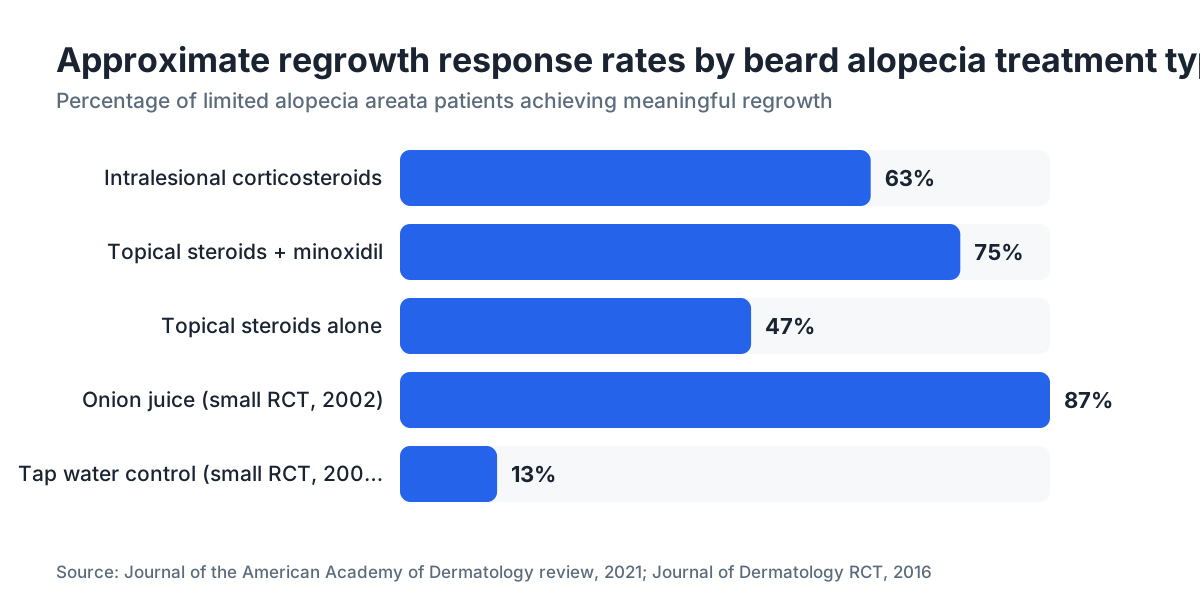
Intralesional corticosteroid injections This is the first choice for most dermatologists treating limited beard alopecia. Triamcinolone acetonide goes straight into the patch, usually at 5-10 mg/mL on the scalp and lower on the face, every 4-6 weeks. Several small injections cover the bare area. A 2021 review in the Journal of the American Academy of Dermatology reported regrowth in roughly 60-65% of patients with limited alopecia areata patches, though beard-specific numbers are slippery because most trials pool scalp and facial sites [3]. Injection-site pain and temporary skin atrophy (a slight dimple or thinning) are real risks, worse if the needle goes too shallow.
Topical corticosteroids Clobetasol propionate or betamethasone creams and solutions get prescribed when injections aren't practical or the patient turns them down. The evidence is thinner than for injections, and prolonged use thins facial skin.
Topical minoxidil Minoxidil doesn't touch the autoimmune cause, but it can push recovering follicles to grow faster and thicker. Minoxidil for men is FDA-approved for scalp pattern baldness. Beard use is off-label and widespread. A 2016 randomized controlled trial in the Journal of Dermatology found topical minoxidil 3% plus topical steroids beat steroids alone for beard alopecia areata regrowth [4]. Men usually apply it once or twice daily to the patch. Read up on minoxidil side effects before you start.
JAK inhibitors (ruxolitinib, baricitinib) This is where the field jumped forward. Ruxolitinib cream 1.5% (Opzelura) got FDA approval in June 2022 for mild-to-moderate alopecia areata, and oral baricitinib (Olumiant) is approved for severe disease [5]. They block the JAK-STAT signaling pathway that drives the T-cell attack on follicles. The main trials centered on scalp hair, but dermatologists use these drugs for beards too, often with good results. Oral baricitinib runs $3,000-$4,500 a month without insurance, so access hinges on coverage.
Contact immunotherapy (DPCP or SADBE) Reserved for extensive or treatment-resistant disease. A sensitizing chemical (diphencyprone or squaric acid dibutyl ester) creates a controlled allergic reaction that pulls the immune system's attention off the follicles. Results vary a lot, and only specialized centers do it.
Anthralin An older topical irritant, sometimes folded into combination regimens. Rarely the first pick for beard alopecia alone, but it's still in the kit.
How effective are JAK inhibitors for beard alopecia specifically?
JAK inhibitors are the biggest advance in alopecia areata treatment in decades, but most of the trial data covers scalp hair, not beards. The BRAVE-AA1 and BRAVE-AA2 baricitinib trials tracked eyebrow and eyelash regrowth as secondary endpoints and showed benefit beyond the scalp [6]. Practices report beard regrowth on JAK inhibitor therapy over and over, even if the formal beard data is thin.
Ruxolitinib cream (Opzelura) reaches the bloodstream far less than the oral drugs, which matters for safety. The FDA label limits it to short-term and intermittent use because of immunosuppression concerns with prolonged exposure [5].
Oral baricitinib and ruxolitinib carry a boxed warning for serious infections, cancer, and cardiovascular events, the same warning class as other immunosuppressants. That doesn't make them dangerous for a healthy 30-year-old with a beard patch. It does mean nobody should start one without a real risk conversation with a dermatologist or rheumatologist.
Going straight to oral JAK inhibitors for a couple of small beard patches isn't the standard first move. But for extensive beard loss that ignored steroids, JAK inhibitors are now a mainstream answer.
Can minoxidil grow beard hair in alopecia areata?
Minoxidil is an add-on here, never a solo act. It stretches out the anagen (growth) phase and pushes more blood to the follicle. In alopecia areata the follicles aren't miniaturized by DHT the way they are in pattern baldness. They're suppressed by an immune attack. Minoxidil doesn't touch that root cause.
Still, the 2016 RCT showed a real bump when it's paired with topical steroids [4]. The idea is that minoxidil helps follicles that are already starting to recover grow in faster and denser. Some dermatologists apply 5% minoxidil foam to the beard twice daily off-label as backup.
Keep one thing straight. Minoxidil for pattern baldness and minoxidil for beard alopecia areata are the same product treating two different problems. If your beard never filled in and you want minoxidil to build it from nothing, that's a separate conversation from treating autoimmune patches. DHT blockers like finasteride have zero role in alopecia areata.
For oral minoxidil, which has gotten more popular lately, the beard-specific data is even sparser. Systemic minoxidil does reach follicles all over the body, and some dermatologists prescribe it off-label at low doses (1.25-5 mg/day) inside combination regimens.
Does alopecia barbae (beard alopecia) come back after treatment?
Relapse is the answer nobody wants. Alopecia areata recurs often enough that dermatologists treat it as a chronic, relapsing condition. A 2020 observational study found that about 50% of patients with initially limited patches had at least one recurrence within five years [7].
Beard alopecia splits the same way. Some men get one episode that clears with a few rounds of steroid injections and never returns. Others cycle through patchy loss and regrowth for years. A smaller group lands in persistent, extensive beard alopecia that needs ongoing suppression with JAK inhibitors.
Predicting who relapses is genuinely hard. More extensive disease at the start, younger age at onset, and nail pitting all raise the recurrence risk [1]. A family history of alopecia areata bumps the odds up too.
No maintenance regimen has strong evidence behind it for preventing beard relapse specifically. Some dermatologists keep topical treatments going for a stretch after regrowth, but that's clinical judgment, not trial data.
Are there natural or home remedies that help beard alopecia?
This is where honesty has to win. A handful of natural remedies have been studied for alopecia areata, and none has evidence strong enough to pick over proven treatments.
Garlic gel and onion juice hold the most RCT data in this space, and that data is small and low quality. A 2002 study in the Journal of Dermatology found onion juice applied twice daily produced regrowth in 86.9% of patients with patchy alopecia areata versus 13.3% on tap water [8]. The study had 38 people in it. Take it for what it is: interesting, biologically plausible (quercetin and sulfur compounds do calm inflammation), nowhere near enough to call a real treatment.
Rosemary oil gets a lot of buzz. A 2015 RCT put it against 2% minoxidil for pattern baldness and found similar scalp results [9]. Different condition. No meaningful trial has tested rosemary oil on beard alopecia areata.
Platelet-rich plasma (PRP) injections show modest benefit in a few small alopecia areata trials, but the beard-specific data is thin.
Want to try onion juice or rosemary oil alongside real treatment? They probably won't hurt. They almost certainly won't work on their own for anything past mild disease. The genuine danger is letting a spreading patch run for months while you chase home remedies.
For hair loss supplements generally, biotin and other vitamins get taken all the time but haven't been shown to help autoimmune alopecia.
What does a dermatologist do differently for beard vs scalp alopecia areata?
The principles match, but the practical details diverge. Injections into the face sting more for some patients because facial skin is thinner and more sensitive. Dermatologists usually drop the triamcinolone concentration on the face (around 2.5-5 mg/mL) below the scalp dose (5-10 mg/mL) to cut the risk of atrophy and hypopigmentation, both of which show up more on the face.
Topical steroids on the beard carry a higher risk of perioral dermatitis, a rash around the mouth, with long use. Dermatologists watch for it and switch formulations if it appears.
Beard follicles are terminal follicles: large and pigmented. They respond to growth stimulants differently than the fine vellus follicles on a balding scalp. So when beard alopecia areata clears, regrowth tends to come back as thick, fully pigmented hair rather than the pale fuzz that sometimes precedes scalp regrowth.
Phototherapy (PUVA or narrowband UVB), used for extensive scalp disease, rarely gets pointed at the beard. It sits too close to the eyes and mucous membranes, and the face already soaks up plenty of ambient UV.
If you're tracking your beard loss and trying to figure out what changed, tools that document the area and severity over time help. MyHairline's free AI hair analysis (/scan) maps your patches and tells you whether they're holding steady, spreading, or responding.
Can beard alopecia be treated with a hair transplant?
Generally no, not for active alopecia areata.
A transplant moves follicles from a donor area into a bare one. If your immune system is still attacking follicles, the transplanted ones face the same attack. The Koebner phenomenon, where skin trauma triggers new lesions, can also flare alopecia areata right at the graft sites. Most experienced hair restoration surgeons refuse to transplant into active autoimmune alopecia [10].
For a man who had beard alopecia areata years ago, hit stable long-term remission (usually 2-3 years with no activity), and now has permanent scarring or a stubborn bare patch, a hair transplant is worth discussing. Even then, recurrence is on the table. It works best for men whose alopecia was truly one-and-done.
Facial hair transplants for cosmetic reasons (a naturally thin beard, not a hair loss disease) are a separate story, and those results are usually good. Know which situation you're in before you book a surgical consult.
What should you realistically expect from treatment?
Here's the realistic arc for most men with limited beard alopecia.
You see a dermatologist, confirm the diagnosis, and start intralesional triamcinolone every 4-6 weeks. After 2-3 rounds, many patches sprout fine vellus regrowth within 6-12 weeks. Full terminal hair can take 3-6 months even when the treatment is clearly working. You might add topical minoxidil during that window to push things along.
When patches ignore 3-4 injection sessions, the dermatologist steps up to a systemic drug or JAK inhibitor cream. Some patients see ruxolitinib cream work in as little as 4-8 weeks, though most trials ran 24-36 weeks to judge full response [5].
For extensive beard alopecia (more than half the beard gone), the timeline stretches out, the treatment gets heavier, and the odds of full regrowth drop but stay real, especially with oral JAK inhibitors.
Nothing works for everyone. Roughly 20-30% of patients with extensive, long-standing alopecia areata get limited response no matter what's tried. That's the honest ceiling.
How much does beard alopecia treatment cost?
Cost swings hard depending on the path.
Intralesional steroid injections at a dermatologist's office run roughly $150-$400 per visit out of pocket, depending on location and how many patches get treated. Expect several sessions.
Topical minoxidil runs $10-$30 a month for generic 5% solution or foam.
Ruxolitinib cream (Opzelura) lists around $2,000 a month, but Incyte, the manufacturer, runs a patient assistance program, and insurance coverage has widened since the 2022 FDA approval [5].
Oral baricitinib (Olumiant) lists at $3,000-$4,500 a month. Most major insurers cover it for severe alopecia areata since FDA approval.
Contact immunotherapy (DPCP) is only available at specialized centers, and cost varies widely.
PRP injections run $500-$1,500 per session, aren't covered by insurance, and have limited evidence for beards specifically.
If cost blocks the JAK inhibitor route, ask your dermatologist about the manufacturer's patient assistance programs. Incyte's copay assistance for Opzelura has cut monthly costs to $0-$35 for eligible commercially insured patients [5].
When should you see a doctor instead of trying treatments at home?
Short version: see a dermatologist before you try much of anything.
Here's the reasoning. Beard alopecia looks like alopecia areata most of the time, but a fungal infection, a scarring alopecia, or a different autoimmune condition each needs a different treatment. The wrong treatment burns time and money. Scarring alopecias are the ones on a clock. Once the follicle dies, nothing brings it back.
Go urgently, within a few weeks, if the patch is spreading fast, the skin looks inflamed or scarred, you see pustules or scaling, or you're losing beard, eyebrow, eyelash, and scalp hair all at once. Rapid loss across multiple body sites can signal alopecia totalis or universalis and calls for aggressive treatment.
A single small stable patch you've had for a few months isn't a race. But sitting on it without a diagnosis still buys you nothing.
If you want to understand what causes hair loss more broadly before your visit, reading up on the mechanisms sets up a sharper conversation with your doctor.
MyHairline's free AI scan (/scan) documents the pattern and size of your patches before you walk into the office, which makes that first appointment run faster.
Sources
- National Institute of Arthritis and Musculoskeletal and Skin Diseases (NIAMS): Alopecia Areata overview
- American Academy of Dermatology (AAD): Alopecia Areata overview
- Journal of the American Academy of Dermatology: Intralesional corticosteroids in alopecia areata (review, 2021)
- Journal of Dermatology: RCT of topical minoxidil 3% vs steroids alone for beard alopecia areata (2016)
- U.S. Food and Drug Administration (FDA): drug approvals and databases
- New England Journal of Medicine: BRAVE-AA1 and BRAVE-AA2 baricitinib trials for alopecia areata
- British Journal of Dermatology: Long-term observational study of alopecia areata recurrence (2020)
- Journal of Dermatology: RCT of onion juice for patchy alopecia areata (2002)
- Skinmed Journal (indexed on PubMed): Rosemary oil vs 2% minoxidil RCT for androgenetic alopecia (2015)
- International Society of Hair Restoration Surgery (ISHRS)
- National Alopecia Areata Foundation (NAAF): Treatment overview