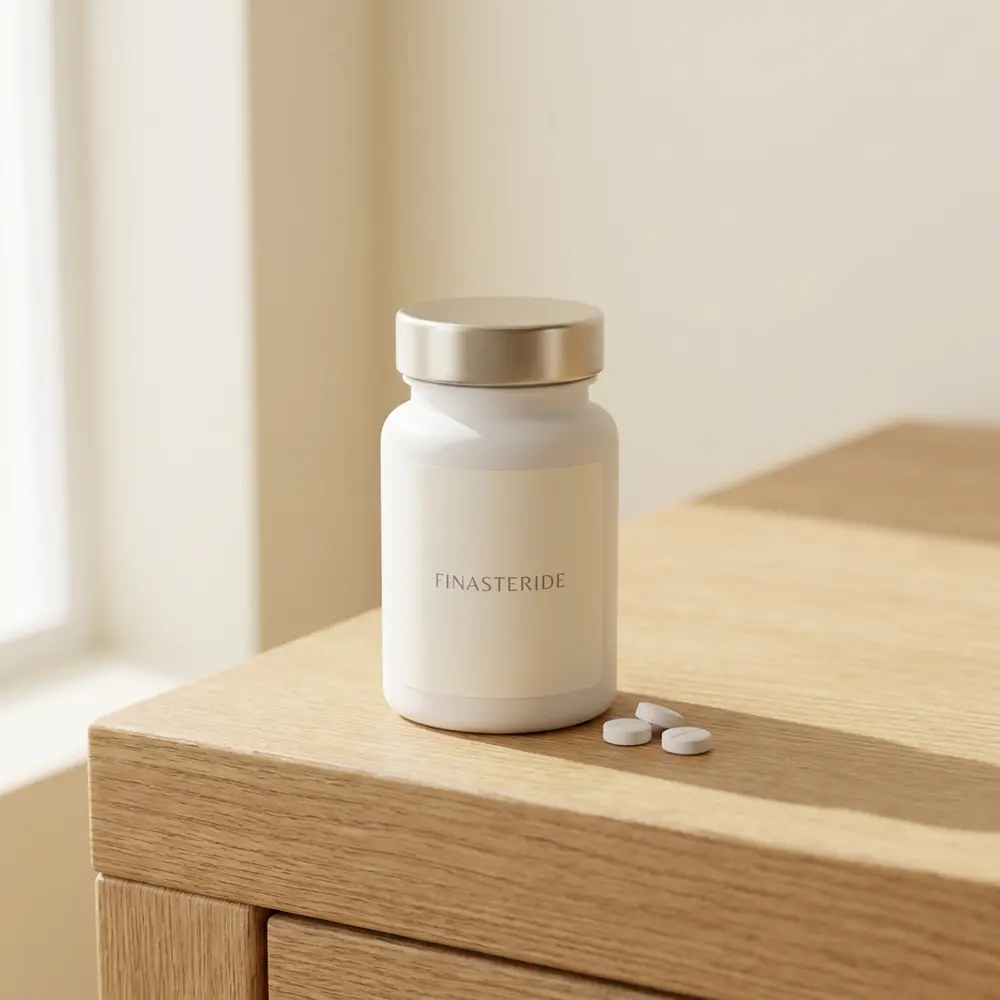
TL;DR: Costco's pharmacy sells generic finasteride 1mg, typically around $15-25 for a 90-tablet supply with a valid prescription, making it one of the cheaper brick-and-mortar options. You need a prescription from a licensed prescriber. No Costco membership is required to use the pharmacy in most US states. The drug works the same regardless of where you fill it.
Does Costco sell finasteride?
Yes. Costco's pharmacy carries generic finasteride 1mg tablets, the dose used for male pattern hair loss (androgenetic alopecia). You need a valid prescription from a licensed physician, dermatologist, or nurse practitioner. You cannot walk in and buy it over the counter.
The prescription requirement exists because finasteride is a prescription-only drug in the United States under 21 U.S.C. § 353(b), the federal statute that defines which drugs need physician oversight [1]. Costco does not stock finasteride 5mg (the prostate dose, brand name Proscar) as a hair loss product, but some prescribers write 5mg scripts and patients cut the tablets. That's a separate conversation, covered below.
Here's what most people don't realize. In all 50 US states, anyone can use a Costco pharmacy without a membership [2]. Federal and most state pharmacy access laws protect your right to fill a prescription regardless of club membership status. The pharmacist cannot turn you away because you don't have a Costco card.
How much does finasteride cost at Costco?
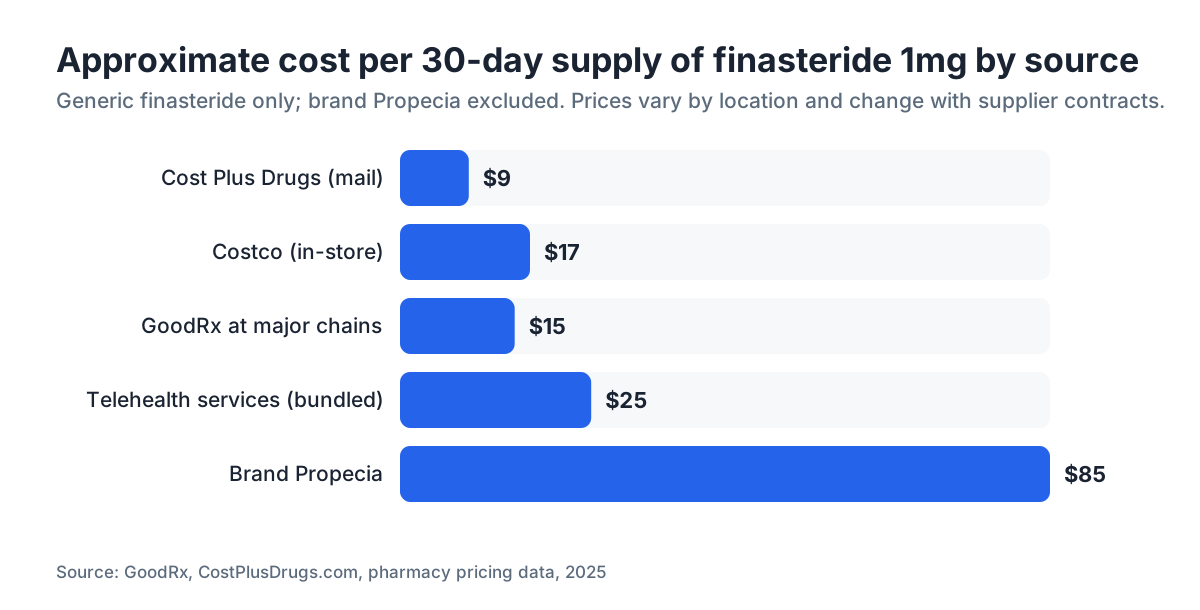
Costco is consistently one of the lowest-priced brick-and-mortar pharmacies for generic finasteride. A 90-tablet supply of generic finasteride 1mg runs roughly $15-25 at Costco depending on your location and whether you use their in-house pricing or a discount card [3].
Here is how Costco compares to other common options:
| Source | Supply | Approximate price | Notes |
|---|---|---|---|
| Costco (generic 1mg) | 90 tablets | $15-25 | Prescription required, no membership needed |
| GoodRx at major chains | 30 tablets | $10-20 | Price varies by zip code |
| Hims / Keeps / Ro | 30 tablets | $20-30 | Includes telehealth consult |
| Mark Cuban's Cost Plus Drugs | 30 tablets | ~$7-12 | Ships; Rx required |
| Brand Propecia (1mg) | 30 tablets | $70-100+ | Rarely used now; same molecule |
These are real pharmacy price ranges, but they shift. Check your specific zip code on GoodRx or directly with Costco's pharmacy before assuming a price [3].
The drug inside a Costco generic tablet is chemically identical to Propecia. Generic manufacturers must prove bioequivalence to the FDA before they can sell [4]. You are paying for distribution, not a different molecule.
If you want to understand why the drug costs what it costs and how it stacks up against telehealth, the finasteride overview goes deeper on the cost landscape.
Do you need a Costco membership to use the pharmacy?
No. This is the most common misconception. Costco's own policy, consistent with state pharmacy access laws, allows anyone to fill a prescription at their pharmacy regardless of membership [2]. You walk to the pharmacy counter, hand over your prescription, and fill it. Nobody checks for a membership card at that counter.
You would need a membership to buy anything else in the warehouse on that trip. But if you're just there for the prescription, you can park, walk in, fill the script, and leave.
Some locations are busier than others, and wait times vary. Call ahead to confirm they have finasteride in stock, especially at smaller Costco Business Centers.
How do you get a finasteride prescription to fill at Costco?
You have several routes.
The most direct is a visit to a dermatologist or your primary care doctor. A dermatologist can diagnose androgenetic alopecia, confirm finasteride is appropriate for you, and write the script in one appointment. If you already have a diagnosis, your PCP can often handle the refill.
Telehealth services (Hims, Keeps, Ro, and others) can issue a valid prescription in most states after an asynchronous or video consultation. Here's the practical reality. If you use one of those services, they typically want to fill the prescription through their own pharmacy, because that's how they make money. Some will write a paper or electronic prescription you can take to Costco, but not all make that easy. Ask explicitly before you complete the consultation.
Once you have a prescription, you can transfer it to Costco's pharmacy or have your prescriber send it directly. Electronic prescriptions are standard now, and your prescriber can route it to whichever pharmacy you choose.
Getting the diagnosis right matters before you fill anything. Finasteride does nothing for non-androgenetic shedding, so if your hair loss might be telogen effluvium rather than male pattern loss, sort that out first.
Still not sure what's driving your hair loss? what causes hair loss is a good place to start.
Is generic finasteride from Costco the same as Propecia?
Pharmacologically, yes. Propecia and generic finasteride 1mg contain the same active molecule: finasteride. The FDA's generic drug approval process requires manufacturers to demonstrate that their product is bioequivalent, meaning it delivers the same amount of active drug to your bloodstream within the same time window as the reference brand [4].
The FDA defines bioequivalence as the 90% confidence interval of the generic's AUC and Cmax falling within 80-125% of the brand's values [4]. In practice, most generics land much closer to 100%. The clinical difference between Propecia and a generic finasteride 1mg tablet from Costco is not meaningful.
What does vary between manufacturers is inactive ingredients: fillers, binders, coatings. These rarely change outcomes. If you had an unusual reaction to one manufacturer's tablet (GI upset, for example), ask the pharmacist which manufacturer they stock and whether an alternative is available.
The FDA's Orange Book lists all approved finasteride generics and their manufacturers. Costco sources from established generic manufacturers and rotates suppliers based on contracts, which is standard for any large pharmacy chain.
What does finasteride actually do for hair loss?
Finasteride is a 5-alpha reductase type II inhibitor. It blocks the enzyme that converts testosterone into dihydrotestosterone (DHT), the androgen that shrinks genetically susceptible hair follicles over time [5]. Lower scalp DHT gives those follicles a chance to recover and hold onto their growth cycle.
A 5-year trial published in the Journal of the American Academy of Dermatology found that men taking finasteride 1mg daily showed hair count increases at 2 years that held through 5 years, while the placebo group kept losing hair [5]. The study's stated conclusion was that "finasteride 1mg/day is well tolerated and effective for the treatment of male pattern hair loss."
The numbers are stark. In that trial, roughly 90% of men on finasteride maintained or improved their hair count at 5 years versus about 25% of placebo patients [5].
Finasteride works best started early, before extensive shrinkage has set in. It is far better at slowing loss than reviving follicles that have gone completely dormant. If you're a Norwood 2 or 3, you have more to protect than someone at a Norwood 5 or 6. The receding hairline article covers Norwood staging and what realistic expectations look like.
Because finasteride works on DHT, the core driver of androgenetic alopecia, the dht blocker explainer goes deeper on that mechanism and what other DHT-blocking options exist.
What are the real side effects of finasteride?
The FDA-approved label for finasteride 1mg lists sexual side effects as the primary concern: decreased libido, erectile dysfunction, and decreased ejaculate volume [6]. In the original clinical trials, these occurred in roughly 3.8% of finasteride users versus 2.1% of placebo users, a statistically significant but modest difference in absolute terms [6].
Persistent sexual side effects after stopping finasteride, sometimes called post-finasteride syndrome (PFS), are reported by a subset of users. The FDA updated the label in 2012 to note reports of persistent sexual dysfunction after discontinuation [6]. The genuine incidence of PFS is debated. The data are limited and confounded by nocebo effects (side effects driven by expectation), but the condition appears real for some people. Nobody has good prevalence data. The closest work suggests it affects a small minority of discontinuers, but "small" is doing a lot of work in that sentence.
Breast tenderness or enlargement (gynecomastia) is a rare reported side effect. Depression and cognitive symptoms have also been reported, though causation is harder to establish in observational data.
Finasteride lowers PSA (prostate-specific antigen) levels by about 50%, which matters if you're being monitored for prostate cancer. Tell any urologist you're on finasteride before PSA testing [6].
Finasteride is absolutely contraindicated in women who are or may become pregnant. The drug causes fetal harm in male fetuses (genital abnormalities). Pregnant women should not even handle crushed tablets [6]. That's why Costco and every other pharmacy dispenses finasteride in sealed tablet form.
For most men in their 20s and 30s taking it for hair loss, the side effect profile is manageable. Have the honest conversation with your prescriber before starting, not after.
Should you combine finasteride with minoxidil?
Combining finasteride with minoxidil is widely considered the most effective medical regimen for androgenetic alopecia. The two drugs work through completely different mechanisms: finasteride cuts DHT production, while minoxidil appears to prolong the anagen (growth) phase of the hair cycle and improve follicle blood flow [7].
A randomized controlled trial published in Dermatologic Therapy in 2015 found that the combination of finasteride and minoxidil produced significantly greater hair count improvements than either drug alone at 12 months [7].
If you're filling finasteride at Costco, minoxidil is available over the counter. You don't need a prescription for topical 2% or 5% minoxidil. Costco carries Kirkland Signature minoxidil 5% solution (a generic), typically one of the cheapest minoxidil options on the market. Kirkland minoxidil 5% is FDA-approved as a generic and contains the same active drug as Rogaine 5% Men's.
Oral minoxidil at low doses (0.625-2.5mg) is an emerging option that requires a prescription but may have better adherence than daily topical application. The oral minoxidil article covers that option fully. For a side-by-side comparison of both drug classes, finasteride and minoxidil lays it out.
The minoxidil for men guide covers topical options in depth if you want to understand what you'd be adding to a finasteride regimen.
Is Costco actually the cheapest way to get finasteride?
Probably not, if you're purely optimizing for price per tablet. Mark Cuban's Cost Plus Drugs (costplusdrugs.com) lists generic finasteride 1mg at around $7-12 for a 30-day supply as of mid-2025 [3]. That's a mail-order model with a transparent markup formula. You still need a prescription.
GoodRx coupons at Walmart, Kroger, and some independent pharmacies can hit similar or lower ranges depending on your location. Prices vary more than people expect by zip code.
Where Costco genuinely wins: convenience if you're already shopping there, no shipping wait, and a pharmacist you can talk to face-to-face. If you have questions about drug interactions or side effects, that in-person pharmacist conversation is worth something a mail-order fulfillment center can't replicate.
For men who want telehealth convenience bundled with the prescription, services like Hims, Keeps, or Ro charge $20-30 per month including the pill. That's more than Costco's price, but it covers the prescriber cost and ongoing check-ins. If you don't have a PCP or dermatologist, that bundled price may actually pencil out for the first year.
At MyHairline, the free AI hair analysis at /scan can help you read your pattern and severity before spending money on a prescriber visit, which is useful if you're not sure yet whether finasteride makes sense for your situation.
Honest take for most people already in the healthcare system: get the prescription from your dermatologist or PCP, fill it at Costco or via Cost Plus Drugs, skip the branded services.
What about cutting finasteride 5mg tablets to save more money?
Some prescribers write finasteride 5mg (Proscar, originally for benign prostatic hyperplasia) and tell patients to cut tablets into quarters, yielding four 1.25mg doses. The logic: finasteride 5mg is often cheaper per tablet than 1mg, so four quarters cost less than four separate 1mg tablets.
This works pharmacologically. A 1.25mg dose sits above the plateau of DHT suppression that 1mg already reaches, so you're not losing efficacy [5]. Plenty of prescribers and dermatologists use this approach.
Practical caveats: tablet cutters introduce dose variation. Finasteride 5mg tablets are not scored for quartering. You could end up with uneven pieces. The difference in DHT suppression between 1mg and 1.25mg is not clinically meaningful, but consistently getting 0.5mg one day and 1.8mg the next is a real variable.
More important: whether Costco or any pharmacy fills a 5mg finasteride prescription written for hair loss depends on the prescriber's notes and state regulations. It's legal and done regularly, but ask your prescriber directly if they're comfortable writing it that way.
If you go this route, do it with a pill cutter (under $5 anywhere), not a knife.
How long does it take for finasteride to work?
Most men see no change for the first 3-6 months. That's not the drug failing. Hair follicles cycle slowly, and DHT suppression needs time to shift follicles from shrunken states back toward normal growth phases.
The earliest sign of response is often less shedding, which can begin around months 3-4. Visible density improvements are more likely at 6-12 months. The 5-year trial data show hair counts keep improving through year 2, then plateau [5].
Here's the hard part. Some men shed more in the first 2-3 months as follicles transition between phases. This alarms people. It almost always passes.
If you stop taking finasteride, DHT returns to baseline within about 2 weeks, and the hair loss process resumes. Most of the hair gained or maintained on finasteride sheds within 9-12 months of stopping [6]. This is a long-term commitment, not a short course.
For men who've already lost significant ground and are weighing whether medication alone is enough, the hair transplant article explains when surgical restoration makes sense and how it fits alongside medical therapy.
Is Costco finasteride right for you?
If you have a diagnosis of androgenetic alopecia, a valid prescription, and want a low-cost in-person pharmacy option, Costco finasteride is a sound choice. The drug is the same, the price is competitive, and you don't need a membership.
It's not the right move if you don't yet have a diagnosis, if your hair loss might be something other than male pattern baldness, or if you're hoping to skip a prescriber visit entirely. Finasteride is prescription-only for a reason: there are real contraindications, real drug interactions (some antifungals affect finasteride metabolism), and real side effects that warrant a medical conversation.
If cost is your main concern, Cost Plus Drugs may beat Costco on price. If convenience and telehealth access matter more, the online services cover both the prescription and the fill. Costco sits in the middle: low-cost, in-person, and dependent on you already having a prescriber.
The MyHairline free AI scan at /scan is worth running before your prescriber appointment. It gives you a clearer picture of your pattern and severity, which makes the clinical conversation more productive.
One thing worth saying plainly: finasteride is genuinely effective for the right person, better than almost anything else in the non-surgical category. If you qualify and your prescriber agrees, where you fill it is secondary to actually starting and staying consistent.
Sources
- US Code, 21 U.S.C. § 353(b), FDA prescription drug classification statute
- Costco Wholesale, Pharmacy FAQ
- GoodRx, finasteride pricing tool
- FDA, Approved Drug Products with Therapeutic Equivalence Evaluations (Orange Book)
- Kaufman KD et al., Journal of the American Academy of Dermatology, 1998; 5-year finasteride trial
- FDA, Propecia (finasteride) prescribing information / drug label
- Hu R et al., Dermatologic Therapy, 2015; finasteride plus minoxidil combination trial
- American Academy of Dermatology, hair loss treatment guidelines
- FDA, Generic Drug Facts
- Mark Cuban Cost Plus Drugs, finasteride pricing