

TL;DR: Oral minoxidil grows hair, but it carries systemic risks that topical minoxidil mostly avoids. The common ones are fluid retention, low blood pressure, and unwanted body hair. Serious heart effects are rare at hair loss doses (1 to 5 mg/day) but not zero. Most people tolerate it fine. You still need a doctor watching your blood pressure.
What is oral minoxidil and how does it differ from the topical version?
Minoxidil started life as a blood pressure drug. Rogaine and its generics are the topical version, rubbed onto the scalp, where very little reaches the rest of your body. The pill is the original. You swallow it, and it enters your bloodstream completely.
That difference drives everything about side effects. Topical minoxidil pushes roughly 1 to 2% of its active ingredient into systemic circulation [1]. The pill delivers 100%. At blood pressure doses, doctors prescribed 10 to 40 mg a day. For hair loss, dermatologists use 1.25 to 5 mg a day, sometimes as low as 0.625 mg for women. The dose is far smaller, but the drug does the same thing: it dilates blood vessels, and its active metabolite (minoxidil sulfate) does the real work on hair follicles.
Oral minoxidil for hair loss is prescribed off-label in the United States. The FDA has approved oral minoxidil only for high blood pressure [2]. So the dermatologist writing that prescription is leaning on a stack of clinical evidence, not an FDA hair loss approval. For how the pill stacks up against the topical, see our guide to oral minoxidil.
What are the most common side effects of minoxidil pills?
The most common side effect is unwanted body hair. After that comes fluid retention, then low blood pressure and dizziness. Serious heart problems sit at the far end of the list, rare at hair loss doses. The full picture is now well-documented from several small-to-medium trials and retrospective cohorts.
Hypertrichosis (unwanted body hair). This is the one that pushes many people, especially women, to quit. Studies put the rate anywhere between 14% and 74% depending on dose and how carefully it was measured [3]. A 2020 retrospective study of 100 women taking low-dose oral minoxidil (0.25 to 4 mg/day) found hypertrichosis in about 74% of them, though most called it mild [3]. It shows up on the face, arms, and legs within 3 to 6 months. It reverses after you stop.
Fluid retention and edema. Minoxidil makes the kidneys hold onto sodium and water. At high blood pressure doses this was a serious problem that needed a diuretic alongside it. At hair loss doses, ankle swelling or mild puffiness hits roughly 5 to 10% of users [4]. People with existing heart or kidney disease run a meaningfully higher risk and should not take this without cardiology input.
Low blood pressure and lightheadedness. Minoxidil is a vasodilator, so it can drop your blood pressure even at small doses. Dizziness on standing up fast (orthostatic hypotension) shows up in a subset of users. Most people with normal baseline pressure feel a small dip they never notice.
Pericardial effusion. Fluid around the heart was a documented risk at blood pressure doses. At hair loss doses it looks very rare, but not zero. The FDA prescribing information carries a black box warning about exactly this [2].
Headache and fatigue. Both turn up in the early weeks as your body adjusts to the vasodilation. They usually fade.
Tachycardia (fast heart rate). As blood pressure drops, the heart speeds up to compensate. Most healthy people at low doses never feel it. It is a reason to watch people with existing arrhythmias closely.
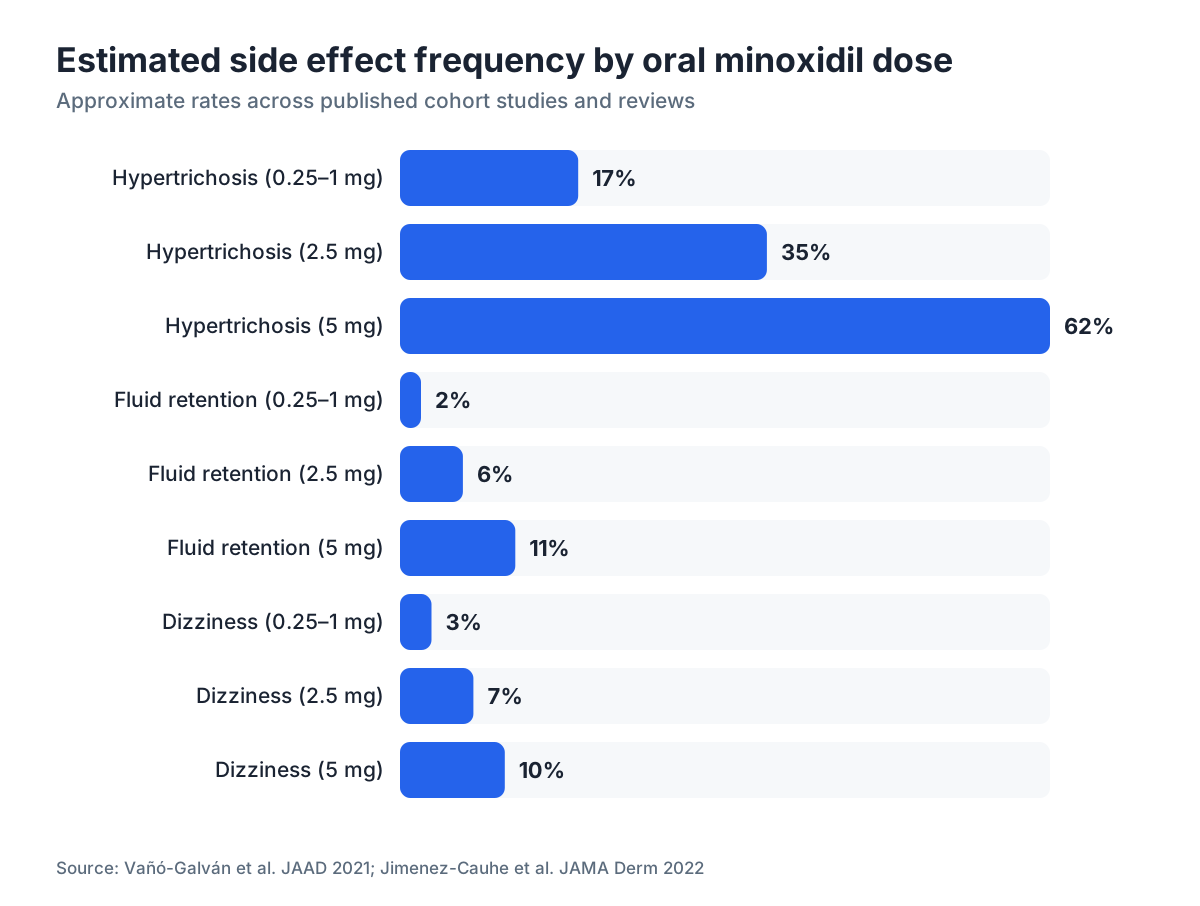
The table below breaks these rates out by dose.
How do side effect rates compare across doses?
Higher dose means more side effects, close to a straight line, which is why dermatologists keep pushing doses lower. A 2021 review in the Journal of the American Academy of Dermatology pulled together findings across multiple cohort studies:
| Side effect | 0.25 to 1 mg/day | 2.5 mg/day | 5 mg/day |
|---|---|---|---|
| Hypertrichosis | ~14 to 20% | ~30 to 40% | ~50 to 74% |
| Fluid retention/edema | ~1 to 3% | ~5 to 8% | ~7 to 15% |
| Dizziness / hypotension | ~2 to 5% | ~5 to 10% | ~8 to 12% |
| Headache | ~3 to 5% | ~5 to 8% | ~5 to 10% |
| Discontinuation (all causes) | ~5 to 10% | ~10 to 15% | ~15 to 25% |
These are approximate ranges pulled from the literature, not one trial's exact numbers [4][5]. The pattern is hard to miss. Going from 0.25 mg to 5 mg roughly triples the odds of unwanted body hair and pushes cardiovascular side effects up with it.
For most men, 2.5 to 5 mg is the range that actually grows hair. For most women, dermatologists start at 0.25 to 2.5 mg, partly to hold facial hair down.
Is the black box warning on oral minoxidil something to actually worry about?
Read it, then read the context. The FDA's prescribing information for oral minoxidil carries a black box warning, the agency's strongest caution. It covers three things: the drug can cause serious cardiovascular effects including pericardial effusion (fluid around the heart) and pericarditis; it can cause or worsen angina (chest pain from reduced blood flow); and at blood pressure doses it has to be given with a diuretic and usually a beta-blocker [2].
Here is the actual label language: "MINOXIDIL TABLETS CONTAIN THE POTENT ANTIHYPERTENSIVE AGENT, MINOXIDIL, WHICH MAY PRODUCE SERIOUS ADVERSE EFFECTS. IT CAN CAUSE PERICARDIAL EFFUSION, OCCASIONALLY PROGRESSING TO TAMPONADE, AND ANGINA PECTORIS MAY BE EXACERBATED." [2]
That warning was written for 10 to 40 mg doses. Hair loss doses are 5 to 20 times lower. No published trial of low-dose oral minoxidil for hair loss has reported a single case of cardiac tamponade. But "no cases in small trials" is not the same as "it cannot happen." If you have a heart condition, a history of pericarditis, or kidney disease that messes with fluid balance, this is a conversation for a cardiologist before you start, more than a dermatologist.
For healthy young adults with no cardiac history, the risk is low. Dermatologists prescribing this off-label generally run a baseline cardiovascular check and a blood pressure reading first.
Does oral minoxidil cause hair shedding at first?
Yes, and it catches people off guard. In the first 2 to 8 weeks, many users shed more hair, not less. People call it the dread shed. It is actually a sign the drug is working.
Minoxidil forces resting follicles (telogen phase) to drop their old hairs early so a new, thicker growth phase (anagen) can start. Topical does the same thing. This early shedding usually peaks around weeks 4 to 8 and settles by week 12 to 16 [5]. It does not mean the drug is failing. If it keeps going past 4 months or turns severe, call your prescribing doctor.
For the mechanism behind this shedding, read about telogen effluvium.
Who should not take oral minoxidil for hair loss?
Some conditions make this a bad or dangerous choice. People with existing cardiovascular disease (heart failure, coronary artery disease, or a history of pericarditis) carry real added risk, and pregnant women should not take it at all.
Heart disease is the big one. Minoxidil's fluid retention raises cardiac preload, which can be dangerous in a heart that is already straining. The FDA label warns about this directly [2].
Kidney disease raises the fluid retention risk, because the kidneys run sodium and water balance. Minoxidil piles onto a system that is already compromised.
Pregnant women should not use oral minoxidil. It is FDA Pregnancy Category C (animal studies showed harm; no adequate human studies) [2]. It can also pass into breast milk.
People already on blood pressure medication need careful coordination. Stacking minoxidil on another antihypertensive can drop pressure too far.
And anyone who would find visible body hair intolerable often decides the trade is not worth it. This comes up most with women who grow facial hair on the drug.
How does oral minoxidil compare to topical minoxidil for side effects?
Topical minoxidil's usual problems are scalp irritation, dryness, and contact dermatitis (often from the propylene glycol in the foam or solution). Local, and usually mild [1]. Systemic effects from topical are real but uncommon at normal doses.
Oral flips that profile. Scalp irritation drops to nearly zero because you are not putting anything on your scalp. But systemic effects climb, because the drug is moving through your whole body.
On regrowth, a 2022 randomized controlled trial in JAMA Dermatology found that 5 mg oral minoxidil produced a larger mean change in hair count at 24 weeks than 5% topical solution, though the confidence intervals were wide and both groups improved significantly [5]. If you are weighing the two, the minoxidil side effects page covers the topical form in detail.
Plain version: topical is the lower-risk starting point for most people. Oral gets appealing when someone responds poorly to topical, hates the twice-daily application, or wants a once-daily pill instead.
To see where minoxidil fits in a broader plan for men, read minoxidil for men.
Can oral minoxidil be combined with finasteride, and does that change the side effects?
Yes, and the combination is common. The two drugs work through completely separate mechanisms. Minoxidil opens potassium channels in follicles and improves blood flow. Finasteride blocks 5-alpha-reductase to cut DHT, the hormone that shrinks follicles [6]. There is no pharmacokinetic interaction between them.
The side effect profiles do not stack into anything dangerous. Finasteride's known effects (lower libido, erectile dysfunction, ejaculatory changes, and the much-argued post-finasteride syndrome) are entirely separate from minoxidil's cardiovascular and body hair effects. Taking them together does not raise the risk of either drug's side effects.
The appeal is that they hit hair loss on two different fronts. Dermatologists often recommend the pair for people at Norwood III or higher who are not getting enough from either drug alone. For the full comparison, see finasteride and minoxidil.
To understand finasteride's side effects on their own, the finasteride article covers those in detail.
What monitoring should you get while taking oral minoxidil?
Bare minimum: most dermatologists check blood pressure at baseline and again 4 to 8 weeks in, especially above 2.5 mg. This is not box-ticking. Minoxidil's blood pressure effect is real and dose-dependent, and some people respond harder than expected.
For higher doses (5 mg and up) or anyone with a cardiac or kidney history, a basic metabolic panel and an edema check make sense. Some clinicians also run a baseline ECG, though that is not standard at low doses.
Watch for these at home: ankle or leg swelling, unusual shortness of breath at rest (a possible sign of fluid near the heart), and chest discomfort that does not quit. Any of those, call your prescribing doctor before your next visit.
If a telehealth platform is handing you oral minoxidil with no cardiovascular screening at all, that is a real problem. A prescription with zero baseline assessment falls below the standard of care.
Not sure where your hair loss stands? The free AI hair analysis at MyHairline can map your pattern before your first appointment, so you and your doctor spend that time on treatment instead of measurement.
How long do side effects last, and do they go away if you stop?
Most side effects from oral minoxidil reverse. That is genuinely reassuring, and clinical observation backs it, even though long-term controlled reversal data is thin.
Hypertrichosis usually starts reversing within 1 to 3 months of stopping and fully clears within 6 months for most people [3]. It does not permanently change follicles elsewhere on your body.
Fluid retention clears fast, often within days to a couple of weeks, once the kidneys catch up.
Blood pressure effects reverse quickly too.
Here is the catch. The hair regrowth, the whole reason you took the drug, also reverses. Most people lose the hair they gained within 3 to 6 months of stopping. That is why dermatologists frame this as a long-term commitment if it works, not a short course you finish.
Does oral minoxidil cause weight gain?
Some users watch the scale climb, but it is almost always water, not fat. Minoxidil's sodium retention can add a few pounds of fluid, usually showing up as ankle swelling or a slightly puffier look [4]. That is not body fat.
For most healthy people at low doses, it stays subtle. If you see a 3 to 5 lb jump with visible ankle swelling, flag it to your prescribing doctor. They might suggest cutting sodium, and in some cases prescribe a low-dose diuretic. At blood pressure doses, a diuretic was standard co-therapy for exactly this reason [2].
What should you do if you experience side effects?
It depends on what you are dealing with.
Mild body hair? Most dermatologists say wait 3 to 6 months before deciding to stop. If the hair lands in easy-to-manage spots and your scalp growth is real, plenty of people decide the trade is fine.
Any cardiovascular symptom (chest tightness, shortness of breath at rest, new ankle swelling beyond mild) means calling your prescribing doctor promptly. Do more than stop abruptly on your own if you are also taking it for blood pressure control, though at hair loss doses an abrupt stop is less risky than at blood pressure doses.
Persistent dizziness or lightheadedness? Check your blood pressure if you have a home monitor. A systolic reading below 90 mmHg with symptoms means same-day medical contact.
Ask for a dose cut if you need one. Dropping from 5 mg to 2.5 mg, or 2.5 mg to 1 mg, often cuts side effects hard while keeping most of the hair benefit.
For the bigger picture on what drives hair loss and whether oral minoxidil is even aimed at the right mechanism for you, the what causes hair loss and receding hairline guides are good places to start. And if the medications are not working, the hair transplant article covers the surgical route.
MyHairline's free AI scan at myhairline.ai gives you a baseline Norwood or Ludwig read to bring into that conversation.
Sources
- FDA, Minoxidil Topical Solution prescribing information (Perrigo)
- FDA, Minoxidil Tablets (oral) prescribing information, NDA 018308
- Vañó-Galván S et al., 'Oral Minoxidil Treatment for Hair Loss: A Review of Efficacy and Safety,' Journal of the American Academy of Dermatology, 2021
- Randolph M & Tosti A, 'Oral Minoxidil Treatment for Hair Loss: A Review of Efficacy and Safety,' Journal of the American Academy of Dermatology, 2021
- Jimenez-Cauhe J et al., 'Effectiveness and Safety of Low-dose Oral Minoxidil in Male Androgenetic Alopecia,' JAMA Dermatology, 2022
- Rossi A et al., 'Finasteride, 1 mg daily administration on male androgenetic alopecia in different age groups,' Journal of Dermatological Treatment, 2011
- American Academy of Dermatology, Hair Loss: Diagnosis and Treatment
- Gupta AK & Talukder M, 'Oral minoxidil: a review for dermatologists,' Journal of Dermatological Treatment, 2023
- MedlinePlus (U.S. National Library of Medicine), Minoxidil oral
- Suchonwanit P et al., 'Minoxidil and its use in hair disorders,' Drug Design, Development and Therapy, 2019