
TL;DR: A handful of foods contain natural 5-alpha reductase inhibitors, the same enzyme target as finasteride, but food concentrations are far lower than pharmaceutical doses. Green tea, pumpkin seed oil, and soy show the most human evidence. No food alone stops androgenetic alopecia, but some may modestly complement proven treatments.
What is DHT and why does it cause hair loss?
DHT stands for dihydrotestosterone. It's made when the enzyme 5-alpha reductase converts testosterone into a more potent androgen. In hair follicles that carry a genetic sensitivity to DHT, this conversion triggers miniaturization: the follicle shrinks over successive growth cycles until it produces only fine, unpigmented vellus hair, or stops producing hair at all.
This process is the engine behind androgenetic alopecia (pattern hair loss), which affects roughly 50% of men by age 50 and about 25% of women before menopause [1]. The scalp and frontal hairline carry higher concentrations of androgen receptors, which is why temples and the crown tend to go first. DHT doesn't destroy every follicle equally; follicles on the back and sides of the scalp are relatively insensitive, which is why surgeons take transplant grafts from there.
Understanding this pathway matters because every DHT-blocking strategy, whether pharmaceutical or dietary, works by reducing either DHT production or its binding to follicle receptors. The FDA-approved drug finasteride inhibits 5-alpha reductase type II and reduces scalp DHT by roughly 70% in men [2]. Food-based approaches aim at the same enzyme but through weaker, less specific compounds. How much weaker? That's the real question. See more on the underlying biology in our overview of what causes hair loss and the details on DHT blockers.
How could food block DHT? The mechanism explained
Several naturally occurring plant compounds interfere with 5-alpha reductase activity in lab and animal studies. The main categories are:
Flavonoids and isoflavones. Quercetin, myricetin, and the soy isoflavone equol have all shown 5-alpha reductase inhibition in cell studies. Equol is particularly interesting because it not only inhibits the enzyme but also binds DHT directly, potentially preventing it from reaching the follicle receptor [3].
Phytosterols. Beta-sitosterol, abundant in pumpkin seeds, saw palmetto, and many plant oils, blocks 5-alpha reductase in a mechanism similar to how the drug dutasteride works, though with far less potency [4].
Epigallocatechin gallate (EGCG). The primary polyphenol in green tea. In a 2016 cell study, EGCG inhibited 5-alpha reductase and also reduced the androgen receptor's activity directly [5].
The honest problem with all of this is that most data comes from in vitro (cell-based) or rodent studies. The compound concentrations needed to show effects in a petri dish often aren't achievable from food alone. The gut also degrades many polyphenols heavily before they reach systemic circulation. So food's actual DHT-lowering effect in a living human scalp is almost certainly much smaller than these bench studies suggest. We don't have scalp-biopsy DHT measurements from randomized food trials. What we do have is a small number of human clinical trials on specific foods or extracts, which is where the evidence gets more interesting.
Which foods have the strongest DHT-blocking evidence?
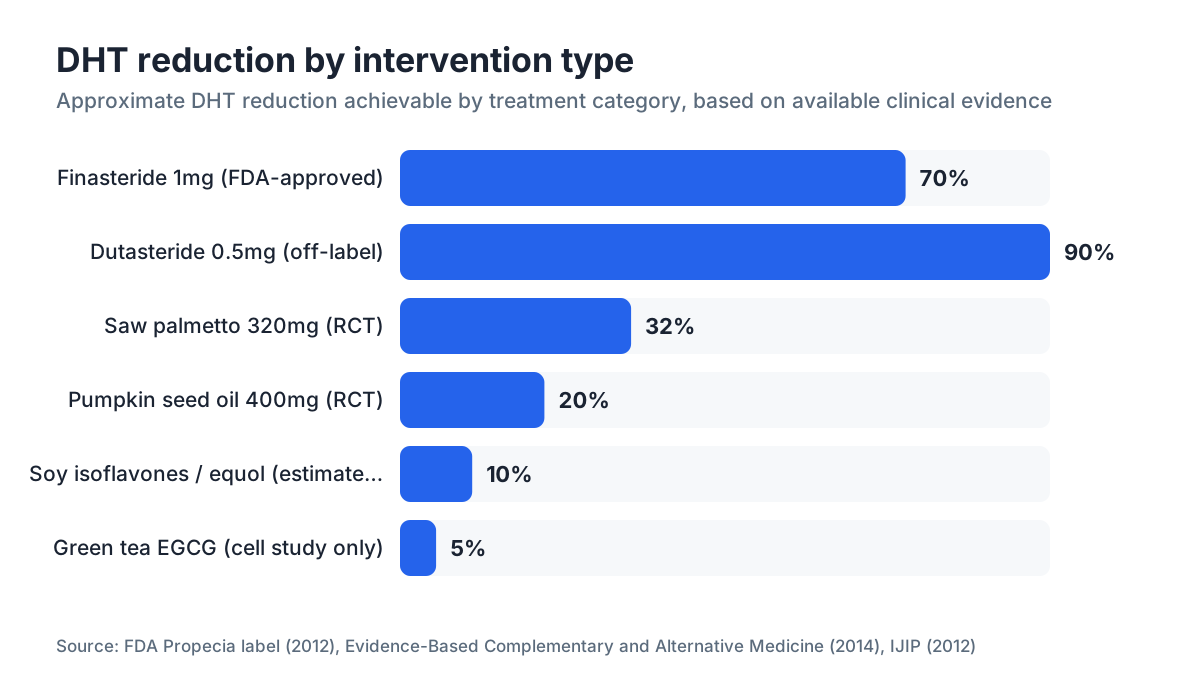
Below is a summary of the foods and compounds with at least some human or high-quality animal data. The chart after this section shows the relative strength of that evidence.
Pumpkin seed oil. The best human trial is a 2014 randomized, placebo-controlled study published in Evidence-Based Complementary and Alternative Medicine. 76 men with mild to moderate androgenetic alopecia took 400 mg of pumpkin seed oil daily for 24 weeks. Mean hair count increased 40% in the treatment group versus 10% in placebo [4]. The researchers attributed the effect to beta-sitosterol inhibiting 5-alpha reductase. This is one of the few dietary interventions with a real randomized controlled trial, which makes it the most credible candidate in this list.
Soy isoflavones / equol. A 2012 study in the Journal of Investigative Dermatology tested oral equol in Japanese men and found reductions in DHT metabolites and improvements in hair thickness [3]. Equol is a metabolite of daidzein (from soy) produced by gut bacteria, and only about 30 to 50 percent of people have the gut microbiome composition to actually convert daidzein into equol. If you're not an equol producer, eating soy has a weaker effect on DHT. You cannot currently test for equol-producing status outside of a research lab, so this is a real limitation.
Green tea (EGCG). Human data is thin. The cell studies are promising, and EGCG does reach circulation after oral ingestion, but there is no published randomized controlled trial specifically testing green tea intake against hair loss or DHT levels measured in scalp tissue [5]. A few small studies suggest oral EGCG supplements reduce serum DHT in men with benign prostatic hyperplasia, but that's measuring blood, not scalp follicle DHT.
Saw palmetto. Technically a berry extract rather than a common food, but worth including because it's the most studied plant-based 5-alpha reductase inhibitor. A 2012 study in the International Journal of Immunopathology and Pharmacology randomized 100 men with androgenetic alopecia to either saw palmetto (320 mg daily) or finasteride (1 mg daily) for two years. The finasteride group did significantly better: 68% showed improvement versus 38% in the saw palmetto group [6]. That's the clearest head-to-head comparison we have. Saw palmetto works somewhat, but not as well as finasteride.
Lycopene-rich foods (tomatoes, watermelon). Lycopene reduced 5-alpha reductase activity in prostate tissue in a small human study, but there is no hair-loss-specific human trial [7]. The evidence is too preliminary to make strong claims.
Caffeine. Caffeine applied topically, not consumed orally, has shown follicle-stimulating effects in ex vivo human hair follicle studies, possibly by counteracting DHT's suppressive effects on follicle metabolism. This is why it appears in some shampoos. Oral caffeine at normal drinking doses doesn't produce the same follicle exposure [8].
| Food / Compound | Active compound | Human RCT on hair? | Effect size (where known) |
|---|---|---|---|
| Pumpkin seed oil | Beta-sitosterol | Yes (n=76, 2014) | +40% hair count vs +10% placebo |
| Soy / equol | Equol, daidzein | Yes (hair thickness) | Modest; limited to equol producers |
| Saw palmetto | Beta-sitosterol, fatty acids | Yes (n=100, 2012) | 38% improvement vs 68% finasteride |
| Green tea (EGCG) | EGCG | No (cell/animal only) | Unknown in scalp |
| Tomatoes / lycopene | Lycopene | No | Unknown in scalp |
| Caffeine (topical) | Caffeine | Ex vivo follicle studies | Follicle elongation in vitro |
Do DHT blocking foods actually work for hair loss in practice?
The honest answer: modestly, and only in the right context.
If your hair loss is early-stage androgenetic alopecia and you're looking for something low-risk to add to a healthy diet, pumpkin seed oil and soy-rich foods are worth the attempt. The evidence isn't strong enough to call them treatments, but the safety profile is good and the pumpkin seed oil trial result, a 40% increase in hair count over 24 weeks, is better than a lot of supplement products with far more marketing dollars behind them [4].
If your hair loss is progressing fast, you're already at a receding hairline and losing ground month over month, food alone won't keep pace with that. The DHT reduction achievable through diet is almost certainly in the single-digit percentage range for most people. Compare that to finasteride's 70% DHT reduction [2]. The gap is wide.
One realistic role for dietary DHT blockers: as part of a broader approach alongside FDA-approved treatments. A man using finasteride or minoxidil who also improves his diet isn't double-dipping or wasting effort. The mechanisms don't conflict. Diet changes are essentially free, have cardiovascular and metabolic benefits, and the downside risk is close to zero.
Women face an additional complexity. Pattern hair loss in women is less often driven by DHT alone, and hormonal factors, thyroid status, iron levels, and telogen effluvium from nutritional deficiencies all matter. For women, ensuring adequate iron, ferritin, and protein is probably more impactful than trying to block DHT through food.
What foods raise DHT and should be limited?
If some foods can nudge DHT down, others may push it up. This area has even weaker human evidence, but here's what the data suggests:
High glycemic index foods and refined carbohydrates. Elevated insulin increases IGF-1 (insulin-like growth factor), which stimulates 5-alpha reductase activity. Observational studies have associated high glycemic diets with worse androgenetic alopecia outcomes, though causality is hard to establish [9].
Alcohol. Heavy alcohol consumption raises androgen levels in some studies, partly by reducing sex hormone-binding globulin (SHBG), which means more free testosterone is available for DHT conversion. This effect is strongest with chronic heavy use, not moderate drinking.
Highly processed foods. Poor overall diet quality correlates with higher inflammatory markers, and chronic low-grade inflammation may accelerate follicle miniaturization. This is a population-level association, not a clinical trial finding.
The practical takeaway: a Mediterranean-style diet (high in vegetables, legumes, olive oil, fish, and low in processed foods) is consistently associated with better cardiovascular and metabolic health, and there's reason to think it's better for hair follicle health too, even if we can't quantify the DHT effect precisely.
Does DHT blocking shampoo work, and how does it compare to food?
DHT blocking shampoo is a popular category worth addressing directly because the marketing is often far ahead of the evidence.
The theoretical basis: some shampoos contain ketoconazole, caffeine, saw palmetto extract, or zinc pyrithione, all of which have some biological rationale for affecting follicle health. Ketoconazole 2% (prescription) has the most evidence: a small randomized trial found it comparable to 2% minoxidil in increasing hair density in men with androgenetic alopecia, though the study was small and not replicated at scale [8]. Ketoconazole 1% is available over the counter in some markets.
The problem with all shampoos is contact time. Shampoo sits on the scalp for 30 seconds to two minutes before rinsing. The compounds don't penetrate deeply enough, long enough, to produce meaningful follicular DHT changes in most cases. Caffeine shampoo studies showing follicle elongation are ex vivo (tissue in a lab), not scalp measurements in living humans [8].
So how does DHT blocking shampoo compare to food? They're similarly modest, which is to say: not transformative. If your shampoo contains 2% ketoconazole, there's a plausible case for using it as an adjunct. Beyond that, most DHT-blocking shampoo marketing is ahead of the evidence. It's not a waste if you're doing the other things right; it's a waste if you think it's the main event.
If you're evaluating where to focus, the decision tree is roughly: proven FDA-approved drugs first (finasteride, minoxidil), then lifestyle and diet improvements, then adjuncts like ketoconazole shampoo. See our detailed look at minoxidil for men and finasteride for how those stack up.
How much pumpkin seed oil, green tea, or soy should you actually consume?
The 2014 pumpkin seed oil RCT used 400 mg of encapsulated pumpkin seed oil daily for 24 weeks [4]. That's not a large amount, roughly equivalent to about two teaspoons of pumpkin seed oil or a small handful of pumpkin seeds, though the capsule form may have better bioavailability than eating seeds whole.
For green tea, EGCG concentrations in a standard cup are 50 to 100 mg, and the doses used in prostate studies range from 400 to 800 mg daily. You'd need four to eight strong cups of green tea a day to approach those doses, and GI side effects become an issue at high EGCG supplemental doses. Green tea supplements standardized for EGCG are an option, but liver toxicity has been reported at very high doses. The FDA has issued safety warnings about concentrated green tea extract supplements [10]. Drinking 2 to 3 cups of green tea daily is safe for essentially everyone and a reasonable place to start.
Soy intake for the equol effect: studies used 40 to 80 mg of isoflavones daily, roughly what you'd get from one or two servings of tofu, edamame, or tempeh. Regular inclusion of these in a varied diet is straightforward and well within normal Japanese dietary patterns, where population-level data has long associated soy consumption with lower rates of androgenetic alopecia compared to Western populations (though that's observational and confounded by many other factors).
Dosing reality check: nobody has established a minimum effective dose of these foods specifically for hair outcomes. The pumpkin seed oil dose is the closest we have to a tested amount. Everything else is extrapolated from adjacent research.
Can you combine DHT blocking foods with finasteride or minoxidil?
Yes, and there's no meaningful pharmacological conflict between dietary approaches and either finasteride or minoxidil.
Finasteride inhibits 5-alpha reductase type II specifically. Beta-sitosterol from foods may inhibit both type I and type II but does so weakly. Adding foods that mildly inhibit the same enzyme while taking finasteride isn't going to cause additive toxicity. It's more like adding a second coat of primer when you've already painted the wall: marginal benefit at best, no harm.
Minoxidil works through a completely different mechanism, vasodilation and follicle cycle extension, so dietary DHT blockers and minoxidil don't even target the same pathway. No interaction to worry about there. For a full picture of combining these treatments, see our article on finasteride and minoxidil.
If you're experiencing significant hair loss and want the best chance of maintaining your hair, the evidence-based approach is: get a proper diagnosis to confirm androgenetic alopecia (rather than another cause), start an FDA-approved treatment if appropriate, and layer in diet changes as a sensible, zero-risk addition. Getting a free AI hair scan at MyHairline can help you understand your current Norwood stage and pattern before making treatment decisions.
Diet is not a substitute for proven treatment in moderate to severe androgenetic alopecia. It's an adjunct.
Are DHT blocking supplements better than whole foods?
This question comes up constantly, and the answer depends on which supplement and what you're comparing it to.
For pumpkin seed oil: a standardized extract capsule gives you a known dose. Eating pumpkin seeds whole delivers beta-sitosterol but also a lot of fiber, fat, and other compounds that may dilute bioavailability. The RCT used the capsule form, so if you want to replicate the evidence, capsules are more consistent [4].
For saw palmetto: supplements are more concentrated than trying to source actual saw palmetto berries. The 320 mg dose used in the 2012 study is what most standardized saw palmetto capsules contain [6].
For soy isoflavones: whole food soy (tofu, tempeh, edamame) also delivers protein, fiber, and other phytonutrients. There's no strong reason to prefer a concentrated isoflavone supplement over regular soy food unless you're trying to hit a specific isoflavone dose. Whole food is probably fine for most people.
The supplement market for hair loss is enormous, largely unregulated by the FDA for efficacy claims, and full of products that mix multiple ingredients at sub-therapeutic doses while charging premium prices. Our broader look at hair loss supplements covers what to watch for. The general rule: if a supplement's active ingredient hasn't been tested in a human randomized controlled trial, you're buying theoretical biology, not demonstrated effect.
Cost comparison matters too. A bag of pumpkin seeds costs a few dollars. A branded "DHT blocking" hair supplement can run $40 to $80 a month, often containing the same active compounds at similar or lower doses.
What else should you know before spending money on DHT blocking approaches?
A few things get glossed over in most articles on this topic.
First, confirm the cause of your hair loss before assuming DHT is the culprit. Nutritional deficiencies, thyroid dysfunction, scalp conditions, and telogen effluvium all cause hair shedding but have nothing to do with DHT. Spending months eating pumpkin seeds when your real problem is low ferritin is wasted time. A dermatologist can do a scalp examination, pull test, and basic bloodwork to distinguish androgenetic alopecia from other causes.
Second, DHT blocking is not a universal treatment for women. Women with androgenetic alopecia often have normal DHT levels; their follicles may simply be more sensitive. Finasteride is not FDA-approved for hair loss in women and is contraindicated in pregnancy [2]. The dietary approaches are safe for women, but the mechanism may contribute less.
Third, timing matters enormously. Follicle miniaturization is largely irreversible once the follicle becomes atrophied. DHT reduction, pharmaceutical or dietary, works by preserving follicles that are alive and functional. It doesn't regrow follicles that have already gone dormant. This is why starting intervention earlier produces better outcomes than waiting until hair loss is advanced. If you're already at a significant Norwood stage, the conversation shifts toward hair transplants and proven medical treatments rather than dietary modifications alone.
The bottom line on DHT blocking foods
Pumpkin seed oil has one real randomized controlled trial supporting it for hair loss, with a 40% hair count increase in 24 weeks, and it's worth trying [4]. Soy-derived equol has decent biological plausibility and some human data. Green tea is safe and may help marginally. None of these are treatments; they're adjuncts.
If your hair matters to you and you want to protect it, the sequence is: confirm the diagnosis, consider FDA-approved treatments (finasteride reduced scalp DHT by about 70% in men in clinical trials [2]), add diet improvements as free, low-risk support, and consider a DHT-blocking shampoo with ketoconazole if you want an additional layer.
Food alone will not stop androgenetic alopecia. That's not pessimism; it's what the evidence shows. But food choices that mildly support the same pathway you're treating pharmacologically, while also improving your cardiovascular health, are genuinely worth making.
If you're not sure what stage of hair loss you're dealing with, the free AI hair analysis at MyHairline lets you upload a photo and get a pattern assessment before you decide where to invest your time and money.
Sources
- American Academy of Dermatology, Hair Loss Overview
- Journal of Investigative Dermatology, Equol and hair thickness (2012)
- Evidence-Based Complementary and Alternative Medicine, Pumpkin Seed Oil RCT (2014)
- Phytomedicine, EGCG and 5-alpha reductase inhibition (2016)
- International Journal of Immunopathology and Pharmacology, Saw Palmetto vs Finasteride RCT (2012)
- Cancer Epidemiology Biomarkers and Prevention, Lycopene and 5-alpha reductase in prostate tissue
- International Journal of Dermatology, Caffeine and ketoconazole shampoo hair studies
- Dermatology Practical and Conceptual, Diet and androgenetic alopecia association (2020)
- U.S. Food and Drug Administration, Dietary Supplements Safety Information
- National Institutes of Health Office of Dietary Supplements, Dietary Supplements Fact Sheets