TL;DR: DHT blocking shampoos contain ingredients like ketoconazole, saw palmetto, or caffeine that may mildly reduce scalp DHT or inflammation. The best-studied option is ketoconazole 1-2%, which one RCT found comparable to minoxidil 2% for hair density. But no shampoo blocks systemic DHT the way finasteride does, and results are modest at best. They work better as an add-on than a standalone treatment.
What is DHT and why does it cause hair loss?
DHT stands for dihydrotestosterone, a hormone made when the enzyme 5-alpha reductase converts testosterone in the body. It binds to androgen receptors in hair follicles, and in people who are genetically susceptible, that binding shrinks the follicle over time. The medical term for this process is miniaturization, and it's the engine behind androgenetic alopecia, which is pattern hair loss. [1]
Androgen receptors are concentrated in follicles on the top and front of the scalp. That's why pattern baldness follows predictable paths: frontal recession, crown thinning, and the classic receding hairline shape. Follicles on the back and sides of the head carry fewer androgen receptors, which is why hair there survives. For a broader look at the causes behind shedding, see what causes hair loss.
Systemic DHT circulates in the bloodstream. Scalp-level DHT is also produced locally by 5-alpha reductase enzymes sitting right in the follicle. That local production matters because it means a topically applied agent has a plausible, if limited, pathway to reduce DHT activity at the follicle without affecting the rest of the body.
What are DHT blocking shampoos and what do they claim to do?
A DHT blocking shampoo is any wash formulated with ingredients that either inhibit 5-alpha reductase activity in the scalp, reduce scalp inflammation driven by DHT, or both. The category includes prescription-grade ketoconazole shampoos, over-the-counter natural ingredient formulas, and everything in between.
The honest marketing claim, when brands are being careful, is that these shampoos may reduce scalp DHT levels and support a healthier follicle environment. The dishonest version claims they stop or reverse pattern baldness on their own. No rinse-off product has that evidence behind it. Shampoo sits on the scalp for roughly one to three minutes before being rinsed away, which limits how much active ingredient actually penetrates the follicle.
Some ingredients in this category do have real pharmacological activity, and calling the whole category useless ignores what the clinical literature says. The trick is knowing which ingredients have data and which are filler.
Which ingredients in DHT blocking shampoos have actual clinical evidence?
Ketoconazole is the most studied. It's an antifungal that also inhibits steroidogenesis and has documented anti-androgenic effects. A 1998 randomized controlled trial published in the Journal of Dermatology compared ketoconazole 2% shampoo to minoxidil 2% solution and found comparable improvements in hair density and the proportion of anagen-phase follicles, though the study was small (n=58). [2] A separate study found ketoconazole 1% used every 2-4 days for 21 weeks produced hair diameter increases comparable to minoxidil 2%. [3] That's real, if modest, data. Ketoconazole is also the active ingredient in Nizoral, which is available OTC in 1% strength and by prescription in 2%.
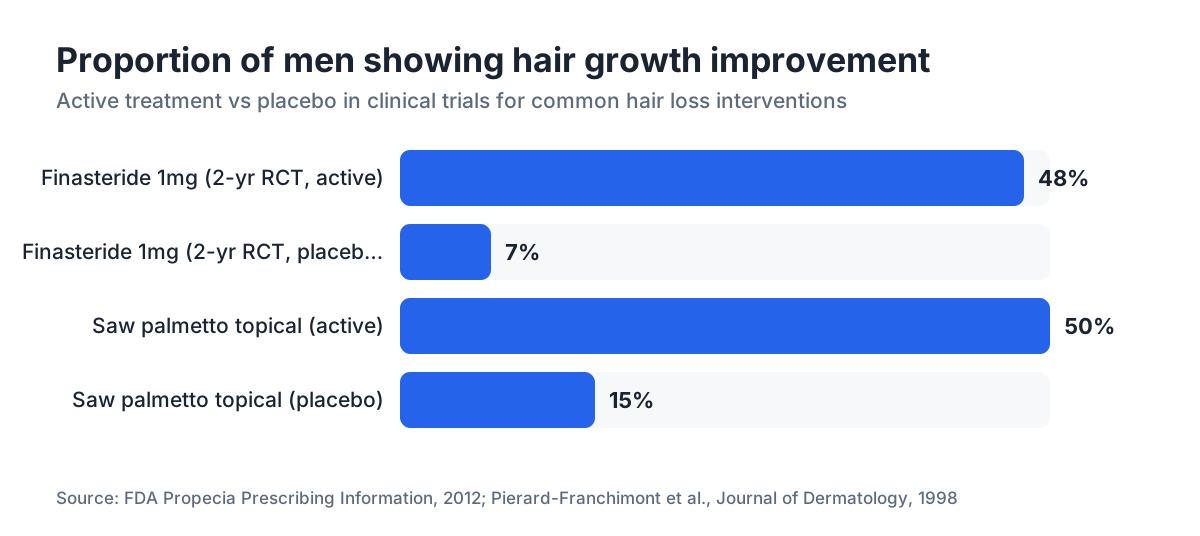
Saw palmetto is a plant extract that inhibits 5-alpha reductase in lab studies. One small RCT (n=34) published in the Journal of Alternative and Complementary Medicine found that 50% of men using a saw palmetto topical reported increased hair count versus 15% in the placebo group after 21 weeks. [4] The problem is effect size: the magnitude of improvement was small, the study was industry-funded, and saw palmetto's bioavailability through a rinse-off shampoo is genuinely uncertain.
Caffeine works differently. It doesn't block DHT directly. It appears to counteract the suppressive effect of testosterone on hair follicle growth in vitro, and it penetrates the scalp follicle within two minutes of application, according to research from the University of Jena published in the International Journal of Dermatology. [5] Whether that in-vitro penetration translates to clinical regrowth in humans hasn't been established in a large, well-controlled trial.
Piroctone olamine and zinc pyrithione are both antifungal and anti-inflammatory agents used in anti-dandruff shampoos. They may help maintain a healthier scalp environment by controlling Malassezia yeast, which is linked to scalp inflammation and can worsen hair shedding. They're not DHT blockers in the strict sense, but they appear in many products in this category. [6]
Biotin, pumpkin seed oil, nettle extract, and rosemary oil all appear on ingredient lists regularly. Biotin in a shampoo washes off before it can be absorbed through skin. Pumpkin seed oil has one RCT behind it for oral use (not topical). Rosemary oil applied topically has one small study showing comparable results to minoxidil 2% at six months, but it was a single trial with 100 participants. [7] For more on supplements that are often paired with these shampoos, see hair loss supplements.
The table below summarizes the evidence tier for each common ingredient:
| Ingredient | Mechanism | Evidence level | Notes |
|---|---|---|---|
| Ketoconazole 2% | Anti-androgen, anti-inflammatory | Moderate (RCT data) | Best-studied topical DHT-related ingredient |
| Ketoconazole 1% | Same | Low-moderate | OTC strength, weaker effect |
| Saw palmetto | 5-AR inhibitor | Low (small RCTs) | Rinse-off bioavailability unclear |
| Caffeine | Counteracts testosterone suppression | Low (in vitro + small human studies) | Penetrates follicle quickly |
| Rosemary oil | Unclear | Low (one small RCT) | Single study, needs replication |
| Biotin (topical) | Keratin support | Negligible | Not absorbed through rinse-off |
| Zinc pyrithione | Scalp environment | Low | Indirect mechanism only |
Do DHT blocking shampoos work, or are they mostly hype?
The honest answer: they work a little, for some people, mostly as part of a larger regimen, and mostly when the active ingredient is ketoconazole. That's a long way from the before-and-after marketing you see online.
The main limitation is contact time. Shampoo is a rinse-off product. Even ketoconazole, the best-evidenced option, has most of its clinical data from studies where participants used it several times per week for months. Leaving a shampoo on longer (two to three minutes rather than thirty seconds) likely helps, but no one has done a well-powered trial specifically optimizing contact time for hair outcomes.
The other limitation is mechanism. Shampoo cannot replicate what finasteride does. Finasteride is an oral 5-alpha reductase inhibitor that reduces serum DHT by roughly 70% according to its prescribing information. [8] No shampoo comes close to that. Even a perfectly formulated topical DHT blocker applied to the scalp is competing against a hormone that circulates in the blood and arrives at the follicle from the inside as well as the outside.
Ketoconazole shampoo used two to three times weekly does appear to modestly reduce scalp DHT levels and improve the follicle environment in ways that complement systemic treatments. Most dermatologists who recommend it do so as an adjunct to minoxidil for men or finasteride, not instead of them. If you're looking at the combination approach, finasteride and minoxidil together have substantially more evidence than any shampoo.
Here's the bottom line. If a DHT blocking shampoo is your only treatment, expect mild results at best. If you're already on minoxidil or finasteride and want to add ketoconazole shampoo for a few dollars a month, that's a reasonable, low-risk add-on.
What's the best DHT blocking shampoo based on the evidence?
If you want the ingredient with the most clinical backing, that's ketoconazole. Nizoral 1% is available over the counter at most drugstores for roughly $10-16 for a 7 oz bottle. Prescription ketoconazole 2% (often sold as Nizoral Rx or generic) has stronger data and is what the better studies used, though it requires a prescription and costs more depending on your coverage.
For people who want to avoid ketoconazole, caffeine-based shampoos like those from Alpecin have a reasonable mechanism story and some small supporting data, but I'd call the evidence thin compared to ketoconazole. They're worth trying if you're sensitive to antifungals or just want variety.
Saw palmetto shampoos are everywhere and very popular in the natural/organic space. The honest assessment is that they're probably not harmful, they may help marginally, and the bioavailability question for a rinse-off product is genuinely unresolved. If a saw palmetto shampoo is what you'll actually use consistently, it's better than nothing. But head-to-head against ketoconazole on evidence, ketoconazole wins.
Products that combine ketoconazole with zinc pyrithione or piroctone olamine to address both DHT pathways and scalp health are a reasonable middle ground. Hair loss dermatologists often suggest alternating an anti-androgenic shampoo with a regular moisturizing shampoo to avoid scalp dryness from frequent antifungal use.
For those using oral minoxidil, scalp health still matters, since a good scalp environment from a ketoconazole shampoo could theoretically support follicle response even though the minoxidil itself works from the inside.
How should you use a DHT blocking shampoo for best results?
For ketoconazole specifically, the clinical studies typically used it two to four times per week. Daily use isn't necessary and may over-dry the scalp. The protocol in the key studies had participants leave the shampoo in contact with the scalp for two to three minutes before rinsing, which is longer than most people spend.
A reasonable routine: lather the ketoconazole shampoo into wet hair, work it into the scalp, set a timer for two minutes, then rinse. On the other days, use a gentle, sulfate-free regular shampoo to keep moisture balance. This matters more if you're also using topical minoxidil, since that product can dry out or irritate the scalp in some users.
Don't expect changes in the first month. Hair growth cycles are long. Most people evaluating any topical hair loss treatment need at least four to six months of consistent use before they can judge whether it's doing anything. Take a photo in the same lighting, same position, every four weeks. Your brain will deceive you. Photos won't.
One thing to stay realistic about: if you're already at a Norwood 5 or 6, a shampoo isn't going to bring back lost hair. For more advanced loss, hair transplant is the only option with evidence for restoring lost coverage.
Are there any side effects or risks from DHT blocking shampoos?
Ketoconazole shampoo is generally well tolerated. The most common side effects are scalp dryness, irritation, or increased hair brittleness, especially with daily use. Rare contact dermatitis reactions have been reported. The FDA has issued warnings about oral ketoconazole for systemic use (liver toxicity risk), but those warnings do not apply to topical/shampoo formulations, which have a completely different safety profile because systemic absorption from a shampoo is minimal. [9]
Saw palmetto in oral supplement form is linked to occasional GI upset. As a shampoo ingredient the systemic exposure is negligible. Caffeine shampoos are essentially side-effect-free for almost everyone.
The real risk here isn't physical harm. It's opportunity cost. Spend two years using only a DHT blocking shampoo and hoping it stops your hair loss, and you've lost two years during which minoxidil or finasteride could have been working. Pattern hair loss is easier to slow than to reverse. Delayed treatment means more follicles miniaturized past the point of no return.
If you're experiencing rapid or patchy shedding rather than gradual pattern thinning, that points to something other than androgenetic alopecia, such as telogen effluvium, and a DHT blocking shampoo isn't the right tool at all.
How do DHT blocking shampoos compare to other hair loss treatments?
Let's be direct about the hierarchy of evidence for hair loss treatment in men:
| Treatment | Evidence strength | DHT reduction | Regrowth possible? | Typical monthly cost |
|---|---|---|---|---|
| Finasteride 1mg oral | Strong (multiple large RCTs) | ~70% systemic [8] | Yes, ~48% of men in 2-yr trial [8] | $10-30 (generic) |
| Minoxidil 5% topical | Strong (FDA-approved) | None | Yes (growth stimulant) | $10-20 |
| Ketoconazole 2% shampoo | Moderate (small RCTs) | Local scalp only | Modest | $15-30/month |
| Saw palmetto shampoo | Weak | Uncertain topically | Unproven | $12-25 |
| Caffeine shampoo | Weak-to-moderate | None (different mechanism) | Unproven | $10-20 |
| Hair transplant | Strong (for coverage) | None | Redistributes existing hair | $4,000-15,000 per procedure |
Finasteride's clinical trial data is from the original FDA submission, which reported that 48% of men in the 2-year trial showed increased hair growth versus 7% in the placebo group. [8] That's the benchmark everything else should be measured against.
A DHT blocking shampoo sits below minoxidil and finasteride in the evidence hierarchy, but well above doing nothing, and with a much safer and cheaper profile than systemic treatments. For someone not ready for medication, starting with a ketoconazole shampoo and assessing after six months is a defensible first step.
For those curious about supplements that claim to block DHT systemically, dht blocker covers the oral options. Creatine is also worth mentioning: one study found it raised DHT levels, which is why people worried about it; does creatine cause hair loss covers what that single study actually found.
What does the FDA say about DHT blocking shampoos?
The FDA has not approved any shampoo for the treatment of hair loss. The only FDA-approved topical treatment for androgenetic alopecia is minoxidil, which is not a DHT blocker. [10] Finasteride 1mg oral (Propecia) is FDA-approved for men. No shampoo ingredient has gone through the NDA process for hair loss.
That means DHT blocking shampoos are sold as cosmetic products, not drugs. They cannot legally claim to treat, cure, or prevent hair loss. When brands say "supports thicker-looking hair" or "promotes a healthy scalp environment," those are cosmetic claims. When they say "stops hair loss" or "reverses balding," those cross into drug claim territory, which the FDA can and does act on.
The American Academy of Dermatology's guidelines on androgenetic alopecia recommend minoxidil and finasteride as first-line treatments. Ketoconazole shampoo appears in AAD guidance as a potential adjunct, particularly for patients with concurrent scalp inflammation or seborrheic dermatitis. [11] That framing, adjunct not primary, is the accurate way to position it.
The FDA's warning letter history on hair loss products is useful context: the agency has sent warning letters to companies making drug claims for shampoos and topical products. If a shampoo brand's marketing reads like a drug claim, that's a red flag both for regulatory compliance and for honesty about the science.
Who is most likely to benefit from a DHT blocking shampoo?
People in the earlier stages of androgenetic alopecia (Norwood 1-3 for men, Ludwig 1-2 for women) are the most plausible candidates for seeing any benefit from a DHT blocking shampoo. At these stages, follicles are miniaturizing but not yet dead, so reducing the DHT signal even modestly may slow the process.
People who also have seborrheic dermatitis or visible scalp inflammation alongside their hair thinning are another reasonable target group for ketoconazole specifically. The anti-inflammatory and antifungal effects may improve scalp health in ways that benefit follicle function beyond the DHT mechanism.
People with a family history of pattern baldness who haven't yet started losing significant hair might use a ketoconazole shampoo as a precaution. There's no strong trial data for prevention specifically, but the risk is low and the cost is minimal.
Who is least likely to benefit: anyone with advanced hair loss (Norwood 5+), anyone with a non-androgenetic cause of shedding (alopecia areata, telogen effluvium, nutritional deficiency), and anyone treating the shampoo as a substitute for evidence-based treatment when they actually need it. If you're noticing meaningful thinning and you're under 50, see a dermatologist. A proper diagnosis, and sometimes basic bloodwork, changes what treatment makes sense.
If you want a data-driven starting point before your appointment, MyHairline's free AI scan at myhairline.ai/scan can help you identify your pattern type and severity so you go in knowing what to ask.
Can women use DHT blocking shampoos, and do they work differently?
Yes, women can use DHT blocking shampoos, and the ingredient safety profile is essentially the same. Female pattern hair loss (androgenetic alopecia in women) also involves DHT and androgen sensitivity, though the mechanism is more complex than in men. Women typically lose hair in a diffuse pattern across the crown rather than a receding frontal hairline.
For women, ketoconazole shampoo is still the best-evidenced option in this category. The 1998 RCT included some female participants, though the evidence base for women specifically is thinner than for men. [2]
The caveat that matters for women: finasteride is not FDA-approved for hair loss in women and is contraindicated in women who are or may become pregnant due to risk of fetal harm. [8] That makes topical approaches including DHT blocking shampoos comparatively more attractive as a starting option for women, though minoxidil 2% or 5% remains the primary evidence-based topical treatment for women with androgenetic alopecia.
Women experiencing diffuse shedding should also rule out non-androgenetic causes before blaming DHT. Thyroid dysfunction, iron deficiency, and post-partum hormonal shifts are common drivers of hair loss in women that a DHT shampoo won't touch.
Sources
- American Academy of Dermatology, Hair Loss Overview
- Pierard-Franchimont C et al., Journal of Dermatology 1998; ketoconazole 2% vs minoxidil 2% RCT
- Piérard GE et al., Dermatology 2002; ketoconazole 1% and hair diameter
- Prager N et al., Journal of Alternative and Complementary Medicine 2002; saw palmetto topical RCT
- Fischer TW et al., International Journal of Dermatology 2007; caffeine scalp penetration
- Borda LJ and Wikramanayake TC, Current Clinical Microbiology Reports 2015; Malassezia and scalp inflammation
- Panahi Y et al., Skinmed 2015; rosemary oil vs minoxidil 2% RCT
- FDA, Propecia (finasteride) Prescribing Information
- FDA, Drug Safety Communication on oral ketoconazole (Nizoral)
- FDA, Minoxidil OTC approval and labeling
- American Academy of Dermatology, guidance on androgenetic alopecia treatment