
TL;DR: DHT blocking shampoos can modestly reduce scalp DHT and inflammation for women with androgenetic alopecia, but they are not a standalone treatment. Ketoconazole 1-2% has the strongest published evidence. Expect them to slow shedding and support other therapies, not to regrow hair on their own.
What is a DHT blocking shampoo and how does it work?
A DHT blocking shampoo is a wash-off product formulated with ingredients that either interfere with 5-alpha reductase (the enzyme that converts testosterone into dihydrotestosterone, or DHT) or reduce the scalp inflammation that DHT triggers. The idea is that by lowering local DHT levels at the follicle, you slow the miniaturization process that shrinks hair over time.
The catch with any shampoo is contact time. Most people leave shampoo on for 30 to 90 seconds before rinsing, which limits how deeply an active ingredient can penetrate to the dermal papilla where DHT does its damage. That is why the evidence for topical DHT blockers is weaker than for oral 5-alpha reductase inhibitors like finasteride. Shampoos still have a role, just a supporting one.
DHT is the main driver of androgenetic alopecia (female pattern hair loss, or FPHL) in women who are genetically sensitive to it. It binds androgen receptors in susceptible follicles and shortens the anagen (growth) phase, progressively producing thinner, shorter hairs. For more background on the mechanism, see our overview of dht blocker options.
Not every woman losing hair is losing it because of DHT. Telogen effluvium (stress or nutrition-related shedding), thyroid dysfunction, and iron deficiency are common causes that DHT blocking shampoos will do nothing for. Get a diagnosis before spending money on these products.
Do women produce DHT and why does it cause hair loss?
Yes, women produce DHT, just at much lower concentrations than men. Testosterone is converted to DHT by two isoforms of 5-alpha reductase: type 1 (found in sebaceous glands and skin) and type 2 (found predominantly in hair follicles). Women have lower 5-alpha reductase activity than men, but follicles in genetically susceptible women can still be sensitive enough to respond to those lower levels.
Female pattern hair loss affects roughly 40% of women by age 50, according to data published in the Journal of the American Academy of Dermatology [1]. The pattern differs from male loss: women typically see diffuse thinning at the crown and a widening part rather than a receding frontal hairline. That distinction matters because it affects which treatments are appropriate and how you measure progress.
If you want a fuller picture of the biological chain that leads to thinning, what causes hair loss lays out the main mechanisms clearly.
What ingredient evidence actually exists for DHT blocking shampoos?
Here you need to be honest about what the research shows, because marketing claims outrun the data by a wide margin.
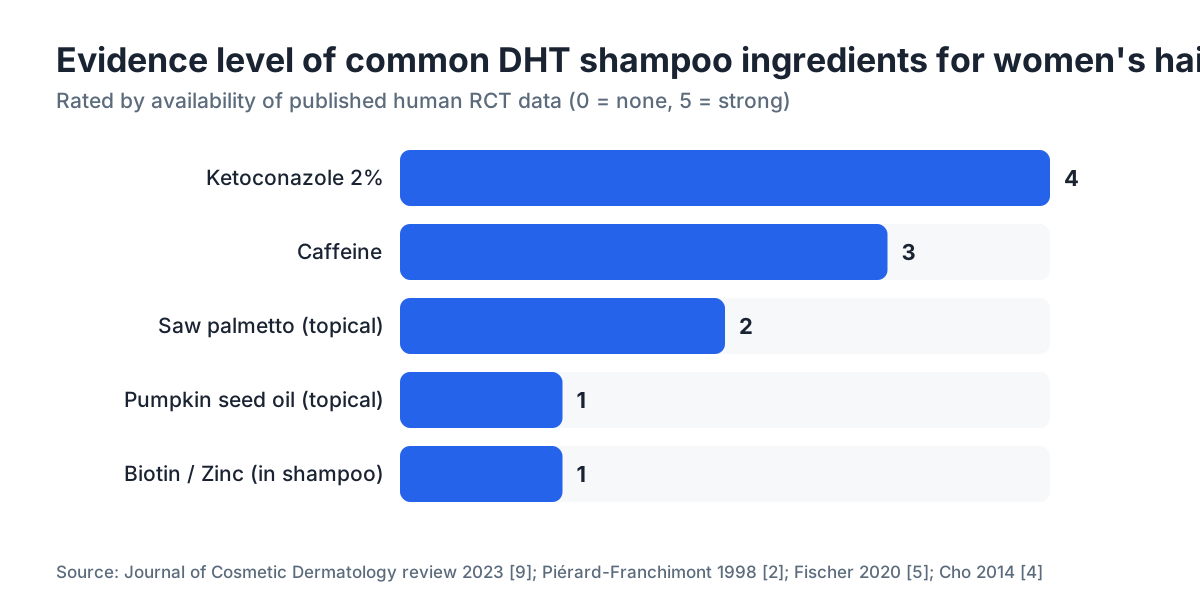
Ketoconazole is the ingredient with the most published human trial data. It is an antifungal azole that also weakly inhibits 5-alpha reductase and reduces scalp inflammation. A 1998 randomized trial by Piérard-Franchimont et al. compared 2% ketoconazole shampoo to 1% zinc pyrithione shampoo in men with androgenetic alopecia and found that after 6 months, ketoconazole users had hair density improvement comparable to 2% minoxidil in a historical reference group [2]. That study was in men, and most of the ketoconazole hair data is. The evidence in women is thinner, but the mechanism (reducing scalp DHT and Malassezia-driven inflammation) is not sex-specific. Nizoral DHT blocking shampoo, sold over the counter at 1% ketoconazole, is the most cited brand in discussions about this ingredient. The prescription 2% formulation has a larger evidence base.
Saw palmetto (Serenoa repens extract) inhibits 5-alpha reductase in vitro and in some small trials. A 2020 randomized study in Skin Appendage Disorders found that a 3-month course of topical saw palmetto in a leave-on serum (not a shampoo) produced modest hair density improvements versus placebo [3]. Shampoo formulations have much shorter contact time than serums, so translating that data is a stretch.
Pumpkin seed oil contains phytosterols that may weakly inhibit 5-alpha reductase. One randomized trial of oral pumpkin seed oil showed a 40% increase in hair count in men at 24 weeks versus 10% in placebo [4]. Topical shampoo data in women is essentially absent.
Caffeine works differently: it stimulates hair follicle keratinocyte proliferation in vitro and counteracts some testosterone-induced suppression of follicle growth in tissue studies. A German randomized trial found caffeine-containing shampoo outperformed placebo on phototrichogram metrics in women at 6 months [5]. The effect was real but modest.
Biotin, niacin, zinc, and amino acids appear on nearly every DHT shampoo label. They support general scalp and hair health but have no meaningful DHT-blocking mechanism. They are not wasted ingredients, but they are not why you would buy a DHT blocking product.
The honest summary: ketoconazole has the most credible data, caffeine has suggestive data, saw palmetto and pumpkin seed oil have promising but weaker signals, and most of the rest is marketing.
How does ketoconazole shampoo compare to other DHT blocking options for women?
| Treatment | Mechanism | Evidence level (women) | Typical cost/month | Rx required? |
|---|---|---|---|---|
| Ketoconazole 2% shampoo | Weak 5AR inhibition + anti-inflammatory | Moderate (mostly male data) | $15-30 | Yes (2%) / No (1%) |
| Minoxidil 2-5% topical | Vasodilation, follicle stimulation | Strong (FDA approved women) | $15-40 | No (OTC 2-5%) |
| Oral minoxidil 0.625-2.5mg | Systemic vasodilation | Growing (off-label) | $10-30 | Yes |
| Finasteride (off-label women) | Systemic 5AR inhibition | Moderate (post-menopausal) | $20-50 | Yes |
| Saw palmetto shampoo | Weak 5AR inhibition | Low (no shampoo RCTs) | $12-25 | No |
| Caffeine shampoo | Follicle stimulation | Low-moderate (small RCTs) | $10-20 | No |
Minoxidil is the only topical treatment FDA-approved specifically for female pattern hair loss, in the 2% concentration [6]. The American Academy of Dermatology guidelines list topical minoxidil as a first-line treatment for FPHL [7]. A DHT blocking shampoo is not a replacement for minoxidil; it is a possible add-on.
For pre-menopausal women, finasteride carries teratogenicity risks and is generally not recommended. Post-menopausal women are sometimes prescribed it off-label. See our breakdown of finasteride for the full picture on dosing and risk.
Oral minoxidil at low doses is gaining traction as an off-label option that some dermatologists find easier to manage than topical. If you want to understand how it compares to topical, oral minoxidil covers the evidence honestly.
How should women use a DHT blocking shampoo for best results?
Contact time is everything. Most studies that showed ketoconazole benefit used a protocol of leaving the shampoo on for 2 to 5 minutes before rinsing. If you rinse at the same speed as a regular shampoo, you are probably leaving most of the active ingredient in the drain.
Frequency: 2 to 3 times per week is the protocol used in the Piérard-Franchimont trial and most later ketoconazole studies. Daily use can strip natural oils and is not necessary for the treatment effect. Alternating with your regular shampoo on other days makes sense.
Apply to the scalp, not the hair shaft. The target is the follicle, not the strand. Work the shampoo into the scalp with your fingertips, let it sit, then rinse thoroughly.
Set realistic timelines. Hair grows about 0.5 to 1.7 cm per month, and follicle response to any treatment is slow. If a DHT blocking shampoo is doing anything useful, you would not expect to see it in the mirror for at least 3 to 6 months. Tracking with photographs taken under consistent lighting (same spot, same time of day) is far more reliable than daily mirror checks.
Do not stop other treatments. A shampoo works best as one layer in a broader plan. If you are using topical minoxidil, keep using it. The shampoo does not replace it.
If you want an objective read on your current hair density and shedding pattern before committing to a regimen, MyHairline's free AI hair scan (/scan) can map your scalp and flag the loss pattern, which helps you figure out whether androgenetic alopecia is actually what you are dealing with.
Is there any risk to women using DHT blocking shampoos?
Generally low, but not zero.
Ketoconazole shampoo at 1-2% is well tolerated in most people. The most common side effects are scalp dryness, irritation, and occasional contact dermatitis. The FDA approved ketoconazole 2% shampoo for dandruff treatment, so the safety profile is documented [6]. Oral ketoconazole carries serious liver toxicity risk, but the shampoo form has minimal systemic absorption.
For women who are pregnant or trying to conceive, the systemic absorption from a wash-off shampoo is considered negligible, but you should discuss any hair loss treatment with your OB. This is especially relevant because some hair shedding in pregnancy or postpartum is normal telogen effluvium and resolves without treatment.
Saw palmetto applied topically has a very thin safety dataset in women specifically. It inhibits 5-alpha reductase, the same mechanism as finasteride, and in theory could affect hormonal signaling locally, though the clinical significance is considered low at shampoo concentrations. Nobody has good long-term data on this for women of reproductive age.
Skin sensitization from fragrance, preservatives, or botanical extracts in some DHT shampoo formulas is probably the most common real-world problem. If you develop itching or flaking after starting a new shampoo, the active DHT-blocking ingredient is often not the culprit. Stop use and identify the offending ingredient by patch testing or switching to a fragrance-free formula.
Which ingredients should women look for (and avoid) on the label?
Look for:
Ketoconazole 1% or 2%. This is the most evidence-backed option. 1% is OTC; 2% requires a prescription in the US.
Caffeine. Look for it listed as caffeine or trimethylxanthine in the first half of the ingredient list. If it is near the bottom, the concentration is probably too low to matter.
Saw palmetto extract (Serenoa repens). Plausible mechanism, weaker topical data. Included in many formulas; not a reason to avoid a product but not a reason to pay a premium either.
Zinc pyrithione or zinc PCA. Primarily targets Malassezia (dandruff yeast), which drives scalp inflammation that can worsen follicle miniaturization. A useful supporting ingredient.
Be skeptical of:
Proprietary blends with no disclosed concentrations. You cannot assess whether the active is at a therapeutic dose.
Products claiming to "block 90% of DHT" or "clinically proven to stop hair loss." These phrases are almost always not backed by the product's own clinical trials. The FDA regulates cosmetic claims and generally prohibits drug claims (like "treats hair loss") on non-drug products [8].
Sulfate-heavy formulas with lots of actives. High-lather sulfate shampoos can damage the cuticle and increase breakage, which gets confused with hair loss. If your DHT shampoo also has harsh surfactants, you are working against yourself.
For a broader look at supplements that claim to address hair loss from the inside out, hair loss supplements is worth reading before you spend.
Can DHT blocking shampoo work for female pattern hair loss specifically?
Female pattern hair loss (FPHL, also called androgenetic alopecia in women) is the most logical target for a DHT blocking shampoo, since DHT sensitivity at the follicle is central to how it develops.
A few nuances matter. FPHL in women often involves a more complicated hormonal picture than in men. Conditions like polycystic ovary syndrome (PCOS) raise androgens including DHT, and women with PCOS may have more pronounced DHT-mediated hair loss. In those cases, targeting DHT makes more sense. Women without elevated androgens can still have FPHL due to heightened follicle sensitivity to normal DHT levels, and topical reduction of scalp DHT could still help at the margin.
The diffuse thinning pattern of FPHL also makes it harder to photograph and quantify improvement from any single treatment. That is partly why the evidence base for every FPHL treatment is thinner than the equivalent male alopecia literature: outcome measurement is harder.
A dermatologist can use dermoscopy and sometimes a scalp biopsy to confirm FPHL and separate it from other causes. That step is worth taking before committing to any long-term regimen, especially if you are spending money on prescription treatments alongside a shampoo.
For women dealing with a different type of shedding, like post-partum or post-illness diffuse loss, see telogen effluvium. A DHT shampoo will not address that mechanism.
How do DHT blocking shampoos fit into a full hair loss treatment plan for women?
Think of a DHT blocking shampoo as the lowest rung on an evidence ladder. It is unlikely to hurt, may provide marginal benefit, and costs relatively little compared to prescription treatments. But women with meaningful FPHL who rely on shampoo alone are almost certainly undertreating their condition.
A reasonable evidence-based approach for a woman with confirmed FPHL might look like this: topical minoxidil 2-5% as the cornerstone (FDA approved, consistent evidence), plus a ketoconazole shampoo 2-3 times per week (supportive, anti-inflammatory), plus fixing any nutritional deficiencies if present (iron, ferritin, and vitamin D are commonly low in women with hair shedding).
For women who are post-menopausal and not responding to minoxidil, a dermatologist might add spironolactone (an anti-androgen commonly prescribed off-label for FPHL in women) or low-dose oral minoxidil. Finasteride is occasionally used post-menopause. These are prescription conversations, not shampoo conversations.
The finasteride and minoxidil combination page covers how those two are used together (primarily in men, but relevant context for women working through the same question with their doctor).
If topical and oral treatments have failed after a sustained trial, hair transplant evaluation becomes relevant, though FPHL patients need careful selection since diffuse donor area thinning can undermine results.
MyHairline's AI scan (/scan) is a free starting point if you want to document your current loss pattern and track change over time without committing to a clinic visit first.
What does the FDA say about DHT blocking shampoos for women?
The FDA has not approved any shampoo product as a drug treatment for female pattern hair loss or any hair loss condition. The only FDA-approved topical treatment for FPHL is minoxidil [6].
Ketoconazole 2% shampoo is FDA-approved, but for the treatment of dandruff and seborrheic dermatitis, not for hair loss [6]. Its use for hair loss is off-label. The 1% OTC version (Nizoral) carries a dandruff indication.
Shampoos marketed with claims like "promotes hair growth" or "treats thinning" walk a regulatory line. The FDA separates cosmetics (products that clean or beautify) from drugs (products that affect the structure or function of the body). A shampoo that claims to affect hair growth would technically be a drug and would need FDA approval. Many brands use softer language like "supports thicker-looking hair" to stay in cosmetic territory. The FDA has issued warning letters to companies making drug claims on cosmetic products [8].
The phrase "clinically tested" on a label does not mean the same thing as FDA reviewed or peer-reviewed published evidence. It can mean a company ran its own internal study with no public data. Ask for the published study. If there is none, weight the claim accordingly.
Are there any real clinical trials on DHT shampoos in women specifically?
Fewer than the marketing implies.
The Piérard-Franchimont 1998 ketoconazole trial that most citations trace back to was conducted entirely in men [2]. A follow-up by the same group in 2002 (Piérard-Franchimont et al., Dermatology) included a mixed population and found similar benefits, but the women-specific subgroup data was not separately powered.
The Fischer 2020 caffeine shampoo trial in Skin Pharmacology and Physiology included women and found statistically significant improvement in anagen rate versus placebo at 6 months, though the absolute effect was modest [5].
A 2023 review in the Journal of Cosmetic Dermatology examined available RCT data on topical DHT-reducing agents for FPHL and concluded that evidence for shampoo-format products remains insufficient to recommend them as monotherapy, while noting their low risk profile makes them reasonable adjuncts [9].
The honest read: there is no large, well-powered RCT of any DHT blocking shampoo specifically in women with FPHL. The field badly needs one. Until then, you are working from mechanism plausibility, small studies, and male-dominated data. That does not mean the products do not work; it means nobody has properly proven it yet.
Sources
- Journal of the American Academy of Dermatology, Vary et al. 2023, Prevalence of female pattern hair loss
- Piérard-Franchimont C et al., Dermatology 1998, Ketoconazole shampoo RCT
- Skin Appendage Disorders, Evron et al. 2020, Saw palmetto topical RCT
- Evidence-Based Complementary and Alternative Medicine, Cho et al. 2014, Oral pumpkin seed oil RCT
- Skin Pharmacology and Physiology, Fischer et al. 2020, Caffeine shampoo RCT in women
- U.S. FDA, Approved Drug Products (minoxidil and ketoconazole indications)
- American Academy of Dermatology, Hair Loss Guidelines (female pattern hair loss)
- U.S. FDA, Cosmetics: Is It a Cosmetic, a Drug, or Both?
- Journal of Cosmetic Dermatology, review 2023, Topical DHT agents for FPHL
- National Institutes of Health MedlinePlus, Androgenetic Alopecia
- International Journal of Trichology, Kanti et al. 2018, Female pattern hair loss epidemiology