
TL;DR: No topical oil has been proven in large clinical trials to block DHT the way finasteride or minoxidil does. Two ingredients have real human data: pumpkin seed oil and rosemary oil, both showing modest reductions in hair loss or small regrowth. Treat them as add-ons to proven treatments, not replacements. Rosemary oil is the best-evidenced choice.
What does DHT have to do with hair loss?
DHT, short for dihydrotestosterone, is the main driver behind androgenetic alopecia, the pattern hair loss that affects roughly 50 million men and 30 million women in the United States [1]. It forms when the enzyme 5-alpha reductase converts testosterone into DHT inside hair follicle cells. DHT then binds to androgen receptors in the follicle, shortening each growth cycle a little more every round until the hair that grows is a thin, colorless vellus hair. Eventually the follicle stops making visible hair at all.
Miniaturization is slow. That's why most people don't notice it until a lot of ground is already gone.
Understanding the mechanism tells you exactly where an intervention has to work: block the conversion of testosterone to DHT, block DHT from binding the androgen receptor, or both. Finasteride works at the conversion step. Topical oils, if they do anything, are thought to work the same way, inhibiting 5-alpha reductase locally in the scalp.
If you want the full picture of how this cascade runs, what causes hair loss walks through it from genetics to environment. The reason the mechanism matters for the oils conversation is simple: an oil that genuinely inhibits 5-alpha reductase could, in theory, lower local DHT enough to slow miniaturization. The question is whether any oil actually does that at the concentrations you'd realistically apply.
What are DHT blocking oils and how are they supposed to work?
"DHT blocking oil" is a loose marketing category for plant-derived oils sold as topical treatments for thinning hair. Most contain phytosterols, fatty acids, or polyphenols that have shown some 5-alpha reductase inhibitory activity in the lab. The names that come up most: pumpkin seed oil, rosemary oil, saw palmetto oil, castor oil, and coconut oil. Plenty of products blend several together.
The proposed mechanism changes by ingredient. Pumpkin seed oil contains delta-7 sterols that may compete with testosterone at the 5-alpha reductase enzyme [2]. Rosemary oil contains carnosic acid and rosmarinic acid, which appear to increase blood flow in the scalp and may have antioxidant effects at the follicle. Saw palmetto, sold far more often as an oral capsule than an oil, inhibits 5-alpha reductase through its fatty acids and plant sterols.
Here's the honest limit on all of it. Most evidence comes from in vitro studies (cells in a dish) or animal models, not from well-built human trials with confirmed outcomes. Inhibiting an enzyme in a dish does not mean the same thing happens when you rub an oil on your head. Skin absorption, the concentration that reaches the follicle, and how long the effect lasts all change the story. The biology is plausible. The clinical proof is thin.
Which oils have actual human study data?
Two ingredients separate themselves from the pack because each has at least one randomized controlled trial in humans: pumpkin seed oil and rosemary oil. Everything else lives on lab data and anecdote.
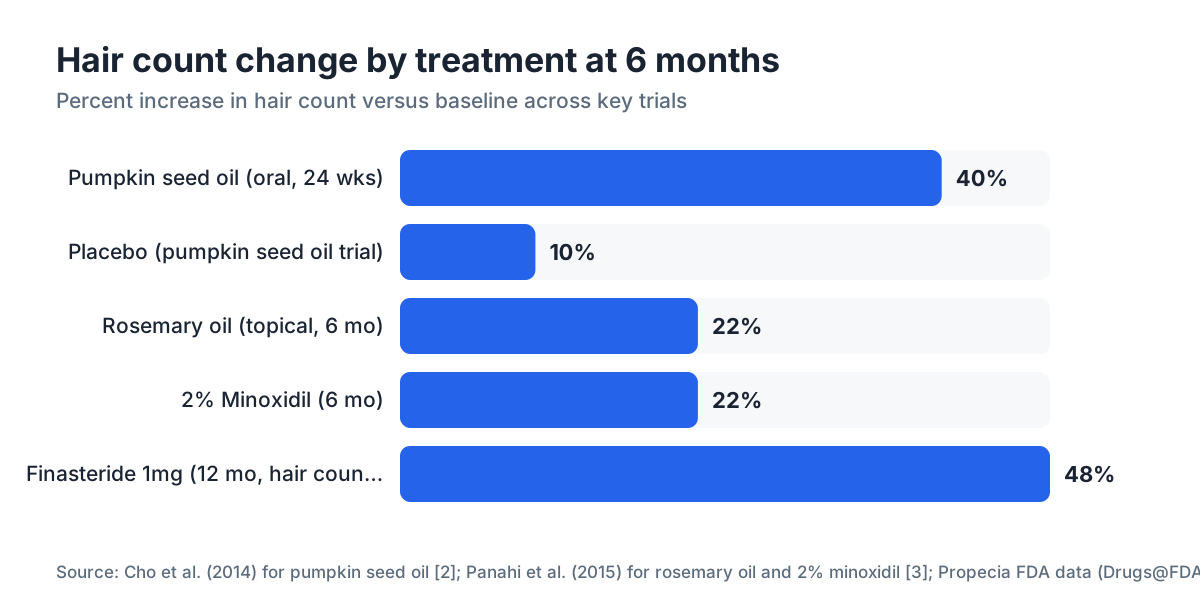
Pumpkin seed oil. A 2014 randomized, double-blind, placebo-controlled trial in Evidence-Based Complementary and Alternative Medicine enrolled 76 men with mild to moderate androgenetic alopecia [2]. They took 400 mg of pumpkin seed oil orally per day for 24 weeks. The pumpkin seed group had a mean hair count increase of 40 percent versus 10 percent in the placebo group. This was oral supplementation, not a topical study. The researchers proposed 5-alpha reductase inhibition as the mechanism but never measured scalp DHT. The trial was also funded by the oil manufacturer, which doesn't disqualify it but earns some caution.
Rosemary oil. A 2015 randomized controlled trial in Skinmed compared topical rosemary oil (applied twice daily for six months) against 2% minoxidil in 100 patients with androgenetic alopecia [3]. Both groups showed statistically similar hair count increases by month six. Scalp itching was more common in the minoxidil group. Genuinely interesting data. But the sample was small, there was no placebo arm, and the comparison was to 2% minoxidil, not the stronger 5% formulation. Even so, rosemary oil is the best topical candidate on current evidence.
Saw palmetto. A 2002 trial in the Journal of Alternative and Complementary Medicine found a saw palmetto extract helped androgenetic alopecia in a small group of men, with 60 percent of the treated group rated improved versus 11 percent on placebo [4]. The sample was just 26 men, so it's underpowered. A later review in Dermatology and Therapy looked at the available data and called the evidence "promising but not conclusive" [5].
Every other oil (castor, argan, jojoba, coconut) has either no human trial data for androgenetic alopecia or only case reports. Castor oil in particular gets marketed hard and has zero published randomized trial data for hair growth. Ricinoleic acid in castor oil shows some anti-inflammatory activity in the lab, but anti-inflammatory is not the same as DHT blockade.
| Oil | Human trial data? | Study type | Vs. placebo? |
|---|---|---|---|
| Pumpkin seed oil | Yes (oral) | RCT, 76 men, 2014 [2] | Yes, +40% vs +10% hair count |
| Rosemary oil | Yes (topical) | RCT, 100 patients, 2015 [3] | No (vs 2% minoxidil only) |
| Saw palmetto | Yes (oral extract) | Small RCT, 26 men, 2002 [4] | Yes |
| Castor oil | No | None | No |
| Coconut oil | No | None | No |
| Argan oil | No | None | No |
How do DHT blocking oils compare to finasteride and minoxidil?
This is the comparison that decides where your money and time should go. The proven drugs win, and it isn't close.
Finasteride 1 mg (Propecia) cuts serum DHT by about 70 percent [6]. In a five-year placebo-controlled trial, 48 percent of men on finasteride showed increased hair count versus 25 percent on placebo, and 99 percent of finasteride users maintained or increased their hair count compared to 83 percent on placebo [6]. Large, durable effects from one daily pill. The trade-off is a real (though debated in frequency) risk of sexual side effects and an FDA-labeled warning about possible mood effects. Finasteride covers that risk-benefit breakdown in detail.
Minoxidil at 5% applied twice daily is also far better proven than any oil. The FDA approved topical minoxidil for hair loss in 1988, and it remains one of only two FDA-approved treatments for androgenetic alopecia in the US [7]. Minoxidil for men shows what realistic results look like.
Rosemary oil's best data says it matched 2% minoxidil at six months. That sounds great until you remember 2% is the weaker formulation, and the trial had no placebo arm. Nobody can say whether both treatments were beating nothing by much.
Here's my honest read. If your hair is visibly thinning and you want to stop it, oils are not the first thing I'd reach for. They're a reasonable add-on for people who want a gentler supplementary approach, or for people who can't tolerate or access the first-line drugs. They are not a substitute for them.
Can topical oils actually penetrate the scalp deeply enough to work?
This is the pharmacology question most marketing walks right past. To do anything to a follicle, the oil has to reach the follicle. Most heavy plant oils barely do.
Hair follicles sit in the dermis, roughly 3 to 4 mm below the skin surface. For a topical oil to inhibit 5-alpha reductase down there, it has to get through the stratum corneum (the outer barrier) and diffuse into dermal tissue at a real concentration. Most plant oils have large, mostly water-repelling molecules, so deep dermal penetration is limited.
Some fare better. Rosemary essential oil has small volatile molecules that may penetrate more easily than a heavy carrier oil like castor. Coconut oil, thanks to its medium-chain fatty acids, does penetrate the hair shaft itself somewhat. That matters for fiber quality, not follicle biology. Getting into the shaft is not the same as reaching the follicle bulb.
Then there's the concentration gap. Even if a compound inhibits 5-alpha reductase in vitro, the amount that reaches the follicle after scalp application may sit far below the effective dose seen in the lab. That gap is why so many natural compounds that look strong in cell studies never translate to a clinic.
The most honest statement here: we don't have good pharmacokinetic data on how much pumpkin seed oil compound or rosemary polyphenol actually reaches the human hair follicle after topical use. The closest study for rosemary oil is the 2015 Skinmed trial, which measured hair count without measuring tissue drug levels. The mechanism stays assumed, not confirmed.
How should you actually use a DHT blocking oil if you want to try one?
If you decide rosemary oil or pumpkin seed oil is worth adding, copy what the trials did. The 2015 Skinmed trial applied rosemary oil twice daily, massaged into the scalp, for six months [3]. It used a standardized extract, not a pure essential oil. If you're working with pure rosemary essential oil, dilute it in a carrier oil first. Undiluted essential oils can trigger contact dermatitis. A common ratio is 2 to 3 drops of rosemary essential oil per teaspoon of a neutral carrier like jojoba or argan.
The massage itself may help, independent of the oil. A 2016 Japanese study found standardized scalp massage for 4 minutes daily over 24 weeks increased hair shaft thickness in nine healthy men, possibly through mechanical stimulation of dermal papilla cells [8]. The effect was modest, but it suggests the application method matters, not only the ingredient.
For oral pumpkin seed oil, the 2014 trial used 400 mg capsules daily [2]. Most off-the-shelf capsules run 1,000 mg each, so a single capsule overshoots the studied dose. Going higher than studied isn't advisable because the safety data above 400 mg isn't established.
A few practical notes. Consistency beats quantity. Apply it at the same time each day. Six months is the floor before you can honestly judge whether anything is working. Track a baseline with photos, a rough hair count, or even how much hair collects on your brush. The free AI scan at MyHairline gives you a Norwood stage baseline before you start, so you have something real to compare against later.
Don't put undiluted essential oils on broken or inflamed skin. If you have seborrheic dermatitis or scalp psoriasis, check with a dermatologist before adding oils, since some can feed fungal overgrowth.
Is saw palmetto oil worth using for hair loss?
Saw palmetto gets attention as a natural stand-in for finasteride because it inhibits 5-alpha reductase through a similar, though weaker, mechanism. The catch: almost all the evidence is for oral saw palmetto extract, not a topical oil.
The review in Dermatology and Therapy concluded that oral saw palmetto at 320 mg/day helped some men with mild to moderate androgenetic alopecia, with a reasonable safety profile and no reported sexual side effects in the reviewed studies [5]. That's a meaningful edge over finasteride for men worried about sexual side effects, even though the effect size is clearly smaller.
Topical saw palmetto oil is a different animal. Commercial shampoos and serums contain it, but no published randomized controlled trial tests topical saw palmetto oil on its own for androgenetic alopecia. Multi-ingredient products bury it among other actives, so you can't attribute any effect to saw palmetto alone.
My take: if you want to try saw palmetto, the oral extract has more behind it than the topical oil. The dht blocker comparison covers this alongside other options, including nutraceuticals.
Are there any safety concerns with DHT blocking oils?
These oils generally have cleaner safety profiles than the pharmaceutical options. But "natural" does not mean harmless.
Rosemary essential oil can cause contact dermatitis if you apply it undiluted, especially with sensitive skin or an existing scalp condition. Patch test a small area first. Some people report scalp itching, which was actually the most common side effect in the 2015 Skinmed rosemary trial, though it was less frequent than in the minoxidil group [3].
Pumpkin seed oil at the oral doses used in the 2014 trial reported no serious adverse events over the study period [2]. As a food supplement it's usually well tolerated.
Saw palmetto at oral doses around 320 mg/day has rare reports of mild gastrointestinal upset, headache, and, in a very small number of cases, liver toxicity, though causation isn't firmly established [9]. The NIH National Center for Complementary and Integrative Health notes that saw palmetto "appears to be safe" for most adults at standard doses while the evidence for its benefits remains limited [9].
One flag worth repeating. If you're pregnant or trying to conceive, saw palmetto and other 5-alpha reductase inhibitors, finasteride included, carry potential risks to male fetal development. The same caution built into finasteride's FDA labeling applies here in principle, even though these oils aren't FDA-labeled drugs [6].
Coconut, castor, and argan oil used topically have a strong safety record as cosmetic ingredients. The main downside is clogged pores on the scalp if you slather on heavy amounts and skip regular washing.
What do dermatologists and the AAD say about natural DHT blockers?
The American Academy of Dermatology (AAD) recommends minoxidil and finasteride as first-line treatments for androgenetic alopecia [7]. Its guidance does not list topical oils as established treatments. That's the short version.
That doesn't mean dermatologists throw them out. In practice, many will admit rosemary oil has better-than-expected data and that adding it alongside a proven treatment is unlikely to hurt. The AAD is blunt about the approved options, stating that "finasteride and minoxidil are the only medications that the U.S. Food and Drug Administration (FDA) has approved to treat hair loss" [7]. That's the ceiling of what a responsible provider can claim for oils. They sit outside the approved category.
The FDA has not approved any topical or oral oil for androgenetic alopecia. Products marketed as DHT blocking oils sell as cosmetics or dietary supplements, not drugs. As supplements they fall under DSHEA (the Dietary Supplement Health and Education Act of 1994), which does not require proof of efficacy before sale [10]. So the quality, concentration, and purity of a given bottle can't be assumed from the label.
If you're dealing with real hair loss, a board-certified dermatologist is still the most direct path to your options, including whether finasteride and minoxidil together make more sense for your case.
Could hair loss be from something other than DHT?
This matters because if DHT isn't the cause, blocking it (with drugs or oils) won't help you. Not even a little.
Androgenetic alopecia is the most common cause of hair loss, but it's far from the only one. Telogen effluvium is diffuse shedding triggered by stress, nutritional deficiency, illness, or hormonal shifts, and it has nothing to do with DHT. Alopecia areata is autoimmune. Scalp infections, thyroid disease, and iron deficiency can all mimic pattern hair loss to an untrained eye, and all are reversible.
If your shedding came on fast (over weeks to months rather than years), shows up in patches, or comes with other symptoms like fatigue or skin changes, DHT-blocking anything is unlikely to be your answer. A dermatologist can run a pull test, dermoscopy, and basic bloodwork to point you the right way.
The what causes hair loss article has a fuller differential. The receding hairline guide is more specific to the classic androgenetic pattern.
Some men also ask about supplements that might raise DHT. Creatine comes up constantly. The does creatine cause hair loss article looks at what the evidence actually shows, which is more nuanced than the headlines.
What is the realistic place for DHT blocking oils in a hair loss routine?
Think of them as a tier-three option. Not useless. Just not where you start.
Tier one is lifestyle, nutrition, and ruling out reversible causes. Iron, ferritin, thyroid function, and vitamin D are all worth checking before you spend a dime on anything topical. If a nutritional deficiency is driving your shedding, fixing it matters more than any oil or drug.
Tier two is FDA-approved treatment. Topical minoxidil (5% foam or solution) and oral finasteride have the deepest evidence base and cost little, especially as generics. Low-dose oral minoxidil (0.625 mg to 2.5 mg) is increasingly used off-label and shows strong clinical data; the oral minoxidil article covers it. The hair loss supplements article covers the wider nutraceutical landscape.
Tier three is where DHT blocking oils live. If you're already doing the tier-one and tier-two work and want to add a topical oil massage, rosemary oil is the best-evidenced choice. It costs almost nothing, has a tolerable safety profile, and the six-month trial data is at least honest enough to take seriously. Pumpkin seed oil capsules at 400 mg/day are reasonable as an oral add-on if you prefer supplements.
The mistake to avoid is obvious: spending 40 dollars a month on a boutique DHT blocking serum instead of getting a generic minoxidil prescription. The fancy serum has less evidence and more cost. If budget is your constraint, generic 5% minoxidil foam runs roughly 15 to 30 dollars a month at most pharmacy chains. That's where the money goes first.
If you want a read on where your hairline actually sits before deciding anything, the free AI scan at MyHairline gives you a Norwood stage assessment in minutes. It tells you whether you're facing early androgenetic alopecia, something more diffuse, or a stable hairline that needs nothing at all.
Sources
- American Academy of Dermatology Association, Hair loss: causes
- Cho YH et al., Evidence-Based Complementary and Alternative Medicine, 2014; pumpkin seed oil RCT
- Panahi Y et al., Skinmed, 2015; rosemary oil vs 2% minoxidil RCT
- Prager N et al., Journal of Alternative and Complementary Medicine, 2002; saw palmetto RCT
- Evron E et al., Dermatology and Therapy, 2020; saw palmetto systematic review
- FDA, Drugs@FDA database entry for Propecia (finasteride) 1 mg
- American Academy of Dermatology Association, Hair loss: treatment
- Koyama T et al., ePlasty, 2016; scalp massage and hair shaft thickness
- NIH National Center for Complementary and Integrative Health, Saw Palmetto
- FDA, Dietary Supplements overview