
TL;DR: DHT blocking supplements like saw palmetto and pumpkin seed oil have modest evidence behind them. None come close to the 60-70% DHT reduction finasteride delivers. They work best as adjuncts for people who can't or won't take prescription drugs. No supplement is FDA-approved to treat hair loss, and results vary a lot between people.
What is DHT and why does blocking it matter for hair loss?
Dihydrotestosterone, or DHT, is a hormone your body makes when an enzyme called 5-alpha reductase converts testosterone. It's about five times more potent than testosterone at androgen receptors. In people who are genetically predisposed, DHT binds to receptors in hair follicles and slowly shrinks them over years. The follicle makes finer, shorter hairs until it stops producing a visible hair at all. That process is androgenetic alopecia, which most people call male or female pattern baldness.
About 50% of men over 50 have some degree of androgenetic alopecia, and up to 50% of women are affected by age 80 [1]. It's the most common form of hair loss by a wide margin.
Block DHT, either by stopping 5-alpha reductase from making it or by competing with it at the follicle receptor, and you can slow or partly reverse that shrinkage. That's the theory behind both prescription drugs and the supplements in this article. The mechanism is real. The open question is whether any supplement does it well enough to make a difference you can see.
For a fuller picture of how hair loss starts, see our guide to what causes hair loss.
Do DHT blocking supplements actually work?
Some show real effects in small trials. None have the evidence base of finasteride or dutasteride, and the effect size is usually modest. That's not a dismissal. For someone who can't take a 5-alpha reductase inhibitor for medical reasons, or won't because of side-effect worries, a supplement that lowers DHT even 20-30% may beat doing nothing.
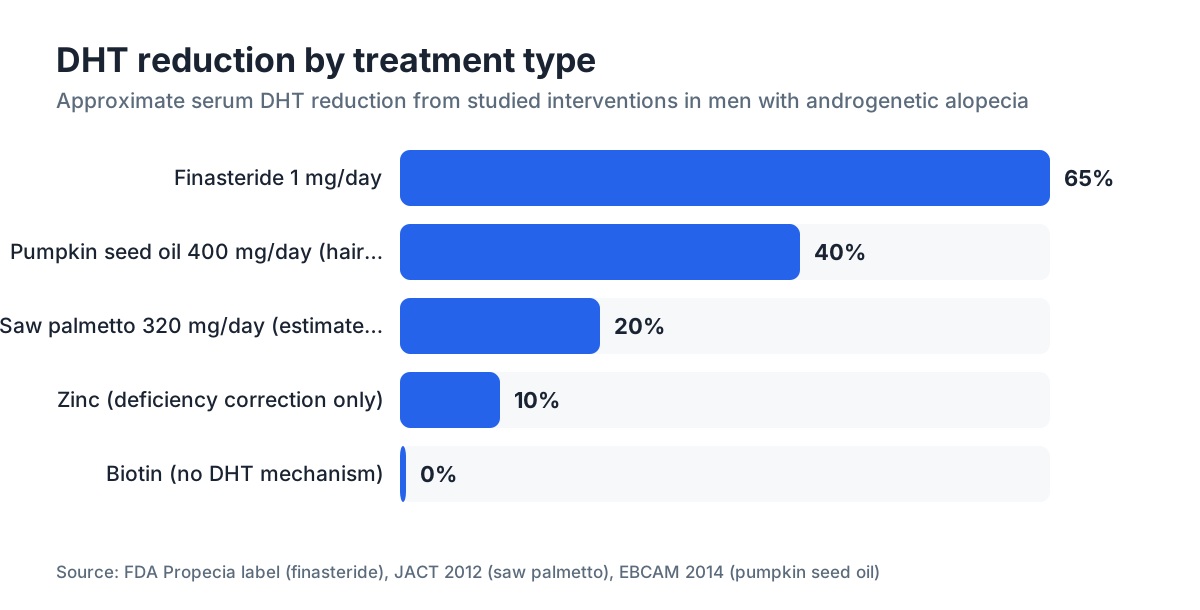
Saw palmetto is the best-studied of the bunch. A 2012 randomized controlled trial in the Journal of Alternative and Complementary Medicine found that 320 mg/day of saw palmetto extract increased hair count at 24 weeks compared to placebo in men with mild to moderate androgenetic alopecia [2]. A 2020 review in Dermatology and Therapy looked at multiple saw palmetto studies and called the evidence promising but insufficient for a standalone clinical recommendation [3].
Pumpkin seed oil sits next on the evidence ladder. A 2014 randomized, double-blind, placebo-controlled trial in Evidence-Based Complementary and Alternative Medicine found that men taking 400 mg/day for 24 weeks had a 40% increase in hair count, versus 10% in the placebo group [4]. That's a fairly clean study. It was also small (76 men) and industry-funded, which you should know before you get excited about the number.
Everything else has thinner evidence. Biotin, zinc, stinging nettle, beta-sitosterol, reishi mushroom, green tea extract. Some show DHT-lowering effects in lab or animal work that never translated cleanly to human trials.
Which supplements have the most evidence for blocking DHT?
Here's a realistic ranking based on human clinical evidence:
| Supplement | Proposed mechanism | Human trial evidence | Typical dose studied |
|---|---|---|---|
| Saw palmetto | 5-alpha reductase inhibition | Multiple RCTs; modest positive effect | 320 mg/day extract |
| Pumpkin seed oil | Possible 5-alpha reductase inhibition | 1 RCT (n=76); 40% vs 10% hair count increase [4] | 400 mg/day |
| Beta-sitosterol | 5-alpha reductase inhibition | 1 small RCT; often combined with saw palmetto | 60-120 mg/day |
| Zinc | Reduces 5-alpha reductase activity | Observational data; deficiency linked to hair loss [5] | 15-30 mg/day |
| Green tea (EGCG) | Inhibits 5-alpha reductase in vitro | Lab data mostly; limited human trials | 300-400 mg EGCG |
| Stinging nettle root | May inhibit DHT binding | Very limited human data | 300-600 mg/day |
| Biotin | No DHT mechanism | No evidence it lowers DHT; deficiency-only role | 2.5-10 mg/day |
Biotin deserves its own note because it's everywhere in hair supplement marketing. It has no known mechanism for blocking DHT. If you aren't biotin-deficient, and most people eating a normal diet aren't, taking more won't do a thing for androgenetic alopecia [11]. The FDA has also warned that high-dose biotin can interfere with lab tests, including thyroid and cardiac troponin assays [6].
Zinc earns a spot only if you're borderline deficient, since low zinc is tied to higher 5-alpha reductase activity [5]. Megadosing above 40 mg/day long-term depletes copper and causes other problems. More is not better.
For a broader look at the supplement landscape for hair, see hair loss supplements.
How does saw palmetto compare to finasteride?
Finasteride 1 mg/day reduces serum DHT by roughly 60-70% [7]. That's a documented, replicated figure from the trials that got it approved. Saw palmetto, in studies that measured DHT directly, tends to show reductions closer to 10-30%, and even that varies because measurement methods differ and not every trial checked serum DHT at all.
A 2004 study that compared saw palmetto to finasteride head to head found finasteride clearly outperformed the supplement on hair count, though the sample was small. Most dermatologists would call the efficacy gap substantial.
Finasteride carries a real side-effect profile: sexual dysfunction reported in roughly 2-4% of users in trials, plus a small but documented risk of persistent effects in some men [7]. Saw palmetto's record is lighter, mostly mild GI upset at standard doses. The FDA has not approved saw palmetto for hair loss, and the prescribing world for finasteride is a different regulatory animal from the supplement aisle.
If finasteride is on your radar, read the full breakdown in our finasteride guide. If you're already on minoxidil and weighing a supplement, finasteride and minoxidil covers combination approaches.
Here's the honest framing. Saw palmetto is not a natural version of finasteride. It works on a similar pathway with less potency and less predictability.
Are DHT blocking supplements safe?
For most healthy adults, the commonly studied supplements are reasonably safe at trial doses. But "generally safe" and "safe for you specifically" are two different claims.
Saw palmetto at 320 mg/day has a good record in trials up to 24 weeks. The usual complaint is GI side effects. There are isolated case reports of bleeding, so anyone on blood thinners should check with a physician first. A handful of case reports link saw palmetto to liver injury, though these are rare [8].
Pumpkin seed oil at 400 mg/day looks benign in the published data. The 2014 RCT reported no serious adverse events [4].
Zinc above the tolerable upper intake level of 40 mg/day, set by the National Institutes of Health, can cause copper deficiency, immune suppression, and nausea [5]. Many hair supplements stack zinc with other ingredients, and the cumulative dose isn't always obvious on the label.
One issue gets underreported. Supplements aren't FDA-approved, so they don't face the same pre-market evidence standard as drugs. The FDA regulates supplements under the Dietary Supplement Health and Education Act (DSHEA) of 1994, but manufacturers don't have to prove efficacy or even safety before selling. FDA guidance states that supplement firms are responsible for evaluating safety and labeling of their products "before marketing" [6]. The agency can only act after the fact if a product turns out to be harmful. That's a much lighter standard than drugs face.
If you're pregnant, nursing, or have liver disease, talk to a doctor before taking any 5-alpha reductase inhibiting supplement. Finasteride, the drug version, carries a Category X pregnancy warning for a reason: 5-alpha reductase inhibition can affect fetal development [7]. Supplements with the same mechanism carry the same theoretical concern, even though the effect is weaker.
What's the best dose and form for each supplement?
Dose matters, and the marketing on most hair supplements is not calibrated to the doses actually studied.
Saw palmetto: the trials used lipophilic (fat-soluble) extracts standardized to 80-90% fatty acids, at 320 mg/day. Whole berry powder is not the same thing. If a label doesn't state the extract type and fatty acid content, you have no idea what you're getting relative to the research.
Pumpkin seed oil: 400 mg/day in capsule form is what the 2014 RCT used [4]. Cold-pressed oil poured on your salad is fine for nutrition, but the dose is much harder to pin down.
Zinc: gluconate and picolinate forms absorb well. Zinc oxide, the form in a lot of cheaper products, absorbs poorly. Stay under 40 mg elemental zinc per day unless a physician says otherwise.
Beta-sitosterol: usually studied alongside saw palmetto in combination products. Standalone dosing runs 60-130 mg/day in the research that exists.
A word on combination products. The industry loves stacking ten ingredients and calling it a proprietary DHT-blocking blend. Blend enough things together and each individual dose often falls below its therapeutic threshold. You end up with a sprinkle of everything and an effective dose of nothing. If you want to test one of these supplements seriously, single-ingredient products with stated extract standards give you more control and results you can actually interpret.
Can women use DHT blocking supplements for hair loss?
Women do experience androgenetic alopecia driven by DHT, especially after menopause when estrogen drops. So the mechanism is relevant. The problem is the data.
Trial evidence on these supplements comes almost entirely from male populations. There's very little rigorous data on saw palmetto or pumpkin seed oil in women with pattern hair loss.
Finasteride is not approved for premenopausal women and is contraindicated in pregnancy. Spironolactone, an anti-androgen drug, gets used off-label in women. Some dermatologists discuss saw palmetto with female patients as a low-risk adjunct, but they're borrowing from male data and general safety profiles.
If you're a woman with heavy shedding that doesn't fit the pattern-baldness picture, read about telogen effluvium before you assume DHT is the culprit. Shedding has many causes, and plenty of them don't respond to DHT-focused treatment.
How long do DHT blocking supplements take to work?
Hair grows slowly. The studies that showed results for saw palmetto and pumpkin seed oil ran 24 weeks (six months), and that's about the minimum window you need to see a real change in hair count.
The hair growth cycle has three phases: anagen (active growth, 2-7 years), catagen (transition, a few weeks), and telogen (resting and shedding, roughly 3 months). When a miniaturized follicle starts recovering, it has to move through a full cycle before a stronger hair pushes out. That takes months.
Realistic timeline. If a supplement is going to help you, you probably won't know before three to four months of daily use. Six months is the fair evaluation point. Don't judge it at eight weeks.
Watch for one thing early. Some people notice more shedding when they start any DHT-related treatment. It can mean follicles are cycling out old miniaturized hairs to make room for new ones. Not always a bad sign, but worth expecting so it doesn't spook you.
Should you combine DHT blocking supplements with minoxidil?
Minoxidil doesn't block DHT. It's a vasodilator that increases blood flow to the follicle and extends the anagen phase. So DHT-targeting supplements and minoxidil hit different parts of the problem, which makes combining them mechanistically sensible.
The direct evidence for supplements plus minoxidil is thin. No large trials have tested that exact stack. But trials do show finasteride plus minoxidil beats either one alone [7], and if saw palmetto works on a similar pathway to finasteride, just weaker, the logic carries over a little.
Some dermatologists and hair loss specialists suggest adding saw palmetto to a minoxidil routine for patients who won't take finasteride. It's practical, low-risk, and covers both the blood-flow angle and the hormonal one.
See our full guide to minoxidil for men for what minoxidil does and doesn't do on its own.
If you're on a DHT-blocking supplement and thinking about adding minoxidil, minoxidil side effects is worth reading first.
What do doctors and dermatologists actually think of these supplements?
Most dermatologists who treat hair loss say something close to this: supplements aren't first-line, the evidence is too thin for a strong recommendation, but they aren't harmful for most people and some patients find them useful as adjuncts.
The American Academy of Dermatology (AAD) lists minoxidil and finasteride as the evidence-backed options for androgenetic alopecia. Supplements don't appear in the first-line recommendations [9]. That's not the AAD being snobbish. A clinical recommendation needs a consistent evidence base from well-designed trials, and supplement data hasn't cleared that bar.
The AAD does note that low levels of certain nutrients, particularly ferritin, zinc, vitamin D, and biotin, can contribute to hair loss, and that fixing deficiencies may help. That's a different thing from swallowing high doses of these nutrients when your levels are already fine.
Run blood work for ferritin, zinc, vitamin D, and thyroid function before starting any supplement regimen. Most hair loss clinicians would back that. If you're deficient in something, correcting it might be all you need. If you're not, more won't help.
A free AI hair analysis at MyHairline can help you understand your pattern before you decide what to try, so you're not aiming at the wrong problem.
Which DHT blocking supplements are mostly hype?
A few get heavy marketing on thin evidence.
Biotin: no DHT mechanism and no evidence for pattern baldness unless you're deficient [11]. The industry sells it by the truckload because hair and nails are culturally tied to vitamin B7 and it's cheap to make. Save your money unless a blood test shows you're low.
Collagen peptides: they support connective tissue and may help skin quality. No meaningful DHT mechanism. Some people say their hair feels thicker on it, maybe because collagen supports the dermal papilla, but that isn't DHT blocking.
Ketoconazole shampoo: technically an antifungal, and at 2% it has some anti-androgen activity in the scalp. Not a traditional supplement, but it shows up on DHT-blocking product lists. The hair loss evidence is modest, mostly from small older trials. It's FDA-approved as a shampoo for dandruff (seborrheic dermatitis), not for hair loss [6].
Reishi mushroom, ashwagandha, saw palmetto in gummy form: some have theoretical mechanisms in lab studies. None have strong clinical data for hair specifically. Gummy saw palmetto almost certainly doesn't deliver the lipophilic extract fraction that makes the clinical evidence mean anything.
Hair gummies as a category are mostly a marketing format. They often can't fit therapeutic doses into the small volume of a gummy, and many use inferior forms of whatever ingredient is on the label.
When should you consider prescription treatments instead?
If your loss is moving fast, if you're already at Norwood 3 or higher, or if you've run a supplement regimen for six months with no change, it's time to talk to a doctor about prescription options.
Finasteride stops progression in about 83% of men who take it and produces regrowth in a meaningful share over two years [7]. That's a far stronger outcome than supplements reliably deliver. The side-effect concern is real and worth a frank conversation with a physician, but don't assume it applies to you before you've had that talk.
For a receding hairline specifically, see receding hairline for how aggressive treatment needs to be at different stages.
If medical treatment fails or you've already lost a lot of ground, a hair transplant is a surgical option worth understanding. Transplants move DHT-resistant follicles from the back of the scalp to balding areas. They don't stop ongoing loss in the areas that weren't transplanted, so most surgeons want to see loss stabilized before operating. That's another reason to get DHT under control first.
MyHairline's free AI scan (/scan) can help you identify your loss pattern before you book any consultations, so you walk in knowing what you're dealing with.
The dht blocker article covers the full spectrum from supplements through prescription options if you want a side-by-side view.
Sources
- American Academy of Dermatology, Hair Loss Overview
- Rossi A et al., Journal of Alternative and Complementary Medicine (2012). Comparing medical treatments for androgenetic alopecia
- Evron E et al., Dermatology and Therapy (2020). Natural hair supplement review including saw palmetto
- Cho YH et al., Evidence-Based Complementary and Alternative Medicine (2014). Pumpkin seed oil RCT in men with androgenetic alopecia
- NIH Office of Dietary Supplements, Zinc Fact Sheet for Health Professionals
- FDA, Dietary Supplements
- FDA, Propecia (finasteride) Prescribing Information
- NIH LiverTox Database, Saw Palmetto
- American Academy of Dermatology, Hair Loss Overview
- van der Merwe J et al., Clinical Journal of Sport Medicine (2009). Creatine supplementation and DHT
- NIH Office of Dietary Supplements, Biotin Fact Sheet for Health Professionals