TL;DR: Biotin does not block DHT. It is a B-vitamin that supports keratin production, and deficiency can cause hair shedding, but supplementing it when you are not deficient has no proven effect on androgenetic alopecia. Blocking DHT requires finasteride, dutasteride, or specific botanicals with 5-alpha reductase activity. Biotin and DHT work through completely separate biological pathways.
What is biotin and what does it actually do for hair?
Biotin is vitamin B7, a water-soluble nutrient your body uses as a cofactor for several carboxylase enzymes involved in fatty acid synthesis, amino acid metabolism, and glucose production [1]. Hair shafts are made mostly of a protein called keratin, and biotin contributes to the metabolic process that helps your body synthesize that protein. That is the entire mechanistic story.
It does not stimulate follicles. It does not extend the anagen (growth) phase. It does not change hormone levels of any kind.
When someone is genuinely deficient in biotin, their hair can become brittle, thin, or shed prematurely. Correcting the deficiency then stops that shedding, which looks impressive on before-and-after photos but is not the same as regrowing hair lost to androgenetic alopecia. The supplement industry leans hard on that distinction without ever clearly making it.
True biotin deficiency is uncommon in adults eating a varied diet. It can occur with prolonged raw egg-white consumption (avidin in raw egg whites binds biotin and blocks absorption), with certain anticonvulsant medications, during pregnancy, or with biotinidase deficiency, a rare inherited disorder [1]. For most people buying biotin gummies for hair loss, deficiency is not the issue.
Does biotin block DHT or lower DHT levels?
No. There is no published mechanism by which biotin interferes with DHT production or androgen receptor binding, and no randomized controlled trial has shown biotin supplementation reduces serum or scalp DHT levels [2].
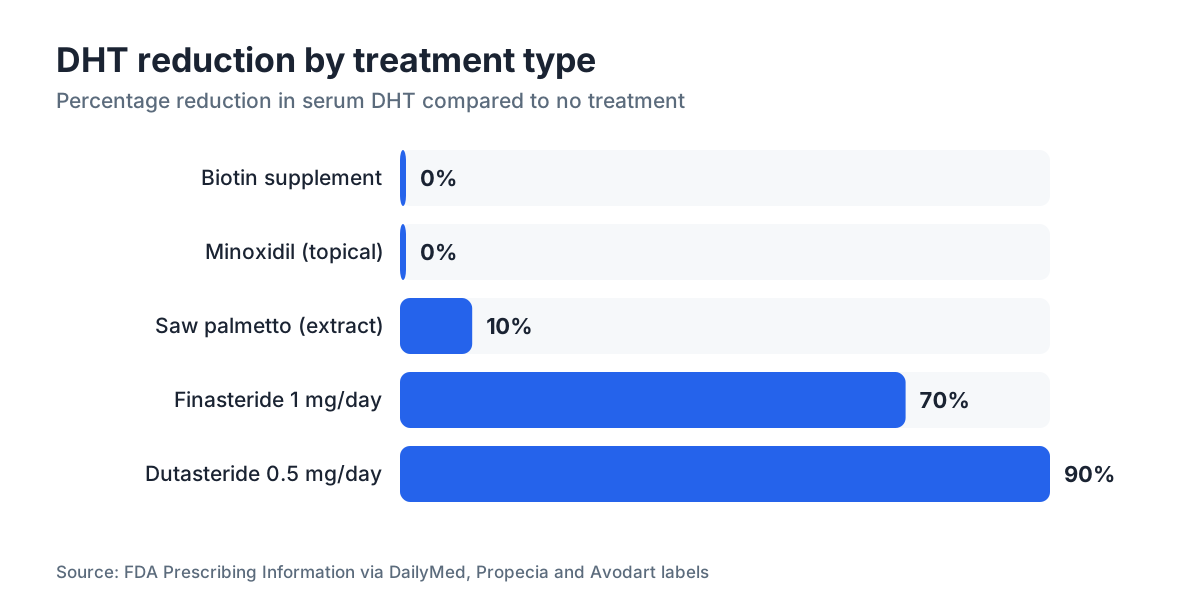
DHT (dihydrotestosterone) is synthesized when the enzyme 5-alpha reductase converts testosterone into DHT. Drugs that lower DHT work by inhibiting that enzyme. Finasteride inhibits type 2 5-alpha reductase and lowers serum DHT by roughly 70% at the standard 1 mg/day oral dose, according to the FDA-approved label [3]. Dutasteride inhibits both type 1 and type 2 and lowers DHT by around 90% [4]. Biotin has no interaction with 5-alpha reductase. None.
You will find websites and supplement company blogs claiming biotin "supports healthy DHT levels" or "may help with DHT-related hair loss." Those claims are not backed by peer-reviewed evidence. The FDA has not approved biotin for androgenetic alopecia, and the American Academy of Dermatology does not list it as a recommended treatment for that condition [5].
If pattern hair loss (receding hairline, thinning crown) is your concern, you need a treatment that actually addresses the androgen pathway. See the breakdown in DHT blockers and what causes hair loss for the full picture.
How does DHT actually cause hair loss?
DHT binds to androgen receptors inside genetically susceptible hair follicles, mostly on the crown and frontal scalp. Once bound, it triggers a cascade that gradually miniaturizes the follicle: each growth cycle produces a shorter, thinner hair until eventually the follicle stops producing a visible hair at all [6]. This process is called follicular miniaturization, and it is the defining feature of androgenetic alopecia (male and female pattern hair loss).
Genetics decide which follicles are sensitive. That is why some men lose all their hair and others keep a full head at 70 even with identical DHT levels.
Biotin plays zero role in this process. The androgen receptor pathway and the keratin synthesis pathway that biotin supports are biologically separate. Giving someone extra biotin when they have miniaturizing follicles is like putting premium fuel in a car with a broken engine.
What does the clinical research say about biotin for hair loss?
The honest answer: the clinical evidence is thin and mostly confined to case reports of deficient individuals, not controlled trials in people with pattern hair loss.
A 2017 review published in Skin Appendage Disorders examined 18 reported cases of biotin use for hair and nail conditions. Every single case involved a person with an underlying condition causing biotin deficiency. The authors concluded: "In all cases, patients were found to have an underlying pathology that could be attributed to their low levels of biotin. It is therefore unclear whether biotin supplementation would be of benefit in patients with normal biotin levels." [2] That is a direct quote from the paper.
No large randomized controlled trial has compared biotin against placebo in people with androgenetic alopecia. There are industry-funded studies of combination supplements that include biotin alongside other ingredients (zinc, selenium, marine extracts), which makes it impossible to isolate biotin's contribution.
The FDA has not approved any biotin supplement for hair loss [3]. Companies selling these products rely on structure-function claims, which do not require proof of efficacy before marketing.
If you are experiencing diffuse shedding rather than pattern thinning, telogen effluvium is worth understanding separately. Nutritional deficiencies can trigger that type of shedding, but iron, ferritin, and vitamin D deficiencies show up far more often than biotin in adult patients without a specific risk factor.
Biotin vs. proven DHT blockers: a direct comparison
Here is how biotin stacks up against treatments that actually address the DHT pathway:
| Treatment | Mechanism | DHT reduction | Clinical evidence | FDA status |
|---|---|---|---|---|
| Biotin (supplement) | Keratin cofactor | None | Case reports only | Not approved for hair loss |
| Finasteride 1 mg/day | 5-AR type 2 inhibitor | ~70% serum DHT [3] | Multiple large RCTs | FDA-approved (men) |
| Dutasteride 0.5 mg/day | 5-AR type 1 & 2 inhibitor | ~90% serum DHT [4] | Multiple RCTs | FDA-approved for BPH; used off-label for hair |
| Minoxidil (topical/oral) | Vasodilator, prolongs anagen | None (not a DHT blocker) | Multiple large RCTs | FDA-approved |
| Saw palmetto (topical/oral) | Weak 5-AR inhibitor | Modest, inconsistent data | Small trials only | Not FDA-approved |
Finasteride and minoxidil are the two treatments with the strongest evidence base and FDA approval for pattern hair loss. You can read a detailed breakdown of how they compare in finasteride and minoxidil and review the minoxidil for men guide for dosing specifics. For a full look at the prescription drug route, the finasteride guide covers what to expect, timeline, and side effect profile.
Biotin is not in the same conversation as these treatments for androgenetic alopecia. That is not a harsh opinion. It is what the data says.
Can biotin make hair grow faster or thicker if you are not deficient?
Probably not in any meaningful way. The marketing claim is that extra biotin feeds keratin production and produces faster, thicker hair growth. The mechanism sounds plausible, but the dose-response evidence is not there.
Your kidneys excrete excess water-soluble B vitamins, including biotin, in your urine. If you already have adequate serum biotin (roughly 200-300 pg/mL is considered normal), adding more does not meaningfully increase keratin synthesis. It just gets cleared.
Some people report anecdotally that high-dose biotin (5,000-10,000 mcg/day) improved their nail and hair texture. Anecdotes are hard to dismiss entirely, but they also reflect placebo effects, seasonal variation in hair cycling, and the general tendency to notice what you expect to notice after spending money on something.
The recommended adequate intake for adults is just 30 mcg/day [1]. Supplement doses of 2,500-10,000 mcg are 80 to 333 times that amount. There is no known toxicity at those levels, but there is also no evidence of proportional benefit.
Does biotin interfere with any hair loss lab tests or medications?
This is the one area where high-dose biotin supplementation does matter, and it is genuinely underappreciated.
High-dose biotin (typically 5 mg or more per day) can interfere with biotin-streptavidin immunoassay tests, which run in many common lab panels. The FDA issued a safety communication in 2019 warning that biotin can cause "clinically significant incorrect lab test results" including falsely low troponin levels (used to diagnose heart attacks), falsely elevated thyroid hormones, falsely low TSH, and interference with sex hormone panels [7].
If you are taking high-dose biotin and get bloodwork done to evaluate your hormone levels (testosterone, DHT, thyroid function) as part of a hair loss workup, your results can be skewed. Most labs recommend stopping biotin supplementation at least 48-72 hours before drawing blood, though some recommend longer for very high doses.
Tell your doctor or dermatologist if you are taking biotin before any blood tests. This is a real practical concern, not a theoretical one.
Biotin does not appear to interact with finasteride, minoxidil, or dutasteride pharmacologically. There is no known mechanism for a direct drug-supplement interaction there.
Are there any supplements that do block DHT?
A few botanicals have real (if modest) evidence for 5-alpha reductase inhibition. None match the pharmaceutical options, but they are not fiction either.
Saw palmetto (Serenoa repens) is the most studied. A small randomized trial published in the Journal of Alternative and Complementary Medicine found a 60% liposterolic extract of saw palmetto produced a "highly active" inhibition of 5-alpha reductase type 1 and 2 in vitro [8]. Human trials are much smaller and shorter than finasteride trials, and effect sizes are correspondingly modest. If you want a detailed look at all the options, hair loss supplements covers the evidence for each.
Pumpkin seed oil has one small RCT in men with androgenetic alopecia showing 40% more hair count at 24 weeks compared to placebo, though the mechanism is not fully characterized [9].
Green tea (EGCG) shows 5-AR inhibitory activity in lab studies, but human hair loss trials are very limited.
None of these come close to finasteride's 70% DHT reduction or the well-characterized clinical trials behind it. And biotin is not on this list at all. It has no 5-AR activity.
Who might actually benefit from biotin supplementation?
People who are biotin-deficient. That is the honest, short answer.
Specific groups who may have lower biotin status and could see real improvement from supplementation include pregnant women (pregnancy increases biotin catabolism, and some studies estimate up to 50% of pregnant women have marginal deficiency) [1], people on long-term anticonvulsant drugs like valproic acid or carbamazepine, individuals who frequently eat large amounts of raw egg whites, and people with biotinidase deficiency.
If a dermatologist suspects biotin deficiency, they can test for it. Serum biotin levels below roughly 100 pg/mL are considered deficient in most references, though labs vary. Treating confirmed deficiency with supplementation is appropriate medicine. Treating assumed deficiency in everyone who has thinning hair is not.
For most people buying biotin for a receding hairline or crown thinning, the underlying problem is androgenetic alopecia, a hormonal and genetic condition that biotin does not address. A clearer picture of what is actually driving your specific hair loss is worth getting before spending money on supplements. Tools like the free AI hair analysis at MyHairline can help identify pattern versus diffuse loss, which points you toward the right treatment category.
What should you actually do if you are losing hair to DHT?
Start with understanding whether your hair loss is really pattern (androgenetic) alopecia. Crown thinning, a receding hairline, or progressive miniaturization at the temples are the hallmarks. If that fits, DHT reduction or follicle-level intervention is what moves the needle.
Finasteride 1 mg daily is the first-line oral option for men. It has more than 25 years of data behind it, and the two registration trials showing roughly 83% of men maintained or improved hair count after two years were the basis for FDA approval in 1997 [3]. The finasteride article breaks down exactly what to expect month by month.
Topical or oral minoxidil is the standard add-on (or standalone for women). It works by a separate mechanism from DHT blockade, prolonging the anagen phase and improving follicle blood supply. Side effects are real and worth reading: the minoxidil side effects guide walks through them in detail.
For more advanced loss, a hair transplant may eventually be part of the picture, but transplants do not stop ongoing miniaturization. Most surgeons want to see medical treatment stabilizing the loss before operating.
Biotin can sit in the background as a general nutritional insurance policy if you want, but treat it as that: background. Do not let it replace a decision about finasteride or minoxidil if those are the right tools for your situation. That is the practical summary, and it is the same advice you would hear from most dermatologists who see hair loss patients every day.
Is taking biotin harmful if you have hair loss?
Biotin is safe at typical supplement doses. There is no established tolerable upper intake level because no adverse effects from high oral intake have been identified in healthy adults [1]. At the doses most supplements deliver (1,000-10,000 mcg), the main cost is the money spent and the lab interference risk mentioned above.
The real harm is opportunity cost. Someone spending six months convinced that biotin is treating their androgenetic alopecia is six months further along the miniaturization process without a treatment that could have preserved or regrown follicles. Hair follicles that reach end-stage miniaturization cannot be reversed pharmacologically. Time matters more with hair loss than with most cosmetic concerns.
If you are also trying to understand whether other lifestyle or supplement choices are contributing to shedding, read does creatine cause hair loss for another common question in this space, or explore what causes hair loss more broadly. Understanding the actual driver of your loss is step one, and biotin is not the driver for the vast majority of people asking this question.
Sources
- NIH Office of Dietary Supplements, Biotin Fact Sheet for Health Professionals
- Skin Appendage Disorders, 'A Review of the Use of Biotin for Hair Loss' (2017)
- DailyMed (NIH National Library of Medicine), Propecia (finasteride 1 mg) Label
- DailyMed (NIH National Library of Medicine), Avodart (dutasteride 0.5 mg) Label
- American Academy of Dermatology, Hair Loss: Diagnosis and Treatment
- New England Journal of Medicine, 'Androgenetic Alopecia' (2003), Sawaya & Price review
- Journal of Alternative and Complementary Medicine, 'Inhibition of 5-alpha Reductase by Saw Palmetto' (2002)
- Evidence-Based Complementary and Alternative Medicine, Pumpkin Seed Oil RCT (2014)
- NIH National Library of Medicine, MedlinePlus: Biotin