
TL;DR: Routine heat styling (blow dryers, flat irons, curling wands) damages the hair shaft, not the follicle. The follicle sits 3 to 4 mm below the scalp surface and is largely insulated from surface heat. Permanent follicle damage from styling tools is possible but requires sustained extreme temperatures and is far less common than simple shaft breakage. Most heat-related shedding is reversible.
What actually is the difference between the shaft and the follicle?
The hair shaft is the dead, keratinized strand you see above your skin. It has no blood supply, no nerve endings, and no capacity to heal itself once damaged. What's done to it is done.
The follicle is a completely different structure. It sits about 3 to 4 millimeters below the scalp surface in the dermis, surrounded by a dermal papilla packed with blood vessels and the stem cells that produce new hair. The follicle is alive. If it's healthy, it keeps generating new shafts every cycle regardless of what you did to the last one.
This distinction changes everything. When a flat iron at 450°F burns a strand so badly it snaps off, the follicle is essentially untouched. A new shaft will grow. When people panic that their heat-damaged hair is "not growing back," what they're usually seeing is breakage at the scalp line that mimics shedding, not actual follicle death.
That's not a license to burn your scalp daily. Sustained, extreme heat applied directly to the skin over the follicle is a real threat, and the evidence for it is worth understanding precisely.
How does heat actually damage the hair shaft?
Hair is roughly 65 to 95 percent keratin protein held together by disulfide bonds, hydrogen bonds, and water [1]. Heat disrupts all three layers of the shaft in a predictable sequence.
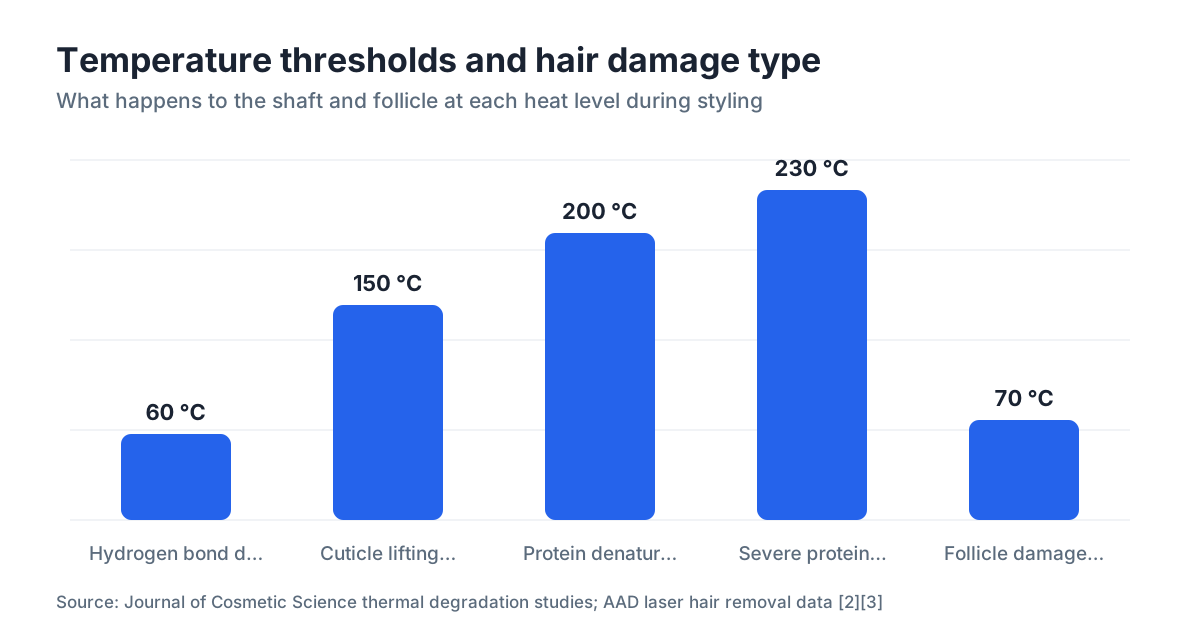
At around 60°C (140°F), hydrogen bonds in the hair's cortex begin to break. This is why a wet blow-dry works at all: you're literally reshaping hydrogen bonds into a new form. The damage at this stage is cosmetic and structurally fairly minor.
By 200°C (392°F), which is a typical flat iron setting, the keratin proteins begin to denature. The cuticle, the outermost scale-like layer, lifts and fractures. Moisture evaporates faster than it can be replaced. You get frizz, split ends, reduced tensile strength, and eventually breakage [2].
Above 230°C (446°F), which is the high setting on most professional flat irons, the protein degrades rather than just deforms. Studies on hair samples after repeated high-heat treatment show measurable reduction in the cysteine content of the cortex, meaning the disulfide bonds that give hair its strength are being destroyed [2]. At this point you're past styling hair. You're destroying it.
None of this kills a follicle. It does make the shaft so fragile that it breaks close to the scalp, producing what looks clinically like shedding. That's worth repeating to anyone who thinks heat has made them go bald.
Can heat actually reach and damage the hair follicle?
Theoretically yes. Practically, it takes conditions most people never create at home.
The follicle bulb sits 3 to 4 mm below the surface. Skin is a poor thermal conductor. Research on laser hair removal, which deliberately destroys follicles, shows you need temperatures of roughly 70°C or higher sustained at follicle level to cause permanent damage [3]. Reaching that at follicle depth requires either direct application of very hot metal to the scalp for multiple seconds, or the kind of radiant heat some professional-grade tools generate when used wrong.
A 2007 study in the International Journal of Dermatology measured scalp surface temperatures during hair dryer use and found that professional dryers held 2 cm from the scalp produced surface temperatures up to 74°C under continuous direct air [4]. The follicle, 3 to 4 mm deeper, experiences considerably lower temperatures because of tissue insulation. But "considerably lower" is not zero, and chronic repeated scalp burns are not trivial.
Then there's traction plus heat. Pressing a hot iron directly against a braided or tightly wound section while pulling applies mechanical and thermal stress to the follicle opening at once. This is the mechanism proposed for the follicle damage seen in "hot comb alopecia," a form of central centrifugal cicatricial alopecia documented in the dermatology literature for decades [5]. The heat alone may not be enough, but paired with traction it can provoke a scarring inflammatory response.
For most people using a blow dryer with a nozzle or a flat iron on their lengths, permanent follicle damage is not a realistic outcome.
What is hot comb alopecia and is it permanent?
Hot comb alopecia is the clearest documented example of heat styling causing genuine follicle damage. It was first described in Black women using metal hot combs heated on gas burners, and it has since been recognized in a wider range of patients using various heated styling tools with heavy oils or grease applied to the scalp.
The proposed mechanism: scalp oils heated by a hot comb or iron become superheated and wick down into the follicle opening, causing a deep thermal burn at follicle level. The inflammatory response that follows is fibrotic. It deposits scar tissue. Scar tissue cannot support hair growth. That's why the hair loss pattern in hot comb alopecia tends to be permanent, or at best partially reversible if caught very early [5].
Dermatologists classify this under central centrifugal cicatricial alopecia (CCCA), a group of scarring alopecias. The American Academy of Dermatology notes that scarring alopecias destroy the follicle and replace it with scar tissue, which is why regrowth in affected areas does not occur [6]. Early biopsy is the only way to confirm follicle scarring before clinical loss is advanced.
If you're using a hot comb or flat iron with heavy product on the scalp (not the lengths), and you notice a slowly expanding bald patch at the crown, this pattern warrants a dermatologist visit, not a YouTube tutorial. The window for intervention is real but short.
Does blow drying cause hair loss?
Direct hair loss from blow drying alone is not well-supported in the literature. What blow drying reliably causes is shaft damage from repeated dehydration and protein disruption, which leads to breakage. Breakage near the scalp looks like hair loss but isn't.
A 2011 study in the Annals of Dermatology compared hair samples blown dry at various distances and temperatures against air-dried samples. Air drying preserved the cuticle better in some measures, but holding a blow dryer too close (less than 15 cm) at high heat caused more surface damage than the same dryer held farther away and moved continuously [7]. Counterintuitively, very long air drying also caused cortex swelling from prolonged water exposure. The authors suggested moderate heat at a maintained distance beats either extreme.
The follicle-level risk from a handheld blow dryer used with normal technique (moving the dryer, keeping distance, not pressing the nozzle to the scalp) is minimal. The temperature gradient through several millimeters of dermis drops substantially.
Seeing more hairs on the brush after heat styling? The likely explanation is that heat makes already-telogen (resting-phase) hairs easier to dislodge, or it's causing breakage that produces short hairs with a tapered rather than bulbed end. A hair with a white bulb at the root is a shed hair. A hair with a tapered or split end is a broken shaft. That one detail tells you most of what you need to know.
How hot is too hot? Temperature thresholds that matter
Here are the temperature ranges that map to specific types of damage, based on published thermal analysis of human hair:
| Temperature | What happens to the shaft | Follicle risk |
|---|---|---|
| Below 150°C (302°F) | Hydrogen bond changes, mostly reversible | Negligible at normal styling distances |
| 150-200°C (302-392°F) | Cuticle scale lifting, moisture loss, some protein denaturation | Very low unless tool touches scalp |
| 200-230°C (392-446°F) | Significant protein denaturation, bubble formation in cortex | Low unless prolonged scalp contact |
| Above 230°C (446°F) | Protein degradation, cysteine loss, severe structural damage | Moderate if metal contacts scalp skin repeatedly |
| Sustained 70°C+ at follicle depth | Follicle cell damage, potentially permanent | High (this is the laser hair removal threshold) [3] |
Most consumer flat irons max out at 230°C (446°F). Professional irons can reach 230°C in seconds and hold there. The danger zone for follicle proximity isn't the temperature setting on the tool. It's how long hot metal contacts scalp skin directly.
A single accidental burn is unlikely to cause permanent loss. Repeated application of maximum-temperature tools to the same scalp area over months or years is a different story.
Can heat styling trigger temporary hair shedding (telogen effluvium)?
This one gets overlooked. Significant scalp trauma, including thermal burns, can trigger a reactive shedding event called telogen effluvium, where follicles are shocked into the resting phase and shed together 2 to 3 months after the event.
Telogen effluvium from heat styling specifically isn't well-documented in controlled trials, but the mechanism is biologically plausible and fits the broader literature on telogen effluvium triggers, which include physical trauma, fever, and inflammation [8]. A significant scalp burn could in theory provoke localized telogen effluvium. The good news: telogen effluvium is almost always self-limiting and reverses within 3 to 6 months once the trigger is gone [8].
If you dramatically increased your heat styling frequency or switched to a much hotter tool and then noticed diffuse shedding 2 to 3 months later, raise that timeline with a dermatologist. The fix is not automatically a drug. It may simply be cutting the thermal stress.
For a wider look at what causes hair loss beyond heat, the factors are numerous and often overlap.
Does hair color or bleaching make heat damage worse?
Yes, substantially. Chemical processes that open the cuticle or break disulfide bonds, bleaching most of all, leave hair dramatically more vulnerable to later heat damage.
Bleaching uses alkaline chemicals and hydrogen peroxide to destroy melanin pigment, and in doing so it degrades a portion of the cysteine-rich proteins in the cortex. A bleached strand has fewer intact disulfide bonds to begin with. Apply the same 200°C flat iron to bleached hair as to virgin hair and the bleached hair dehydrates faster, deforms more, and fractures at lower mechanical stress [2].
That's why the maximum safe heat for color-treated hair is generally cited around 150 to 180°C versus 200°C for healthy virgin hair. It's also why bleached hair breaks far more often during styling, giving you that sensation that your hair is "melting."
None of this changes the follicle story. Bleached hair that snaps off at the scalp still regrows from a healthy follicle. But the shaft consequences are severe enough that they warrant a genuine rethink of your heat habits if you're also chemically processing.
What does the research say about heat protectant sprays?
Heat protectants work, but not the way most people think. They don't meaningfully lower the temperature your iron runs at. They coat the shaft with polymers and silicones that reduce moisture loss and act as a buffer between the cuticle and the iron's metal plate.
A 2015 review in the Journal of Cosmetic Science examined several commercial heat protectant formulations and found that protein-containing protectants (hydrolyzed wheat protein, silk amino acids) could partially fill surface damage in the cuticle and temporarily reduce tensile stress during styling [9]. Silicone-based protectants provided a thin thermal barrier that slightly delayed the point at which cuticle lifting occurred.
The honest summary: heat protectants reduce shaft damage at moderate temperatures and slow the buildup of cosmetic wear. They are not a guarantee against breakage at extreme temperatures. They do nothing for the follicle, which isn't at meaningful risk from styling anyway.
If you're choosing between a better protectant and simply lowering your iron temperature by 20 to 30 degrees, lower the temperature. That does more.
How do I know if my hair loss is from heat styling or something else like pattern baldness?
This is the question that actually matters, because heat styling gets blamed for things that are really early androgenetic alopecia or telogen effluvium, and the treatments are completely different.
Heat damage looks like: diffuse breakage, short hairs of uneven length, split ends throughout, hair that feels dry and rough, loss that's worse on the sections you style most aggressively.
Androgenetic alopecia (pattern hair loss) looks like: miniaturization of hairs in a predictable zone (temple recession in men, diffuse crown thinning in women), hairs that get thinner and shorter over time in specific locations, a family history of the same pattern, and no correlation with your styling habits [10]. A receding hairline that follows the Norwood pattern is not heat damage.
If you're a man noticing temple recession or crown thinning regardless of styling habits, the cause is almost certainly DHT-driven follicle miniaturization, not your blow dryer. Tools like finasteride and minoxidil for men address that mechanism. Heat protectant spray does not.
A trichoscopy exam (dermoscopy of the scalp) can separate breakage from true miniaturization by visualizing follicle caliber and anagen-to-telogen ratios. A dermatologist can do this in office. If you want a first pass before an appointment, the free AI hair analysis at MyHairline lets you upload photos and get a structured read of your pattern, which can help you ask sharper questions.
If you're weighing drug treatments, understanding minoxidil side effects and the option of combining finasteride and minoxidil is a logical next step once you know what you're actually dealing with.
What is the safest way to use heat tools without damaging follicles or shaft?
The evidence points to a few practices that make a real difference.
Keep irons below 180°C (356°F) for fine, damaged, or color-treated hair and below 200°C (392°F) for thick, healthy virgin hair. Above 230°C there's no styling benefit that justifies the structural cost. Most people run far more heat than their hair type needs.
Keep tools moving. Holding a flat iron on one section for 5 to 10 seconds at maximum heat is where shaft and potential scalp damage pile up. One or two passes at moderate heat gets the same result with a fraction of the damage.
Never put a hot iron on the scalp itself. Sounds obvious. It gets violated constantly when people try to straighten roots or tame baby hairs. Even a single direct contact at 200°C leaves a brief thermal impression on scalp tissue. Repeated contacts in the same spot over years is where the hot comb alopecia literature becomes relevant.
Let hair dry to 70 to 80 percent before any heat tool touches it. Styling wet hair with a flat iron causes rapid internal steam formation, which physically fractures the cortex from the inside out [2].
Apply a heat protectant before every session if you style often. Pick one with hydrolyzed proteins if your hair is already compromised, silicone-based if it's healthy and you want glide.
Take heat breaks. Even a week off from daily straightening gives the cuticle time to recover some surface integrity before you start again. The follicle doesn't need the break. The shaft does.
If I have heat-related hair loss, can it grow back?
If the damage is shaft breakage or telogen effluvium triggered by heat trauma, full recovery is expected. Stop the damaging practice, treat the scalp gently, and new growth shows up within 3 to 6 months. There's nothing to treat pharmacologically.
If you have a scarring pattern from prolonged hot comb use or direct repeated scalp burns, the outlook depends on how much follicle destruction has occurred. Early-stage CCCA, if caught before significant fibrosis, may be slowed with anti-inflammatory treatments and stopping the heat source. Established scarring is permanent by definition: scar tissue has replaced the follicle, and neither minoxidil nor finasteride can regenerate a destroyed follicle [6].
If you have established scarring alopecia and you're wondering about follicle replacement, a hair transplant requires healthy donor follicles and healthy recipient site tissue. Scarred recipient tissue is a limiting factor that transplant surgeons weigh carefully.
The takeaway that matters: the vast majority of heat-related hair concerns involve shaft damage, not follicle loss. The follicle is tougher than most people fear. It's not invincible under extreme or chronic abuse, and the cases where it's permanently harmed are documented and real. Know the difference, and you make rational decisions instead of panicking about your blow dryer.
MyHairline's free AI scan can give you a clearer read on whether your pattern looks like styling damage or something systemic before you spend money on treatments.
Sources
- U.S. National Library of Medicine (MedlinePlus) - Hair structure and keratin composition
- Ruetsch et al., Journal of Cosmetic Science - Thermal degradation of human hair
- American Academy of Dermatology - Laser hair removal guidance
- International Journal of Dermatology - Scalp temperature during hair dryer use (2007)
- Central centrifugal cicatricial alopecia (CCCA) and hot comb alopecia review, PubMed Central
- American Academy of Dermatology - Hair loss types overview (scarring alopecia)
- Annals of Dermatology - Hair dryer heat damage study (2011)
- American Academy of Dermatology - Hair loss causes overview (telogen effluvium)
- Journal of Cosmetic Science - Heat protectant efficacy review (2015), PubMed Central
- American Academy of Dermatology - Hair loss types (androgenetic alopecia)
- FDA - Drug approvals for hair loss (minoxidil, finasteride)