

TL;DR: Yes. Dihydrotestosterone (DHT) drives both male-pattern hair loss and benign prostatic hyperplasia (BPH) through the same androgen receptor pathway. Men with higher 5-alpha reductase activity convert more testosterone to DHT, shrinking hair follicles and enlarging the prostate simultaneously. Finasteride and dutasteride block this enzyme and reduce both conditions, which is why the same drug treats them.
What is DHT and why does it affect both your scalp and your prostate?
Dihydrotestosterone is a hormone your body makes by converting testosterone using an enzyme called 5-alpha reductase. That conversion happens in many tissues, but two of them respond to DHT most dramatically: the hair follicles on your scalp and the stromal cells of the prostate gland.
In both places, DHT binds to androgen receptors and tells cells what to do. In the prostate, it tells cells to grow. In scalp follicles with a genetic sensitivity to androgens, it tells follicles to miniaturize, producing progressively thinner, shorter hairs until the follicle stops producing a visible shaft entirely [1].
Same enzyme, same hormone, same receptor class. That's not a coincidence and it's not a one-in-a-million overlap. It's the predictable consequence of how androgen signaling works throughout the male body.
There are two isoforms of the 5-alpha reductase enzyme. Type 1 sits mostly in skin and the liver. Type 2 concentrates in the prostate and the dermal papilla cells of scalp follicles. This is why finasteride, which inhibits Type 2 preferentially, is licensed both for androgenetic alopecia and for BPH [2].
Does high DHT actually cause prostate enlargement?
Yes, though the relationship is a bit more nuanced than "higher DHT equals bigger prostate."
Benign prostatic hyperplasia is almost universal in aging men. Autopsy studies have found BPH in roughly 50% of men in their 50s and up to 90% of men in their 80s [3]. DHT is the primary hormonal driver of that growth. Men born with 5-alpha reductase deficiency, who produce almost no DHT, have very small prostates and essentially never develop BPH, which is about as clean a natural experiment as medicine ever gets [1].
That said, DHT in the blood doesn't track perfectly with prostate size in any single man. The prostate concentrates DHT locally, and intraprostatic DHT can run far higher than circulating levels suggest. A man with a "normal" blood DHT reading can still have a prostate bathed in high local DHT. That's part of why a serum DHT level isn't much use for predicting BPH severity.
The clinical proof comes from treatment. The FDA approved finasteride 5 mg (Proscar) for BPH in 1992, specifically because blocking 5-alpha reductase cuts intraprostatic DHT by roughly 85-90%, which shrinks prostate volume by about 20-25% over 12 months and eases urinary symptoms [2].
Does high DHT cause male-pattern hair loss?
Yes, in men and women who are genetically sensitive to it.
Androgenetic alopecia, the medical term for male- and female-pattern hair loss, affects roughly 50% of men by age 50 and about 40% of women by age 70 [4]. The mechanism is follicular miniaturization: DHT shortens the anagen (growth) phase and lengthens the telogen (resting) phase, so each successive hair is finer and shorter until the follicle produces nothing visible.
The genetic piece is sensitivity of the androgen receptor in the follicle itself. Two men can carry identical circulating DHT levels and one goes bald while the other keeps a full head of hair. The difference is how strongly the androgen receptors in their follicles respond. That's why hair loss runs in families, and why a "normal" DHT reading doesn't mean you're safe.
For a broader look at all the factors that trigger shedding, see what causes hair loss.
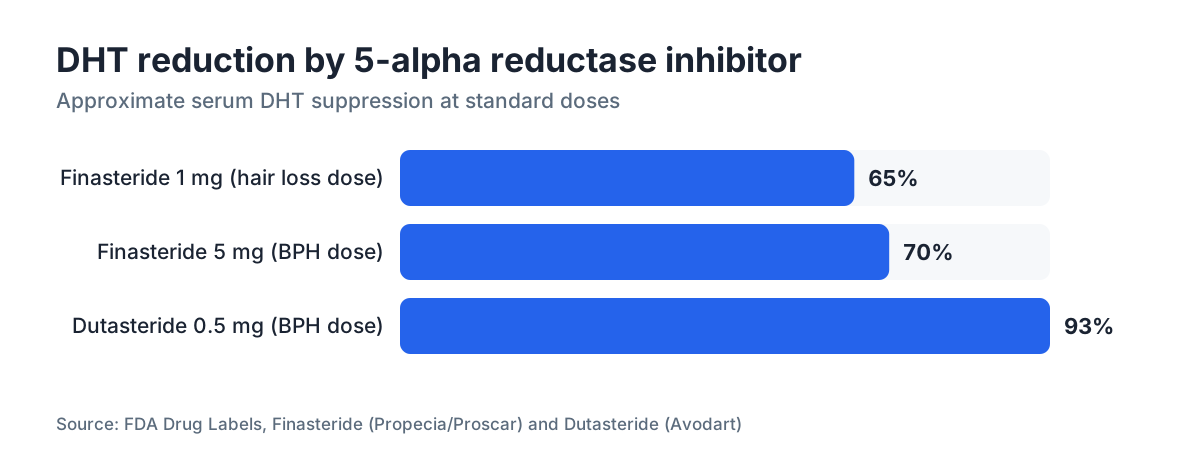
Finasteride 1 mg (Propecia), approved by the FDA for androgenetic alopecia in men in 1997, works by reducing scalp DHT by roughly 60-70%, which is enough to slow or halt loss in most men and regrow hair in a meaningful subset [2].
How much do DHT levels actually differ between men who have BPH or hair loss and those who don't?
Here the data gets genuinely complicated, and anyone who hands you a clean answer is oversimplifying.
Several large studies have found that serum DHT levels in men with androgenetic alopecia are not reliably higher than in men without it [5]. The difference lives in receptor sensitivity, not in the amount of DHT floating in the blood. Prostate volume also correlates weakly with serum DHT in most epidemiological studies.
What correlates better is 5-alpha reductase activity, which you can't read off a routine blood test. Men with higher enzyme activity convert more testosterone to DHT at the tissue level, even when their circulating numbers look unremarkable.
| Condition | Primary driver | Serum DHT predictive? | Key treatment mechanism |
|---|---|---|---|
| Androgenetic alopecia | Follicle androgen receptor sensitivity + local DHT | Weakly | Reduce scalp DHT ~60-70% |
| BPH | Prostatic DHT accumulation + growth factors | Weakly | Reduce prostatic DHT ~85-90% |
| Both simultaneously | High 5-AR activity + androgen receptor expression | Somewhat | 5-ARI drugs address both |
So if you have both conditions, elevated 5-alpha reductase activity is a plausible common thread, even when your serum DHT comes back "within range."
Can the same man have both BPH and androgenetic alopecia at the same time?
Yes, and it's common. Both conditions share the same hormonal mechanism, both climb in prevalence with age, and both track the same genetic variation in androgen receptor function.
A 2000 study published in the Journal of the American Academy of Dermatology found that men with vertex baldness had a statistically significant increased risk of BPH compared to men with minimal hair loss [6]. The association tied specifically to vertex (crown) thinning rather than frontal recession, which points to the androgen sensitivity pattern in that scalp region.
Not everyone with hair loss has BPH, and not everyone with BPH is bald. The overlap is real, and the shared biology explains why.
If you have both, that's useful information for treatment. A DHT blocker like finasteride at 5 mg can address both at once, and many urologists and dermatologists coordinate care for exactly this reason.
Does a high DHT blood test mean you will definitely get prostate problems?
No. It raises risk. It doesn't decide the outcome.
BPH is driven by intratissue DHT, not circulating DHT. A high serum DHT reading tells you your 5-alpha reductase is converting testosterone at a fast clip, which does increase the amount of DHT your prostate sees. But other factors matter too: your androgen receptor gene variants, your age, your estrogen-to-androgen ratio, and your overall hormonal picture.
Prostate cancer is a separate question. BPH is not cancer and does not become cancer, but prostate cancer is also androgen-sensitive. High DHT has a more complicated and debated relationship with prostate cancer risk. The Prostate Cancer Prevention Trial, which tested finasteride 5 mg against placebo in over 18,000 men, found that finasteride cut the overall detection of prostate cancer by about 25%, but the drug group had a slightly higher rate of high-grade tumors detected, which fed years of controversy before follow-up analyses suggested this was largely a detection artifact [7].
If you're worried about prostate health specifically, a PSA test and a conversation with a urologist is the right move. Hair loss or not, men over 50 (or 45 if Black or with family history) should talk to a doctor about prostate cancer screening per the American Cancer Society [8].
What treatments reduce DHT for both conditions, and are they the same drugs?
Mostly yes. The drug class is 5-alpha reductase inhibitors (5-ARIs), and two of them are FDA-approved.
Finasteride selectively inhibits the Type 2 isoform of 5-alpha reductase. At 1 mg daily it's approved for male-pattern baldness; at 5 mg daily it's approved for BPH. Same drug, different dose. A study in the New England Journal of Medicine reported that finasteride 5 mg reduced prostate volume significantly and improved urinary flow scores against placebo over a 4-year period [9].
Dutasteride inhibits both Type 1 and Type 2 isoforms, suppressing serum DHT by roughly 90-95% versus finasteride's 70% [12]. It's FDA-approved for BPH (Avodart, 0.5 mg daily) and gets used off-label by dermatologists for hair loss. Some men and their doctors turn to dutasteride when finasteride hasn't delivered enough response, though it carries the same sexual side effect profile and is not FDA-approved for alopecia in the US.
For a detailed breakdown of the hair loss application specifically, see finasteride and the combined approach in finasteride and minoxidil.
Minoxidil works through a completely different mechanism (vasodilation and potassium channel opening) and has no effect on DHT. It improves hair growth but does nothing for the prostate. You can read about topical use in minoxidil for men and systemic effects in oral minoxidil.
| Drug | DHT reduction | FDA-approved for hair loss | FDA-approved for BPH | Key side effect risk |
|---|---|---|---|---|
| Finasteride 1 mg | ~60-70% serum | Yes (men) | No | Sexual dysfunction, post-finasteride syndrome (rare) |
| Finasteride 5 mg | ~70% serum | No | Yes | Same as above |
| Dutasteride 0.5 mg | ~90-95% serum | No (US) | Yes | Similar to finasteride |
| Minoxidil | 0% | Yes (men and women) | No | Scalp irritation, unwanted facial hair |
Are there risks to blocking DHT if you're trying to treat both conditions?
Yes, and they deserve honest attention.
Sexual side effects get the most airtime. The FDA label for finasteride lists decreased libido, erectile dysfunction, and decreased ejaculate volume. In clinical trials these showed up in roughly 3-4% of men on finasteride 1 mg versus about 2% on placebo [2]. A real but modest increase, and in most men the effects resolve after stopping the drug.
A more contested concern is post-finasteride syndrome, where some men report persistent sexual, neurological, and psychological symptoms after quitting the drug. The FDA added a label update in 2012 noting that libido, erectile function, and ejaculation disorders may continue after discontinuation [2]. The actual prevalence of persistent symptoms is genuinely unknown, because the best-designed studies haven't been done. Nobody has good population-level data here; the closest systematic review, in 2020 in JAMA Dermatology, found the evidence base too limited to draw firm conclusions on persistence rates.
DHT does more than shape hair and prostate. It affects muscle, mood, bone density, and neurological function. Cutting it hard for years is not without systemic implications, even if most men tolerate 5-ARIs well. Have this conversation with a doctor who knows your full health picture, not with a hair forum.
If you're also weighing supplements, hair loss supplements covers what the evidence actually supports as adjuncts.
Do women experience DHT-related hair loss differently, and does it affect their prostate equivalents?
Women don't have a prostate, so that half of the question doesn't apply. But women do produce DHT, in smaller amounts, and female-pattern hair loss carries a meaningful androgenic component in many (though not all) cases.
Female androgenetic alopecia usually shows up as diffuse thinning at the crown rather than a receding hairline, partly because women have lower overall androgen levels and more aromatase activity (which converts testosterone to estrogen rather than DHT). The dermal papilla cells in women's scalps still express androgen receptors, so when DHT rises, such as during menopause when estrogen falls and the androgen-to-estrogen ratio shifts, hair loss often speeds up.
Polycystic ovary syndrome (PCOS), which involves elevated androgens including DHT, is one of the more common causes of hair loss in younger women. Women with PCOS have elevated 5-alpha reductase activity and higher intrafollicular androgen activity. Spironolactone, which blocks androgen receptors, is a common treatment for both the hormonal and hair-related sides of PCOS.
For women, finasteride is not FDA-approved for hair loss and is contraindicated in pregnancy due to teratogenicity risk. Minoxidil (2% solution or 5% foam) is the standard first-line treatment.
If your shedding pattern doesn't fit the androgenetic template, see telogen effluvium for the other major category of diffuse hair loss, which is not DHT-driven.
Should you get your DHT levels tested if you have both hair loss and urinary symptoms?
It's reasonable to ask for, but don't expect it to change treatment much.
As above, serum DHT doesn't predict BPH severity or hair loss severity well at the individual level. Most clinical guidelines for BPH lean on symptom scores (like the IPSS questionnaire), PSA, and prostate volume on ultrasound rather than DHT levels. Most guidelines for androgenetic alopecia don't require DHT testing before starting treatment in typical male-pattern loss.
Where a full hormonal panel does matter: women with hair loss who may have PCOS or adrenal issues, men with unusually severe or early-onset loss who might have a hormonal disorder, and anyone considering testosterone replacement therapy (which sharply increases DHT conversion and can worsen both hair loss and prostate growth).
If you want a structured way to assess your hair loss pattern before booking a doctor's appointment, MyHairline's free AI scan (/scan) can characterize your pattern and Norwood stage from photos, which gives you something concrete to bring to the conversation.
If you do get a DHT test, the typical reference range for men runs roughly 300-850 pg/mL (or about 1.03-2.92 nmol/L), though lab reference ranges vary. A result within range doesn't rule out androgenetic sensitivity, and a result above range is worth discussing with an endocrinologist or urologist.
Does creatine or testosterone therapy make both conditions worse?
Creatine deserves an answer because the question comes up constantly. A 2009 study in the Clinical Journal of Sport Medicine found that college rugby players taking creatine monohydrate had a statistically significant increase in DHT-to-testosterone ratio after three weeks, rising roughly 56% above baseline [10]. The study measured DHT, not testosterone, and serum levels stayed within normal range, but the relative shift was notable.
That doesn't prove creatine causes hair loss or worsens BPH. The study was small (20 men), short, and measured a ratio, not a clinical outcome. No trial has randomized men to creatine and measured prostate volume or hair count. Still, if you have both androgenetic alopecia and BPH and you're hunting for reasons your symptoms are getting worse, a high creatine intake is at least a plausible contributor worth discussing. See the full breakdown in does creatine cause hair loss.
Testosterone replacement therapy (TRT) is a clearer story. When you add exogenous testosterone, your 5-alpha reductase converts some of it to DHT, raising both circulating and intratissue DHT. Men on TRT who are prone to hair loss often notice faster thinning, and urologists routinely track prostate volume and PSA in men on TRT for exactly this reason. If you have a receding hairline and are considering TRT, this tradeoff is worth a frank conversation with your prescriber.
What's the practical takeaway if you have both hair loss and prostate symptoms?
See both a dermatologist and a urologist, ideally ones who know you're managing both issues. This isn't as complicated as it sounds. The treatments overlap heavily.
For most men in this spot, finasteride 5 mg is the most logical pharmacological starting point. It's FDA-approved for BPH, and multiple studies confirm it reduces prostate volume and improves urinary symptoms. At that dose, it also cuts scalp DHT enough to address androgenetic alopecia, even though 1 mg is the labeled hair loss dose. Some doctors prescribe 5 mg for both conditions at once. Others prefer to keep doses separate for titration flexibility.
Minoxidil can be added for hair loss with no effect on the prostate, which makes it a safe adjunct. See minoxidil side effects if you're weighing risks.
Lifestyle factors matter at the margins. Obesity increases aromatase activity but also raises insulin and testosterone precursors. Chronic stress lifts cortisol, which can push androgen output higher. Neither of these substitutes for medical treatment if your BPH is symptomatic, but both are worth addressing.
For men whose hair loss has kept progressing despite medication, hair transplant is an option worth understanding, though it's a cosmetic solution, not a hormonal one, and ideally happens after medical treatment has stabilized ongoing loss.
MyHairline's free AI analysis (/scan) can give you a baseline Norwood stage assessment, useful context before any consultation.
Sources
- New England Journal of Medicine, Imperato-McGinley et al. 1974, 5-alpha reductase deficiency study
- FDA Drug Label, Finasteride (Propecia and Proscar)
- National Institute of Diabetes and Digestive and Kidney Diseases (NIDDK), Prostate Enlargement: Benign Prostatic Hyperplasia
- American Academy of Dermatology, Androgenetic Alopecia overview
- Journal of Investigative Dermatology, Sawaya & Price 1997, 5-alpha reductase and androgen receptor in bald vs non-bald scalp
- Journal of the American Academy of Dermatology, Hawk et al. 2000, vertex baldness and BPH risk
- New England Journal of Medicine, Thompson et al. 2003, Prostate Cancer Prevention Trial
- American Cancer Society, Prostate Cancer Early Detection Guidelines
- New England Journal of Medicine, McConnell et al. 1998, Finasteride for BPH 4-year outcomes
- Clinical Journal of Sport Medicine, van der Merwe et al. 2009, Creatine and DHT in rugby players
- New England Journal of Medicine, Bent et al. 2006, Saw Palmetto for Benign Prostatic Hyperplasia
- FDA Drug Label, Dutasteride (Avodart)