

TL;DR: Seborrheic dermatitis does not usually cause permanent hair loss. The shedding it triggers is almost always reversible once the scalp inflammation is controlled. In rare, severe cases where inflammation runs unchecked for years, follicle scarring is possible but uncommon. Treat it early with antifungal shampoos and the hair almost always comes back.
What is seborrheic dermatitis and how does it affect the scalp?
Seborrheic dermatitis is a chronic inflammatory skin condition driven largely by an overgrowth of Malassezia yeast on oily areas of the skin. The scalp is the most common site. You get red, flaky, greasy patches and an itchy scalp that can range from mild dandruff to thick, crusted plaques covering large areas [1].
The Malassezia yeast is not an invader in the usual sense. It lives on almost everyone's scalp. The trouble starts when the immune system overreacts to its metabolites, particularly free fatty acids that irritate the skin barrier. That immune response drives inflammation, and inflammation is what connects seborrheic dermatitis to hair loss [2].
About 11 percent of the general population has seborrheic dermatitis, making it one of the most common diagnoses a dermatologist sees [1]. Men get it more often than women. It tends to peak in infancy (cradle cap) and again in adults aged 30 to 60.
The scalp inflammation is real and measurable. When follicles sit inside inflamed skin, the hair cycle gets disrupted. That disruption is the chain of events worth understanding if you are worried about whether your hair will grow back.
Can seborrheic dermatitis actually cause hair loss?
Yes, it can cause hair loss, but the mechanism matters a lot for figuring out whether that loss is temporary or permanent.
The main way seborrheic dermatitis causes shedding is by pushing hairs prematurely from the growth phase (anagen) into the resting and shedding phase (telogen). This is the same process behind telogen effluvium, where scalp-wide stress triggers diffuse shedding. The inflammation acts as that stressor. Hair sheds, sometimes noticeably, but the follicles themselves are still alive and intact.
The second mechanism is mechanical. A severely itchy scalp makes you scratch. Repeated scratching traumatizes the skin and the follicles underneath, and can yank out hairs that were not ready to fall. Over months, that physical trauma adds up.
A 2020 review in the Journal of Clinical Medicine found an association between seborrheic dermatitis and androgenetic alopecia, noting that Malassezia-driven inflammation may worsen genetically predisposed hair loss, though the researchers were careful to say causation is not established [3]. Put plainly: if you already carry a genetic tendency toward a receding hairline, seborrheic dermatitis could speed it up. If you do not carry that tendency, the shedding is very likely to reverse once the condition is controlled.
Seborrheic dermatitis causes hair loss more often than most people realize. But the type of loss is almost always the recoverable kind.
Does untreated seborrheic dermatitis cause permanent hair loss?
This is the question most people are actually asking, and the honest answer is that permanent loss is possible but it is not the typical outcome.
Permanent follicle damage requires scarring alopecia. Scarring happens when chronic inflammation gets severe enough and sustained enough to destroy the follicular stem cell reservoir, which sits in a region called the follicular bulge. Once those stem cells are gone, the follicle cannot regenerate and the loss is permanent [4].
Seborrheic dermatitis, left completely untreated over years, can create the kind of persistent inflammation that risks this damage, especially if it turns into a very severe, diffuse form. Most cases, even neglected ones, never reach that threshold. The condition waxes and wanes on its own, which means follicles get some recovery time even without treatment.
The risk genuinely rises at the severe end of the spectrum: dense plaques, heavy crusting, frequent secondary bacterial infections, and years of continuous active inflammation. Someone in that situation has a real, if still minority, risk of some permanent thinning in the worst-affected zones.
For most people with ordinary seborrheic dermatitis, the hair loss is reversible. Treat the inflammation, stop the itch-scratch cycle, and most of the shed hair returns within three to six months. That timeline matches how long a telogen hair takes to re-enter anagen and grow to a visible length.
One nuance matters here: if you also carry genetic androgenetic alopecia, the combined effect can look worse and recover less completely than either condition alone. That is why an accurate picture of what is happening matters.
What does the research actually say about seborrheic dermatitis and follicle damage?
The research is honest about the gaps. There are no large, long-term randomized trials that followed people with untreated seborrheic dermatitis for a decade and measured permanent follicle loss. That kind of study is hard to run ethically, because you would have to withhold treatment.
What we have is mechanistic evidence. Chronic inflammation is a well-documented driver of scarring alopecia in conditions like lichen planopilaris and frontal fibrosing alopecia. Seborrheic dermatitis produces lower-grade, more diffuse inflammation, which is why it rarely causes the same catastrophic scarring. But inflammation is inflammation, and the biological path from sustained follicular inflammation to stem cell damage is real [4].
Dermoscopy and biopsy work in seborrheic dermatitis shows perifollicular inflammation in a substantial share of samples, meaning the inflammation sits directly around the follicles rather than only in the superficial epidermis [5]. Whether that perifollicular inflammation, over years, translates to permanent damage in a meaningful fraction of patients is still not answered definitively in the literature.
What dermatologists do agree on, based on clinical experience, is that seborrheic dermatitis-related hair loss looks like diffuse shedding, responds well to antifungal treatment, and does not usually produce the scarring pattern you see in primary scarring alopecias. Reassuring, but not an absolute guarantee.
The American Academy of Dermatology does not list seborrheic dermatitis as a cause of permanent hair loss in its patient materials, which tells you where the clinical consensus sits [1].
How long does it take for hair to grow back after treating seborrheic dermatitis?
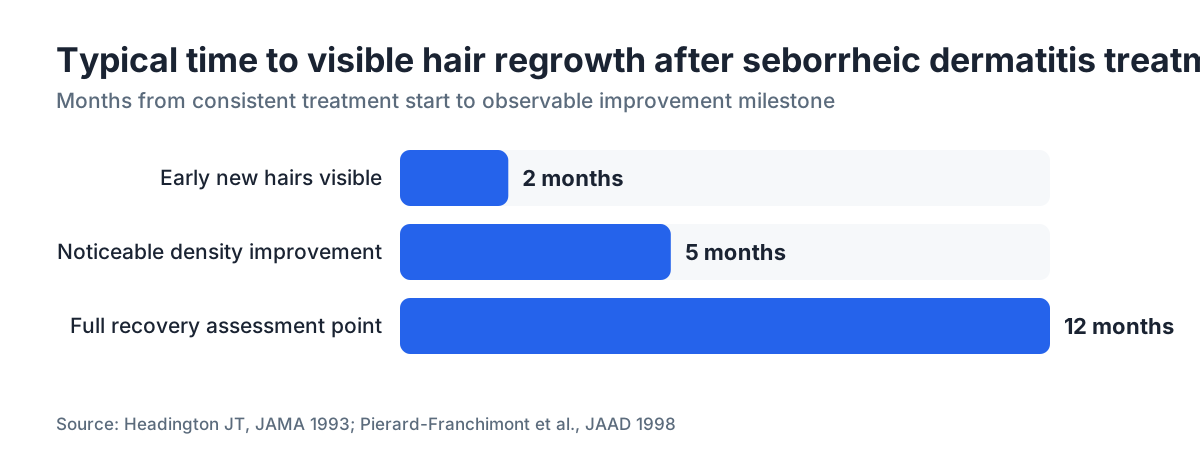
If the follicles are intact, which they almost always are in seborrheic dermatitis, regrowth follows the normal cycle. Control the inflammation and follicles move from the resting phase back into anagen (growth), with new growth starting within two to three months.
Visible improvement in density usually takes three to six months because scalp hair grows roughly half an inch per month. A hair that re-enters anagen in month one only reaches a noticeable length by month three or four. Full recovery, if it is going to happen, is generally judged at the twelve-month mark [6].
A few things slow that recovery:
- If you had significant scratching trauma, the skin barrier needs to heal before follicles fully normalize.
- If you have underlying androgenetic alopecia running in parallel, the seborrheic-related regrowth can be masked by continued genetic loss.
- If treatment is inconsistent and the condition keeps flaring, follicles never get clean recovery windows.
Here is the practical message. Consistency beats flare-chasing. People who keep using a maintenance shampoo even when they feel fine tend to have better long-term hair outcomes than people who quit the moment symptoms clear.
What treatments actually work for seborrheic dermatitis hair loss?
The first-line treatments are antifungal. Since Malassezia overgrowth drives the inflammation, cutting the yeast load is the most direct move.
Ketoconazole 1% is available over the counter in the US as a shampoo. The 2% prescription version is stronger. A randomized trial in the Journal of the American Academy of Dermatology found ketoconazole 2% shampoo significantly reduced seborrheic dermatitis severity and also improved hair density compared to placebo, suggesting the antifungal itself does something for the hair beyond controlling the condition [7]. That finding is why dermatologists often recommend ketoconazole shampoo even alongside other hair loss treatments.
Zinc pyrithione shampoos (Head and Shoulders and many generics) are a solid maintenance option. Less potent than ketoconazole, but well-tolerated and cheap for daily or every-other-day use.
Selenium sulfide 1% (Selsun Blue) is another over-the-counter option. Prescription selenium sulfide 2.5% handles more stubborn cases.
Ciclopirox shampoo (prescription) is an antifungal that works through a different mechanism, useful when Malassezia has developed some resistance to azole antifungals.
For inflammation, low-potency topical corticosteroids like over-the-counter hydrocortisone can calm flares. Higher-potency prescription steroids work faster but carry a risk of scalp thinning with long-term use, which is a real concern when you are already worried about hair. Calcineurin inhibitors like tacrolimus are sometimes used as a steroid-sparing option [2].
If you are also dealing with androgenetic alopecia on top of seborrheic dermatitis, your dermatologist may combine the above with minoxidil for men or finasteride. Those treatments address the genetic component; the antifungals address the inflammatory component. Using both together is common and generally safe.
One more thing. If you are not sure what you are dealing with, scalp psoriasis and seborrheic dermatitis look similar and need somewhat different management. A dermatologist can usually tell them apart by appearance, and by biopsy when needed.
How do you know if your hair loss is from seborrheic dermatitis or something else?
The right treatment depends on the right diagnosis, and seborrheic dermatitis often coexists with other causes of hair loss rather than being the only one. That makes this worth getting right.
Seborrheic dermatitis hair loss looks diffuse. It spreads across the scalp rather than following a pattern. You almost always have visible scalp symptoms: flakes, redness, greasiness, itching. The loss usually tracks with flare severity, getting worse when the scalp is most inflamed.
Androgenetic alopecia (pattern baldness) follows a predictable template, the Norwood scale for men and the Ludwig scale for women. It does not itch, and there are no flakes unless seborrheic dermatitis happens to coexist. What causes hair loss is a good starting point for the full range of possibilities.
Telogen effluvium is diffuse shedding triggered by a systemic stressor (illness, surgery, crash diet, childbirth). Like seborrheic dermatitis, it is usually reversible. Unlike seborrheic dermatitis, the scalp itself looks normal.
Scarring alopecias (lichen planopilaris, frontal fibrosing alopecia, discoid lupus) cause permanent follicle destruction and often bring a burning or painful scalp, follicular redness, and scaling concentrated around individual hairs. These are more serious and need prompt dermatology attention.
Alopecia areata shows up as smooth, round patches with no scalp inflammation.
If your hair loss started with, or tracks alongside, a symptomatic scalp, treating the seborrheic dermatitis first and watching for regrowth works as both a diagnostic strategy and a treatment. If the loss continues after you have good control of the seborrheic dermatitis, that is a signal to investigate other causes.
MyHairline's free AI scan (/scan) can help you map what you are seeing on your scalp before your dermatology appointment, so you walk in with a clearer picture instead of starting from zero.
Does seborrheic dermatitis make androgenetic alopecia worse?
There is real reason to think it does, and this is one of the more clinically important connections.
Malassezia yeast produce lipases that break down sebum into free fatty acids. Those free fatty acids irritate the scalp and drive inflammation [9]. There is a proposed mechanism in which Malassezia-driven inflammation raises local androgen activity in the scalp, which would in theory speed up DHT-driven miniaturization of follicles in people who are genetically susceptible [3].
The 2020 Journal of Clinical Medicine review found that seborrheic dermatitis and androgenetic alopecia share more geographic overlap on the scalp than chance would predict, particularly in the frontotemporal and vertex regions, exactly where androgenetic alopecia concentrates [3]. That overlap is suggestive even if it does not prove causation.
In practice, if you have both conditions, controlling seborrheic dermatitis may slow the progression of pattern hair loss even though it will not stop it entirely. If androgenetic alopecia is the main driver, you will likely need a DHT blocker like finasteride rather than antifungal shampoo alone. The two approaches are not mutually exclusive, and many people run them together.
What happens if you leave seborrheic dermatitis untreated for years?
Most people who go years without treatment are dealing with a mild, low-grade form. In those cases, the consequences are persistent dandruff, occasional itching, and some diffuse thinning that waxes and wanes with flares. Probably no permanent follicle damage. Uncomfortable, but not catastrophic.
For people with moderate to severe untreated seborrheic dermatitis, the picture changes. Secondary bacterial infections can set in on cracked or excoriated skin. Widespread thick plaques can cut oxygen and nutrient delivery to follicles. Long-standing perifollicular inflammation can produce fibrosis around the follicle even without classic scarring alopecia, reducing the follicle's ability to grow a healthy hair shaft [5].
Years of severe, untreated disease also means years of scratching, and that mechanical trauma has its own slow cumulative effect on follicle health.
Here is the honest summary. Mild and moderate seborrheic dermatitis left untreated is unlikely to cause permanent hair loss in most people, but it is also completely unnecessary to leave alone given how well it responds to cheap treatments. Severe, untreated disease over many years carries a real, though still minority, risk of some permanent thinning. There is no reason to find out which category you fall into when effective shampoos cost eight dollars.
Can minoxidil or finasteride help with seborrheic dermatitis hair loss?
Minoxidil and finasteride address androgenetic alopecia. They do not treat the underlying inflammation of seborrheic dermatitis. So if seborrheic dermatitis is the primary or sole cause of your shedding, using finasteride and minoxidil without also addressing the scalp condition is treating the wrong thing.
That said, if you have both conditions at once (and many people do, because the affected scalp regions overlap heavily), minoxidil and finasteride make sense as part of a broader regimen. Minoxidil is a vasodilator that extends the anagen phase and may improve follicle nutrition. Finasteride lowers scalp DHT by around 60 to 70 percent [8], which cuts the androgenetic component of your loss.
One thing to watch. Minoxidil applied to an actively inflamed scalp can sometimes cause extra irritation. Using it on a well-controlled scalp, after getting seborrheic dermatitis under management, tends to go down better. If you want the full side effect picture first, minoxidil side effects covers that in detail.
For people whose hair loss has a meaningful androgenetic component on top of seborrheic dermatitis, antifungal management plus a proven hair loss treatment is usually the most effective approach overall.
When should you see a dermatologist about seborrheic dermatitis and hair loss?
See a dermatologist if any of these apply:
- Over-the-counter antifungal shampoos have not improved your symptoms after four to six weeks of consistent use.
- Your scalp has painful areas, significant redness, or what looks like infected skin.
- Your hair loss is accelerating or following a pattern that does not match diffuse shedding.
- You have had significant hair loss and it has not started recovering after three months of controlled seborrheic dermatitis.
- You cannot tell whether what you have is seborrheic dermatitis, psoriasis, or something more serious.
A dermatologist can examine your scalp with a dermatoscope, which shows follicle structure and surrounding inflammation in far more detail than a naked-eye exam. They can biopsy a patch if the diagnosis is genuinely uncertain. And they can prescribe higher-potency treatments (2% ketoconazole, prescription ciclopirox, stronger anti-inflammatories) that you cannot buy over the counter.
Do not wait years to get evaluated if over-the-counter treatments are not working. The case for early treatment is not about fear of permanent loss, which again is not the typical outcome. It is that seborrheic dermatitis is very treatable, and there is no upside to tolerating the discomfort and the shedding while good options are sitting on the shelf.
Sources
- American Academy of Dermatology, Seborrheic Dermatitis Overview
- National Institute of Arthritis and Musculoskeletal and Skin Diseases (NIAMS)
- Peyravian N et al., Journal of Clinical Medicine 2020, The Inflammatory Aspect of Male and Female Pattern Hair Loss
- Otberg N et al., Seminars in Cutaneous Medicine and Surgery, Follicular Stem Cells and Scarring Alopecia
- Ranawaka RR et al., Skin Appendage Disorders 2021, Dermoscopy of Seborrheic Dermatitis
- Headington JT, JAMA 1993, Telogen Effluvium: New Concepts and Review
- Pierard-Franchimont C et al., JAAD 1998, Ketoconazole Shampoo Reduces Hair Loss in Men
- U.S. National Library of Medicine, DailyMed, Finasteride Prescribing Information
- Borda LJ and Wikramanayake TC, Journal of Clinical and Investigative Dermatology 2015, Seborrheic Dermatitis and Dandruff: A Comprehensive Review
- MedlinePlus (National Library of Medicine)