
TL;DR: Sleep deprivation can worsen hair loss, though it rarely causes it from scratch. Chronic poor sleep raises cortisol, disrupts the hormones that govern hair cycling, and can trigger or extend telogen effluvium (a shedding condition). Most people need a true stressor beyond bad sleep alone to see significant loss, but if you're already prone to hair loss, poor sleep adds real fuel to the fire.
What does sleep actually do for your hair follicles?
Hair follicles are not passive. They're metabolically active mini-organs that cycle through growth (anagen), transition (catagen), and rest/shedding (telogen) phases on their own schedule. That schedule is partly governed by hormones that fluctuate with your sleep-wake cycle.
Human growth hormone (HGH) is released primarily during deep, slow-wave sleep. HGH stimulates cell proliferation in the hair matrix, the tissue at the base of the follicle that actually builds the hair shaft. A 1999 study published in the Journal of Clinical Endocrinology and Metabolism confirmed that roughly 70% of daily HGH secretion happens during the first few hours of sleep, overwhelmingly tied to slow-wave cycles [1]. Chronically cut that window short and you cut the hormonal signal that tells follicles to stay in the growth phase.
Melatonin adds a second layer. Your scalp follicles have melatonin receptors, and research published in the British Journal of Dermatology found that topical melatonin applied to the scalp significantly increased the proportion of follicles in anagen compared to placebo [2]. Melatonin drops when you're not sleeping and when artificial light hits your eyes late at night. That's not a catastrophic effect on its own, but it's another nudge in the wrong direction.
So before we even reach stress hormones, sleep does two concrete things for hair. It gives you the main window for growth-promoting HGH secretion, and it keeps melatonin levels up that follicle receptors appear to use as a timing cue.
How does sleep deprivation raise the hormones that damage hair?
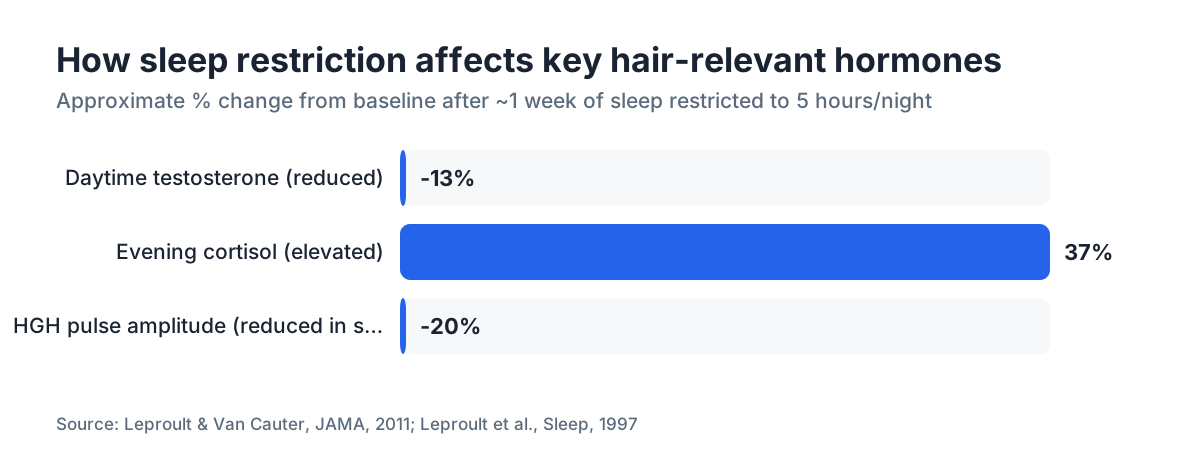
Cortisol is the villain most people have heard of, and the link here is well-documented. Sleep restriction studies consistently show that cutting sleep to around five hours or fewer for even a few days significantly elevates evening cortisol levels [3]. The problem is that cortisol, at elevated chronic levels, can push follicles prematurely into the telogen (resting/shedding) phase. A widely cited 2021 study from Harvard published in Nature identified a mechanism: sustained stress hormones suppressed a dermal papilla cell signal (Gas6) that normally keeps follicle stem cells active and ready to cycle back into growth [4]. The follicles didn't die. They just went quiet.
Beyond cortisol, sleep deprivation disrupts the hypothalamic-pituitary-adrenal (HPA) axis more broadly. This matters for hair because the HPA axis also regulates the hormones that interact with androgens, and androgens, specifically dihydrotestosterone (DHT), are the primary driver of androgenetic alopecia (male and female pattern hair loss). The relationship between poor sleep, elevated androgens, and hair loss is not as cleanly mapped as the cortisol story, but there is enough mechanistic overlap to take seriously, especially if you already carry genetic sensitivity to DHT. For more detail on how DHT contributes to pattern loss, see what causes hair loss and DHT blocker.
Prolactin is another hormone worth noting. Sleep deprivation raises prolactin. Hyperprolactinemia (chronically high prolactin) is a recognized cause of hair loss in clinical practice, and while ordinary short sleep doesn't produce the extreme elevations seen in prolactinomas, it adds to the hormonal load on the follicle.
Can sleep loss alone cause telogen effluvium?
Probably not on its own, at least not in most people. Telogen effluvium is a diffuse shedding condition triggered when a large share of follicles shift into the telogen phase at once. The classic triggers are rapid weight loss, surgery, high fever, childbirth, severe psychological stress, nutritional deficiency, and medications. Most dermatologists would rank chronic poor sleep as a contributing factor rather than a standalone trigger.
The realistic scenario is stacking. Poor sleep amplifies every other stressor. If you're also under psychological pressure at work, eating poorly, or losing weight quickly, the extra cortisol load from insufficient sleep can push the combined stress burden past the threshold that triggers a shedding episode. That matches what most dermatologists see clinically. Patients rarely arrive with sleep as the only explanation for their shedding, but when they walk back the timeline, severe sleep disruption was often present in the months before the shed began.
Telogen effluvium typically shows up two to three months after the triggering event, which makes the sleep connection easy to miss. You're shedding heavily in March, you're asking what happened in March, but the actual stressor was December and January.
One honest caveat: nobody has a clean randomized trial where they kept otherwise healthy people sleep-deprived for months and measured hair counts. The evidence is partly mechanistic (we know what sleep deprivation does to the hormones that affect hair) and partly observational (people with chronic sleep disorders have higher rates of hair loss). Proving causation in the strict sense is genuinely hard here.
Does sleep affect androgenetic alopecia (pattern hair loss)?
This is where it gets more complicated, and more honest hedging is required.
Androgenetic alopecia (AGA), the genetically programmed pattern loss that accounts for the vast majority of hair loss in both men and women, is driven by DHT acting on follicles that carry genetic sensitivity to it. Sleep doesn't change your genetics. If you carry the androgen receptor variants that make your follicles vulnerable to DHT, that sensitivity is fixed.
What sleep can do is affect the androgen environment those follicles sit in. A 2011 study in JAMA found that one week of sleep restriction to five hours per night reduced testosterone levels in young healthy men by 10 to 15% [5]. That sounds counterintuitive, because lower testosterone might seem protective against DHT-driven loss, but the hormonal picture is messier than that. Testosterone is the precursor to DHT (via the 5-alpha reductase enzyme), and short-term sleep disruption does not neatly track with protective changes across the full androgen cascade.
The more practical point is that sleep deprivation adds an inflammatory and hormonal burden that's bad for follicles already fighting a genetic battle. If you're dealing with a receding hairline and sleeping five hours a night, you're not helping yourself. Whether good sleep slows AGA progression in any measurable way is genuinely unknown. There's no clinical trial on it. But the mechanism for harm from chronic poor sleep is plausible and the cost of fixing it is zero, so it's an easy call.
What does the research actually show, and how strong is it?
The honest answer is that the direct human evidence is thin, but the mechanistic and indirect evidence is real.
On the mechanistic side, the Harvard/Nature 2021 study is probably the clearest link. Researchers found that stress-induced corticosterone (the rodent cortisol equivalent) inhibited Gas6 signaling in dermal papilla cells, arresting hair follicle stem cell activation. When they neutralized corticosterone pharmacologically, follicle cycling resumed [4]. That's a mouse study with a clean causal mechanism.
On the epidemiological side, a cross-sectional study published in Annals of Dermatology in 2020 found that patients with alopecia areata (an autoimmune hair loss condition) reported significantly worse sleep quality on the Pittsburgh Sleep Quality Index compared to controls [6]. This doesn't prove sleep causes alopecia areata, but it suggests sleep disruption and active hair loss conditions travel together.
For the cortisol-telogen link, the most-cited indirect evidence comes from studies on other forms of psychological stress showing hair follicle effects. A study in PLOS ONE in 2016 found elevated cortisol in the hair of patients who had experienced severe stress-induced shedding compared to controls [7].
What we don't have: a prospective randomized human trial showing that sustained sleep deprivation causes hair loss, or that sleep improvement reverses it. That trial probably hasn't been done because it would mean deliberately wrecking participants' sleep for months. The evidence here is mechanistic and observational, not interventional. That's a real limitation worth stating plainly.
| Evidence type | Quality | What it shows |
|---|---|---|
| Mouse study (Harvard/Nature 2021) | High mechanistic | Cortisol suppresses follicle stem cell activation |
| Human cortisol/testosterone studies | Moderate | Sleep restriction raises cortisol, alters androgens |
| Epidemiological cross-sectional | Low-moderate | Sleep disorders correlate with hair loss conditions |
| Randomized human trial (hair endpoints) | None found | No direct causal proof in humans yet |
How many hours of sleep do you need to avoid hair-related harm?
The CDC recommends adults get at least 7 hours of sleep per night for general health [8]. The research showing significant cortisol disruption and testosterone suppression generally used protocols restricting sleep to 5 hours or fewer. So 7 to 9 hours protects more than your general health. It protects the hormonal environment your follicles depend on.
Sleep quality matters as much as quantity. Six hours of uninterrupted, deep sleep probably does more for HGH release and cortisol regulation than eight fragmented hours. Conditions like sleep apnea, which cut deep sleep without necessarily cutting total time in bed, are worth taking seriously. Sleep apnea causes intermittent hypoxia (low oxygen), and follicle cells are sensitive to oxygen levels. There's emerging (but still early) evidence linking sleep apnea severity to alopecia risk, though the literature is not settled.
The practical threshold from the hormonal data is blunt. Consistently sleeping under 6 hours means the cortisol and HGH disruption is probably real enough to add to any hair loss you're seeing. Below 5 hours, the data is quite clear that your endocrine system is under significant strain.
What other factors interact with poor sleep to accelerate hair loss?
Poor sleep rarely acts alone. Here are the combinations that genuinely compound the problem.
Stress and poor sleep feed each other in a loop that's hard to break. Psychological stress raises cortisol, which makes sleep worse, which raises cortisol further. If you're already under heavy psychological pressure, even modest sleep restriction can tip the cumulative hormonal burden over the follicle threshold.
Nutritional deficiency plus poor sleep is another dangerous stack. Iron deficiency and vitamin D deficiency are both independently associated with hair loss [9]. Poor sleep disrupts appetite regulation and can worsen dietary habits over time, so the two problems often coexist. Before blaming hair loss on sleep alone, get a basic blood panel (ferritin, vitamin D, thyroid, CBC).
Rapid weight loss or caloric restriction while sleep-deprived piles on the metabolic stress. Caloric restriction already raises cortisol and can trigger telogen effluvium on its own.
Medications that affect sleep also affect hair. Some drugs used for insomnia or anxiety carry their own hair loss associations. Beta-blockers, anticoagulants, and certain antidepressants are all listed as potential causes of diffuse shedding. If you're taking something for sleep problems, that medication itself deserves a look as a variable. See hair loss supplements for more on the nutritional side, and the what causes hair loss article covers the broader diagnostic landscape.
Genetic predisposition to pattern hair loss shrinks the margin. Someone genetically sensitive to DHT is working with less buffer. For them, adding a chronic cortisol load from poor sleep may be the straw that visibly speeds up the timeline.
Can improving your sleep actually slow or reverse hair shedding?
For telogen effluvium triggered or worsened by sleep deprivation, cautiously yes, because TE is largely reversible once the triggering stressor is gone. Once you consistently get enough sleep and your cortisol normalizes, follicles should eventually re-enter the anagen phase. The catch is timing. Even after the stressor is gone, you typically don't see regrowth for two to six months, and full recovery can take up to a year [10].
For androgenetic alopecia, better sleep alone is unlikely to reverse loss. AGA needs active treatment to stop progression and regrow hair. The evidence-based options are finasteride (a DHT blocker, for men, prescription only), minoxidil for men (OTC topical or prescription oral), and for significant loss, a hair transplant. Combining finasteride and minoxidil is a common clinical approach and is covered at finasteride and minoxidil.
Here's the honest framing. Fixing your sleep is almost certainly a prerequisite for any other treatment to work at its best. Running on five hours a night while taking minoxidil means you're fighting the hormonal environment your medication is trying to overcome. Sleep is not a treatment for hair loss. It's a condition for treatment.
If you're not sure what type of hair loss you're dealing with, a free AI analysis at MyHairline can map your hairline pattern against clinical classifications before you spend money on products or a dermatologist visit.
What should you actually do if you suspect sleep is affecting your hair?
Start with measurement. Track your sleep for two weeks with any wearable or even a simple log. If you're averaging under 7 hours or waking frequently, that's the first thing to address. A consultation with your GP or a sleep specialist makes sense if you suspect apnea or a sleep disorder, since those need proper diagnosis.
Get a blood panel. Ask for ferritin (more useful than hemoglobin here), TSH, free T4, vitamin D, DHEAS, and a basic metabolic panel. Hair loss has many possible causes and sleep is one of them. A test rules in or out the ones that need specific treatment.
Give sleep improvement time before expecting hair results. If your sleep was genuinely disruptive for months, your hair is responding to that stress. Correcting the sleep now won't show up in your hair for two to six months, minimum.
Don't stack interventions blindly. Some over-the-counter supplements marketed for hair loss contain ingredients with real effects (biotin at very high doses, for example, can skew thyroid lab results) [11]. If you're also considering minoxidil side effects or other treatments, talk them through with a dermatologist rather than layering them on without a diagnosis.
Sleep hygiene changes with consistent evidence behind them include keeping a fixed sleep-wake time seven days a week, avoiding screens in the 60 minutes before bed, keeping the bedroom cooler (around 65 to 68°F / 18 to 20°C), and cutting caffeine after 1 pm. None of this is complicated. Consistency matters far more than any individual hack.
A dermatologist who specializes in hair (a trichologist or a board-certified derm with a hair practice) can look at your scalp, pull pattern, and symptom timeline and tell you whether what you're seeing looks like TE, AGA, or something else entirely. The American Academy of Dermatology has a find-a-dermatologist tool for locating one [12].
Is hair loss from sleep deprivation permanent?
In most cases, no, at least not the shedding directly tied to sleep-induced stress. Telogen effluvium, even severe acute cases, resolves once the stressor is controlled. The follicles are dormant, not dead. Studies on TE generally show full or near-full recovery within 6 to 12 months after the triggering stressor is removed [10].
The permanence question gets more complicated if sleep deprivation has been accelerating an underlying androgenetic alopecia. AGA causes structural miniaturization of the follicle over time. Once a follicle has miniaturized past a certain point (which happens over years, not weeks), it may not recover without active treatment. So if pattern hair loss and chronic poor sleep have been running together for years, the contribution of sleep to your current state is real, but the specific loss from AGA isn't reversible through sleep alone.
There's also a monitoring point worth making. If you're a MyHairline user, uploading comparison photos over time lets the AI track whether what you're seeing is diffuse shedding (more consistent with TE) or a pattern recession (consistent with AGA). That distinction matters enormously for choosing the right response. The two conditions need different treatments.
Act on sleep as early as you can. The longer the stressor runs, the longer the recovery, and the greater the chance it has masked or accelerated permanent pattern changes underneath.
Sources
- Van Cauter et al., Journal of Clinical Endocrinology and Metabolism, 1999
- Fischer et al., British Journal of Dermatology, 2004
- Leproult et al., Sleep, 1997
- Choi et al., Nature, 2021 (Harvard Medical School)
- Leproult & Van Cauter, JAMA, 2011
- Cross-sectional study, Annals of Dermatology, 2020
- Ito et al., PLOS ONE, 2016
- CDC, Sleep and Sleep Disorders
- Almohanna et al., Dermatology and Therapy, 2019
- Harrison & Sinclair, Clinical and Experimental Dermatology, 2002
- FDA, Safety Communication on Biotin and Lab Test Interference, 2017
- American Academy of Dermatology, Find a Dermatologist