

TL;DR: Spironolactone rarely causes lasting weight gain in women using it for hair loss. Early on, its diuretic action can shift fluid weight by 1-2 kg in either direction. Controlled trials show no significant net weight change after 6-12 months. Breast tenderness, menstrual changes, and low blood pressure are the more common complaints worth knowing about before you start.
What is spironolactone and why do doctors prescribe it for hair loss?
Spironolactone is a potassium-sparing diuretic that also blocks androgen receptors, and the FDA approved it back in 1960 for conditions like primary hyperaldosteronism, heart failure, and hard-to-treat hypertension [1]. Using it for hair loss in women is off-label. That means the FDA never reviewed it for that purpose, but dermatologists have prescribed it that way for decades with real evidence behind them.
The hair-loss logic is simple. Female pattern hair loss (androgenetic alopecia) and some types of diffuse shedding are driven partly by androgens, mainly dihydrotestosterone (DHT), binding to receptors on the hair follicle and shrinking it over time. Spironolactone blocks those receptors and also lowers circulating testosterone a bit. Less androgen reaching the follicle means slower miniaturization. You can read more about how this mechanism works alongside other dht blocker options.
Doses for hair loss run from 50 mg to 200 mg per day, usually starting low and moving up based on response and tolerability [2]. Most dermatologists settle patients at 100-150 mg. At those doses you get both the anti-androgen effect and a mild-to-moderate diuretic effect. That diuretic action is exactly where the weight question gets interesting.
Does spironolactone actually cause weight gain?
Probably not in any lasting way. The fuller answer means separating fluid weight from fat weight, because spironolactone touches each one differently.
Spironolactone is a diuretic. It makes you pass more sodium and water, which usually drops fluid weight rather than adds it. Some women watch the scale dip slightly in the first few weeks. Others feel a rebound fluid retention when they first start, or hold a little fluid as the drug resets their aldosterone signaling. Neither effect lasts.
For actual fat mass or sustained body weight, the controlled data are reassuring. A 2020 randomized trial in the Journal of the American Academy of Dermatology tested spironolactone at 200 mg/day against placebo over 12 months in women with female pattern hair loss and found no statistically significant difference in body weight between the groups [3]. That is the trial that matches this exact population most closely. The investigators also reported no meaningful gap between spironolactone and placebo on metabolic measures.
Older, larger observational data from cardiologists prescribing spironolactone for heart failure do show weight changes. Those patients start with fluid overload and often take several interacting drugs. Applying that to a healthy 35-year-old woman on 100 mg for thinning hair is a mistake.
Why do some women report gaining weight on spironolactone?
Take the reports seriously instead of waving them off. Plenty of women describe weight changes on forums and in clinics, even though controlled trials do not confirm a strong causal signal. A few mechanisms are plausible.
Spironolactone acts on progesterone receptors as well as androgen receptors [1]. Some women get breast swelling and water retention tied to that progesterone-like activity, which registers on the scale even when it is not fat.
Appetite can also shift. A small number of women report more hunger or cravings, though no consistent pharmacological effect explains it and the mechanism is unclear. It may be incidental. It may be real in a subset of women.
Spironolactone rarely starts alone. A woman beginning a hair loss regimen might also cut back on intense exercise because she is anxious about shedding, change her diet, or carry more stress. Attribution gets messy in real life, which is exactly what a controlled trial removes by design.
Timing matters too. Female pattern hair loss usually shows up between the late 20s and the 50s, overlapping with life stages where weight changes for unrelated hormonal reasons. Blaming the drug for something perimenopause started is an easy and understandable error.
If you started spironolactone and gained weight, that does not prove the drug caused it, and it does not mean you should ignore it either. Weigh yourself weekly for the first two months so you bring real signal to your prescribing doctor.
How does spironolactone's diuretic effect affect the scale?
Spironolactone works in the collecting tubule of the kidney, blocking aldosterone receptors [1]. Aldosterone normally tells the kidney to hold onto sodium and water. Block it, and you excrete more sodium, with water following. That is why the drug was invented as a diuretic.
At the doses used for hair loss (50-200 mg/day), the diuretic effect is mild next to a loop diuretic like furosemide. You may urinate a bit more, mostly in the first couple of weeks. Your blood pressure may drop slightly. Some women feel lightheaded standing up fast.
The scale effect of this diuresis is usually a loss of 0.5-2 kg of fluid weight, not a gain [2]. A drop in week one or two is probably fluid, not fat, and it will level off. A rise is less likely to trace back to the diuretic mechanism.
One real consideration: spironolactone holds onto potassium. Hyperkalemia (too much potassium in the blood) is a genuine risk, especially if you already eat a high-potassium diet or take other drugs that raise potassium [1]. Your doctor should check potassium at baseline and again after a few months. This is not a weight issue, but it is the side effect that matters most for safety.
What are the actual common side effects of spironolactone in women?
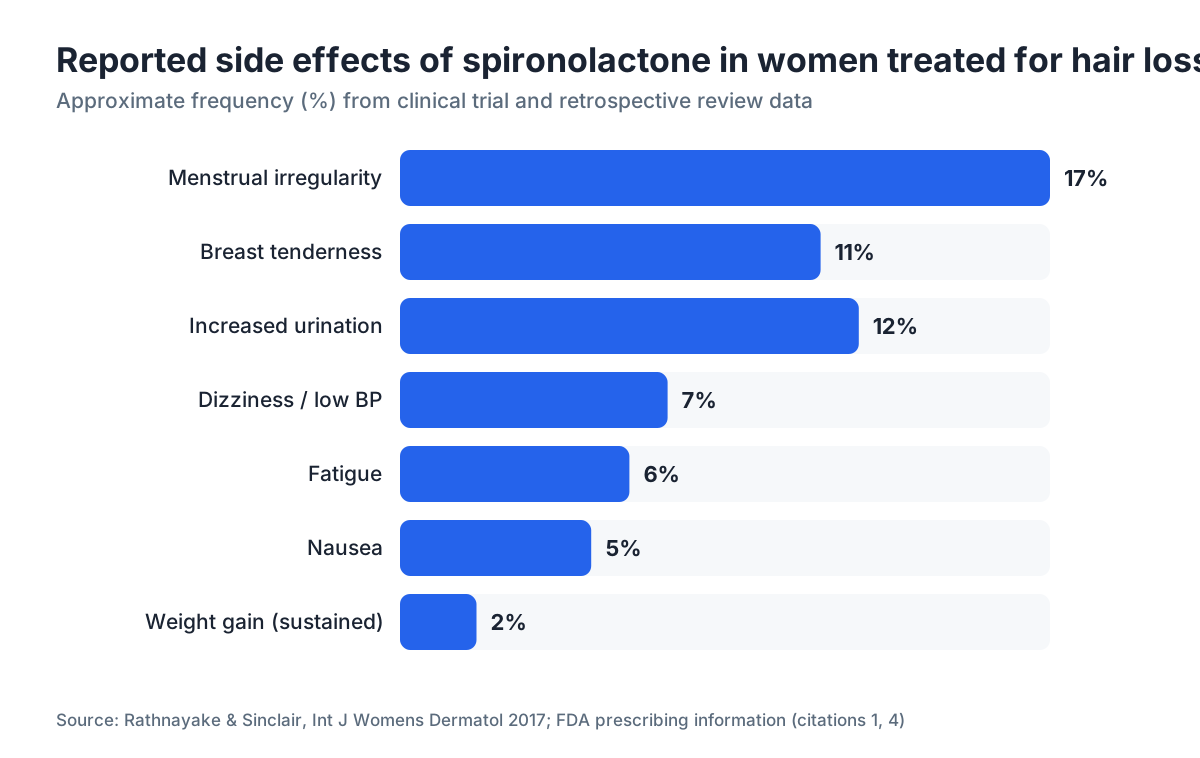
Weight gain is not in the top tier of documented side effects for women taking spironolactone for hair loss. The ones that show up again and again in trials and in the clinic are these:
| Side Effect | Approximate Frequency | Notes |
|---|---|---|
| Menstrual irregularity | 10-20% | More common at higher doses |
| Breast tenderness | 10-20% | Usually resolves after dose adjustment |
| Increased urination (polyuria) | 10-15% | Diuretic effect, peaks early |
| Dizziness / low blood pressure | 5-10% | Risk higher in women already on antihypertensives |
| Hyperkalemia (elevated potassium) | <5% at low doses | Requires monitoring, rare but serious |
| Fatigue | 5-10% | Often transient |
| Nausea | 5% | Typically improves with food |
Source: FDA prescribing information for spironolactone; Rathnayake & Sinclair, Int J Womens Dermatol 2017 [1][4].
Breast tenderness and menstrual changes are the two side effects most likely to make women quit. A 2017 review in the International Journal of Women's Dermatology summarizing spironolactone use in dermatology reported menstrual irregularity (17%) and breast tenderness (11%) as the leading reasons for dose reduction or discontinuation [4]. Weight gain as a primary reason for stopping did not stand out.
Spironolactone is also absolutely contraindicated in pregnancy because of its anti-androgen effects on fetal development [1]. If you are of reproductive age, your dermatologist should discuss contraception. This is not optional.
Does spironolactone work for female hair loss, and is the weight tradeoff worth it?
Effectiveness first. The 2020 JAAD trial found that 200 mg/day of spironolactone produced significantly greater hair density improvement than placebo at 12 months, with the spironolactone group showing a statistically significant mean increase in hair count (p < 0.01) [3]. That is the best randomized evidence available for this specific use.
Real-world response rates land around 50-75% of women who notice stabilization or improvement, with the best results at 6-12 months of continuous use [10]. This is not a fast drug. The androgen receptor takes time to stop driving miniaturization, and follicles need time to recover. If you quit early because the scale scared you, you are dropping a drug that might work based on a side effect the controlled data say is unlikely to be real.
The honest tradeoff: spironolactone has real side effects (menstrual changes, breast tenderness, potassium risk) and a real benefit (meaningful slowing of androgenic hair loss in roughly half to three-quarters of women who tolerate it). Weight gain is not a tradeoff worth weighing heavily. If the scale is your only worry and you have no other contraindications, the data say do not rule out spironolactone on weight fear alone.
The other main systemic anti-androgen women use for hair loss is finasteride, which is also off-label for women (and contraindicated in women who could become pregnant). Some women and their doctors use both. For the logic of stacking treatments, see the article on finasteride and minoxidil.
Not sure what type of hair loss you even have? Understand what causes hair loss before committing to an anti-androgen. Spironolactone does nothing useful for telogen effluvium, for example, which is a completely different process.
How does spironolactone compare to other hair loss treatments for women on weight and side effects?
Women treating hair loss usually pick from a short list: topical or oral minoxidil, spironolactone, finasteride, and sometimes low-level laser therapy or supplements. The weight and metabolic side effect profiles differ in ways that matter.
| Treatment | Weight Effect | Primary Concern |
|---|---|---|
| Topical minoxidil (2-5%) | Negligible | Scalp irritation, facial hair |
| Oral minoxidil (0.25-2.5 mg) | Possible fluid retention, 1-3 kg in some women | Fluid retention, heart rate |
| Spironolactone (50-200 mg) | No consistent effect, short-term fluid shifts | Hyperkalemia, menstrual changes, contraindicated in pregnancy |
| Finasteride (1-2.5 mg off-label) | No consistent effect | Teratogenic, limited trial data in women |
Here is the twist: oral minoxidil is arguably more likely to cause weight-related changes than spironolactone, because oral minoxidil causes fluid retention as part of how it widens blood vessels. Women on oral minoxidil for hair loss sometimes gain 1-3 kg of fluid weight, especially at higher doses [5]. You can read the full profile in the article on minoxidil side effects.
Spironolactone does the opposite mechanically. It is a diuretic that pushes fluid out. The two drugs are sometimes paired precisely because spironolactone offsets the fluid retention oral minoxidil can cause [5].
If you are weighing your options, the free AI hair analysis at MyHairline (myhairline.ai/scan) can help you identify what type of loss you have before you pick a treatment category.
Who should not take spironolactone for hair loss?
This section matters. Spironolactone is wrong for some people, and a few contraindications are absolute.
Pregnancy is the clearest hard stop. Spironolactone is a known teratogen with anti-androgen activity that can feminize a male fetus. The FDA pregnancy category is D, meaning there is evidence of fetal risk [1]. Any woman of reproductive potential who is not reliably contracepting should not take it, full stop. This is the single most important safety point about the drug for women in the hair loss setting.
Renal impairment is another major concern. Because spironolactone slows potassium excretion, women with reduced kidney function can develop dangerous hyperkalemia. Most dermatologists order baseline labs and then recheck potassium at 1-3 months [2].
Women on ACE inhibitors, ARBs, or potassium supplements face additive hyperkalemia risk and need closer monitoring or a dose adjustment of one of the drugs.
Addison's disease (adrenal insufficiency) is a contraindication because spironolactone blocks aldosterone, which these patients already cannot make adequately.
Low blood pressure at baseline can turn into symptomatic low blood pressure on spironolactone, bringing dizziness, fainting risk, or falls. If your systolic already runs below 100 mmHg, talk it through carefully with your doctor before starting.
Can you manage or prevent weight changes while on spironolactone?
If you want to track this carefully, a few practical steps help.
Weigh yourself at the same time each day, ideally in the morning after using the bathroom, before eating or drinking. Do it daily for the first six weeks. You will see normal day-to-day swings of 0.5-1.5 kg no matter the medication. What you are hunting for is a sustained upward trend that holds past week four, which is worth raising with your prescriber.
Stay well hydrated. It sounds backward for a diuretic, but mild dehydration can trigger reflex sodium retention that hides the drug's fluid-shifting effect and leaves you feeling bloated.
Watch your potassium-rich foods, not to eliminate them, but so your prescriber has an accurate picture of your intake when reading your labs. Bananas, avocados, potatoes, and leafy greens are not forbidden. Loading up on them dramatically while starting a potassium-sparing diuretic creates avoidable risk.
If you genuinely gain more than 2-3 kg over 2-3 months on a stable diet and activity level, bring that to your prescriber with your food diary and weight log. That is real data. The doctor can look for other causes, check your potassium, and consider a dose change.
Do not adjust the dose yourself. Spironolactone has a narrow enough therapeutic window and enough hormonal downstream effects that self-titration is a bad idea.
What do dermatologists actually say about spironolactone and weight?
The American Academy of Dermatology publishes practice guidelines on female pattern hair loss that list spironolactone as a recommended treatment option [6]. Those guidelines focus monitoring on blood pressure and serum potassium, not on weight, which tells you where the evidence-based concerns actually sit.
The Endocrine Society and several dermatology reviews note that spironolactone's metabolic profile in women using anti-androgen doses (50-200 mg) is generally favorable, with no consistent weight-gain signal in the controlled literature [7]. The clinical worry is hormonal and electrolyte effects, not body composition.
A 2017 review in the International Journal of Women's Dermatology put it plainly, saying spironolactone at doses used for hair and skin conditions "has an acceptable safety profile in otherwise healthy premenopausal women when potassium and blood pressure are monitored" [4]. That is the consensus: safe with monitoring, not weight-altering in most women.
If a dermatologist tells you weight gain is a major expected side effect of spironolactone, push back and ask them to name the trial. The data do not support that framing for women at standard hair loss doses.
How long does it take to know if spironolactone is working for hair loss?
Realistic timelines matter, because people quit too early.
Most dermatologists tell patients to give it at least six months before judging effectiveness, and twelve months for a full read [2][6]. Hair follicles move in slow cycles. Cutting androgen signaling does not reverse miniaturization overnight; it stops the damage and lets some follicles gradually recover. You are unlikely to see visible improvement in the first two to three months.
More shedding in the first few weeks is not necessarily failure. Some women get a brief spike in shedding as the drug shifts their follicle cycle timing. It usually settles by month two or three.
Staying on long enough to get a real read is what counts. Genuinely intolerable side effects (something worse than fear of an unlikely one) are a fair reason to stop. Quitting at six weeks because the scale rose 1.2 kg, without checking whether that is just normal fluctuation, leaves a possibly effective treatment on the table too soon.
For broader context on the hair loss journey and what to track over time, the MyHairline free AI hair scan (myhairline.ai/scan) can follow visual changes in hair density at set intervals, so you have something more objective than a mirror.
Sources
- FDA, Aldactone (spironolactone) prescribing information
- UpToDate, Management of female pattern hair loss (spironolactone dosing and monitoring)
- Journal of the American Academy of Dermatology, 2020 - Randomized controlled trial of spironolactone 200 mg vs placebo for female pattern hair loss
- Rathnayake D, Sinclair R. International Journal of Women's Dermatology, 2017 - Spironolactone in women's dermatology
- Randolph M, Tosti A. Journal of the American Academy of Dermatology, 2021 - Oral minoxidil for hair loss
- American Academy of Dermatology, Clinical guidelines for female pattern hair loss
- Endocrine Society, Androgen therapy in women: a reappraisal
- National Library of Medicine, MedlinePlus - Spironolactone drug information
- National Center for Biotechnology Information, PubMed - Hair loss in women (androgenetic alopecia and anti-androgen therapy)
- Levy LL, Emer JJ. Dermatology and Therapy, 2013 - Female pattern alopecia: current perspectives