
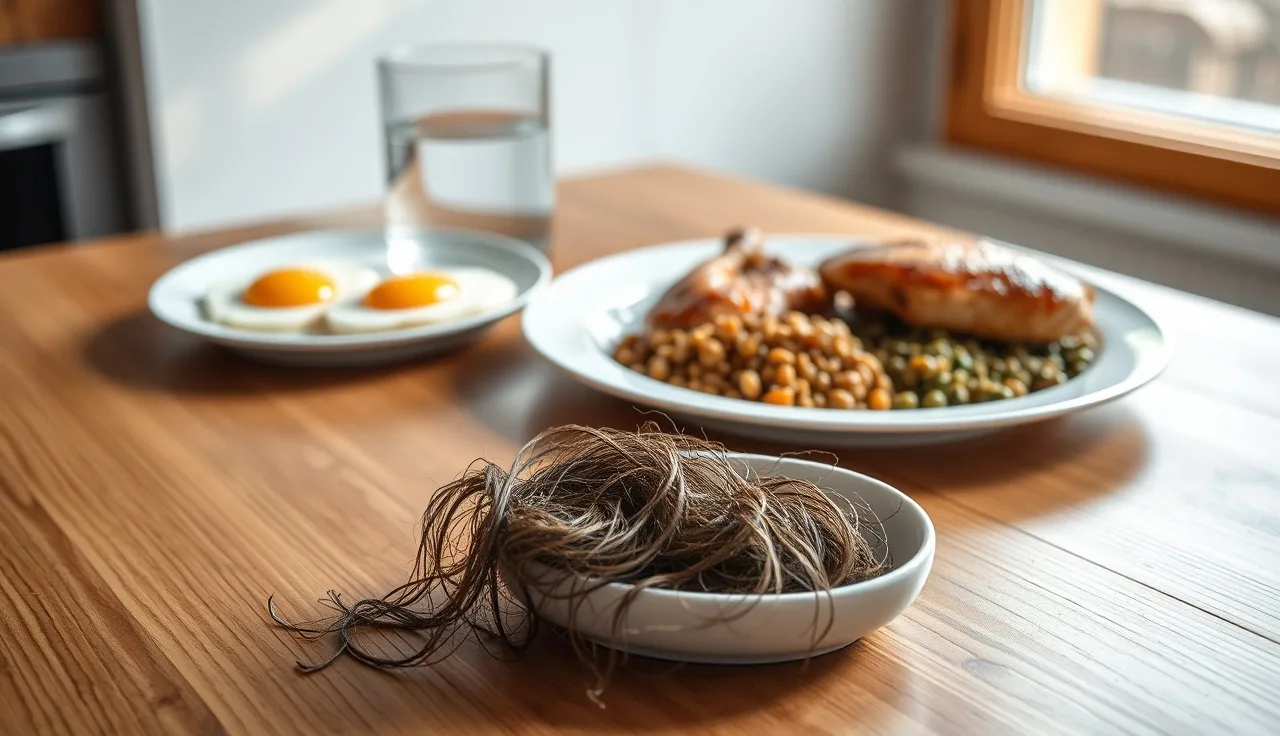
TL;DR: Yes, protein deficiency can cause hair loss. Hair follicles are made almost entirely of keratin, a protein. When intake drops far enough, the body shifts follicles into a resting phase and triggers a diffuse shed called telogen effluvium. Most adults need at least 0.8 grams of protein per kilogram of body weight daily, though many researchers argue 1.2 to 1.6 g/kg protects tissue better.
How does protein deficiency actually cause hair loss?
Hair is almost pure protein. Each strand is roughly 95% keratin, a fibrous structural protein built from amino acids including cysteine, methionine, and lysine [1]. Growing hair is one of the most metabolically expensive things your body does. Follicles turn over faster than nearly any other tissue. So when protein runs short, the body makes a triage decision: send amino acids to the organs that keep you alive, and let hair follicles go dormant.
The mechanism has a name. Telogen effluvium. Under nutritional stress, a large batch of follicles exit the active growth phase (anagen) and enter the resting phase (telogen) together. Two to four months later, those resting hairs shed all at once. You notice a jump in hairs on the pillow, in the shower drain, in the brush, long after the thing that caused it [2].
That delay is the part that trips people up. Someone who crash-dieted in January might not see heavy shedding until March or April, by which point the restrictive eating is a distant memory. If you want the whole map of how hair stops growing, we cover it in what causes hair loss and specifically in telogen effluvium.
One clarification matters. Intake that technically meets the minimum requirement rarely causes noticeable shedding in healthy adults. Protein-deficiency hair loss shows up clearest in kwashiorkor (severe protein malnutrition), aggressive calorie restriction, post-bariatric surgery, eating disorders, and very restrictive elimination diets held for months [3]. Subclinical deficiency, where intake sits above the floor but low relative to your body size, activity, and physiological stress, is real too, and probably underappreciated.
What is the minimum protein intake, and is it enough for healthy hair?
The U.S. Recommended Dietary Allowance for protein is 0.8 grams per kilogram of body weight per day for healthy sedentary adults [9]. For a 70 kg (154 lb) person, that's 56 grams a day. The Acceptable Macronutrient Distribution Range for protein is 10 to 35 percent of total daily calories [9].
Here's the honest catch with the RDA. It was set as a floor to prevent deficiency, not an amount tuned for tissue repair, exercise recovery, or hair growth. A large body of sports and geriatric nutrition research points to 1.2 to 1.6 g/kg per day as a better target for active adults, older adults, or anyone under physiological stress [5]. Hair researchers tend to land somewhere in that range when they talk targets, though controlled trials on protein and hair density in non-deficient humans are thin.
Post-bariatric surgery patients are the best-studied group, because protein malabsorption after procedures like Roux-en-Y gastric bypass is common and well-documented. Studies in that population consistently tie low protein intake in the months after surgery to significant telogen effluvium, and adequate supplementation (targeting 60 to 80 grams or more per day depending on the procedure) blunts the shedding [3]. It's about as close to a controlled natural experiment on protein and hair loss as humans give us.
How much protein does your hair actually need to grow?
The average scalp holds about 100,000 follicles. At any moment, roughly 85 to 90% sit in anagen, the active growth phase that can run two to seven years [2]. Each follicle needs a steady supply of amino acids to build new keratin. Scalp hair grows about 1.25 cm (half an inch) a month under normal conditions.
There's no clean protein number just for hair, because hair competes with every other tissue for the same amino acid pool. What research does suggest is that some amino acids matter more than others. Cysteine leads the list, because the disulfide bonds between cysteine residues give keratin its strength. Methionine is the essential amino acid the body converts to cysteine. Lysine shows up in several studies as limiting when intake is low, especially in vegetarian diets, because plant proteins run lower in lysine and methionine than animal proteins [1].
Here's the practical read. Eat enough total protein from varied sources and you're almost certainly covering your hair's amino acid needs. The trouble starts when total intake is low, when quality is poor (leaning hard on one low-quality plant source), or when absorption is compromised by gut disease or post-surgical anatomy.
What are the signs that your hair loss might be protein-related?
Pattern is everything here. Protein-deficiency shedding looks different from androgenetic (genetic) hair loss. Instead of a receding hairline at the temples or a thinning crown in a predictable pattern, you tend to see diffuse shedding across the whole scalp, more hair in the shower and on the pillow rather than a defined bald patch, and lower density everywhere when you check in bright light [2].
Other clues point at nutrition over genetics. Hair texture can change first, going thinner in diameter, more brittle, duller, before the shedding starts. In severe protein malnutrition, clinicians describe the flag sign: alternating light and dark bands along the shaft that track periods of adequate and inadequate protein. Most people in wealthy countries never see it, but it shows how directly the hair shaft records your nutritional history.
Blood work helps. A serum albumin below 3.5 g/dL suggests protein deficiency, though albumin has a long half-life and lags behind recent changes in intake [3]. Prealbumin (transthyretin) reflects shorter-term status and is often more useful. Neither test is reliable alone. A dermatologist can also examine pulled hairs under magnification (trichoscopy) or run a hair pull test, a quick in-office screen where they tug a small clump and count how many release.
If you're shedding diffusely and you've had months of low protein intake, a restricted diet, major surgery, or big weight loss, protein is a fair suspect. But diffuse shedding has many drivers. Thyroid disease, iron deficiency, postpartum hormone shifts, and stress all produce a similar look. Get blood work before you assume.
Which foods have the most protein, and which sources are best for hair?
Animal proteins, eggs, poultry, fish, beef, and dairy, are complete proteins. They hold all nine essential amino acids in ratios the body uses well. Eggs get cited as the reference protein in nutrition literature because their amino acid profile sits close to ideal for building human tissue [9].
Eat mostly plants and combining sources matters. Legumes run relatively high in lysine but low in methionine. Grains tend to do the reverse. Rice and beans together, or peas and oats, cover each other's gaps well enough. Soy is one of the few plant proteins counted as complete with good digestibility [9].
A few nutrients ride alongside protein in the hair loss literature and deserve a mention. Iron carries oxygen to follicles and often runs low in people who eat little meat. Biotin gets far more attention than it earns, since true biotin deficiency is rare and supplementing when you're not deficient does nothing measurable for hair [6][10]. Zinc and vitamin D also matter, and both can dip on restricted diets.
If you're weighing broader supplement strategies, there's a longer breakdown at hair loss supplements that separates the evidence from the marketing.
Protein intake by weight: a practical reference table
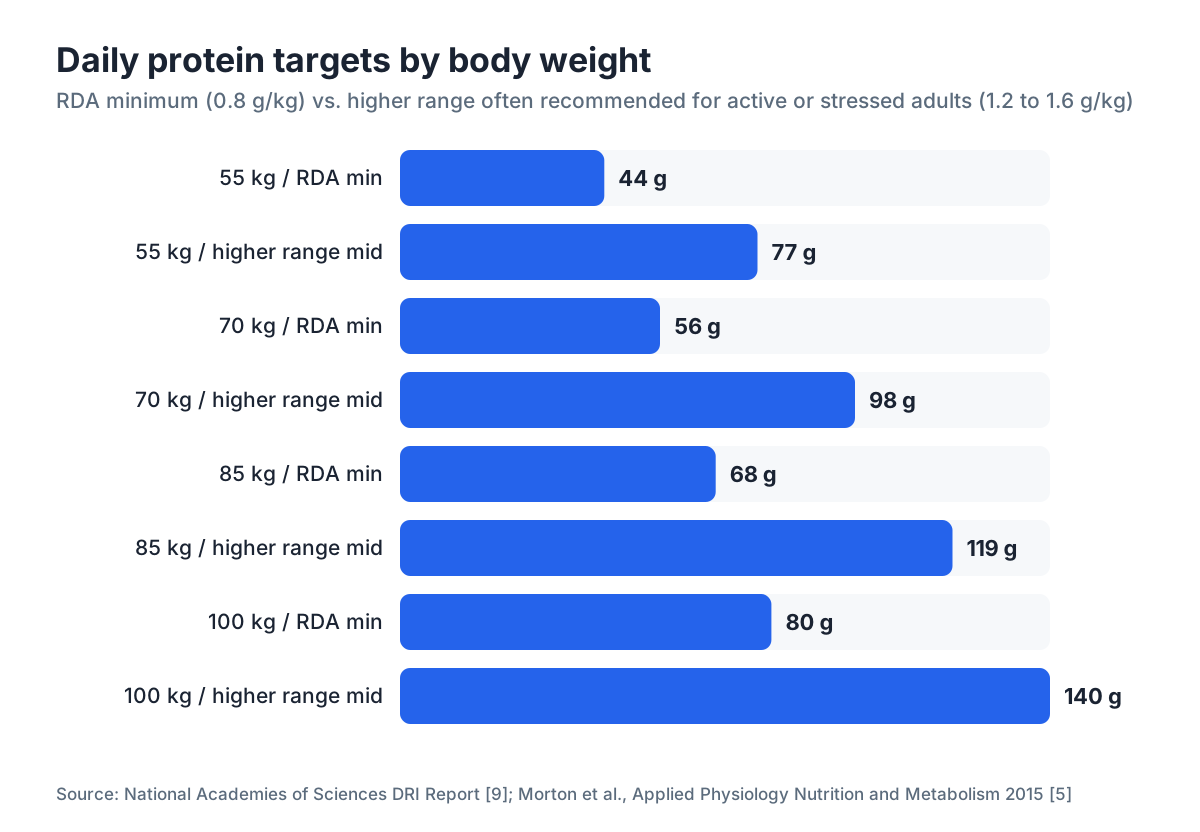
This table turns the two main benchmarks, the RDA floor and the higher range many nutrition researchers prefer, into gram targets by body weight. Treat it as a starting point, not a prescription.
| Body weight | RDA (0.8 g/kg) | Higher range (1.2 to 1.6 g/kg) |
|---|---|---|
| 55 kg (121 lb) | 44 g/day | 66 to 88 g/day |
| 70 kg (154 lb) | 56 g/day | 84 to 112 g/day |
| 85 kg (187 lb) | 68 g/day | 102 to 136 g/day |
| 100 kg (220 lb) | 80 g/day | 120 to 160 g/day |
The RDA column comes from the National Academies of Sciences Dietary Reference Intakes [9]. The higher range comes from a 2015 review in Applied Physiology, Nutrition, and Metabolism [5]. Those higher targets matter most for people over 65, anyone doing regular resistance training, people recovering from illness or surgery, or anyone who's held a calorie-restricted diet longer than a few weeks.
How long does it take for hair to grow back after fixing a protein deficiency?
This is the question everyone wants answered, and the answer is slower than people hope. Hair grows about 1 cm a month. Once you fix the underlying deficiency, follicles need time to cycle back into anagen before growth starts, then more time for that growth to become visible.
Expect three to six months before you see meaningful regrowth after correcting a nutritional deficiency. Some people notice the shedding rate drop within six to eight weeks of a diet fix, which is encouraging even when the new growth isn't showing yet. Full density can take a year or more to return, depending on how long and how severe the deficiency was [2].
Patience is genuinely part of the treatment. People who fix their diet and then panic at two months because nothing has changed are working off unrealistic expectations. If you correct protein intake, address any co-deficiencies (iron, vitamin D), and the shedding still hasn't slowed after about three months, revisit the diagnosis, because something else may be driving it.
Genetic hair loss follows a different script with different tools. Finasteride, minoxidil, and transplants, not diet. If your hairline is receding in a recognizable pattern while your nutrition is fine, the next reads are finasteride, minoxidil for men, and hair transplant.
Can high-protein diets or supplements like creatine cause hair loss instead?
This is the flip side of the question, and it comes up constantly in fitness communities. Fear of high-protein diets causing hair loss is mostly unfounded at normal intakes. There's no good evidence that 150 or even 200 grams of protein a day harms hair follicles in healthy people.
Creatine is its own conversation. A 2009 study in rugby players found that creatine supplementation raised the DHT (dihydrotestosterone) to testosterone ratio, and DHT is the androgen most tied to androgenetic hair loss [7]. That finding got picked up and amplified far beyond what it can support. The honest read: one small study showing a surrogate marker move (DHT levels, not actual hair loss) is weak evidence. No study has shown creatine causes measurable hair loss in humans. The mechanism is plausible enough that you can't wave it away entirely. We go deeper in does creatine cause hair loss.
Whey, casein, and plant-based protein powders have no documented mechanism for causing hair loss. If anything, hitting adequate protein from whatever source suits you protects against nutritional shedding.
When is hair loss about something other than protein?
Most adult hair loss, especially in men, is androgenetic alopecia, also called male or female pattern hair loss. It runs on genetic sensitivity to DHT, not diet. No amount of protein or any other nutrient stops pattern baldness once follicles are genetically programmed to miniaturize under DHT [8].
The practical way to tell them apart: androgenetic loss follows a recognizable spatial pattern (temples and crown in men, the central part in women). Nutritional loss is diffuse and all-over. A scalp exam or trichoscopy usually settles it fast. Blood panels rule thyroid disease, iron deficiency anemia, and vitamin D deficiency in or out, all of which can mimic protein-related shedding.
The American Academy of Dermatology advises evaluation by a board-certified dermatologist for anyone with noticeable hair loss, because treatment differs sharply by cause [8]. Treating androgenetic alopecia with protein shakes wastes time and money. Treating a genuine deficiency with finasteride is the same mistake in reverse.
Myhairline's free AI scan at /scan gives you a starting read, matching your hairline pattern against the Norwood and Ludwig scales. That helps clarify whether what you're seeing looks like pattern loss or diffuse thinning before you book a doctor or buy a treatment.
For confirmed androgenetic alopecia, the best-evidenced options are finasteride (a 5-alpha reductase inhibitor that lowers DHT), minoxidil, or both together. We break down the combination in finasteride and minoxidil.
What does the research actually say? The evidence quality, honestly
The link between severe protein deficiency and hair loss is strong and not seriously contested. Studies in kwashiorkor, post-bariatric populations, and anorexia nervosa consistently show telogen effluvium as a result of protein malnutrition [3]. The biology is well understood.
The evidence for subclinical insufficiency, intake that's low but not severely deficient, causing hair loss in otherwise healthy adults is weaker. Most of it is observational. Nobody has run a randomized controlled trial that deliberately underfeeds protein to healthy volunteers and tracks follicle response over months, for obvious ethical reasons.
A 2017 review in the Journal of Clinical and Aesthetic Dermatology concluded that nutritional deficiencies including protein, iron, zinc, and biotin can contribute to hair loss, while noting how hard it is to isolate single-nutrient effects in real-world diets [6]. That's about as honest as the literature gets.
So here's the takeaway. Documented or strongly suspected protein deficiency? Fixing it is clearly right, and your hair will likely benefit alongside every other system in your body. Intake that's already adequate, and you're hunting for a dietary reason to explain shedding? The evidence gets thin fast, and the likelier culprits are genetics, hormones, thyroid function, or other nutrient gaps.
Practical steps if you think protein deficiency is causing your hair loss
Get blood work first. Ask your doctor for serum albumin, prealbumin, ferritin (iron stores), CBC, TSH (thyroid), and vitamin D at minimum. One draw gives you a real map of what's happening.
Audit your actual intake, honestly. Most people badly overestimate how much protein they eat. A food diary app for three days beats memory every time. Aim for the targets in the table, favoring quality sources with complete amino acid profiles.
Be realistic about timeline. Commit to three to six months of adequate intake before judging results. Photograph your hair in consistent lighting at the start so you have something objective to compare against later.
Don't pile on supplements chasing a shortcut. Biotin mega-doses, collagen powders, and hair growth vitamins have little evidence behind them unless you have a documented deficiency [6][10]. Spend the money on better food.
And if you're losing hair in a patterned way despite solid nutrition, accept that genetics may be the driver and get a dermatologist's opinion on evidence-based treatments. Nutrition is the foundation. It doesn't override follicle genetics.
Sources
- National Library of Medicine, StatPearls: Hair Follicle Anatomy and Physiology
- American Academy of Dermatology, hair loss types overview
- American Society for Metabolic and Bariatric Surgery, clinical practice guidelines
- Morton RW et al., Applied Physiology Nutrition and Metabolism 2015, protein needs for active adults
- Guo EL, Katta R. Journal of Clinical and Aesthetic Dermatology 2017: Diet and hair loss effects of nutrient deficiency and supplement use
- van der Merwe J et al., Clinical Journal of Sport Medicine 2009: Three weeks of creatine monohydrate supplementation affects dihydrotestosterone to testosterone ratio
- American Academy of Dermatology, hair loss diagnosis and treatment
- National Academies of Sciences Engineering and Medicine: Dietary Reference Intakes for Energy Carbohydrate Fiber Fat Fatty Acids Cholesterol Protein and Amino Acids
- NIH Office of Dietary Supplements, Biotin Fact Sheet for Health Professionals