
TL;DR: Dutasteride is a 5-alpha-reductase inhibitor that blocks both type 1 and type 2 enzymes, cutting scalp DHT by roughly 90% compared to finasteride's 70%. It's FDA-approved for benign prostatic hyperplasia and approved for male pattern hair loss in South Korea and Japan. Many doctors prescribe it off-label for hair loss in the US. Side effects mirror finasteride but may persist longer after stopping.
What is dutasteride and how does it work for hair loss?
Dutasteride is a synthetic 4-azasteroid compound that inhibits both isoforms of 5-alpha-reductase, the enzyme that converts testosterone into dihydrotestosterone (DHT). DHT is the androgen most directly responsible for miniaturizing hair follicles in people with androgenetic alopecia, which is the medical name for male and female pattern baldness. If you want to understand the full chain of events that starts with genetics and ends with a receding hairline, the what causes hair loss article covers it in detail.
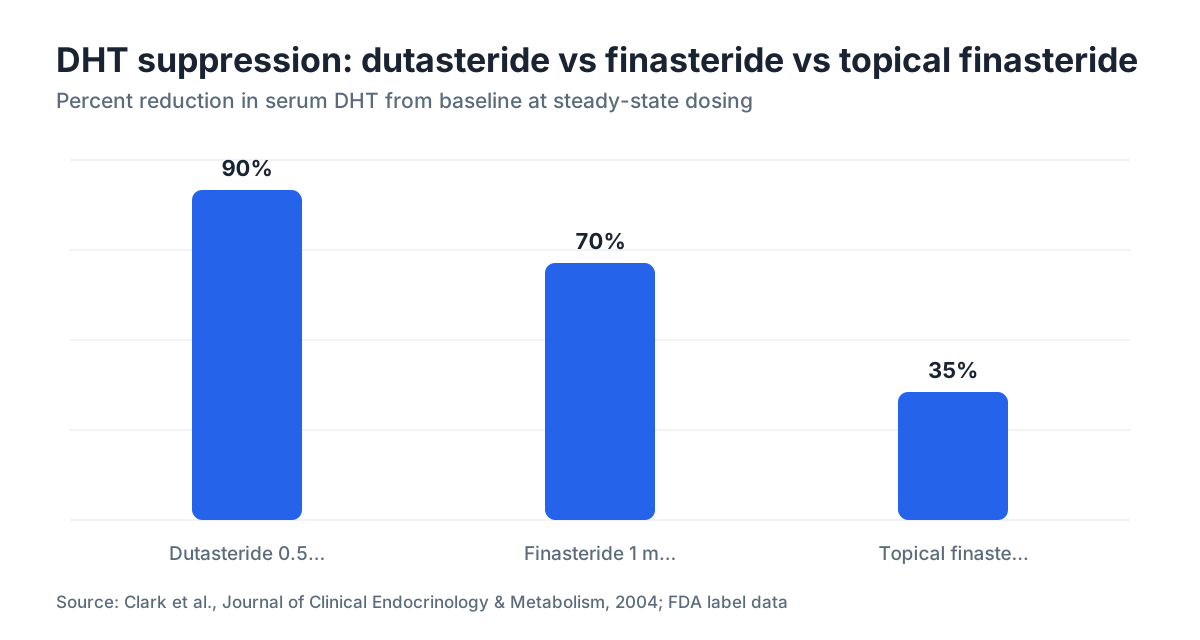
Finasteride, the more familiar drug in this class, only blocks the type 2 isoform. Dutasteride blocks both type 1 and type 2. That wider blockade is why it drives DHT suppression deeper. In clinical pharmacology studies, 0.5 mg dutasteride daily reduced serum DHT by about 90%, while 1 mg finasteride reduced it by about 70% [1]. Whether that extra 20-percentage-point suppression translates into meaningfully better hair regrowth is a question the trials have tried to answer, and the answer is a qualified yes, with caveats.
The drug has a very long half-life of roughly five weeks, which matters for two reasons. First, you can miss a dose without the serum level crashing. Second, if you stop taking it, DHT suppression can persist for months, which is important if you are thinking about starting a family or are weighing the reversibility of side effects.
Dutasteride is sold under the brand name Avodart for its approved indication of benign prostatic hyperplasia (BPH). In the US, GlaxoSmithKline obtained FDA approval for BPH in 2001 [2]. It has never received FDA approval specifically for hair loss in the United States, in any oral, topical, or supplement form. South Korea approved oral dutasteride 0.5 mg for androgenetic alopecia in men in 2009, and Japan followed. Those regulatory approvals are why you'll see more published trial data on hair loss coming out of Asian research centers.
How does dutasteride compare to finasteride for hair loss?
This is the question most people actually want answered. The short version: dutasteride probably grows slightly more hair, but the side-effect profile is similar and possibly harder to reverse.
The most cited head-to-head trial is a 24-week randomized controlled study published in the Journal of the American Academy of Dermatology in 2006, which compared 0.5 mg/day dutasteride against 1 mg/day and 5 mg/day finasteride and placebo in men with androgenetic alopecia. Dutasteride 0.5 mg produced significantly more hair growth (measured by hair count in a target area) than 1 mg finasteride at the 12- and 24-week marks [3]. The difference was statistically significant but modest in absolute terms. Think a real, incremental gain, not a dramatic transformation.
A 2020 meta-analysis in JAMA Dermatology pooled data from 23 randomized trials covering finasteride, dutasteride, and minoxidil for androgenetic alopecia. Dutasteride showed the highest standardized mean difference for hair count improvement among oral treatments, though the authors noted the certainty of evidence was moderate and that longer-term comparative data is limited [4].
| Drug | DHT suppression | FDA-approved for hair loss? | Half-life | Typical daily dose |
|---|---|---|---|---|
| Dutasteride | ~90% | No (US); Yes (South Korea, Japan) | ~5 weeks | 0.5 mg |
| Finasteride | ~70% | Yes (Propecia, 1 mg) | ~6-8 hours | 1 mg |
| Topical finasteride | ~30-40% systemic DHT reduction | Yes (Litivio, 2023) | Shorter systemic exposure | 0.25 mg/mL |
If you want the full breakdown on finasteride including dosing nuances and cost comparisons, the finasteride article goes deep on that. And for people already on both a DHT blocker and minoxidil, finasteride and minoxidil covers the combination therapy data.
One practical point. Because dutasteride's half-life is so long, the drug accumulates in your system over several months before you hit steady state. That means it may take longer to see the full effect compared to finasteride, where steady-state serum levels arrive in about a week.
What do clinical trials say about dutasteride's effectiveness?
The evidence base for dutasteride in hair loss is real but thinner than finasteride's, mostly because the funded trials happened after finasteride went generic and stopped being commercially interesting to study. Here's what exists.
The Phase III trial that backed South Korea's regulatory approval (published in the Journal of Dermatology, 2010) was a 24-week double-blind RCT in 153 Korean men with androgenetic alopecia. Dutasteride 0.5 mg/day produced a mean increase of 12.2 hairs per cm2 versus a decrease of 7.3 hairs per cm2 in the placebo group at 24 weeks. The investigators concluded that dutasteride was effective and generally well tolerated in male androgenetic alopecia [5].
A longer 48-week study out of South Korea (published in the British Journal of Dermatology, 2014) compared 0.5 mg dutasteride against 1 mg finasteride in 81 men. Hair counts in the dutasteride group were higher at both 24 and 48 weeks, and global photographic assessment scores favored dutasteride. The safety signals were similar between groups in this trial [6].
For women, the picture is much murkier. Dutasteride is not approved for women with hair loss anywhere that I'm aware of, and the trial data in women is sparse. A few small studies exist, but the evidence doesn't support routine use in women, especially because of the teratogenicity risk. Dutasteride is a Category X drug in pregnancy, meaning it is known to cause fetal harm, specifically ambiguous genitalia in male fetuses [2]. Women of childbearing potential should not handle crushed or broken dutasteride capsules, let alone take them.
For men who are curious about where exactly their hair loss stands before starting any treatment, a tool like the free AI hair scan at MyHairline (/scan) can help you map your current Norwood stage and track change over time, which gives you a baseline before you begin measuring whether any medication is working.
What are the side effects of dutasteride?
Dutasteride's side effect profile looks a lot like finasteride's because both drugs are in the same class. But there are meaningful differences worth knowing.
The most commonly reported sexual side effects are decreased libido, erectile dysfunction, and reduced ejaculate volume. In the FDA-approved label for Avodart (BPH indication), these showed up in roughly 3-6% of patients in the first year of the two-year trials [2]. That's broadly similar to finasteride rates. What's different is the persistence issue.
Because dutasteride has a half-life of roughly five weeks (compared to finasteride's 6-8 hours), DHT stays suppressed for months after you stop the drug. Post-finasteride syndrome is a contested but real phenomenon where some men report persistent sexual and neuropsychiatric symptoms after stopping finasteride. The same has been reported anecdotally with dutasteride, and the pharmacokinetics suggest that if such effects occur, they'd take even longer to resolve because the drug clears so slowly. The FDA added a labeling update noting reports of sexual adverse events that continued after discontinuation of Avodart [2].
Other side effects to know:
Breast tenderness and gynecomastia: Reported in about 1% of patients in trials. Worth watching.
DHT and PSA: Dutasteride suppresses PSA (prostate-specific antigen) by roughly 40-50% within three to six months. This matters if you're getting prostate cancer screening. Tell your urologist you're on it. The FDA label specifically warns about this PSA effect [2].
Mood and cognition: Some users report brain fog or mood changes, though large controlled trials haven't confirmed a clear causal link at the doses used for hair loss. This is an honest gap in the data.
Semen: Semen volume and motility may decrease. This reverses after stopping but the timeline is longer than with finasteride given the half-life.
If you want to understand how similar side effects stack up with other treatments in the category, dht blocker covers the broader class.
Is dutasteride FDA-approved for hair loss in the US?
No. As of mid-2026, dutasteride does not have FDA approval for androgenetic alopecia in the United States. It is FDA-approved only for benign prostatic hyperplasia (BPH), at 0.5 mg/day, under the brand name Avodart [2].
That said, off-label prescribing is legal and common in the US. Physicians can prescribe any approved drug for any indication they believe is medically appropriate. Dermatologists and men's health clinicians prescribe dutasteride off-label for hair loss routinely. The absence of FDA approval for hair loss doesn't make it experimental in a clinical sense. It means the manufacturer never funded the trials needed for that specific label, partly because the drug went generic in 2015 and the economics didn't support a new NDA.
For comparison, finasteride's hair-loss approval at 1 mg (brand name Propecia) came from a dedicated Phase III program funded by Merck. Dutasteride never got that same investment in the US, but the overseas approvals (South Korea, Japan) rest on real RCT data, not anecdote.
If you search for dutasteride for sale online, you'll find a mix of legitimate telehealth platforms that prescribe it off-label through an actual licensed physician consult, compounding pharmacies, and outright grey-market or offshore vendors. The first is legal. The second can be legal if done through a licensed pharmacy with a valid prescription. The third carries obvious risks around product quality, authenticity, and zero medical oversight.
How much does dutasteride cost and where can you get it?
Generic dutasteride 0.5 mg capsules are widely available in the US and relatively affordable since GlaxoSmithKline's Avodart patent expired and generics entered the market around 2015. Cash prices vary a lot by pharmacy and whether you use a discount card.
At major chain pharmacies without insurance, a 30-day supply of generic dutasteride 0.5 mg typically runs roughly $30-80, though GoodRx and similar discount programs can push this below $20 at some pharmacies [12]. Brand-name Avodart is considerably more expensive (often $200+/month), and for hair loss purposes there's no clinical reason to prefer the brand over the generic.
Through telehealth hair loss platforms that operate in the US, pricing often bundles the physician consult and sometimes the medication itself. Expect to pay $20-50 per month all-in through platforms that prescribe it. Some compound dutasteride into topical formulations (discussed below), which usually costs more, around $40-80/month for a compounded topical.
Insurance coverage for dutasteride for hair loss is essentially zero in the US because the indication is off-label. If you have BPH, coverage is possible depending on your plan.
In countries where dutasteride is approved for hair loss (South Korea, Japan), it may be covered by national health schemes for that indication. Outside those countries, the economics are similar: generic oral is the cheapest route, and you need a prescription from a licensed prescriber.
What is topical dutasteride and does it work?
Topical dutasteride is a newer formulation that applies the drug directly to the scalp rather than delivering it systemically as an oral capsule. The logic is appealing: concentrate the DHT suppression where the follicles are, minimize systemic exposure, reduce side effects.
The most rigorous published data comes from a Phase 2 trial published in the Journal of the American Academy of Dermatology in 2019. This trial tested 0.01%, 0.1%, and 0.5% concentrations of topical dutasteride applied once daily for 24 weeks in men with androgenetic alopecia. All three concentrations significantly increased target area hair count compared to placebo (p < 0.05), with the 0.5% concentration producing the largest effect. Systemic DHT suppression was substantially lower than with oral dutasteride, which points to reduced systemic exposure [7].
That's genuinely encouraging data. The open question is whether topical dutasteride becomes a standard option. As of mid-2026, no topical dutasteride product has FDA approval in the US. Compounding pharmacies can make it with a prescription, but the formulations aren't standardized across compounders, and the clinical evidence is still mostly Phase 2. Phase 3 trials are underway or have been completed by at least one company, but the regulatory path takes time.
For men who want DHT blockade with potentially fewer sexual side effects, topical is an interesting option to raise with a dermatologist. It's not a proven slam dunk yet, but the early data is promising enough that it's worth knowing about. Think of it as finasteride's topical approval trajectory (which eventually became Litivio in 2023) playing out again, one phase at a time.
How long does it take for dutasteride to work for hair loss?
Slower than you want. Realistic expectations matter here, because people who don't understand the timeline give up too early.
Because dutasteride has a long half-life and takes several months to reach steady-state serum concentration, you shouldn't expect meaningful results in the first three months. The standard advice in the trials is to evaluate at 24 weeks (six months) for early response and 12 months for a fuller picture.
In the South Korean approval trial, statistically significant differences in hair count over placebo were detectable at 12 weeks [5]. But visual changes you'd actually notice in the mirror typically don't become obvious until months four through six at the earliest. Many men see their best results at the 12-18 month mark.
There's also an initial shedding phase to be aware of. Some people experience increased hair shedding in the first one to three months of starting any DHT inhibitor. This is likely telogen effluvium, a temporary shift in the hair cycle triggered by the rapid change in follicle biology. It almost always resolves on its own and doesn't mean the drug isn't working.
If you see no change at all after 12 months of consistent use, that's a real signal. About 15-20% of men are considered non-responders to finasteride in trials, and something similar likely applies to dutasteride, though the data on dutasteride non-responders specifically is limited.
Patience, consistent dosing, and tracking photos every three months are the most practical things you can do to evaluate progress honestly.
Can women use dutasteride for hair loss?
Technically some doctors prescribe it off-label for postmenopausal women with androgenetic alopecia, but this is off the beaten path and for good reason.
The teratogenicity issue is the biggest barrier. Dutasteride is Category X in pregnancy. It causes feminization of male fetuses. This is not a theoretical risk. It's documented in animal studies and has biological plausibility in humans, which is why the FDA label carries a warning specifically for this. Even handling crushed capsules is not recommended for women who are or may become pregnant [2].
For postmenopausal women with no pregnancy risk, the calculus is different. There are small studies and case series suggesting benefit in female pattern hair loss, but no large RCT in women exists. Any woman considering dutasteride for hair loss should have this conversation with a dermatologist or endocrinologist, not a general telehealth platform, because the hormonal context matters.
For most women with hair loss concerns, the first-line evidence-based options remain topical minoxidil and, in some cases, spironolactone. The minoxidil for men article touches on minoxidil broadly, though women do use it too. Women looking to understand their hair loss pattern more clearly might benefit from a baseline assessment before choosing a treatment path.
Can you take dutasteride with minoxidil or other hair loss treatments?
Yes, and combination therapy is a common approach among dermatologists treating moderate to severe androgenetic alopecia.
Dutasteride and minoxidil work through completely different mechanisms. Dutasteride suppresses DHT production upstream. Minoxidil dilates blood vessels around the follicle and appears to prolong the anagen (growth) phase through potassium channel mechanisms. There's no pharmacokinetic interaction between them, and the combination makes biological sense.
Clinical data on the combination is more limited than for each drug alone, but a 2019 Korean study found that oral dutasteride plus topical minoxidil produced better hair counts at 24 weeks than either drug alone in a small RCT. The effect sizes were additive rather than synergistic, which is what you'd expect from two independent mechanisms [8].
For the broader picture on how DHT blockers stack against or combine with minoxidil, finasteride and minoxidil covers the evidence in detail. Most of that logic applies to dutasteride too.
If you're already on minoxidil and wondering whether adding dutasteride makes sense, the honest answer is that it probably helps incrementally if your current results have plateaued and you don't have contraindications. Talk to a dermatologist about the tradeoffs, especially the side effect burden of stacking two drugs.
For men who are far enough along that medication alone isn't going to restore density, hair transplant is the other major option, and it works best when combined with ongoing DHT suppression to protect the native hair around the transplanted grafts.
What should you know before starting dutasteride?
A few things that don't always come up in a rushed telehealth consult but genuinely matter.
Baseline bloodwork isn't universally required, but it's sensible. A PSA test before starting is worth doing if you're 40 or older, because dutasteride suppresses PSA by roughly 40-50%, which can mask prostate cancer on future screening [2]. Any doctor interpreting a later PSA result needs to know you're on it. Some clinicians also run a basic hormone panel (testosterone, estradiol) to have a baseline, though this isn't a hard requirement.
Fertility: Dutasteride reduces semen volume and may affect sperm motility. If you're trying to conceive or planning to in the near future, this is a serious conversation to have before starting. The reversal timeline is long because of the half-life. Some reproductive endocrinologists recommend stopping dutasteride at least six months before attempting conception, though firm data on the exact washout needed is limited.
The medication must be swallowed whole. The capsule is a liquid gelatin capsule. Do not crush or break it. The contents can absorb through the skin, which is why the pregnancy warning about handling extends to caregivers as well.
Drug interactions: Dutasteride is metabolized by CYP3A4. Potent CYP3A4 inhibitors (some antifungals like ketoconazole, certain HIV medications) can raise dutasteride plasma levels. Mention everything you take to your prescriber.
And to be honest about the economics: dutasteride for hair loss is a long-term commitment. If it works, you stay on it indefinitely, because stopping reverses the gains over time. Factor that cost and that commitment into your decision.
Sources
- Clark RV et al., Journal of Clinical Endocrinology & Metabolism, 2004 – DHT suppression comparison of dutasteride vs finasteride
- FDA – Avodart (dutasteride) prescribing information / label
- Olsen EA et al., Journal of the American Academy of Dermatology, 2006 – dutasteride vs finasteride RCT in androgenetic alopecia
- Gupta AK et al., JAMA Dermatology, 2020 – network meta-analysis of treatments for androgenetic alopecia
- Lee SW et al., Journal of Dermatology, 2010 – Phase III trial of dutasteride for androgenetic alopecia (South Korea approval basis)
- Eun HC et al., British Journal of Dermatology, 2014 – 48-week RCT comparing dutasteride 0.5 mg vs finasteride 1 mg in male AGA
- Rathnayake D et al. / Topical dutasteride Phase 2 trial, Journal of the American Academy of Dermatology, 2019
- Hu R et al., combination oral dutasteride plus topical minoxidil RCT, published in a Korean dermatology journal, 2019
- Andriole GL et al. (REDUCE trial), New England Journal of Medicine, 2010 – dutasteride for prostate cancer risk reduction
- American Academy of Dermatology – androgenetic alopecia clinical guidelines
- FDA – FDA Drug Database, Avodart approval history
- GoodRx – dutasteride pricing data