
TL;DR: Biotin does not directly cause hair loss at any dose studied so far. The real danger is indirect. High supplemental biotin (roughly 5,000 mcg/day and up) interferes with the biotin-streptavidin immunoassays used in thyroid, hormone, and iron labs, producing false results that lead to mistreated deficiencies. Those untreated deficiencies are what cause the shedding.
What actually happens when you take too much biotin?
Biotin is a water-soluble B vitamin, so your kidneys filter and dump whatever your body does not use. That physiology is why biotin has no tolerable upper intake level in the United States. The Institute of Medicine found no adverse effects in humans even at very high oral doses and simply could not set a threshold [1]. At face value that sounds like a green light to take as much as you want.
It is not.
The problem is not toxicity to your follicles. The problem is what high circulating biotin does to the blood tests your doctor runs to figure out why your hair is falling out. Most modern immunoassay platforms, the machines that measure your TSH, free T4, ferritin, testosterone, and dozens of other markers, use a biotin-streptavidin binding reaction as part of their detection chemistry. Flood your bloodstream with supplemental biotin and it competes with the labeled biotin in the assay, and the numbers come back wrong [5].
The FDA issued a safety communication on this exact problem in 2017 and updated it in 2019 after a patient death was linked to a falsely low troponin result caused by biotin interference [10]. The agency's warning is blunt. Its 2019 communication states the FDA "has become aware that biotin can significantly interfere with certain lab tests and cause incorrect test results which may go undetected." That is documented harm, not hypothetical risk.
For someone worried about hair loss, the chain of events runs like this. You start taking a 5,000 to 10,000 mcg biotin supplement sold as a hair growth product. Your doctor draws labs to check your thyroid or iron because you are shedding. The results come back falsely normal or falsely abnormal. You get no treatment or the wrong treatment. The actual deficiency driving your shedding keeps going, unaddressed, for months.
Does biotin deficiency actually cause hair loss?
Yes. Genuine biotin deficiency causes hair loss, usually a diffuse thinning that shows up alongside a scaly red rash around the face and eyes and brittle nails [3]. The mechanism is real. Biotin is a cofactor for five carboxylase enzymes involved in fatty acid synthesis and amino acid metabolism, and your follicles lean on those processes to make keratin.
The catch: true biotin deficiency is rare in healthy people eating a normal diet. Biotin is in eggs, nuts, legumes, salmon, and liver. Your gut bacteria make small amounts too. Documented deficiency cases tend to involve biotinidase deficiency (a rare inherited disorder), long-term anticonvulsant therapy, parenteral nutrition without added biotin, or eating raw egg whites daily for months (raw avidin binds biotin in the gut and blocks absorption) [3].
The American Academy of Dermatology does not recommend routine biotin supplementation for hair loss, because there is no high-quality trial evidence that it helps people who are not already deficient [4]. Sit with that for a second. The supplement aisle is stacked with 5,000 to 10,000 mcg biotin products framed as hair thickeners. If your biotin levels are already normal, more biotin does nothing measurable for your hair.
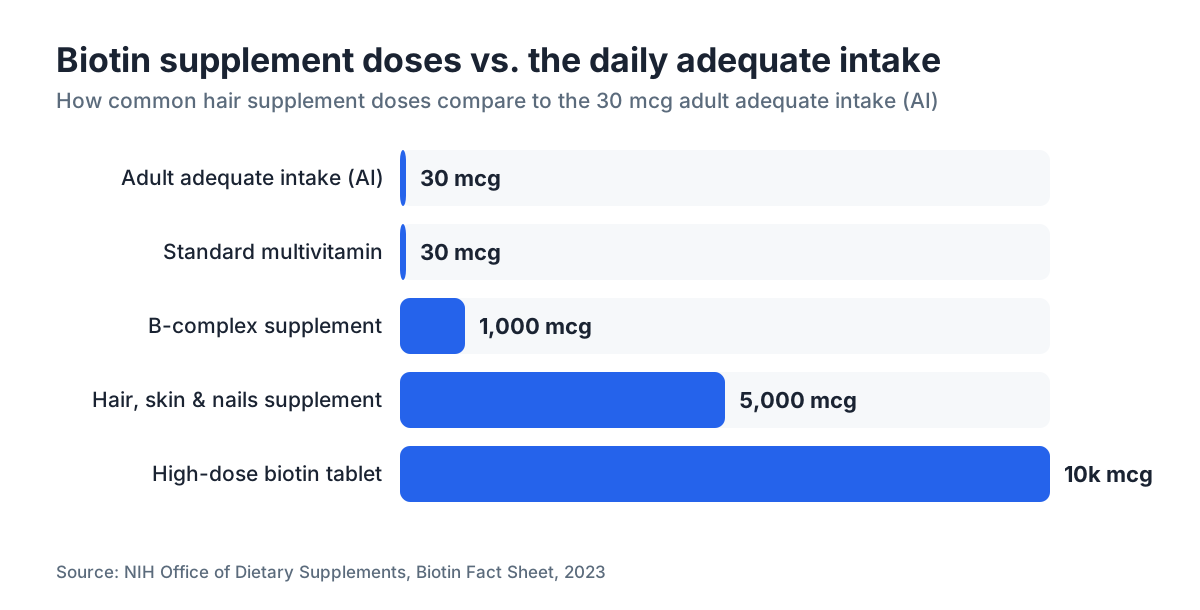
The daily adequate intake for adults is 30 mcg [1]. Standard high-dose supplements pack 166 to 333 times that.
How much biotin is actually in most hair supplements?
This chart shows common supplemental doses against the established adequate intake.
| Product type | Typical biotin content | Multiplier above AI (30 mcg) |
|---|---|---|
| Standard multivitamin | 30 mcg | 1x |
| B-complex supplement | 300-1,000 mcg | 10-33x |
| "Hair, skin, nails" supplement | 2,500-5,000 mcg | 83-167x |
| High-dose biotin tablet | 10,000 mcg | 333x |
| Prescription (MS research doses) | 100,000-300,000 mcg | 3,333-10,000x |
The FDA's 2017 safety communication flagged supplements at 10,000 mcg (10 mg) as a level commonly tied to clinically significant lab interference [10]. A 5,000 mcg dose has caused interference on many platforms as well, though the exact threshold shifts with the specific machine and the specific test [5].
A 2018 review in Clinical Chemistry and Laboratory Medicine tested biotin's effect on routine immunoassays and found measurable interference at serum concentrations reachable with supplements as low as 1,000 mcg/day on some platforms, while others held up until higher concentrations [5]. That variability is the trap. Your doctor probably does not know which platform your lab runs, and most lab requisition forms have no field asking whether you take biotin.
Can biotin supplements cause hair loss directly through any mechanism?
No published human study shows that biotin supplementation directly damages follicles or triggers shedding at any dose. No one has proposed a credible pharmacological mechanism for direct follicle harm from excess biotin either.
So the short answer is no. Biotin does not cause hair loss directly.
The indirect path is the whole story. Take high-dose biotin, throw off your labs, and think about what gets missed. Hypothyroidism is one of the more common causes of diffuse shedding, and TSH is one of the assays most often affected by biotin interference [10]. If your TSH comes back falsely suppressed because of biotin in your blood, your doctor might skip treatment, or worse, chase a workup for hyperthyroidism you do not have. Meanwhile your real hypothyroidism keeps pushing follicles early into the resting phase, a process called telogen effluvium [6].
Ferritin is another one. Low ferritin is strongly tied to telogen effluvium in women, and some research puts the shedding threshold below 30 ng/mL even when hemoglobin looks normal [6]. Biotin interference can falsely normalize a ferritin result. You get told your iron stores are fine, you stop looking, and the deficiency stays.
This is what earns the phrase "reverse effect" in casual conversation online. Biotin does not reverse hair growth. It hides the real diagnosis, and the delay in finding and treating the actual cause is what drives the continued or worsening shedding.
Which lab tests does high biotin interfere with most?
The FDA lists these categories as affected by biotin interference: thyroid function tests (TSH, free T3, free T4), hormone assays (testosterone, estradiol, progesterone, LH, FSH), cardiac markers (troponin, BNP), cancer markers (PSA, CEA, AFP), infectious disease markers (HIV, hepatitis), and bone markers (PTH, vitamin D, bone alkaline phosphatase) [10].
For anyone chasing down hair loss, the thyroid panel and the hormone assays matter most. Both are standard workup items for unexplained shedding, and both are exposed.
The direction of the error is not consistent. On some platforms, excess biotin pushes results falsely high (the interference mimics more signal). On others it pushes them falsely low. Which way it goes depends on the assay architecture, whether it runs a competitive or sandwich format. That is why the interference is so hard to catch at the bedside. There is no clean rule like "biotin always suppresses TSH."
A 2018 review in Clinical Chemistry and Laboratory Medicine put it plainly: biotin interference "can lead to either falsely increased or falsely decreased results" depending on the assay design [5]. Clinical pattern recognition falls apart when the error can run in either direction.
How long should you stop biotin before a blood test?
The FDA recommends stopping biotin at least 72 hours before a blood draw to cut interference [10]. Some clinical pharmacologists push for a longer washout of five to seven days at very high doses (10,000 mcg or more), because serum biotin clearance is dose-dependent and kidney clearance rates vary person to person.
The half-life of biotin in healthy adults is roughly two hours [1], but that is total biotin. After a large oral dose, biotin metabolites and the biotin bound to avidin-like tissue proteins clear more slowly. Serum biotin can stay above baseline for 24 to 48 hours even after a single big dose.
The safest practical move: tell every ordering clinician that you take biotin, tell them the dose, and hold to the 72-hour rule at minimum. Write it on the intake form. Some labs now add biotin interference notes to reports when a result looks off, but that catches the problem after the fact, not before.
If you are working through unexplained hair loss and your doctor is running labs to figure out what causes hair loss, stop all biotin for a full week before the draw. That is the cleanest approach.
Does biotin supplementation actually help with hair growth if you are not deficient?
Probably not, and the evidence is thin.
A 2017 review in Skin Appendage Disorders examined 18 reported cases of biotin use for hair and nail changes. Every single one involved an underlying condition: a rare inherited disorder, a deficiency, or another metabolic issue. The reviewers concluded there is no evidence to support biotin supplementation in healthy people without a known deficiency [7].
There are no large randomized controlled trials of biotin versus placebo in people with androgenetic alopecia (pattern hair loss) showing a meaningful benefit. Androgenetic alopecia runs on DHT-driven follicle miniaturization, not a biotin shortage. If your shedding is androgenetic, the treatments with real evidence are finasteride, minoxidil for men, and in some cases a hair transplant. Extra biotin on top of those does nothing for the androgen signaling shrinking your follicles.
For telogen effluvium driven by a nutrient deficiency, fixing the actual deficiency is what works. Genuinely biotin-deficient? Supplementation helps. Not deficient? You are paying for expensive urine and possibly muddying your labs.
The hair loss supplements market runs around $3 billion a year globally. Biotin is the headline ingredient in most of those products. The distance between the marketing and the clinical evidence is wide.
What are the signs that your hair loss might be from a lab-missed deficiency rather than biotin itself?
Pattern recognition is the game here. If you started a biotin supplement around the same time your shedding got worse, the timeline can make biotin look guilty. That read is almost certainly wrong.
The more likely scenarios:
You started biotin because you noticed shedding. The shedding continued or got worse. The real cause, thyroid dysfunction, low ferritin, a hormonal shift, never got identified because your later labs were distorted by the biotin you were taking.
Or the shedding is androgenetic and marching on regardless, and the biotin is doing nothing at all to slow it.
Signs that a systemic deficiency or hormonal cause is in play: diffuse shedding across the whole scalp rather than a defined receding pattern, shedding that accelerated after a major stressor (surgery, illness, childbirth, a severe crash diet), fatigue, cold intolerance, or brittle nails that showed up before the hair loss, and a family history that does not fully explain how much you are losing.
If any of that fits, stop biotin for at least a week and ask your doctor for a panel with TSH, free T4, CBC, ferritin (specifically ferritin, more than iron), total and free testosterone, DHEAS, and a metabolic panel. Run biotin-free, that panel gives you a real picture. If you want a fast read on your shedding pattern before the appointment, the free AI analysis at MyHairline (/scan) can help you sort out what type of loss you are dealing with and what questions to bring in.
A receding hairline with temple recession is almost never a deficiency issue. It is almost always androgenetic. Knowing your pattern matters.
Are there any people who should never take high-dose biotin?
Anyone with a recent or pending cardiac event should be careful. The death the FDA referenced in its 2019 update involved troponin interference in a cardiac patient. A falsely low troponin from biotin caused a heart attack to be missed [10]. That is an extreme case, but it shows why "water-soluble so it is safe" is an incomplete story.
People with kidney disease may clear biotin more slowly than average, which means interference at lower doses and for longer after they stop.
Pregnant or breastfeeding: the adequate intake is 30 mcg for adults and 35 mcg for lactating women [1]. There is no established reason to go higher, and high-dose supplements in pregnancy have not been studied well enough for safety.
People on anticonvulsants (phenytoin, carbamazepine, primidone) may absorb less biotin from those drugs, which could mean a genuine need for modest supplementation [9]. That call belongs to a physician measuring actual biotin levels, not a hair supplement label.
People managing thyroid conditions are probably the highest-risk group for practical harm here, because they are often getting TSH checked on a schedule, and a distorted result can trigger an unnecessary medication change.
What should you actually take if you want to address hair loss nutritionally?
If a blood panel confirms a specific deficiency, fix that deficiency at the right dose. Low ferritin: iron under medical guidance. Low vitamin D: cholecalciferol at whatever dose brings you into the normal range. Hypothyroidism: thyroid hormone replacement from your doctor, not an OTC supplement.
If your labs are normal and your shedding is androgenetic, no nutritional supplement is going to stop DHT from shrinking your follicles. The treatments with FDA approval or strong clinical evidence for androgenetic alopecia are minoxidil (topical and oral) and finasteride (for men). Want the side effect profiles laid out honestly before deciding? The minoxidil side effects and finasteride and minoxidil articles cover the real tradeoffs. DHT blockers are the category finasteride falls into, and that mechanism actually addresses the cause of pattern loss.
A multivitamin with 30 to 100 mcg of biotin alongside zinc, vitamin D, and iron at normal daily values is fine. No meaningful interference risk at those levels, and a plausible nutritional safety net. The problem is the high-dose standalone biotin at 2,500 mcg and up that dominates the hair supplement market.
Spending money on 10,000 mcg biotin capsules while your ferritin is 12 ng/mL and nobody caught it because the biotin muddied the test is exactly the outcome this article is trying to help you dodge. Get the labs done clean. Know what you are actually dealing with. Then spend your money on what fixes it.
What does the research actually say about biotin and hair loss reversal claims?
The supplement industry leans on two kinds of evidence. First, studies in people with rare inherited disorders like biotinidase deficiency, where biotin genuinely reverses catastrophic symptoms including hair loss. Second, a small pile of low-quality observational studies and case reports in people with vague hair complaints.
Neither kind supports the mass-market claim that biotin supplements grow hair or reverse loss in healthy people.
The 2017 Skin Appendage Disorders review [7] is the most cited synthesis of clinical reports. Its conclusion is direct. Every case where biotin supplementation improved hair or nail changes involved a documented underlying condition or deficiency. Zero of the 18 cases were healthy people with pattern hair loss who got better on biotin.
A 2012 study in the Journal of Clinical and Aesthetic Dermatology tested a marine protein supplement containing biotin among other ingredients against placebo in women with self-perceived thinning hair [8]. It showed improvement, but biotin was one ingredient among many and the trial was industry-funded, so you cannot pin the result on biotin specifically.
For the biotin-hides-the-diagnosis pathway, the evidence is stronger and more alarming. The FDA's two safety communications [10], multiple published case reports of patients getting wrong diagnoses from biotin interference, and laboratory studies confirming the mechanism across platforms [5] all point the same way.
The bottom line every person spending money on hair supplements should carry: biotin deficiency causes hair loss, biotin sufficiency does not cause hair growth, and excess biotin causes lab problems that can delay finding whatever is actually behind your shedding.
Sources
- National Institutes of Health Office of Dietary Supplements, Biotin Fact Sheet for Health Professionals
- National Institutes of Health Office of Dietary Supplements, Biotin Fact Sheet for Health Professionals
- American Academy of Dermatology Association, Hair Loss resource center
- Favresse J et al., 'Interference of Biotin with Routine Clinical Assays', Clinical Chemistry and Laboratory Medicine, 2018
- Almohanna HM et al., 'The Role of Vitamins and Minerals in Hair Loss: A Review', Dermatology and Therapy, 2019
- Patel DP et al., 'A Review of the Use of Biotin for Hair Loss', Skin Appendage Disorders, 2017
- Ablon G, 'A Double-blind, Placebo-Controlled Study Evaluating the Efficacy of an Oral Supplement in Women with Self-Perceived Thinning Hair', Journal of Clinical and Aesthetic Dermatology, 2012
- National Institutes of Health Office of Dietary Supplements, Biotin Fact Sheet for Health Professionals
- U.S. Food and Drug Administration, Safety Communication on biotin interference with laboratory tests (2017, updated 2019)