

TL;DR: Dutasteride's most common side effects are sexual: decreased libido, erectile dysfunction, and reduced ejaculate volume, each affecting roughly 3-9% of men in clinical trials. Most resolve within months of stopping. A small percentage of men report persistent symptoms after quitting. Gynecomastia, mood changes, and a temporary hair shed are less common. Women of childbearing age must not handle the capsules.
What is dutasteride and why does it cause side effects?
Dutasteride is a 5-alpha reductase inhibitor. It blocks both type 1 and type 2 isoforms of the enzyme that converts testosterone into dihydrotestosterone (DHT). Finasteride only blocks type 2. Because dutasteride hits both isoforms, it suppresses serum DHT by roughly 90-95% versus finasteride's 65-70% at standard doses [1]. That deeper suppression is the whole point for treating androgenetic alopecia and benign prostatic hyperplasia. It's also why the side effect profile deserves a closer read than a product insert usually gets.
DHT isn't only a hair-loss villain. It shapes libido, erection quality, mood in some men, and prostate health. Suppress it hard and the body notices. That's not a reason to panic. It is a reason to know what you're signing up for before you fill the prescription.
Dutasteride is FDA-approved only for benign prostatic hyperplasia (BPH) under the brand name Avodart [2]. Its use for hair loss is off-label in the United States, though South Korea and Japan have approved it specifically for androgenetic alopecia. When your dermatologist prescribes it for hair loss, they're working within accepted medical practice, but you won't find an FDA hair-loss label on the bottle.
What are the most common dutasteride side effects?
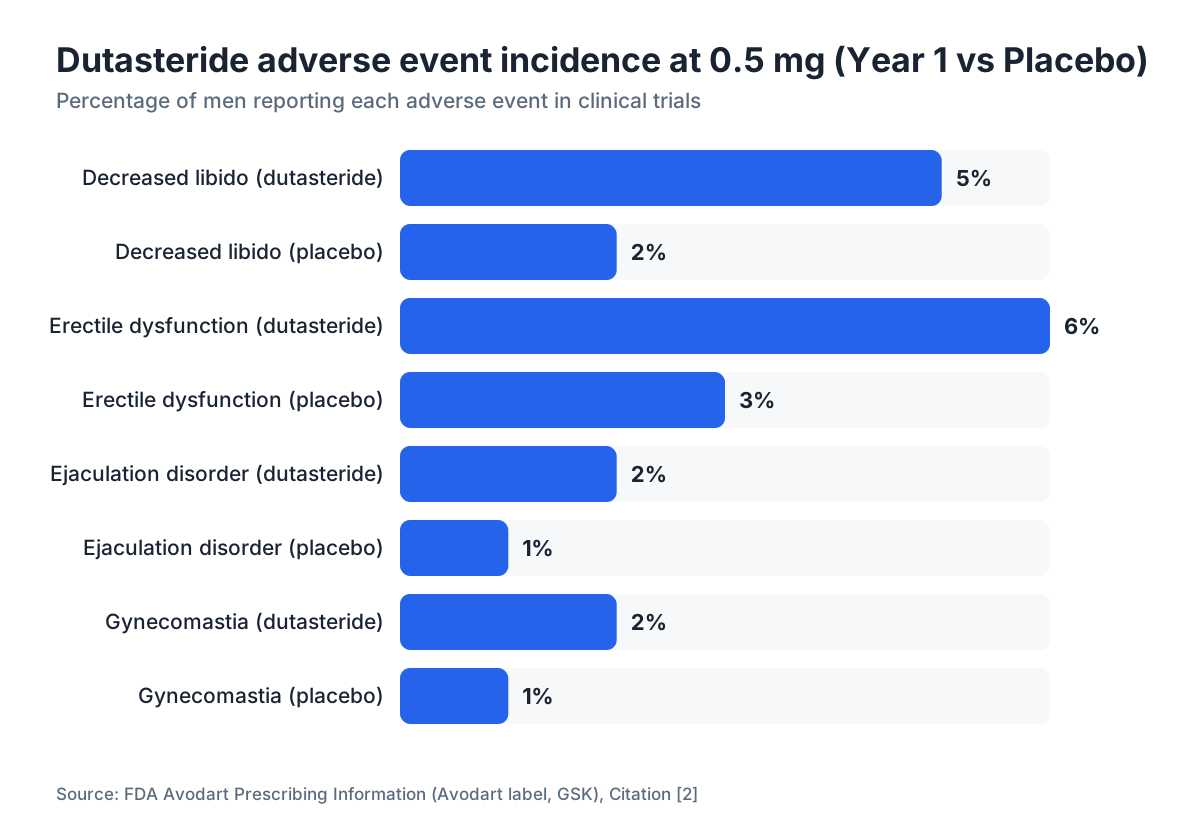
The FDA-approved prescribing information for Avodart, based on the CombAT and ARIA clinical trials, lists four sexual adverse events as the most frequently reported [2]. Here's what the data shows at the 0.5 mg dose over two years:
| Side Effect | Year 1 incidence | Year 2 incidence | Placebo Year 1 |
|---|---|---|---|
| Decreased libido | 3-6% | ~1-2% | ~1-2% |
| Erectile dysfunction | 4-7% | ~1-2% | ~1-4% |
| Ejaculation disorder | 1-2% | ~0.5% | <1% |
| Gynecomastia (breast tenderness/enlargement) | ~1-2% | ~1% | <1% |
Numbers vary slightly across trials and come from the Avodart prescribing label [2]. The pattern that matters: incidence is highest in year one and drops sharply by year two. That likely reflects two things. Some men stop taking it when side effects appear. Some men's bodies adapt.
For context, finasteride at 1 mg shows a similar but somewhat lower frequency, because DHT suppression isn't as deep [1]. The difference isn't massive in absolute terms, but it exists.
Decreased libido is the most reported issue. For most men it's a noticeable blunting, not "zero sex drive." Erectile dysfunction in trials tends to be mild to moderate, not a complete inability to achieve erection. Ejaculation disorders include reduced volume and, less commonly, retrograde ejaculation.
Do dutasteride's sexual side effects go away after stopping?
For most men, yes. The Avodart prescribing information states that sexual adverse events resolved in the majority of patients who discontinued treatment [2]. Dutasteride has a long half-life, roughly 3-5 weeks, so it takes months to fully clear [2]. Men who quit often don't see a full reversal for three to six months, sometimes longer.
The harder question is whether some side effects persist permanently. A syndrome called Post-Finasteride Syndrome (PFS) has been described in men who used finasteride and report persistent sexual, neurological, and psychological symptoms after stopping. The scientific picture here is genuinely murky. The National Institutes of Health funded research on PFS, and a 2022 review in the Journal of Urology concluded that persistent symptoms after 5-alpha reductase inhibitor use are real for a subset of men, but that well-controlled prevalence data are lacking [3].
A parallel "Post-Dutasteride Syndrome" hasn't been separately defined or studied at the same level. Given the mechanism is identical and the DHT suppression is deeper, the theoretical concern applies at least as much. Anyone with persistent symptoms after stopping should see a urologist or endocrinologist rather than wait it out.
If you started dutasteride and noticed sexual side effects within the first few weeks, that's worth noting but not necessarily alarming. Some men have transient symptoms that resolve without quitting. Others don't. Nobody can tell you in advance which category you'll land in.
Can dutasteride cause depression or mood changes?
This is where the evidence is less settled. DHT and its metabolites, particularly 3-alpha-androstanediol glucuronide and neurosteroids from the 5-alpha reductase pathway, have activity in the brain [3]. Some researchers think suppressing 5-alpha reductase affects GABA-A receptor signaling, which could influence mood and anxiety.
Clinical trials for BPH weren't built to track mood outcomes carefully, and participants were generally older men (average age around 65 in the CombAT trial). The FDA label for Avodart does not list depression as a labeled adverse event in its standard warnings, but post-marketing reports exist, and FDA added a warning about depressive symptoms to the finasteride label for hair loss in 2022 [4].
Because dutasteride works through the same pathway, that warning is clinically relevant even though the dutasteride label hasn't been updated identically. If you notice low mood, anhedonia, or anxiety changes after starting, take it seriously. Don't assume it's unrelated and don't sit on it for months before telling your prescriber.
The population most relevant for hair loss, younger men in their 20s and 30s, was barely studied in the original trials. That's an honest gap.
Does dutasteride cause a hair shedding phase?
Yes, and it's not a sign the drug is failing. When you start any effective hair loss treatment that shifts follicles from miniaturized to active growth, hairs sitting in telogen (resting phase) can shed to make room for new anagen growth. This is sometimes called a telogen effluvium response.
With dutasteride, a shed in the first 1-4 months is common enough that dermatologists routinely warn about it upfront. If they don't, ask. The shed typically peaks around weeks 6-12 and then stabilizes. If you're shedding past month 4-5 with no sign of new growth, that's worth a follow-up conversation.
This shed is not the drug failing. Most men who ride it out report visible improvement at the 6-12 month mark. Patience is genuinely required here.
What is the prostate cancer screening concern with dutasteride?
Dutasteride and finasteride both suppress prostate-specific antigen (PSA) levels, typically by about 40-50% after six months of use [2]. That matters because PSA is the standard screening tool for prostate cancer. If your doctor doesn't know you're on dutasteride, a PSA of 2.0 might look normal when the true unmasked value is 4.0.
The FDA label says to establish a new PSA baseline after 3-6 months on dutasteride, then double the measured PSA value when interpreting results [2]. Make sure every doctor who orders a PSA knows you're on this drug.
There's a separate, more serious historical concern. The REDUCE trial tested dutasteride 0.5 mg for prostate cancer prevention and found it reduced overall prostate cancer risk by 22.8% [5]. In a subset analysis, high-grade (Gleason 8-10) prostate cancers were numerically higher in the dutasteride arm, though the absolute numbers were small and the statistical interpretation is debated. The FDA declined to approve dutasteride for prostate cancer prevention partly on this basis [5]. For men using it for hair loss at the same 0.5 mg dose, this finding is worth knowing, but keep it in proportion: the trial enrolled men who already had elevated PSA, a higher-risk group than a typical hair loss patient.
Why can women and children not touch dutasteride capsules?
This is one of the non-negotiable warnings on the label. Dutasteride absorbs through skin. Women who are pregnant or may become pregnant must not handle crushed or broken capsules, because DHT suppression during fetal development can cause abnormalities of the external genitalia in male fetuses [2]. The risk is real enough that pregnant women are advised to avoid even contact with leaking capsules.
The FDA label states: "Dutasteride capsules should not be handled by women who are pregnant or who may become pregnant because of the potential risk of absorption of dutasteride and the subsequent potential risk to a male fetus" [2].
Intact capsules, swallowed whole by the patient, are fine. The drug absorbs in the gastrointestinal tract. The concern is skin contact with the gelatin contents if a capsule breaks or leaks.
Women with androgenetic alopecia do sometimes use dutasteride off-label (post-menopausal women, or women on reliable contraception), but this is strictly a specialist decision and falls outside approved labeling.
How do dutasteride's side effects compare to finasteride's?
The honest comparison: dutasteride suppresses more DHT and therefore carries at least a modestly higher theoretical risk of the same class of side effects finasteride produces. Head-to-head trial data for hair loss is limited. A 2014 Korean RCT comparing dutasteride 0.5 mg, finasteride 1 mg, and placebo in men with androgenetic alopecia found dutasteride produced superior hair growth at 24 weeks, with adverse event rates that were broadly similar between the two active arms [6]. That trial was not powered to detect small differences in adverse event rates.
For a deeper look at how the two drugs differ mechanistically and in hair growth evidence, see our article on finasteride. If you're considering combining either with topical treatment, finasteride and minoxidil covers what the combination data actually shows.
| Feature | Dutasteride 0.5 mg | Finasteride 1 mg |
|---|---|---|
| DHT suppression | ~90-95% | ~65-70% |
| 5-AR isoforms blocked | Type 1 and Type 2 | Type 2 only |
| Half-life | ~3-5 weeks | ~5-7 hours |
| FDA hair loss approval | No (off-label in US) | Yes (Propecia) |
| Sexual AE rate (approx.) | 3-9% | 2-8% |
| Clears after stopping | Months (long half-life) | Weeks |
The longer half-life of dutasteride matters in practice. If you develop a side effect and stop finasteride, it clears in days to a couple of weeks. Dutasteride can take three to six months to fully wash out.
What side effects are rare but serious enough to know about?
Male breast cancer has been reported in dutasteride users in post-marketing surveillance. The absolute risk is extremely low, and causality hasn't been established, but the FDA label includes it as a warning [2]. Any new breast lump, pain, or nipple discharge in a man on dutasteride should be evaluated promptly.
Allergic reactions, including rash, urticaria, and angioedema, are rare but documented [2]. If you get a skin reaction within weeks of starting, stop the medication and contact your prescriber.
Liver enzyme elevations have been reported rarely. This isn't a standard monitoring requirement for most prescribers, but if you have existing liver disease, that's a conversation to have before starting.
The drug also affects male fertility. In a study of healthy men taking 0.5 mg dutasteride for 52 weeks, semen volume, sperm motility, and sperm count all decreased, and in some men they hadn't fully recovered 24 weeks after stopping [7]. Men actively trying to conceive should discuss this with a urologist before starting, not after.
How should you monitor for side effects if you decide to take dutasteride?
A reasonable monitoring approach, based on what's in the prescribing information and standard dermatology practice [2][8]:
Baseline labs before starting: PSA level, ideally a digital rectal exam if over 40, and a frank conversation about sexual health so you have a reference point.
At 3-6 months: Repeat PSA. Establish your new "dutasteride-adjusted" baseline by doubling the measured result. Note any sexual symptoms honestly, because comparing against a remembered baseline is unreliable.
Ongoing: Annual PSA at minimum. If you notice breast changes, report them. If mood changes emerge, report them early rather than chalking them up to stress.
If you're using dutasteride off-label for hair loss, think about how your hair is responding at 6 and 12 months. A tool like the free AI hair analysis at MyHairline can give you a structured visual record so you're doing more than eyeballing photos on your phone. It's not a medical assessment, but tracking matters when your timeframe is a year or more.
For men who want to understand the DHT blocker mechanism more broadly before committing to a 5-alpha reductase inhibitor, starting with that context is reasonable. Side effects only make sense once you understand what the drug is actually doing.
Are there ways to reduce dutasteride side effects?
Honest answer: no proven protocol keeps the full hair-growth benefit while eliminating the side effect risk. A few approaches get tried clinically, though evidence quality varies.
Lower or intermittent dosing. Some practitioners use dutasteride 0.5 mg twice or three times per week rather than daily. The long half-life means the drug accumulates, so weekly dosing still produces substantial DHT suppression, potentially with fewer side effects. There's no large RCT specifically testing this for adverse event reduction, so this is expert opinion territory, not established evidence.
Topical dutasteride. Topical formulations are being studied to deliver the drug to the scalp while limiting systemic absorption. Early data looks promising for hair growth with reduced systemic side effects, but topical dutasteride isn't FDA-approved and compounded versions vary widely in quality. If you're interested in this route, a dermatologist with hair loss experience is the right person to ask.
Switching to finasteride. If sexual side effects show up on dutasteride, switching to finasteride at 1 mg is a reasonable step down. You'll get less DHT suppression but likely a more tolerable side effect profile.
For men who aren't tolerating any systemic 5-alpha reductase inhibitor well, minoxidil for men or oral minoxidil are mechanistically different options with their own side effect profile worth comparing.
Who should probably not take dutasteride?
Men who are actively trying to father children should think carefully before starting. The sperm effects are real and not fully reversible on a short timeline.
Men with a first-degree relative with male breast cancer, or personal breast tissue abnormalities, should raise that specifically with their prescriber before starting.
Anyone with a history of depression, anxiety, or other mood disorders deserves an explicit discussion of the neurosteroid concern before starting. That's not a hard contraindication, but it's not trivial either.
Younger men, particularly under 25, are in an age group where androgenetic alopecia can look alarming but may not be moving fast. Understanding the receding hairline staging before jumping to the strongest available DHT suppressor is a reasonable step. The what causes hair loss primer can help frame whether genetics, inflammation, or something else is primarily driving what you're seeing.
If you're using supplements hoping to get DHT-lowering effects without prescription risk, see hair loss supplements for a realistic look at what the evidence supports. The short version: the data is thin. Saw palmetto is the closest analog, and it doesn't come close to dutasteride's efficacy or its side effect certainty.
For anyone who has already lost substantial density and wants to weigh surgical options alongside medical ones, hair transplant information is useful context. Medication doesn't replace transplanted follicles, and transplants don't stop ongoing loss. Most people end up needing both.
At this stage, if you've been on dutasteride for 12-plus months and want an objective read on whether your hairline has actually responded, the MyHairline free AI hair scan can give you a structured before-and-after record. That kind of documentation earns its keep when you're deciding whether to continue, switch, or add a second agent.
Sources
- Clark RV et al., Journal of Clinical Endocrinology & Metabolism 2004 - Marked suppression of DHT by dutasteride vs finasteride
- FDA - Avodart (dutasteride) prescribing information, GlaxoSmithKline
- Melcangi RC et al., Journal of Urology 2022 - Persistent sexual dysfunction following 5-alpha reductase inhibitor use
- FDA Drug Safety Communication 2022 - Finasteride label update for depressive symptoms
- Andriole GL et al. (REDUCE trial), New England Journal of Medicine 2010
- Olsen EA et al. / Kim BJ et al., Journal of the American Academy of Dermatology 2014 - Dutasteride vs finasteride RCT for androgenetic alopecia
- Amory JK et al., Journal of Clinical Endocrinology & Metabolism 2007 - Dutasteride effect on semen and sperm in healthy men
- American Academy of Dermatology - Hair loss treatment guidelines
- NIH National Library of Medicine - Dutasteride drug summary, MedlinePlus