TL;DR: The best-studied finasteride alternatives are topical minoxidil (FDA-approved, regrows hair in about 40% of men), dutasteride (a stronger DHT blocker, approved in South Korea and Japan but not the US for hair loss), and low-level laser therapy. Supplements and natural DHT blockers have thin evidence. No alternative matches finasteride's mix of cost, access, and trial data.
Why are people looking for a finasteride alternative in the first place?
Finasteride works. For most men with male pattern baldness, it slows shedding and regrows some hair. The finasteride article on this site covers the mechanism in detail, but the short version: it blocks 5-alpha reductase type 2, which cuts scalp DHT by roughly 70%, and lower DHT means less follicle miniaturization. [1]
So why look elsewhere? A few real reasons.
Side effects, real or feared. The FDA label lists sexual dysfunction, reduced libido, and ejaculatory disorders. Clinical trial rates run around 1.8 to 3.8% for sexual side effects. Post-market reports and some observational studies suggest a subset of men have symptoms that persist after stopping, sometimes called post-finasteride syndrome. The science on that is genuinely unsettled. [1][2]
Mood is the other worry. A 2020 study in JAMA Dermatology found a small but statistically significant association between finasteride use and depression, though causality is not established. [2]
Contraindications. Women who are or could become pregnant can't handle crushed or broken finasteride tablets, because of teratogenic risk to a male fetus. That rules out a lot of women with androgenetic alopecia, and the 1 mg hair loss dose isn't labeled for women at all. [1]
Personal preference. Some people just don't want a daily systemic drug that suppresses a hormone, even at low doses. Fair enough.
Cost and access. In some countries finasteride is hard to get. In others the generic is nearly free. Your situation varies.
The search for alternatives is legitimate, not fringe. What follows goes through every option with an honest evidence rating instead of reassurance.
What is the strongest evidence-backed alternative to finasteride?
Topical minoxidil is the honest answer. It's FDA-approved for androgenetic alopecia (2% and 5% for men, 2% for women), it has decades of controlled trial data, and it works through a completely different mechanism than finasteride, so you don't have to pick one or the other. [3]
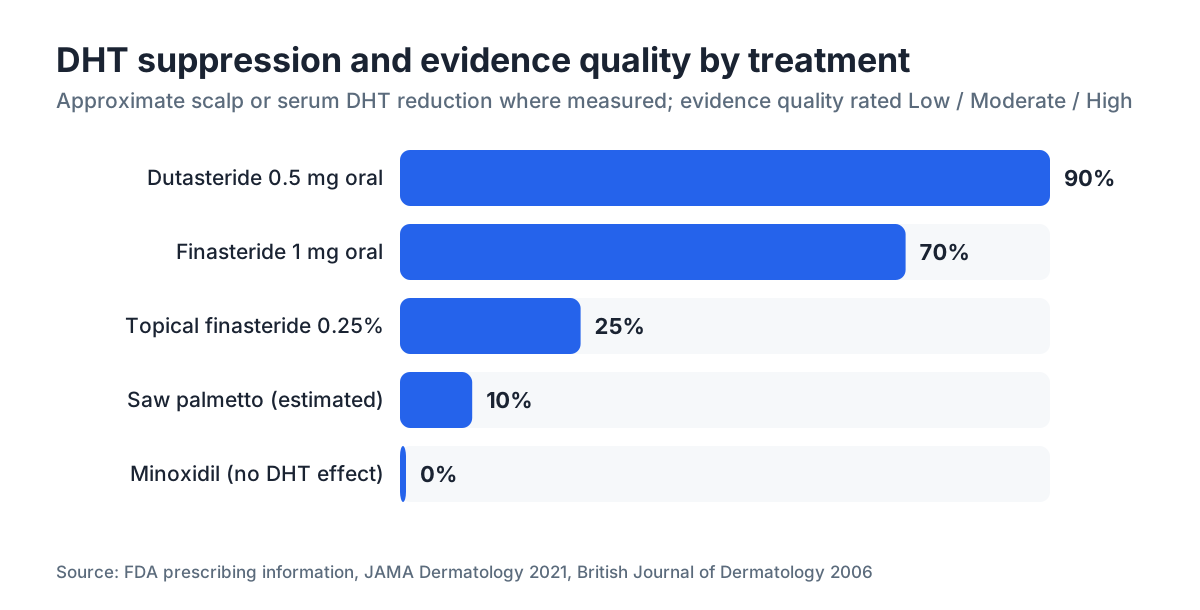
Minoxidil is a potassium channel opener. It widens blood vessels and stretches out the anagen (growth) phase of the hair cycle. It does not touch DHT. That's a limitation and, for anyone spooked by hormonal side effects, a selling point.
The 5% solution or foam shows vertex regrowth in roughly 40 to 45% of men after 48 weeks in controlled trials, and slows loss in most of the rest. [3] Not bad for a topical. The catch: stop it and you lose the benefit. Finasteride is the same way, but the daily application makes the psychological barrier feel different.
Minoxidil for men has the full picture on dosing and protocols. For this article, the short version: topical minoxidil is the most accessible, lowest-risk starting point for anyone who can't or won't take finasteride.
Oral minoxidil is newer and getting popular fast. Dermatologists prescribe it off-label at low doses (0.25 mg to 2.5 mg daily for hair, well under the 10 to 40 mg cardiac doses). A 2020 review in the Journal of the American Academy of Dermatology found it effective for androgenetic alopecia in men and women at these doses, with the main side effects being hypertrichosis (hair growing where you don't want it) and, rarely, fluid retention. [4] It's not FDA-approved for hair loss, so you need a prescription and a physician who's comfortable writing it. Oral minoxidil is worth reading if you're considering it.
Head-to-head, finasteride edges out minoxidil alone in most direct comparisons. A 1999 randomized trial in the Journal of the American Academy of Dermatology found finasteride produced significantly more growth at 12 months than 2% minoxidil solution. [5] The combination of both often beats either alone. But for people who genuinely can't take finasteride, topical minoxidil is the real alternative, not a consolation prize.
Is dutasteride a better alternative, and can you get it in the US?
Dutasteride is finasteride's stronger cousin. Where finasteride blocks only 5-alpha reductase type 2, dutasteride blocks both type 1 and type 2, cutting scalp DHT by around 90% versus finasteride's 70%. [6]
The hair data are good. Dutasteride 0.5 mg daily beat finasteride 1 mg daily in a large randomized trial across multiple endpoints, including total hair count and patient-reported outcomes. [6]
In South Korea and Japan, dutasteride is approved for androgenetic alopecia. In the US, the FDA approved it only for benign prostatic hyperplasia (BPH), under the brand name Avodart. Physicians prescribe it off-label for hair loss, and plenty do, but it is not an FDA-approved hair loss treatment here. [6]
The side effect profile looks like finasteride's, possibly with more pronounced sexual side effects because of the deeper DHT suppression. The long half-life (roughly 5 weeks versus finasteride's 6 to 8 hours) also means it takes far longer to clear if you quit.
If you tried finasteride and found it only mildly effective, dutasteride is a reasonable next step to raise with a dermatologist. If you're avoiding finasteride over side effect worries, switching to dutasteride is unlikely to help, because the mechanism and risk profile are close relatives.
This isn't a true alternative the way minoxidil is. It's finasteride turned up louder.
What about topical finasteride, is it different from the pill?
Topical finasteride is getting popular, and the logic holds up: keep the drug at the scalp, cut systemic absorption, cut systemic side effects.
The evidence is promising but thinner than for the oral version. A 2021 randomized trial in JAMA Dermatology compared 0.25% topical finasteride applied once daily to 1 mg oral finasteride in men with androgenetic alopecia. Both groups showed significant hair count gains. Serum DHT suppression was lower in the topical group (roughly 25% versus 70% with the pill), which points to less systemic effect. [7] Whether that means fewer sexual side effects in practice isn't proven in long-term data yet, but the mechanistic case is reasonable.
Topical finasteride isn't FDA-approved as a standalone product. In the US you get it through compounding pharmacies, usually as a solution or foam, sometimes mixed with minoxidil. Compounded products aren't FDA-reviewed for the specific formulation, which matters for quality consistency. The finasteride and minoxidil page covers compounded dual treatments in more detail.
If you want the DHT-blocking benefit with potentially lower systemic exposure, topical finasteride is a legitimate thing to discuss with a board-certified dermatologist. It's not a guaranteed safer version. The rationale just has real science behind it now.
Do natural DHT blockers actually work?
This is where the evidence gets thin fast. The dht blocker article covers the full landscape. Here's the honest summary for the most-marketed options.
Saw palmetto is the most studied natural DHT blocker. A small 2002 trial in the Journal of Alternative and Complementary Medicine found improvement in 60% of participants versus 11% on placebo for androgenetic alopecia. [8] Then you see the sample size: 26 men. A later comparison found finasteride produced significantly greater hair density gains. Saw palmetto showed modest benefit, well below pharmaceutical-grade results. [8]
Pumpkin seed oil gets attention online. One small 2014 randomized trial (76 Korean men, 24 weeks) found 40% more hair count in the pumpkin seed oil group versus 10% on placebo. Real study, small, not replicated at scale. [9]
Ketoconazole shampoo (prescription and OTC versions like Nizoral 1%) is a weak anti-androgen that also cuts scalp inflammation. A 1998 study found it comparable to 2% minoxidil for hair density. The evidence is old and not definitive, but ketoconazole as an add-on is cheap and low-risk enough that most dermatologists don't object. [10]
Biotin, zinc, and other supplements have no meaningful trial support for androgenetic alopecia unless you have a confirmed deficiency. The hair loss supplements page covers what's worth taking and what's not.
So the honest answer runs on a spectrum: possibly-helpful-but-modest (saw palmetto, pumpkin seed oil) down to no real evidence (most everything else sold for hair). None come close to finasteride's effect size. Choosing them to dodge pharmaceutical side effects is a reasonable personal call. Just go in with accurate expectations.
How does low-level laser therapy (LLLT) compare to finasteride?
Low-level laser therapy is FDA-cleared (not approved, a different regulatory category) for hair growth in men and women. Clearance via the 510(k) pathway means the device is substantially equivalent to a legally marketed predicate device. It does not mean the same evidence standard as drug approval. [11]
The devices come as helmets, combs, and caps from brands like Capillus and iRestore. Prices run from around $200 for basic units to over $3,000 for medical-grade systems.
The proposed mechanism is photobiomodulation, where certain wavelengths (typically 650 to 670 nm red light) stimulate mitochondrial activity in follicular cells. The theory is reasonable. The trial data are mixed.
A 2014 randomized trial in the American Journal of Clinical Dermatology found a 39% increase in hair count in men using an LLLT device versus a sham device. [11] Other trials show more modest results. Long-term head-to-head data against finasteride don't exist, and the effect size in most LLLT trials is smaller than in drug trials.
The appeal is obvious: no drugs, no hormones, no prescriptions. The downsides are cost, the time (typically 20 to 30 minutes several times a week), and the real chance that modest effects shrink when you run larger, tighter trials.
If you can't take any systemic or topical medication, LLLT is worth considering inside a broader plan. As a standalone finasteride replacement, it probably underperforms. Pairing it with topical minoxidil is what most dermatologists suggest for a drug-free protocol.
Can women use these alternatives, and what works specifically for female hair loss?
Women with androgenetic alopecia face a different landscape than men. Finasteride isn't FDA-approved for female hair loss, and it's outright contraindicated in women who are pregnant or could become pregnant, because of teratogenic risk. [1] Some dermatologists prescribe it off-label for postmenopausal women, but that's a physician judgment call, not a standard first line.
For women, the real options are:
Topical minoxidil 2% or 5%. FDA-approved for women (the 2% formulation, with 5% foam also labeled for women, though the original 5% solution approval was men-only). This is the legitimate first-line treatment for female androgenetic alopecia. [3]
Oral minoxidil at low doses (0.25 to 1.25 mg daily for women). Same off-label situation as men, with a growing evidence base. Hypertrichosis is a bigger concern for women given body hair.
Spironolactone. An anti-androgen (a potassium-sparing diuretic used off-label for hair) that reduces androgen activity. It's widely prescribed for female pattern hair loss in the US, typically at 50 to 200 mg daily. [12] It requires blood pressure and electrolyte monitoring, and it's contraindicated in pregnancy. For postmenopausal women or those on reliable contraception, it's the most-used pharmaceutical alternative to finasteride in female hair loss.
If you're trying to figure out whether you have androgenetic alopecia or something else like telogen effluvium, that distinction matters before you choose a treatment path. Telogen effluvium doesn't respond to DHT blockers, because it isn't driven by androgens.
The free AI hair analysis at MyHairline (/scan) can help you identify your pattern before you spend money on a protocol. Knowing what you're dealing with is step one.
What is the evidence for platelet-rich plasma (PRP) for hair loss?
PRP means drawing a small amount of your blood, spinning it to concentrate the platelets, and injecting the platelet-rich fraction into your scalp. The growth factors in platelets are thought to stimulate follicular activity.
The evidence is real but imperfect. A 2019 systematic review and meta-analysis in Dermatologic Surgery found PRP significantly increased hair density and diameter in androgenetic alopecia compared to controls, across 11 studies. [13] The problem: most included studies were small, protocols vary widely (session count, concentration method, injection technique), and there's no standard treatment.
Cost is a big factor. PRP runs $1,500 to $3,500 per session in the US, and most protocols involve 3 to 4 initial sessions, then maintenance every 6 to 12 months. Insurance doesn't cover cosmetic hair loss.
If you can't use DHT blockers and want more than topical minoxidil, PRP is a legitimate option with reasonable evidence. Just go in knowing the evidence quality is moderate, costs are high, and results vary a lot between people and clinics.
One thing worth checking before you book: get a clear diagnosis first. PRP works better when there are still follicles to stimulate. At a more advanced Norwood stage, a hair transplant consultation is the more realistic path.
How do all the options compare on effectiveness, cost, and side effect risk?
Here's where everything lands side by side.
| Option | Evidence quality | Typical effectiveness | Approx. annual cost (US) | Key risks |
|---|---|---|---|---|
| Finasteride 1mg oral | High (RCTs, long-term data) | ~66% hair count improvement vs placebo at 2 yrs | $100-$400 (generic) | Sexual side effects, mood changes (rare) |
| Topical minoxidil 5% | High (RCTs, FDA-approved) | ~40-45% show regrowth | $120-$300 | Contact dermatitis, hair loss if stopped |
| Oral minoxidil (off-label) | Moderate (growing evidence) | Comparable to topical, possibly better | $200-$600 | Hypertrichosis, fluid retention |
| Dutasteride (off-label) | Moderate-high (RCTs, approved elsewhere) | Outperforms finasteride in head-to-head | $400-$1,200 | Similar to finasteride, longer clearance |
| Topical finasteride | Moderate (smaller trials) | Similar hair count to oral, less systemic DHT suppression | $600-$1,800 (compounded) | Unknown long-term side effect profile |
| LLLT devices | Moderate (mixed trials, FDA-cleared) | Modest hair count improvement | $200-$3,000 (device) | Minimal; time commitment |
| PRP | Moderate (small trials) | Significant density improvement in most studies | $4,500-$14,000 per year (3-4 sessions) | Procedure risks, high cost, variable results |
| Spironolactone (women) | Moderate (observational, off-label) | 50-75% response in some studies | $200-$600 | Electrolyte monitoring, contraindicated in pregnancy |
| Saw palmetto | Low | Modest at best | $100-$200 | Very low; GI upset sometimes |
Cost ranges are approximate US market estimates and swing widely by region, pharmacy, and provider. Use this table to have a sharper conversation with a dermatologist, not to skip one.
What actually causes hair loss and does it change which alternative is right for you?
The right alternative depends heavily on why you're losing hair. Not all hair loss is androgenetic alopecia, the pattern baldness finasteride targets. What causes hair loss covers the full diagnostic map. The practical split for this article is androgen-driven loss versus non-androgen-driven loss.
Androgenetic alopecia follows a predictable pattern. In men it tracks the Norwood stages, starting at the temples and crown. In women it shows up as diffuse thinning at the part. A receding hairline is often the earliest visible sign in men. For androgen-driven loss, the DHT-blocking alternatives (dutasteride, spironolactone for women, topical finasteride) hit the root cause. Minoxidil and LLLT help but don't touch the underlying androgen sensitivity.
Telogen effluvium (diffuse shedding triggered by stress, illness, nutrition deficiency, or hormonal shifts) does not respond to DHT blockers at all. If that's what you have, finasteride or its alternatives are the wrong tool entirely. The telogen effluvium article explains how to tell the difference.
Alopecia areata, scarring alopecias, and traction alopecia each have their own treatment paths. DHT blockers and minoxidil aren't first-line for any of them.
Getting the diagnosis right matters more than picking the most popular treatment. A board-certified dermatologist, ideally one focused on hair disorders, is worth seeing before you commit money to a year of treatment.
What if you're worried about a specific finasteride side effect, is there a safer alternative?
The most honest thing to say: no alternative is proven safer than finasteride in rigorous head-to-head safety trials, because those trials don't exist. What we have is mechanism-based reasoning and real-world prescribing patterns.
If your worry is sexual side effects, topical finasteride has a mechanistic case for lower systemic exposure. The 2021 JAMA Dermatology trial showed 25% serum DHT suppression versus 70% for the oral pill, which points to less systemic anti-androgenic effect. [7] Whether that means fewer sexual side effects in real use isn't confirmed in large trials yet.
If your worry is depression or mood, the evidence linking finasteride to mood changes is real but contested. Minoxidil has no known mood effects. LLLT has no known mood effects. Those are genuinely lower-risk on that dimension, and also less effective for DHT-driven loss.
If the worry is the hormonal intervention itself, spironolactone (for women), saw palmetto, or pumpkin seed oil are gentler on the endocrine system, at the cost of less effectiveness.
My read: if you tried finasteride and had a clear, confirmed side effect, work through the alternatives here systematically. If you're avoiding it preemptively out of fear rather than experience, have a real conversation with a dermatologist about the actual risk numbers before you write off the most effective oral option available. Fear-based avoidance often ends with more money spent on less effective treatments.
The MyHairline AI scan (/scan) can give you a clearer read on your pattern, a useful starting point before that dermatologist conversation.
When is a hair transplant the better answer than any alternative?
At some point on the Norwood scale, medical treatments stop mattering much, because there aren't enough viable follicles left to stimulate. That's when a hair transplant becomes the serious conversation.
Transplants don't prevent future loss. Have one without any medical treatment (usually minoxidil, finasteride, or both), and the transplanted hair stays while the native hair around it keeps thinning. Most hair restoration surgeons recommend ongoing medical treatment alongside a transplant for exactly that reason.
FUT (follicular unit transplantation, the strip method) and FUE (follicular unit extraction) are the two main techniques. FUE leaves no linear scar and is more popular now. FUT can move more grafts in a session, and its grafts are often argued to survive at higher rates, though surgeon skill matters enormously either way.
US costs run roughly $4,000 to $15,000+ depending on graft count, technique, and clinic. Don't rush it. Because it's permanent, picking an experienced, board-certified surgeon (specifically in hair restoration) is non-negotiable.
If you want to avoid finasteride and you're at a moderate-to-advanced stage, a transplant paired with topical minoxidil is a legitimate alternative pathway. More expensive upfront, permanent, and for the right person it fixes the problem rather than just slowing it.
Sources
- FDA, Propecia (finasteride 1 mg) full prescribing information
- JAMA Dermatology, 2020, Nguyen et al., finasteride and depression association
- FDA, Rogaine (minoxidil 5%) OTC labeling and approval information
- Journal of the American Academy of Dermatology, 2020, Randolph and Tosti, oral minoxidil review
- Journal of the American Academy of Dermatology, 1999, Leyden et al., finasteride vs minoxidil RCT
- British Journal of Dermatology, 2006, Gubelin Harcha et al., dutasteride vs finasteride RCT
- JAMA Dermatology, 2021, Piraccini et al., topical vs oral finasteride RCT
- Journal of Alternative and Complementary Medicine, 2002, Prager et al., saw palmetto RCT; and comparison with finasteride data
- Evidence-Based Complementary and Alternative Medicine, 2014, Cho et al., pumpkin seed oil RCT
- Journal of the American Academy of Dermatology, 1998, Pierard-Franchimont et al., ketoconazole shampoo and hair density study
- American Journal of Clinical Dermatology, 2014, Leavitt et al., LLLT RCT
- American Academy of Dermatology, clinical guidelines on female pattern hair loss
- Dermatologic Surgery, 2019, Giordano et al., PRP systematic review and meta-analysis