TL;DR: For androgenetic alopecia (male or female pattern baldness), fully natural regrowth is limited but not zero. Low-level laser therapy, PRP, nutritional correction, and scalp-focused habits have real trial data behind them. None match finasteride or minoxidil head-to-head, but for mild-to-moderate loss, or if drugs are off the table, they're worth knowing about.
What does 'natural hair regrowth' actually mean?
Be honest with yourself about the question before spending a dime. 'Natural' usually means no prescription drugs and no over-the-counter minoxidil. That still leaves a wide field: devices cleared by the FDA, in-office procedures like platelet-rich plasma, dietary changes, scalp massage, and supplements. Some have real randomized controlled trial data. Others have one small study and a lot of influencer noise.
The second thing to understand is what type of hair loss you have. What causes hair loss is a longer conversation, but the short version is that androgenetic alopecia (AGA, the pattern baldness most people mean) is driven by dihydrotestosterone (DHT) shrinking follicles over years. That's a hormonal process, and reversing it without blocking DHT is genuinely hard. Compare that with telogen effluvium, which is shedding triggered by stress, illness, or nutritional deficiency. Telogen effluvium often resolves on its own once the trigger is removed, and 'natural' approaches work much better there.
So the honest answer to the title question depends on what's causing your hair loss. Natural approaches can meaningfully slow AGA and in early stages sometimes partially reverse it. For telogen effluvium or deficiency-related shedding, natural correction is often all you need. For advanced AGA (Norwood 4 and above), natural options probably won't be enough on their own.
Does scalp massage actually help with hair growth?
This sounds too simple to work. It might not be.
A 2016 Japanese study published in ePlasty had nine healthy men do a standardized 4-minute scalp massage daily for 24 weeks. Hair thickness increased, though total hair count didn't change significantly [1]. A 2020 self-reported survey of 327 participants who massaged their scalps daily found that 68.9% reported stabilized loss or increased hair thickness over roughly 6 months [2]. Neither is a large RCT, and neither compared massage against a sham-treated control group, so the placebo effect can't be ruled out.
The proposed mechanism is mechanical stretching of dermal papilla cells, which may switch on genes involved in hair growth. There's some cell-culture evidence for this. The jump from cultured cells to your actual scalp is a big one.
What's the practical recommendation? Four to five minutes of firm, circular pressure daily costs nothing and has no downside. If you're already doing other things, add it. Don't buy an expensive device expecting it to be the whole answer.
What is low-level laser therapy (LLLT) and does it regrow hair?
Low-level laser therapy (sometimes called red light therapy or photobiomodulation) uses specific wavelengths of light, typically 630 to 670 nanometers, to stimulate hair follicles. The FDA has cleared several LLLT devices (combs, caps, helmets) for hair growth in both men and women, which means the agency found them safe and manufacturers showed evidence of efficacy, though FDA clearance is not the same as FDA approval [3].
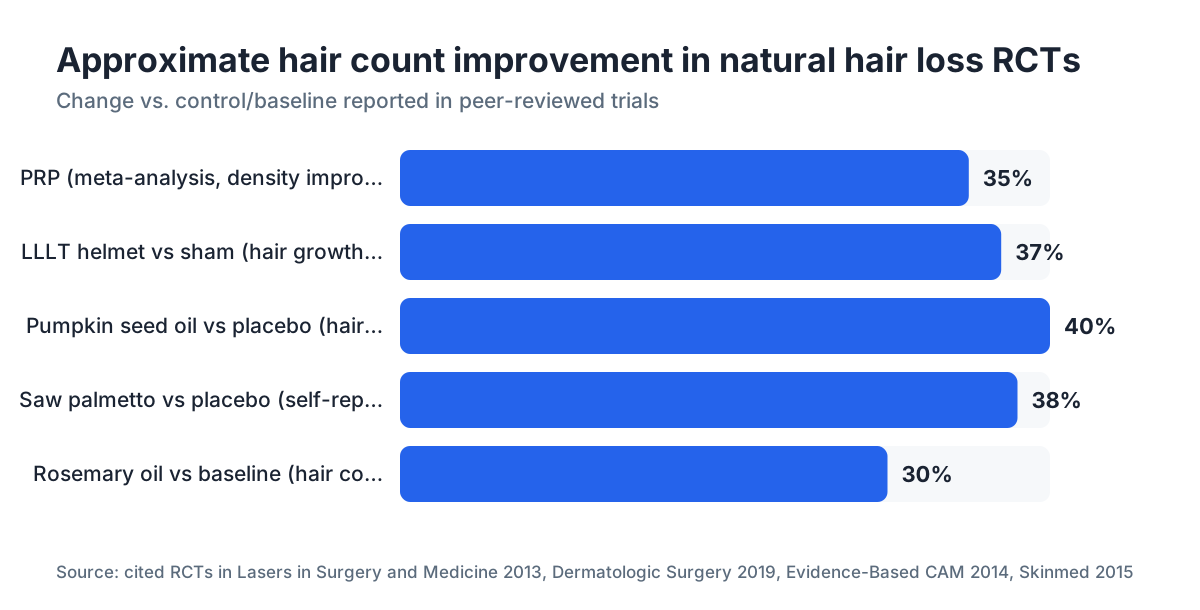
The evidence base is modest but real. A 2013 trial in Lasers in Surgery and Medicine found a statistically significant 37% increase in hair growth rate in men using an LLLT helmet versus a sham device [4]. Other sham-controlled trials of LLLT combs have shown positive trends in hair count, though some did not reach statistical significance at the primary endpoint.
Here's the honest summary. LLLT probably produces modest regrowth or slowing of loss in early AGA. It won't restore a fully receded hairline. Consumer devices cost between $200 and $800, with no ongoing drug cost. Treatments take 20 to 30 minutes several times per week for months before you see anything. Compliance is the real hurdle.
LLLT is one of the few natural options with enough controlled trial data that dermatologists sometimes recommend it as an adjunct. The American Academy of Dermatology lists it as an option for hair loss treatment [3].
Can platelet-rich plasma (PRP) regrow hair without medication?
PRP is an in-office procedure, so it's not a home remedy, but it is drug-free. Your blood is drawn, spun in a centrifuge to concentrate the platelets, and injected into your scalp. Platelets carry growth factors, including platelet-derived growth factor and vascular endothelial growth factor, that may stimulate dormant follicles.
A 2019 systematic review and meta-analysis in Dermatologic Surgery, covering 11 randomized controlled trials, concluded that PRP produced statistically significant improvements in hair density and thickness compared with control groups [5]. Hair count improvements in positive trials ranged from roughly 20 to 50 additional hairs per square centimeter, depending on protocol.
The costs are steep. A course of PRP is typically 3 initial sessions spaced 4 to 6 weeks apart, then one maintenance session every 6 to 12 months. Each session costs $500 to $1,500 at most clinics, putting initial treatment at $1,500 to $4,500 out of pocket. Insurance doesn't cover it for hair loss.
Who's the best candidate? People with early-to-moderate AGA who still have many miniaturized follicles. PRP can't bring back follicles that have been dead for years. It also works better in women than men in some studies, possibly because women tend to seek treatment earlier. PRP won't stop DHT from continuing to miniaturize follicles, so without addressing the root hormonal driver, results can fade.
Which nutritional deficiencies actually cause hair loss, and can fixing them regrow hair?
This is the most overlooked area in hair loss conversations, and it's also the one where 'natural' approaches have the clearest mechanism.
Iron deficiency is the most common nutritional cause of hair shedding in premenopausal women. A 2006 review in the Journal of the American Academy of Dermatology found that low ferritin is frequently associated with chronic telogen effluvium and possibly AGA in women [6]. Correcting iron deficiency can meaningfully reduce shedding, though it takes 3 to 6 months of supplementation to see results because hair cycles are slow.
Vitamin D has a messier relationship with hair. Vitamin D receptors sit in hair follicles, and several observational studies found lower serum vitamin D in people with AGA and alopecia areata compared with controls. Whether supplementing D regrows hair is less clear. No large RCT has confirmed it, but correcting a genuine deficiency is reasonable.
Zinc, biotin, and amino acids get a lot of supplement marketing. Biotin deficiency is rare in people eating a normal diet, and there's no good evidence that extra biotin helps hair in people who aren't deficient, despite what the packaging implies [7]. Zinc deficiency does cause hair loss, but again, correcting a deficiency is the point. Megadosing on top of adequate levels hasn't been shown to help.
The practical move is bloodwork before buying supplements. Ask your doctor for ferritin (more useful than hemoglobin here), vitamin D (25-OH), zinc, and a complete metabolic panel. Fix what's actually low.
For a broader look at what's worth taking, see hair loss supplements.
Do DHT-blocking supplements or foods work the same as finasteride?
This is where marketing and reality split hard.
Finasteride works by blocking the 5-alpha reductase enzyme that converts testosterone to DHT, reducing scalp DHT by roughly 60 to 70% [8]. That's a precise, potent, measurable mechanism. The DHT blocker category of supplements, which includes saw palmetto, pumpkin seed oil, and reishi mushroom, is claimed to work similarly. These do inhibit 5-alpha reductase, but far less efficiently.
Saw palmetto is the most studied. A 2012 randomized trial in the Journal of Alternative and Complementary Medicine (320 mg/day extract) found a self-reported increase in hair count in 38% of men versus 24% on placebo at 24 weeks [9]. A later comparative study found that saw palmetto extract produced less hair count improvement than 1 mg finasteride over 24 weeks, but still outperformed placebo [9].
Pumpkin seed oil had one small 2014 RCT (76 men, 400 mg/day for 24 weeks) that found a 40% increase in hair count versus 10% for placebo [10]. That's a promising number from a single small trial. No large-scale replication exists yet.
The honest comparison: these supplements are likely weaker than finasteride, and possibly a lot weaker. If you're avoiding finasteride over side effect concerns, saw palmetto and pumpkin seed oil are reasonable alternatives to try, knowing they probably won't match drug-level results. They're not the same mechanism, just an overlapping one.
For context on what you'd be skipping, read about finasteride and minoxidil as a combined approach.
How much evidence is there for essential oils like rosemary oil?
Rosemary oil gets a lot of attention, and for once it's not entirely hype.
A 2015 randomized, comparative clinical trial published in Skinmed (84 patients total, 6 months) compared 2% minoxidil with rosemary oil. Both groups had similar improvements in hair count at 6 months, though both also had more scalp itching than at baseline, and the study was small with no placebo arm [11]. The proposed mechanism involves increased scalp circulation and possible inhibition of 5-alpha reductase.
Peppermint oil has one supporting rodent study showing it outperformed minoxidil in inducing hair growth in mice. The leap from mouse skin to human AGA is enormous and this hasn't been replicated in humans.
Cedarwood, lavender, and thyme oils are often cited together from a 1998 Scottish study in Archives of Dermatology involving 86 patients with alopecia areata (not AGA). Patients massaged a blend of these oils into their scalp daily for 7 months, and 44% showed improvement versus 15% in the carrier-oil-only group.
Alopecia areata is an autoimmune condition, not androgenetic alopecia. The mechanisms differ, so don't assume what helps one helps the other.
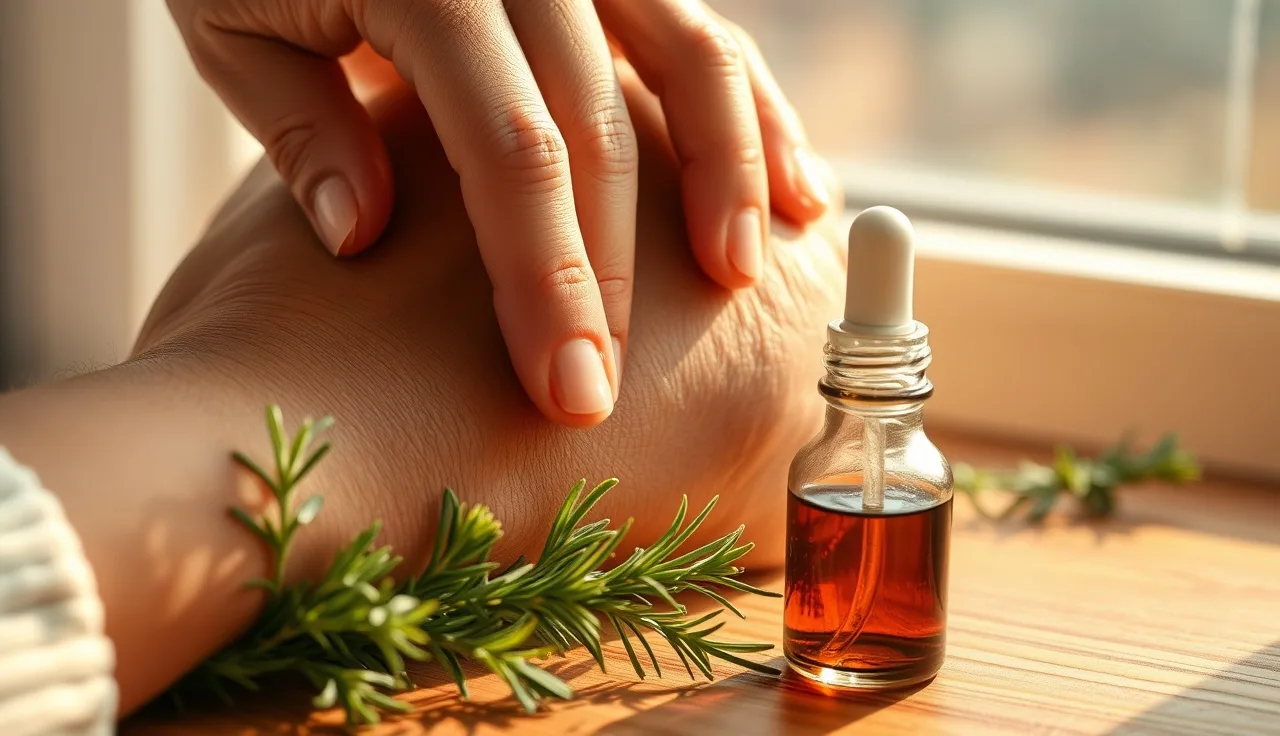
Practical take: rosemary oil (specifically Rosmarinus officinalis leaf extract, diluted to 2% in a carrier oil) is cheap, low-risk, and has the best human-trial evidence among the essential oils. It's worth a 6-month test if you're committed to drug-free options. Don't expect it to work as well as minoxidil, even though that one trial found parity.
What role does stress and sleep play in hair loss?
Stress is one of the most plausible natural levers, partly because the mechanism is well-understood and partly because you can actually do something about it.
Chronic stress elevates cortisol, which can disrupt the hair growth cycle by pushing more follicles into the telogen (resting/shedding) phase. A 2021 Harvard study in Nature showed that high cortisol suppresses the activation of hair follicle stem cells in mice, giving a cellular mechanism for stress-induced hair loss [12]. Whether reducing cortisol through lifestyle changes demonstrably regrows hair in humans hasn't been tested in a clean RCT, because you can't really blind someone to whether they're meditating.
Sleep deprivation also elevates cortisol and disrupts growth hormone secretion, which matters because growth hormone has a role in the anagen (growth) phase. There's no hair-specific sleep RCT, but the indirect physiology is reasonable.
For stress-triggered telogen effluvium, managing the trigger is the treatment. Hair typically regrows within 3 to 6 months after the stressor resolves, without any intervention. For AGA, stress management is unlikely to reverse the underlying DHT-driven follicle miniaturization, but it may slow the rate of loss and improve hair quality.
Sleep, exercise, and stress management cost nothing. They have documented effects on inflammation, cortisol, and metabolic health. Even if the hair benefit is modest, the rest-of-body benefit isn't.
What natural options work best for a receding hairline specifically?
A receding hairline is almost always early-to-mid AGA, which means DHT is the driver. That's the honest starting point.
The temple and hairline region is one of the most DHT-sensitive areas of the scalp. It's also often the last to respond to treatment and the first to worsen. Expecting complete natural reversal of a receded hairline is unrealistic for most people. Slowing progression and modest thickening of existing fine hairs is a more achievable goal.
Of the natural options, LLLT and PRP have the most evidence for stopping hairline recession. Scalp massage, rosemary oil, and DHT-blocking supplements can be layered on top. None of these will regrow a fully bare temple area if the follicles have been miniaturized for years.
If you want a proper picture of where you stand before committing to any protocol, a free AI hair analysis at MyHairline (/scan) can map your hairline against Norwood stages and show whether there's still miniaturized (salvageable) hair in the recession zone. Knowing that saves money on approaches that won't move the needle.
For people who've already lost significant ground, a hair transplant is the only option that actually moves hair back into that zone. That's a surgical procedure, not a natural approach, but worth knowing exists.
How long does natural hair regrowth take, and how do you track progress?
This is where most people give up too early or too late.
Hair grows roughly half an inch per month (about 6 inches per year). A single follicle cycle runs 2 to 6 years for the growth (anagen) phase, then a few weeks of transition (catagen), then 2 to 3 months of rest (telogen) before shedding and restarting. When a treatment wakes a resting follicle, you won't see the new hair at the surface for weeks, and you won't see meaningful length for months.
Most trials that show positive results run 24 weeks minimum. Expecting results at 8 weeks is why people declare products useless and quit. If you're running a natural protocol, commit to at least 6 months before making a call.
How to track properly: take consistent photos every 4 weeks in the same lighting, same position, same camera distance. Many people also use a trichoscope (a cheap dermoscope that plugs into your phone, $20 to $50 online) to look at hair density and miniaturization up close. If you're seeing more hairs with pigment and thickness over time, the treatment is working even if the change isn't visible in the mirror yet.
One pitfall trips people up. Increased shedding in the first 4 to 8 weeks of a new protocol is common and doesn't mean it's failing. It often means follicles are transitioning from telogen to anagen, which temporarily pushes more hairs out before new ones come in. This is documented with minoxidil and appears to happen with some natural stimulants too.
When do natural approaches stop being enough and medication becomes worth considering?
There's no clean threshold, but here's how to think about it.
If you're Norwood 1 or 2 with just early recession or slight thinning, natural approaches are reasonable to try first for 6 to 12 months. The follicles are still largely healthy, the changes are subtle, and the risk of being undertreated is lower.
If you're Norwood 3 or above, actively losing ground, and a natural protocol hasn't slowed the loss after 6 months of honest compliance, you're probably watching follicles die while you experiment. At that point the cost-benefit math on prescription options changes. Minoxidil for men and finasteride each have decades of trial data and are still the only FDA-approved medical treatments for male pattern hair loss [8]. The side effects of minoxidil are real but manageable for most people.
Some people legitimately can't take these drugs. Finasteride is contraindicated in pregnancy and in men with certain prostate or liver conditions. Minoxidil has cardiovascular interactions at higher doses, and the topical form irritates the scalp in a meaningful percentage of users. For those people, the natural options here aren't a compromise, they're the plan.
Oral minoxidil at low doses (0.25 to 1.25 mg/day) is increasingly used by dermatologists for people who can't tolerate the topical form. That's still a drug, just a different formulation. More at oral minoxidil.
If you've exhausted medical options or want to get ahead of further loss, a hair transplant is the other end of the spectrum: a permanent surgical redistribution of follicles. It's not a natural approach, and it doesn't stop ongoing loss, but it addresses the cosmetic result directly.
What's the realistic summary of what you can expect without drugs?
Here's the honest answer. Natural approaches can slow androgenetic alopecia and in early stages produce partial, modest regrowth. They rarely produce dramatic before-and-after results on par with finasteride or minoxidil, especially at moderate-to-advanced stages. For telogen effluvium or deficiency-driven shedding, natural correction is often curative.
The approaches with the most credible evidence, ranked roughly by evidence quality:
- Correcting nutritional deficiencies (iron, vitamin D, zinc, protein) where bloodwork confirms they're low.
- LLLT (FDA-cleared devices, multiple RCTs showing a modest effect).
- PRP (strong systematic review; expensive and in-office).
- Rosemary oil 2% topical (one human RCT against minoxidil; cheap, low-risk).
- DHT-blocking supplements, particularly pumpkin seed oil and saw palmetto (limited but real RCT data).
- Scalp massage (small studies, plausible mechanism, zero cost).
- Stress reduction and sleep optimization (indirect evidence; whole-body benefit regardless).
Stacking several of these is a reasonable strategy. Someone doing LLLT plus rosemary oil plus a DHT-blocking supplement plus scalp massage is covering multiple mechanisms at once, and the combined effect is likely additive even if no trial has tested that exact stack.
If you want to know what you're working with before deciding on a strategy, MyHairline's free AI hair scan at /scan gives you a baseline Norwood or Ludwig stage and identifies which zones still have miniaturized hair worth targeting. That changes what you prioritize.
For more context on the drug-free side of the DHT equation, dht blocker has a deeper breakdown of the supplement evidence.
Sources
- ePlasty, Koyama et al. 2016, Standardized Scalp Massage Results in Increased Hair Thickness
- Dermatology and Therapy, Aukerman & Bhatta 2020, Self-assessments of standardized scalp massages for androgenic alopecia
- American Academy of Dermatology, Hair Loss Diagnosis and Treatment
- Lasers in Surgery and Medicine, Lanzafame et al. 2013, Photobiomodulation helmet RCT in men
- Dermatologic Surgery, Gupta & Carviel 2019, PRP for AGA systematic review and meta-analysis
- Journal of the American Academy of Dermatology, Trost et al. 2006, Iron and hair loss review
- U.S. Food and Drug Administration, Biotin (Vitamin B7) Safety Communication
- U.S. National Library of Medicine, MedlinePlus, Finasteride and Minoxidil drug information
- Journal of Alternative and Complementary Medicine, Rossi et al. 2012, Saw palmetto for AGA
- Evidence-Based Complementary and Alternative Medicine, Cho et al. 2014, Pumpkin seed oil RCT
- Skinmed, Panahi et al. 2015, Rosemary oil versus minoxidil 2% clinical trial
- Nature, Choi et al. 2021, Corticosterone inhibits hair follicle stem cell activation