TL;DR: Finasteride is an FDA-approved drug with two main uses: 1 mg daily for male pattern hair loss (androgenetic alopecia) and 5 mg daily for benign prostatic hyperplasia (enlarged prostate). It works by blocking DHT, the hormone that shrinks hair follicles and grows prostate tissue. Hair regrowth results take 3-6 months minimum. It is not approved for women of childbearing age.
What is finasteride actually approved to treat?
Finasteride has two FDA-approved uses, and the dose is completely different for each one. At 1 mg per day, sold as Propecia, it treats androgenetic alopecia, which is male pattern baldness, in adult men [1]. At 5 mg per day, sold as Proscar, it treats benign prostatic hyperplasia (BPH), meaning an enlarged prostate, also in adult men [2].
That dose gap matters more than most people realize. The 5 mg tablet is more than "more of the same" for hair loss. The FDA reviewed and approved each dose on its own, for different endpoints, in different trial populations. Using 5 mg for hair loss is off-label, and there is no strong evidence it works better than 1 mg for that purpose.
Both branded versions are now off-patent. Generic finasteride at 1 mg and 5 mg is widely available, and prices have dropped a lot. The core molecule is identical regardless of brand name.
A third use, for hair loss in postmenopausal women, is sometimes prescribed off-label, and we cover that in its own section below. It is not FDA-approved for women, and pregnancy exposure is a hard contraindication.
If you want the full pharmacology and mechanism before reading further, the finasteride overview covers the biochemistry in detail.
How does finasteride work to stop hair loss?
Finasteride is a 5-alpha reductase inhibitor. Type II 5-alpha reductase is the enzyme that converts testosterone into dihydrotestosterone (DHT) inside hair follicle cells and prostate tissue [1]. DHT binds to androgen receptors in those tissues and shrinks hair follicles in genetically susceptible men, and makes prostate cells multiply.
By blocking that enzyme, finasteride cuts serum DHT levels by roughly 70% at the 1 mg dose and by roughly 70-75% at the 5 mg dose [1]. The difference in DHT suppression between the two doses is small, which is why the hair-loss benefit is not meaningfully better at 5 mg.
Hair follicles that have shrunk but are not yet dead can partially recover when the DHT pressure comes off. That is the mechanism behind regrowth. Follicles that are gone, producing no hair at all, do not come back. This is why starting earlier gives better results, and why finasteride is better at holding onto hair than at recovering lost ground.
For a broader picture of what drives follicle miniaturization in the first place, see what causes hair loss. And for a focused look at DHT and the drugs that target it, the DHT blocker article is worth reading next.
What does the clinical evidence say about finasteride for hair loss?
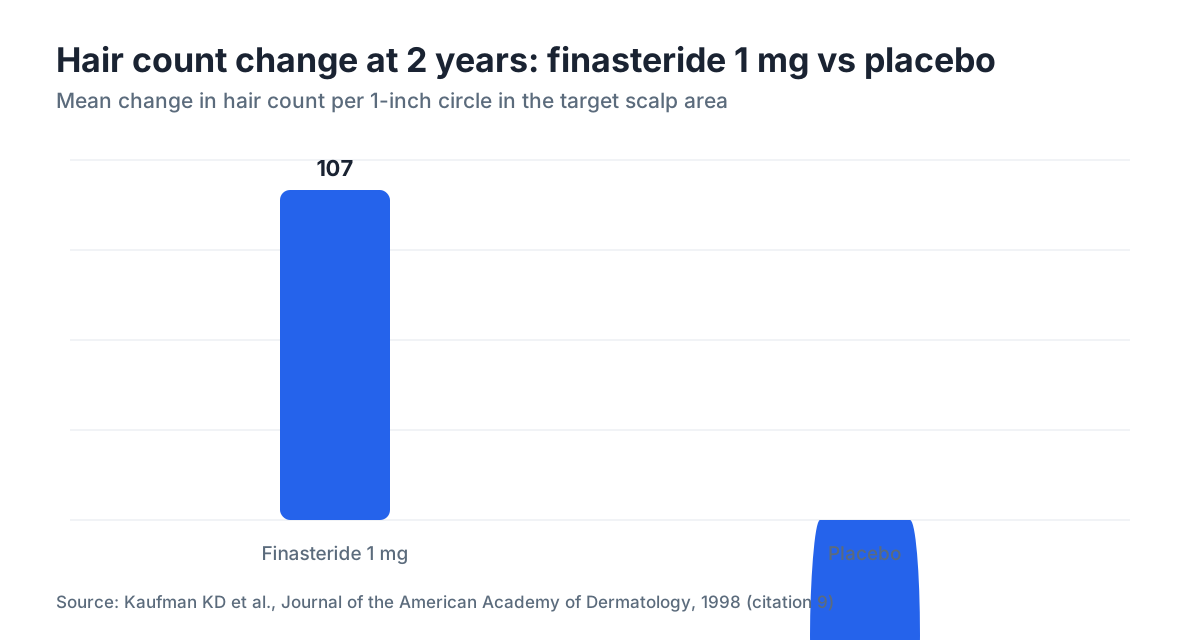
The main FDA registration trials for 1 mg finasteride ran for two years and enrolled men aged 18 to 41 with mild to moderate vertex and frontal hair loss. At two years, 83% of men taking finasteride kept or increased their hair count versus baseline, compared with 28% on placebo [9]. Hair count in the target area rose by a mean of roughly 107 hairs per one-inch circle in finasteride users versus a drop of 75 hairs in placebo users at two years [9].
Longer-term data exist. A long-term follow-up found that men who stayed on finasteride held hair density above baseline, while men who stopped and then restarted showed partial loss during the gap [10]. Here is the single most important practical lesson from all of it: stopping finasteride reverses its benefits within 9 to 12 months.
The evidence is strongest for vertex (crown) hair loss and a bit weaker for the frontal hairline, though both show statistically significant benefit. If you are mainly worried about a receding hairline, finasteride still helps, but results at the temples are generally more modest than at the crown.
One 2019 meta-analysis published in JAMA Dermatology looked at combination therapy. It found that finasteride plus topical minoxidil beat either drug alone, with the combination producing greater improvements in hair density scores [3]. That combination is now the standard first-line approach many dermatologists recommend. The finasteride and minoxidil article goes into the specifics of how to combine them.
For women with androgenetic alopecia, a 2020 study in the Journal of the American Academy of Dermatology found that 1 mg finasteride in postmenopausal women showed modest benefit, but the evidence base is much smaller and the effect sizes are less impressive than in men [4]. Nobody should read that as a green light for premenopausal women; pregnancy exposure to finasteride is category X for male fetuses.
How is finasteride used for an enlarged prostate (BPH)?
At 5 mg daily, finasteride shrinks prostate volume by roughly 20-30% over six to twelve months [2]. The FDA-approved use is specifically for symptomatic BPH in men with an enlarged prostate, to improve symptoms, reduce the risk of acute urinary retention, and reduce the risk of needing prostate surgery [2].
The PLESS trial, a four-year randomized controlled trial of 3,040 men, found that finasteride 5 mg cut the risk of acute urinary retention by 57% and the risk of surgery by 55% compared to placebo [8]. Those are large effect sizes for a medical therapy in this category.
Urologists often combine finasteride 5 mg with an alpha-blocker like tamsulosin for men with larger prostates or more severe symptoms. That combination is well-supported by data from the MTOPS trial and the CombAT trial.
Here is a note on PSA testing that men skip at their peril: finasteride 5 mg reduces PSA (prostate-specific antigen) levels by roughly 50% [2]. Men on finasteride who are being screened for prostate cancer need their PSA values doubled to get a meaningful comparison with untreated reference ranges. Miss this correction and a rising PSA that should trigger a workup can hide in plain sight. Tell every doctor ordering a PSA that you take finasteride.
Finasteride use for hair loss at 1 mg also lowers PSA, though less dramatically than the 5 mg dose, roughly a 30-40% reduction. The same correction principle applies.
Can women use finasteride for hair loss?
This is where the FDA-approved labeling and real-world clinical practice genuinely diverge. Finasteride is not FDA-approved for hair loss in women. The label says it is for men only, and the drug is absolutely contraindicated in women who are pregnant or may become pregnant because of the risk of feminization of a male fetus [7].
That said, dermatologists do prescribe finasteride off-label for postmenopausal women with androgenetic alopecia. Some also prescribe it for premenopausal women who use reliable contraception and are not trying to get pregnant. The clinical evidence in women is thinner than in men. A 2020 review in the Journal of the American Academy of Dermatology found some benefit at doses of 1 mg to 5 mg, but called the data "preliminary" and noted that larger randomized trials are needed [4].
Spironolactone is the more commonly used anti-androgen for female hair loss in the United States, partly because of the longer prescribing history and a somewhat more studied safety profile in women. Some clinicians prefer finasteride; some prefer spironolactone; some use both. No consensus guideline clearly ranks one above the other for women.
If you are a woman with hair loss, a board-certified dermatologist is the right person to sort through your options. Self-prescribing or buying finasteride online without a consultation carries real risks in this population.
What dose of finasteride is used for hair loss vs. prostate?
| Indication | Approved dose | Brand name | Generic available? |
|---|---|---|---|
| Male pattern hair loss | 1 mg/day | Propecia | Yes |
| Benign prostatic hyperplasia | 5 mg/day | Proscar | Yes |
| Female hair loss (off-label) | 1-5 mg/day | N/A | Yes (off-label Rx) |
Some men cut Proscar 5 mg tablets into fifths to get 1 mg doses at lower cost. This is common enough that dermatologists know about it. The tablet is not scored for this, so dose accuracy is imperfect, but plenty of men use this approach. Whether that tradeoff is smart depends on your situation and what your prescriber is comfortable with.
The generic 1 mg tablet is now cheap through pharmacy discount programs, often under $30-50 for a 90-day supply with a GoodRx-type coupon. That has taken some of the financial pressure off tablet splitting, though not all of it.
There is no FDA-approved topical finasteride in the United States as of mid-2026, though topical versions are prescribed off-label through compounding pharmacies. Topical finasteride is approved in some other countries. The theory is that topical application produces meaningful scalp DHT reduction with lower systemic absorption, which could cut systemic side effects. The evidence base for this is growing but still smaller than for oral finasteride.
How long does finasteride take to work?
Three to six months for any visible change. Six to twelve months to see meaningful regrowth. Two years to see the full response. Those timelines come straight from the clinical trial data [9].
The mechanism explains the delay. Finasteride does not work like a direct growth stimulant. It takes a hormonal brake off follicles that have already shrunk. Those follicles then have to cycle through their normal growth phases (anagen, catagen, telogen) before new terminal hairs show up. Hair follicles run on a months-long schedule. You cannot rush that.
Some men feel like they shed more in the first few months. This is usually not a sign the drug is failing. It often means follicles are moving out of a long resting phase into active growth, and that shift briefly releases old telogen hairs before new anagen hairs come in. This kind of shedding is related to (but distinct from) telogen effluvium, and it usually settles within a few months.
If there is no improvement at all after 12 months of consistent daily use, finasteride is unlikely to work for that person. Roughly 15-20% of men do not respond meaningfully [9]. Non-response is not a reason to keep taking a drug with side effect risks; it is a reason to reassess with your prescriber.
What are the real side effects of finasteride?
The FDA label lists sexual side effects as the main concern: decreased libido, erectile dysfunction, and decreased ejaculate volume, each reported in roughly 1-2% of men in the registration trials versus under 1% for placebo [1]. Those numbers come from trial populations, and real-world rates may differ depending on how questions are asked and how long men are followed.
The more contested area is post-finasteride syndrome (PFS), a label applied to persistent sexual, neurological, and psychological symptoms that some men report continuing after stopping finasteride. The FDA updated the label in 2012 to note that sexual side effects may persist after discontinuation [6]. The scientific community has not settled on the prevalence or mechanism of PFS. The Post-Finasteride Syndrome Foundation has documented case reports, but solid epidemiological data on true persistence rates are limited.
The Propecia package insert also notes a small increased risk of high-grade prostate cancer tied to the Prostate Cancer Prevention Trial (PCPT), though the clinical meaning of that finding has been argued over at length, and the FDA did not pull finasteride from the market over it.
Depression and mood changes have been reported and are included in post-market safety labeling. If you notice significant mood changes after starting finasteride, tell your prescriber. Do not brush it off.
Breast tenderness or gynecomastia (breast tissue growth) is a less common but real side effect, reported in under 1% of men in trials [1]. Any new breast lump needs a clinical evaluation regardless of cause.
Men worried about hair loss from other causes, including supplement-related shedding, should also read does creatine cause hair loss and check out hair loss supplements before blaming every shedding episode on finasteride.
Is finasteride used differently for different Norwood stages?
The FDA registration trials enrolled men with Norwood stages II through IV vertex hair loss [9]. The drug works best when hair follicles are shrunk but not yet completely gone. That maps roughly to Norwood II through V.
Men at Norwood VI or VII, who have extensive loss across the crown and mid-scalp, are unlikely to get dramatic regrowth from finasteride because most of the follicles in the affected areas are no longer active. Finasteride can still slow further progression, which matters if they have remaining hair worth keeping, but set expectations accordingly.
For men considering a hair transplant, finasteride matters in a specific way. Transplanted follicles come from the DHT-resistant donor zone at the back and sides of the scalp, so they do not shrink. But the surrounding native hair does. Without finasteride, you can end up with transplanted grafts that look isolated as the native hair around them keeps thinning. Most hair restoration surgeons recommend finasteride before and after a transplant for this reason.
At earlier Norwood stages, finasteride alone is often enough. At later stages, combining it with minoxidil for men usually produces better outcomes than either drug alone, based on the meta-analysis data cited above [3].
Are there off-label finasteride uses worth knowing about?
A few off-label uses come up regularly in the dermatology literature and in practice.
Frontal fibrosing alopecia (FFA) is a scarring alopecia that causes progressive recession of the frontal hairline, mostly in postmenopausal women. Some case series and small observational studies report that finasteride or dutasteride slows FFA progression. The evidence is not from randomized controlled trials, and this stays off-label, but the American Academy of Dermatology (AAD) recognizes finasteride as one of the treatment options for FFA [5].
Hirsutism in women, meaning excess facial or body hair, is sometimes treated with anti-androgens including finasteride off-label. Spironolactone and oral contraceptives are more commonly used for this in the US.
Female pattern hair loss, already covered above, is probably the most common off-label use in dermatology practice.
Dutasteride is a related 5-alpha reductase inhibitor that blocks both type I and type II isoenzymes (finasteride only blocks type II). Dutasteride is FDA-approved only for BPH, not for hair loss, but it is prescribed off-label for androgenetic alopecia, especially in men who did not respond well to finasteride. It produces greater DHT suppression (roughly 90-95% versus 70% for finasteride) but has a much longer half-life and similar or greater side effect risks.
If you are tracking your scalp over time to see whether finasteride is actually working, the free AI hair analysis at MyHairline can give you a baseline and help you watch changes objectively.
How does finasteride compare to other hair loss treatments?
| Treatment | Mechanism | Evidence level | Approved for women? | Ongoing use required? |
|---|---|---|---|---|
| Finasteride 1 mg | DHT blocker (type II) | Strong RCT data | No (off-label only) | Yes |
| Minoxidil (topical) | Vasodilator, unknown exact mechanism | Strong RCT data | Yes (2% formulation) | Yes |
| Oral minoxidil | Same mechanism, systemic | Growing evidence | Yes (off-label) | Yes |
| Dutasteride | DHT blocker (type I + II) | Moderate, off-label for hair | No | Yes |
| Hair transplant | Surgical redistribution of follicles | Permanent for transplanted hairs | Yes | No (for transplanted hair) |
| Ketoconazole shampoo | Mild anti-androgen effect | Weak, adjunctive | Yes | Yes |
Finasteride and minoxidil work through completely different mechanisms, which is why they complement each other instead of overlapping. Minoxidil does not lower DHT. Finasteride does not directly stimulate blood flow to follicles. Using both is not redundant. The minoxidil side effects article covers the risk profile of the other half of that combination if you are thinking about going that route.
For men who want the whole picture before committing to any treatment, the oral minoxidil piece covers a growing option that some prescribers now recommend instead of or alongside topical minoxidil.
Finasteride is, in the honest opinion of most practicing hair loss dermatologists, the single most effective medical treatment for male androgenetic alopecia that exists right now. That is not a marketing line; it reflects where the randomized trial evidence sits next to the alternatives. But it requires continuous use, has real side effect risks, and does not work for everyone. Make that decision with clear eyes.
Who should not use finasteride?
Women who are pregnant or who may become pregnant. Full stop. Finasteride is teratogenic to male fetuses and is FDA Pregnancy Category X [7]. Even contact with crushed or broken tablets by pregnant women is a risk because the drug absorbs through the skin. This is not theoretical; it is the basis for one of the drug's most prominent label warnings.
Men with a known or suspected prostate cancer should talk through the PSA confounding issue carefully with their urologist before starting finasteride, because the drug's effect on PSA can complicate monitoring.
Men with liver disease should use caution; finasteride is metabolized in the liver, and severe liver impairment can change drug levels.
Children and adolescents. Finasteride is not approved for anyone under 18, and its use in kids is not supported by evidence.
Anyone with a prior hypersensitivity reaction to finasteride or any component of the tablet.
Men dealing with significant depression or a history of mood disorders should have a careful conversation with their prescriber before starting, given the reports of mood-related adverse effects, even though the causal link is not definitively established in the literature.
Sources
- Gupta AK et al., JAMA Dermatology, 2019 — meta-analysis of combination therapy for androgenetic alopecia
- Vano-Galvan S et al., Journal of the American Academy of Dermatology, 2020 — finasteride in women with AGA
- American Academy of Dermatology, hair loss treatment guidelines
- FDA, MedWatch safety labeling changes for finasteride, 2012
- NIH MedlinePlus, finasteride drug information
- Roehrborn CG et al., PLESS Study Group, Urology, 1999 — PLESS trial of finasteride for BPH
- Kaufman KD et al., Journal of the American Academy of Dermatology, 1998 — 2-year Propecia efficacy trial
- Van Neste D et al., British Journal of Dermatology, 2000 — long-term finasteride efficacy
- ClinicalTrials.gov, NLM, finasteride trials registry