

TL;DR: Finasteride (1 mg daily for hair loss) can reduce sperm count, concentration, and motility in a minority of men, likely by lowering DHT inside the testes. Most studies show the effects reverse within three to six months of stopping. If you're actively trying to conceive, talk to a urologist before starting or continuing finasteride.
What does finasteride actually do inside the body?
Finasteride is a 5-alpha reductase inhibitor. It blocks the enzyme that converts testosterone into dihydrotestosterone, or DHT. At the 1 mg dose prescribed for male pattern hair loss (brand name Propecia), it lowers serum DHT by roughly 65-70% [1]. At 5 mg (Proscar, used for enlarged prostate), the suppression runs deeper, around 70-75%.
DHT matters for the prostate, the scalp, and, importantly here, the testes. The testicular environment normally holds very high local concentrations of DHT. That intratesticular DHT supports spermatogenesis, the process of making sperm. When finasteride drops that local DHT level, it can disrupt the hormonal signals sperm production depends on.
The drug does not touch testosterone itself much at standard doses. Testosterone often ticks up slightly because less of it gets converted downstream. But the downstream product, DHT, is the one that matters for sperm.
To understand finasteride's broader role in hair loss treatment, see finasteride and DHT blocker for a fuller picture of how DHT drives follicle miniaturization.
How common are sperm changes in men taking finasteride?
Honest uncertainty is the right posture here. The answer depends heavily on which study you read, how it was designed, and what dose participants were taking.
A 2013 review published in Fertility and Sterility examined multiple case series and controlled studies. It found that some men on finasteride 1 mg showed reductions in sperm concentration, total motility, and morphology, but results were inconsistent across studies [2]. Some men showed no change at all. The review's authors estimated that clinically significant semen parameter changes appear in a minority of men, not the majority.
A 2020 prospective study in the Journal of Urology followed men presenting to infertility clinics who were taking finasteride 1 mg. A meaningful subset had semen analysis values that improved after stopping the drug, which points to finasteride as a contributing factor [3]. But that's a self-selected group, men already struggling with fertility, so the rate is probably higher than it would be in the general population of finasteride users.
The honest summary: nobody has perfectly clean population-level data. The clearest signal is that severe oligospermia (very low sperm count) or even azoospermia (no sperm) has shown up in case reports at both the 1 mg and 5 mg dose, but these appear to be uncommon. Subclinical changes, meaning numbers that drop but stay in the normal range, are probably more frequent and often go unnoticed.
What specific semen parameters does finasteride change?
Studies report changes across several dimensions of semen quality [2][3]:
| Semen Parameter | Direction of Change | Notes |
|---|---|---|
| Sperm concentration | Decrease in some men | Can range from mild to severe |
| Total motility | Decrease in some men | Progressive motility affected more |
| Morphology | Variable, some worsening | Less consistent than concentration data |
| Semen volume | Generally unchanged | Not a major target of DHT signaling |
| Total sperm count | Decrease in some men | Follows concentration changes |
Sperm concentration and total motility are the parameters cited most often as affected. Morphology changes get reported too, but the evidence is weaker and less consistent. Semen volume (how much fluid is produced) does not appear to move meaningfully at 1 mg.
The clinical threshold most reproductive urologists watch is a total motile sperm count below 5 million, because below that line natural conception gets significantly harder. There are documented cases of men on finasteride falling under it and recovering after stopping [3].
Are the fertility effects of finasteride reversible?
In most reported cases, yes. That's the consistent finding across case reports and small prospective studies: after stopping finasteride, semen parameters tend to recover over months.
A frequently cited timeline is three to six months. That fits the biology. A full cycle of spermatogenesis takes about 74 days, so you'd expect at least two to three full cycles before you see the new baseline [4]. Some men recover within three months. Others take closer to twelve. Severe cases, particularly where sperm count dropped to near zero, can take longer, and a small number of case reports describe men who did not fully recover, though it's difficult to know whether finasteride was truly the cause or whether the men had underlying fertility problems that were unmasked.
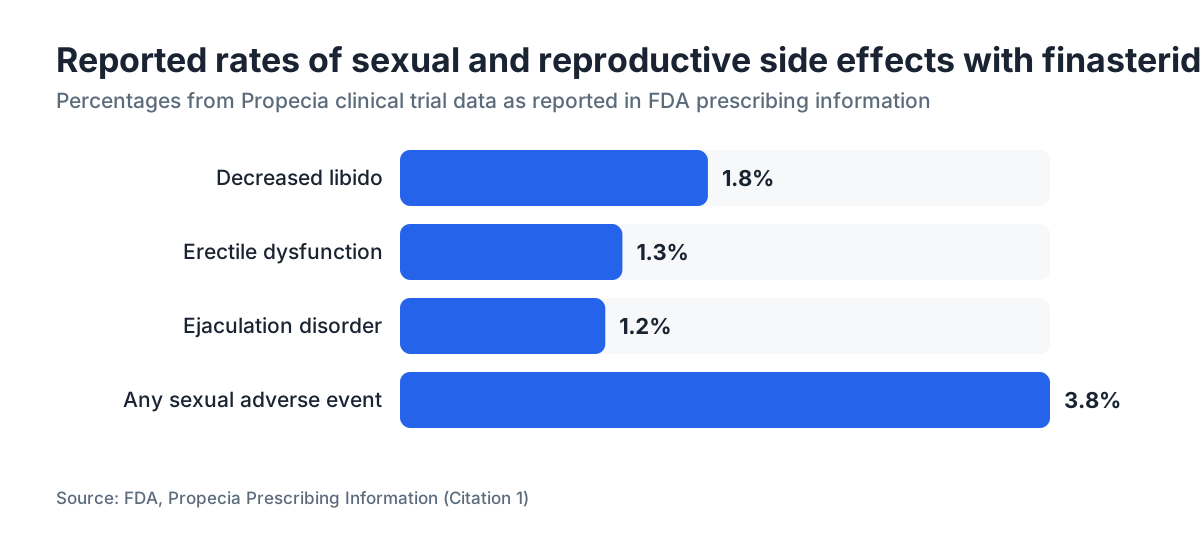
The FDA-approved prescribing information for Propecia (finasteride 1 mg) states that "in a study of finasteride 1 mg in healthy volunteers, semen analysis was normal and no adverse effects on sperm parameters were observed," but also notes that post-marketing case reports of abnormal semen parameters exist [1]. That tension is real. The clinical trial population and the real-world population are different groups.
If you've been on finasteride and you're now planning to conceive, the standard advice from most reproductive urologists is to stop three to six months before your target conception window. That's not a guarantee of recovery. It gives the biology time to reset.
Does the 1 mg hair loss dose affect fertility differently than the 5 mg prostate dose?
Dose matters, but probably less than you'd expect. Most case reports of severe semen parameter changes involve 1 mg, simply because far more men take it. The 5 mg dose suppresses DHT more deeply, and there's a reasonable hypothesis that it carries higher fertility risk, but controlled head-to-head data comparing the two doses on fertility outcomes specifically are limited.
A 2017 analysis published in Urology looked at men discontinuing finasteride prior to fertility treatments. It did not find a clean dose-response relationship in its small sample [5]. So for now, "5 mg is definitely worse for fertility than 1 mg" is a reasonable hypothesis that strong evidence hasn't confirmed.
The practical takeaway: if you're taking either dose and fertility is on your radar, treat both as worth discussing with a urologist. Don't assume 1 mg is safe just because it's a quarter of the prostate dose.
What does finasteride do to testosterone and other hormones?
Finasteride's hormonal footprint is narrow. By blocking 5-alpha reductase, it keeps testosterone from converting to DHT. The result is that serum testosterone tends to rise slightly, often 10-15%, because part of the conversion pathway is blocked [1]. Luteinizing hormone (LH) and follicle-stimulating hormone (FSH), the pituitary signals that drive testicular function, generally stay in the normal range at 1 mg [2].
This is why finasteride's effect on fertility is considered indirect. It's not suppressing the hypothalamic-pituitary axis the way anabolic steroids do. It's not crashing testosterone. It specifically cuts DHT at the testicular level, and DHT at that local site matters for the later stages of sperm maturation.
For men already working with a urologist on fertility, a standard hormone panel (FSH, LH, total testosterone, DHT if available) plus a semen analysis gives a reasonable snapshot before and after stopping finasteride. DHT blood tests exist but don't get ordered routinely, partly because serum DHT doesn't perfectly reflect intratesticular DHT levels.
Should you stop finasteride if you want to have children?
This is the practical question most men actually want answered. The honest answer: it depends on your timeline, your baseline fertility, and how much your hair loss matters to you.
If you're actively trying to conceive right now, most reproductive urologists would recommend stopping finasteride and getting a baseline semen analysis. That tells you where you're starting from. If your numbers are already in a healthy range, you have more information to make the decision. If they're borderline, stopping finasteride for three to six months and retesting is a reasonable next step before more involved interventions.
If conception is a year or more away, some men get a baseline semen analysis while still on finasteride, then decide. There's no one-size answer.
For hair loss during the finasteride break, minoxidil for men is the most common bridge. Minoxidil doesn't touch DHT or fertility, so it can be continued or started while you pause finasteride. It won't prevent all shedding, but it helps. Topical finasteride is another option some men explore during this period, on the theory that lower systemic absorption reduces fertility risk, though controlled fertility data on topical finasteride specifically are limited.
One genuinely useful move: if you're trying to figure out what's driving your hair loss in the first place, or wondering whether finasteride is even the right tool for your pattern, a hair analysis before committing to long-term medication makes sense. MyHairline's free AI scan at myhairline.ai/scan can help you understand your current pattern and Norwood stage before you talk to a doctor.
Can finasteride cause permanent infertility?
Permanent infertility from finasteride is rare based on available evidence, but "rare" and "impossible" aren't the same word. The case reports where semen parameters did not fully recover after stopping are a small fraction of the total documented cases, and those cases often carry confounders: men with pre-existing subfertility, older men, or men who stopped too late in the fertility workup to isolate the drug's effect.
The FDA label for Propecia notes that "in clinical studies, finasteride 1 mg was not associated with infertility," but the clinical trial populations weren't specifically selected for fertility endpoints, and the trials weren't powered to detect a low-frequency outcome [1]. Post-marketing surveillance has collected the case reports that suggest a real but uncommon signal.
The American Urological Association, in its male infertility guidelines, includes finasteride among drugs known to potentially impair spermatogenesis and recommends discontinuation in men with unexplained infertility [6]. That's a reasonable clinical standard, not a declaration of permanent harm.
If you've stopped finasteride for six to twelve months and sperm parameters remain severely abnormal, a reproductive urologist can assess whether other causes are present and whether assisted reproductive technology like IUI or IVF/ICSI should be considered.
What are the alternatives to finasteride for hair loss if fertility is a concern?
If you need to pause or avoid finasteride, a few options are worth knowing.
Minoxidil (topical or oral) has no known mechanism affecting fertility or sperm. It's a vasodilator, not a hormone modifier. The side effect profile is different: see minoxidil side effects for a full breakdown. Topical minoxidil at 5% is FDA-approved for men and doesn't carry the reproductive concerns finasteride does [7].
Oral minoxidil at low doses (0.625 mg to 2.5 mg daily) has gained clinical traction and also carries no known fertility risk, though it has its own cardiovascular and fluid retention considerations. See oral minoxidil for more detail.
Ketoconazole shampoo (1-2%) has some evidence as a mild DHT-blocking topical, though far weaker than finasteride. The fertility data on it are thin.
Dutasteride is another 5-alpha reductase inhibitor, and it blocks both the type 1 and type 2 isoforms. It suppresses DHT more thoroughly than finasteride and has a much longer half-life (around 5 weeks versus 6-8 hours for finasteride). From a fertility standpoint, it's considered higher risk than finasteride, not lower. If you're switching to dodge fertility concerns, dutasteride is not the move.
For men at a more advanced stage of loss, a hair transplant is a surgical option that doesn't involve ongoing hormonal suppression, though it doesn't stop the underlying loss process.
The combination of finasteride and minoxidil is the most studied medical regimen for hair loss, but if finasteride is off the table, minoxidil alone is still a legitimate strategy.
What should you actually do before starting finasteride if you might want kids someday?
A few concrete steps reproductive urologists commonly suggest:
Get a baseline semen analysis before you start. This is the single most useful thing you can do, and most labs can run the test for under $100 without insurance. Knowing your starting point means that if fertility concerns come up later, you have something to compare against instead of guessing.
Bank sperm if you're serious about it. Sperm banking is an option for men who want absolute coverage. Cost varies widely, roughly $300-700 for cryopreservation plus annual storage fees of $200-500, depending on the facility [8]. Not necessary for most men, but a legitimate option if you're starting finasteride in your late twenties or early thirties and want a safety net.
Tell your urologist or GP that you're on finasteride. This sounds obvious but often doesn't happen. If a male partner is being evaluated for infertility, finasteride use should be disclosed right away as a potential reversible cause.
Don't assume the semen analysis your doctor orders covers everything. A basic count and motility analysis is the starting point, but DNA fragmentation, strict Kruger morphology, and anti-sperm antibody testing add information if the standard analysis comes back borderline.
For broader context on what drives hair loss and whether finasteride even fits your pattern, read up on what causes hair loss and check where your loss is headed using a tool like myhairline.ai/scan. It helps you make a more informed call about whether the trade-offs make sense for your situation.
What does the research still not know about finasteride and male fertility?
The honest gaps are worth naming.
There are no large randomized controlled trials designed specifically to measure finasteride's effect on sperm parameters as a primary endpoint. Most of what we know comes from case reports, small prospective series, or fertility clinic populations that don't represent all finasteride users. That's a real limitation.
We don't have reliable data on whether some men are genetically more susceptible to sperm changes on finasteride. Variants in the SRD5A2 gene (which encodes 5-alpha reductase type 2) could in theory change how strongly finasteride suppresses intratesticular DHT, but nobody has studied this in the context of fertility outcomes.
The long-term effects of years of finasteride use on lifetime fertility, as opposed to the short-term reversibility seen in most studies, are also poorly characterized. Most recovery studies follow men for six to twelve months after they stop. What happens at two or three years for a man who took the drug for a decade is genuinely unknown.
Sperm DNA fragmentation, a measure of genetic integrity inside the sperm cell, has drawn less attention than standard semen parameters in finasteride research. A small number of studies suggest finasteride may worsen fragmentation, which could affect embryo quality even when standard counts look fine, but this is preliminary [9].
For men also worried about other contributors to hair loss that might tie into their overall health picture, the evidence on supplements is thinner still. See hair loss supplements for a realistic breakdown of what the data actually support.
Sources
- FDA, Propecia (finasteride 1 mg) Prescribing Information
- Fertility and Sterility, 'Effects of 5-alpha reductase inhibitors on semen parameters' (2013 review)
- Journal of Urology, prospective study on finasteride and male infertility clinic patients (2020)
- National Institutes of Health, StatPearls: Spermatogenesis
- Urology journal, analysis of men discontinuing finasteride before fertility treatment (2017)
- American Urological Association, Male Infertility Guidelines
- FDA, Rogaine (minoxidil 5%) OTC label for men
- UCSF Health, Sperm Banking: What to Expect
- Andrologia, study on finasteride and sperm DNA fragmentation (preliminary data, 2019)
- MedlinePlus (NIH), Finasteride drug information