

TL;DR: Hair follicle miniaturization runs through roughly four stages, from mild thinning to complete follicle death. Stages 1 through 3 are generally reversible or at least stoppable with finasteride and/or minoxidil. Once a follicle reaches stage 4 and the dermal papilla is gone, no current drug reverses it. The treatment window is real. Most men who act before bald patches form keep meaningful hair.
What is hair follicle miniaturization?
Miniaturization is the process by which a genetically susceptible hair follicle progressively shrinks. Each time it cycles through growth, the new hair comes in a little thinner, a little shorter, and a little lighter in color. Over enough cycles, that full terminal hair becomes an almost invisible vellus fiber, and eventually nothing at all.
The driver in most cases is dihydrotestosterone, or DHT. DHT binds to androgen receptors in the follicle's dermal papilla, the small cluster of cells that controls the growth signal. In people with a genetic sensitivity to DHT, that binding shortens the anagen (growth) phase and gradually atrophies the papilla itself. This is androgenetic alopecia, which affects roughly 50 percent of men by age 50 and around 25 percent of women by age 50 according to the American Academy of Dermatology [1].
Miniaturization is not sudden. It is slow enough that most people do not notice until a meaningful proportion of follicles in a given zone have already progressed. A trichoscope or dermoscope can detect follicle diameter variation early; a clinician measuring more than 20 percent diameter variation across a zone is generally treating that as a sign of active androgenetic alopecia [2].
Understanding what causes hair loss more broadly matters here because not all thinning is miniaturization. Telogen effluvium causes shedding without miniaturization, and those follicles come back on their own once the stressor resolves. Miniaturization is a different, slower, more structural problem.
What are the four stages of follicle miniaturization?
Researchers and clinicians do not all use the same numbered staging system for miniaturization itself (the Norwood scale stages pattern baldness across the scalp, not miniaturization within individual follicles), but the biological progression is well characterized in the literature and can reasonably be described in four stages [3].
Stage 1: Normal terminal follicle. The follicle is full size, anagen lasts two to six years, and the hair shaft diameter is typically 60 to 80 micrometers. No DHT-related damage is detectable yet. This stage can exist in a person who is genetically predisposed but has not yet shown clinical loss.
Stage 2: Early miniaturization. Anagen shortens. The follicle still produces a terminal hair but the shaft diameter has decreased by 10 to 30 percent compared to unaffected follicles in the same scalp. The dermal papilla is smaller but intact. Hair feels finer to the touch. Trichoscopy shows follicular diameter variation. This stage is highly reversible.
Stage 3: Intermediate miniaturization. Shaft diameter is now 30 to 60 percent below normal. The hair produced is transitional between terminal and vellus. Anagen may last only weeks to a few months. The dermal papilla has lost a significant portion of its cell volume but retains vascular supply. Drugs can still slow or partially reverse this stage, though full restoration is less predictable.
Stage 4: Advanced miniaturization / follicle senescence. The follicle produces only vellus or peach-fuzz fibers, or nothing at all. The dermal papilla is severely atrophied or fibrotic. In fully bald scalp, histology consistently shows fibrotic tract remnants where follicles once were. A study in the Journal of the American Academy of Dermatology found that bald scalp retains about 1,000 follicular units per cm² as fibrotic remnants, compared to roughly 1,700 in non-balding areas [3]. No currently approved drug reverses stage 4. Hair transplant is the only reliable option at this point.
| Stage | Shaft diameter vs normal | Dermal papilla | Drug reversible? |
|---|---|---|---|
| 1, Normal terminal | 100% (60-80 µm) | Intact, full size | N/A |
| 2, Early miniaturization | 70-90% | Intact, slightly smaller | Yes, high likelihood |
| 3, Intermediate | 40-70% | Partially atrophied, vascular | Partial to moderate |
| 4, Advanced / senescent | <40% or vellus only | Severely atrophied or fibrotic | No; transplant needed |
How does DHT cause follicle miniaturization step by step?
Testosterone is converted to DHT by the enzyme 5-alpha reductase (type 2 primarily in scalp follicles, type 1 in sebaceous glands). DHT has roughly five times the binding affinity for the androgen receptor compared to testosterone [4].
Once DHT binds to the androgen receptor in the dermal papilla, it alters gene expression. Papilla cells produce more of a protein called DKK-1, which inhibits the Wnt/beta-catenin signaling pathway. That pathway is essentially the "stay in growth phase" signal. Suppressing it shortens anagen. At the same time, DHT-sensitized papilla cells produce TGF-beta2, which promotes catagen (regression phase) and can eventually induce apoptosis, meaning cell death, in papilla cells.
This is why DHT blockers like finasteride work: finasteride inhibits 5-alpha reductase type 2, reducing scalp DHT by roughly 60 percent at a 1 mg daily dose [4]. Less DHT means less androgen receptor activation, which means less DKK-1 and TGF-beta2, which means anagen lengthens and the papilla can partially recover in size.
But that recovery has limits. If enough papilla cells have already undergone apoptosis and been replaced by collagen (fibrosis), there is no cell population left to rescue. The drug reduces the ongoing damage but cannot rebuild a structure that no longer exists. That biological ceiling is what makes timing so important.
How do you know what stage your follicles are at?
You cannot feel it through your scalp, and the mirror is unreliable until you have already lost a noticeable amount. By the time a bald patch is clearly visible, most follicles in that zone have reached stage 3 or 4.
The most accessible clinical tool is dermoscopy or trichoscopy. A dermatologist uses a handheld device with magnification and polarized light to measure follicle shaft diameters directly. A diameter variation of more than 20 percent across follicles in the same zone is a recognized diagnostic marker for androgenetic alopecia [2]. Some clinicians use phototrichograms, where a small area is shaved, photographed, and re-photographed after a few days to count actively growing vs resting follicles.
Biopsy is the most definitive method. A 4 mm punch biopsy analyzed horizontally can quantify the ratio of terminal to vellus follicles, the degree of perifollicular fibrosis, and the presence of inflammatory infiltrate. It is rarely done in routine practice but is sometimes used when the diagnosis is uncertain.
At-home methods are genuinely limited. A daily hair count (collecting and counting shed hairs from a single wash) can suggest active shedding but cannot distinguish stage 2 from stage 3 miniaturization. Hair density apps and AI scalp analysis tools can track changes over time and flag variation patterns. If you want a starting point before a dermatology appointment, the free AI scan at MyHairline gives you a baseline scalp analysis you can bring to a clinician. But it does not replace a trichoscope or a biopsy.
When is it too late to reverse miniaturization with medication?
Here is the question everyone actually wants answered. The honest version: probably not too late if you still have any hair at all in the affected zone, but it gets much harder once follicles reach late stage 3.
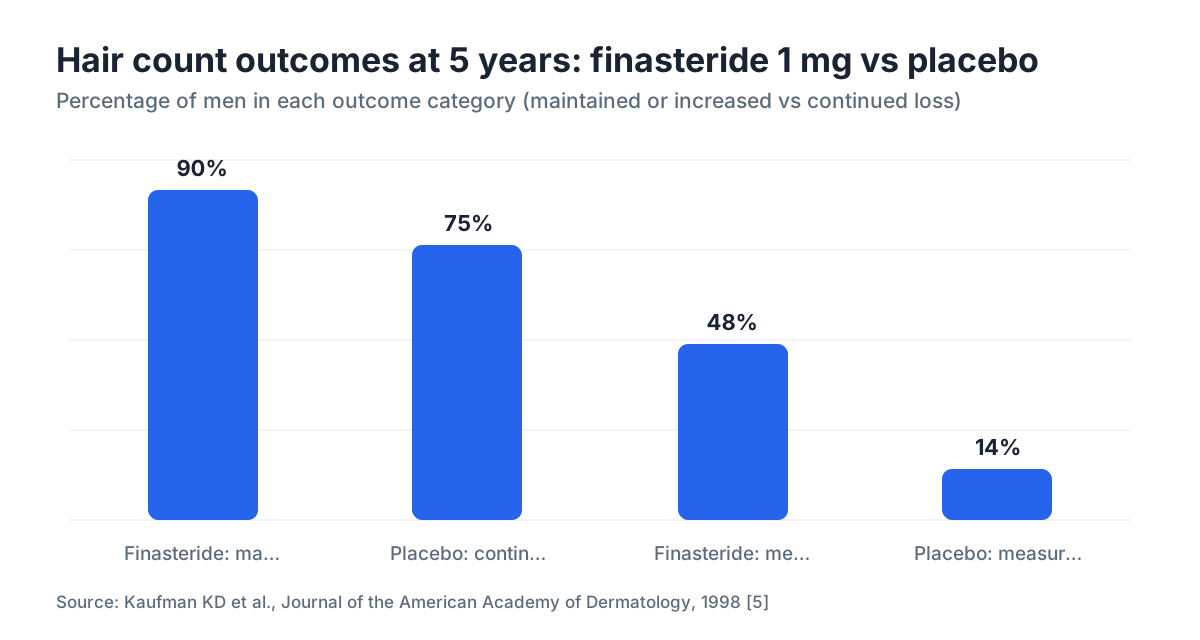
The clearest evidence for reversal comes from finasteride trials. The Merck-sponsored 5-year study published in the Journal of the American Academy of Dermatology found that 90 percent of men on 1 mg finasteride daily maintained or increased hair count, compared with placebo-treated men, most of whom continued to lose hair [5]. The men who responded best were those with early to moderate loss (Norwood II through IV) who started treatment sooner. Men with extensive vertex loss saw smaller benefits.
Minoxidil adds a different mechanism. It prolongs anagen directly and increases blood flow to the follicle, which can nudge a follicle from a telogen resting state back into growth. A 52-week randomized controlled trial of 5% topical minoxidil showed a mean increase of 18.6 hairs per cm² in the vertex [6]. Minoxidil does not block DHT, so it does not address the root cause, but it can partially compensate at stages 2 and 3. You can read more about minoxidil for men including dosing and application.
The stage 4 threshold is essentially irreversible by medication. Follicles replaced by fibrotic tracts have no living papilla cells to stimulate. Histological studies of bald scalp show fibrosis and near-complete loss of hair matrix cells in areas with no visible hair [3]. No drug approved by the FDA currently reverses this.
Practically: if you see a genuinely smooth, shiny bald patch that has looked that way for several years, medication is unlikely to produce visible regrowth there. Areas where you still have thin or fine hair are almost always worth treating.
Does combining finasteride and minoxidil improve outcomes?
Yes, and the combination is now the standard recommended approach for most men with androgenetic alopecia. A 2021 randomized trial published in JAMA Dermatology compared oral minoxidil 0.25 mg plus oral finasteride 2.5 mg versus each drug alone and found the combination produced significantly greater hair density improvement at 24 weeks than either monotherapy [7].
The logic makes sense mechanically. Finasteride addresses the cause (DHT-mediated follicle atrophy) while minoxidil addresses the growth cycle directly (anagen prolongation). They do not interact dangerously, and the side effect profiles are largely independent.
For people who prefer topical over oral, finasteride and minoxidil are also available as combined topical formulations through compounding pharmacies, though those are not FDA-approved as a combined product.
One realistic expectation: in most studies, regrowth takes four to twelve months to become visible, and peak response often comes around 12 to 24 months. Starting either drug and stopping after two months because you do not see results is one of the most common and costly mistakes people make.
Can a hair transplant restore a fully miniaturized area?
Yes, and it is the only evidence-based option for stage 4 follicles. A hair transplant takes follicular units from your donor zone (typically the back and sides of the scalp, which have different androgen receptor genetics and resist miniaturization) and moves them to the recipient area.
The transplanted follicles retain the genetics of their original location. That is why they keep growing in the bald area. But two things matter: first, the donor supply is finite, so extensive baldness may limit what is achievable; second, if you transplant into an area and continue to lose native hairs around the grafts, you can end up with an unnatural result over time. Most surgeons recommend being on finasteride before and after a transplant for exactly this reason.
FUE (follicular unit extraction) and FUT (follicular unit transplantation) both have high graft survival rates, typically 90 to 95 percent in experienced hands, but outcomes vary significantly by surgeon skill and patient selection [8]. Cost runs roughly $4,000 to $15,000 USD for most procedures in the US, depending on graft count and clinic.
The receding hairline at the temples is one of the most common transplant requests, and it is also one where you can get very natural-looking results because the hairline design work is well-established.
Are there any treatments that can actually regrow hair in miniaturized follicles?
For stages 2 and 3, yes. Finasteride and minoxidil both have randomized controlled trial evidence for measurable regrowth in men with active miniaturization, more than maintenance [5][6]. The AAD recommends both as first-line treatments for androgenetic alopecia [1].
For stage 4, no currently approved drug does this. Emerging research areas include:
JAK inhibitors. Ruxolitinib and baricitinib are FDA-approved for alopecia areata (an autoimmune condition, not androgenetic alopecia) but show no proven benefit for miniaturization-type loss [9]. Trials for androgenetic alopecia are ongoing but no results support clinical use yet.
Platelet-rich plasma (PRP). A 2019 systematic review in Dermatologic Surgery found PRP produced statistically significant improvements in hair density across 19 randomized controlled trials, but effect sizes were modest and study quality was mixed [10]. Probably worth considering as an adjunct at stages 2 to 3, not as a standalone treatment.
Low-level laser therapy (LLLT). The FDA has cleared several LLLT devices (not approved, cleared, which is a different regulatory standard) for hair growth. A randomized trial published in Lasers in Surgery and Medicine found significant improvements in hair density vs placebo in men and women with androgenetic alopecia [11]. Effect size is smaller than finasteride.
Stem cell and Wnt pathway therapies. Active area of research. Nothing is FDA-approved or commercially available that convincingly regrows follicles from scar tissue.
If you are considering supplements, the evidence base is thin. You can review what the actual data shows at hair loss supplements before spending money on unproven products.
Does hair miniaturization happen faster in some people?
Yes. The rate varies enormously between individuals and depends on a combination of factors.
Genetics is the primary driver. Androgenetic alopecia has polygenic inheritance, meaning dozens of genes contribute. Variants in the androgen receptor gene (located on the X chromosome, which is why maternal grandfather pattern matters) and in the 5-alpha reductase genes both influence how aggressively follicles respond to DHT.
Age at onset matters too. Men who start losing hair in their late teens or early twenties typically progress faster and to more advanced Norwood stages than men whose loss begins at 35 or 40. A retrospective analysis found that onset before age 21 correlated with a significantly higher risk of reaching Norwood VI or VII by mid-life.
Scalp inflammation may accelerate the process. Chronic seborrheic dermatitis, which is often accompanied by elevated levels of 5-alpha reductase activity in the scalp, has been associated with faster progression in some cohort studies, though causation is not firmly established.
Lifestyle factors like chronic stress, crash dieting (severe caloric restriction), and anemia can push follicles into telogen and worsen shedding, but these do not cause miniaturization by themselves. There is a real question about whether creatine supplementation raises DHT enough to matter; you can read the nuanced breakdown at does creatine cause hair loss.
The takeaway: you cannot control your genetics, but you can control when you start treatment. The earlier you act, the higher the baseline you are preserving.
What does miniaturization look like on the scalp and how is it different from normal hair loss?
Miniaturization shows up differently than the sudden shedding of telogen effluvium. You are not finding large clumps in the shower drain. Instead, the hairs that grow back after each cycle are just slightly thinner and slightly shorter. Over months to years, a zone that used to look full starts to look diffuse, then sparse.
Common early signs include:
- The scalp becoming visible through the hair when wet or under direct light, particularly at the crown or temples.
- Hairs that break easily or feel fine and limp compared to the rest of the scalp.
- A widening part line in women, or a hairline that creeps back over years in men.
- Hairs that seem to stop growing as long as they used to.
The key difference from telogen effluvium (heavy shedding with full regrowth) is that miniaturization leaves behind progressively smaller hairs, rather than simply fewer of them. If your hair density looks lower but the hairs that remain look thick and normal, that is more consistent with effluvium or mechanical breakage. If the remaining hairs look thin, wispy, or colorless, that is miniaturization.
A receding hairline at the temples is often the first visible sign in men, and it is almost always accompanied by at least early miniaturization in the affected zone.
What is the realistic prognosis if you start treatment at each stage?
Being honest with you here: most treatment trials enroll people with mild to moderate loss, so the data for early stages is strong, and the data for late stages is thinner.
Starting at stage 2 (early miniaturization): The prognosis is good. Most men who start finasteride 1 mg daily at this stage maintain their hair and a meaningful proportion see measurable regrowth. The 5-year finasteride data shows 48 percent of men in the study had some degree of hair regrowth vs 14 percent in the placebo group [5]. That is not everyone, but it is most people.
Starting at stage 3 (intermediate): You can still expect maintenance and partial improvement, but full restoration of a zone that already looks thin is less predictable. The hair you preserve is worth preserving, even if you do not get back to baseline.
Starting at stage 4 (advanced): Drugs do not bring back dead follicles. Transplant can restore a bald area aesthetically, but you will still need medical treatment for surrounding native hairs to prevent ongoing loss around the grafts.
One number worth remembering: studies tracking untreated men with androgenetic alopecia suggest the average rate of loss runs roughly 10 to 15 percent of terminal follicles per decade in affected zones, but it is not linear and often moves faster in the first decade after onset. Every year you wait is a year of avoidable progression at stages 2 and 3.
If you are trying to figure out which stage you are at and want a first look before seeing a dermatologist, a free AI scalp scan at MyHairline can help you identify patterns and bring a baseline to your appointment.
Sources
- American Academy of Dermatology, Hair Loss Overview
- National Center for Biotechnology Information, StatPearls: Androgenetic Alopecia
- Whiting DA, Possible mechanisms of miniaturization during androgenetic alopecia, Journal of the American Academy of Dermatology, 2001
- National Center for Biotechnology Information, StatPearls: Finasteride
- Kaufman KD et al., Finasteride in the treatment of men with androgenetic alopecia, Journal of the American Academy of Dermatology, 1998
- Olsen EA et al., A randomized clinical trial of 5% topical minoxidil versus 2% topical minoxidil for the treatment of male pattern hair loss, Journal of the American Academy of Dermatology, 2002
- Hu R et al., Combined treatment with oral finasteride and topical minoxidil in male androgenetic alopecia, JAMA Dermatology, 2021
- International Society of Hair Restoration Surgery, Practice Census Results 2022
- FDA, Olumiant (baricitinib) approval for alopecia areata
- Lanzafame RJ et al., The growth of human scalp hair mediated by visible red light laser and LED sources, Lasers in Surgery and Medicine, 2013