TL;DR: The standard triple protocol pairs daily finasteride (1 mg oral) to block DHT, once or twice daily topical minoxidil to stimulate growth, and ketoconazole 1-2% shampoo two to three times per week to reduce scalp inflammation and DHT at the follicle. The three hit hair loss through separate mechanisms, and small trials suggest the combination beats any single agent alone.
Why combine three treatments instead of just one?
Androgenetic alopecia (male or female pattern baldness) runs on several problems at once: systemic DHT made from testosterone, localized scalp inflammation, and follicle miniaturization that grinds on over years. No single drug shuts down all three pathways cleanly.
Finasteride cuts the body's production of DHT by blocking the 5-alpha reductase enzyme that converts testosterone into DHT [1]. Minoxidil works through a completely different channel: it widens blood vessels around follicles, extends the anagen (growth) phase, and may raise prostaglandin E2 [2]. Ketoconazole is an antifungal, but it also has mild anti-androgenic and anti-inflammatory effects directly on the scalp, and one small controlled trial found it produced hair density gains comparable to 2% minoxidil solution [3].
The three mechanisms barely overlap, so stacking them is additive rather than redundant. You're not tripling the dose of one thing. You're knocking on three separate doors at once.
This is why dermatologists who treat hair loss hard tend to use all three. The approach is off-label for ketoconazole (the FDA has not approved it for hair loss) but well referenced in dermatology literature. Finasteride is FDA-approved for male pattern hair loss at 1 mg per day [1], and minoxidil is FDA-approved as a topical treatment for androgenetic alopecia in both men and women [2].
If you're just starting out and nervous about three products at once, there's a fair case for starting with two (usually finasteride plus minoxidil) and adding ketoconazole shampoo once you're tolerating the first two. But if you're comfortable with the side-effect profiles and want maximum coverage from day one, the full triple protocol is what most hair loss specialists treat as the standard aggressive baseline. More on what causes hair loss if you want the biology first.
What is the exact daily protocol and timing for each treatment?
Here's how the three products fit into a real week.
Finasteride: Take 1 mg by mouth once daily. Time of day doesn't matter clinically. The drug's half-life is roughly five to six hours, but its effect on DHT suppression lasts around 24 hours [1]. Most people take it with breakfast to build the habit. Missing one day occasionally is not a disaster, but consistent daily use is what produces the roughly 60% scalp DHT reduction seen in trials [1].
Minoxidil: Apply 1 mL of the 5% solution (or half a capful of 5% foam) to the dry scalp twice daily, about 12 hours apart. The FDA label says to apply to the area of thinning, not to wash-and-go hair [2]. Let it dry fully before bed or before a hat. If twice-daily compliance is a fight, once daily beats nothing, and some dermatologists now prescribe once-daily as the default given comparable real-world outcomes. Put minoxidil on a dry scalp and wait at least four hours before washing. More detail on minoxidil for men, including foam vs. solution tradeoffs.
Ketoconazole shampoo: Use it two to three times per week. Apply to the wet scalp, work into a lather, leave on for three to five minutes, then rinse. The leave-on window matters because ketoconazole penetrates the scalp during contact time, not rinse time [3]. On ketoconazole days you can still apply minoxidil after your hair dries. On other days, use whatever shampoo you like.
| Treatment | Dose | Frequency | When |
|---|---|---|---|
| Finasteride 1 mg | 1 tablet | Daily | Any time, consistent |
| Minoxidil 5% topical | 1 mL / half capful foam | Once or twice daily | Dry scalp, not before bed if using solution |
| Ketoconazole shampoo 1-2% | Lather, 3-5 min contact | 2-3x per week | Any shower |
The one real scheduling conflict: don't apply minoxidil and then jump straight in the shower. Give it at least two to four hours to absorb. Everything else runs in parallel with no interaction.
Does the triple combination actually work better than finasteride or minoxidil alone?
Probably yes, but the combination trials are small and not built to give you precise effect-size comparisons.
The most-cited ketoconazole paper is a 1998 Belgian study by Van Cutsem et al. in Dermatology. It found that ketoconazole 2% shampoo used three times weekly produced significant improvements in hair shaft diameter and density in men with androgenetic alopecia, with effects described as comparable to 2% minoxidil in that same trial [3]. That study had 39 participants. Read it as directional, not definitive.
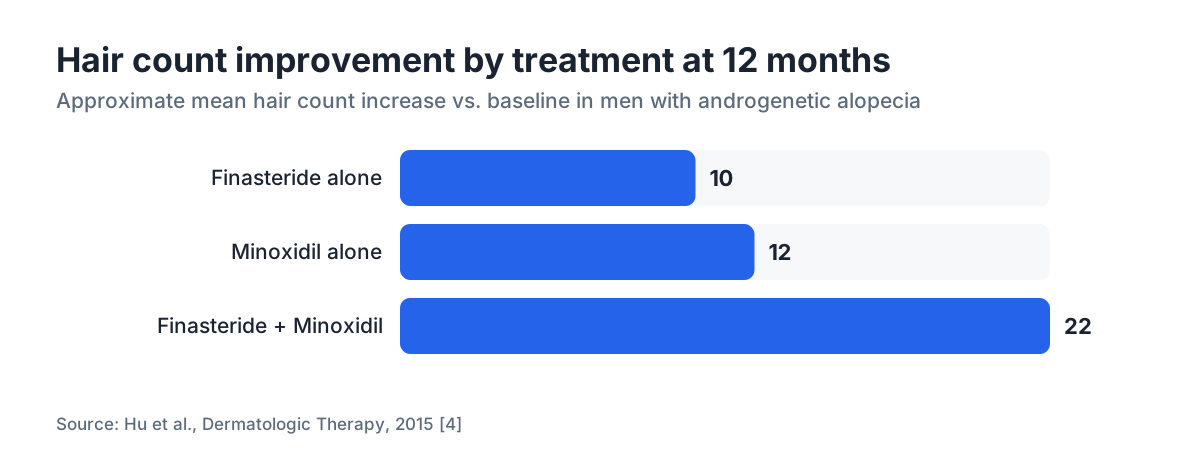
For finasteride plus minoxidil, a 2015 trial in Dermatologic Therapy compared finasteride alone, minoxidil alone, and both together in men with androgenetic alopecia. The combination group had significantly greater hair count increases at 12 months than either monotherapy [4]. The American Academy of Dermatology lists both finasteride and minoxidil as first-line treatments for male pattern hair loss and notes that combination use is common in practice [5].
No large randomized trial has tested all three together against head-to-head single-agent controls. That's a real gap. But dermatologists have stacked these three for decades on mechanism logic and smaller supporting data, and serious interactions between the three have not shown up in the literature.
The practical read: most men on the full triple protocol for 12 to 24 months see some measurable improvement in density or a halt in progression. Very few regrow a full head of hair. Ketoconazole is the weakest of the three. Its job in the stack is scalp health and the mild anti-androgen effect, not dramatic regrowth on its own.
What are the side effects of each drug and do they get worse in combination?
The side effects of the three products are independent because their mechanisms and absorption routes are so different. Combining them does not appear to amplify any individual drug's risk based on available data.
Finasteride: The most discussed side effects are sexual: lower libido, erectile dysfunction, and reduced ejaculate volume. These occurred in roughly 1.8% to 3.8% of men in the registration clinical trials [1]. Post-finasteride syndrome (persistent sexual and cognitive symptoms after stopping) is reported anecdotally and now appears in the FDA label, but the causative mechanism is still debated. If you're male and under 40, raise this with your prescriber before starting. Women of childbearing potential should not handle crushed or broken finasteride tablets due to risk of fetal harm [1]. Full breakdown at finasteride.
Minoxidil topical: The main side effects are scalp irritation and, less often, unwanted facial hair (from product running down the face). Systemic absorption is low with topical use. Shedding in the first 4 to 8 weeks is common and signals the hair cycle resetting, not the treatment failing. That's telogen effluvium and it resolves on its own. See telogen effluvium for that shedding phase, and minoxidil side effects for the full risk list.
Ketoconazole shampoo: Used as a rinse-off product two to three times per week, systemic absorption is very low. Scalp dryness or irritation is the usual complaint. Oral ketoconazole carries serious liver toxicity warnings from the FDA and is no longer recommended for fungal scalp conditions because safer alternatives exist [6]. The 1-2% shampoo used topically is a completely different risk profile.
The combination creates no known pharmacokinetic interaction. Finasteride is metabolized in the liver by cytochrome P450, but ketoconazole shampoo applied topically and rinsed off contributes negligible systemic ketoconazole. The FDA label for oral ketoconazole does note CYP3A4 interactions [6], but that warning applies to oral dosing, not the rinse-off shampoo.
How long does it take to see results from this combination?
Patience is the hardest part of this protocol.
Finasteride's main job for the first 6 to 12 months is stopping the bleeding, not growing hair back. You may see no visible change, and that's a win. Real density gains usually show up between months 12 and 24. The finasteride trials measured hair counts at 12 and 24 months, and the 24-month data showed more regrowth than the 12-month data [1].
Minoxidil can show earlier because it stimulates the follicle directly. Some men notice less shedding within 4 to 8 weeks and early fuzz at the hairline by month 3 or 4. Meaningful density changes land around the 6-month mark for most responders. About 40% of men using 5% minoxidil see moderate to dense regrowth at 12 months, and another 40% see minimal growth but halted loss [2].
Ketoconazole shampoo's hair effects, to whatever extent they exist, come on slowly over months, in the same window as the other two.
Twelve months is the earliest reasonable point to judge the full stack. Many dermatologists ask patients to commit to 18 to 24 months before deciding whether it's working for them specifically. Quitting early is the most common mistake people make. If you're not sure what stage you're at, get a baseline: the free AI hair scan at MyHairline documents your current hairline so you have something objective to compare against later.
One thing that trips people up: the effects of both finasteride and minoxidil are maintenance-dependent. Stop, and hair loss resumes within 6 to 12 months [1] [2]. This is a long-term commitment, not a course you finish.
Can women use this same triple protocol?
Not the exact same one.
Minoxidil is FDA-approved for women at 2%, and 5% is used off-label with a reasonable evidence base (the 5% foam is also FDA-approved for women) [2]. Women tolerate minoxidil well, and it's the backbone of female pattern hair loss treatment [11].
Finasteride is a different story for women. It's not FDA-approved for female pattern hair loss. Some dermatologists prescribe it off-label for postmenopausal women at doses from 1 mg to 5 mg per day. The efficacy evidence in women is mixed: some trials show modest benefit, others show none [11]. The big one: finasteride is absolutely contraindicated in women who are pregnant or may become pregnant, because DHT is required for normal male fetal genital development and finasteride exposure causes birth defects [1]. If a postmenopausal woman and her dermatologist decide finasteride makes sense, that's a valid conversation. It's not a simple yes.
Ketoconazole shampoo works the same regardless of sex. The scalp inflammation pathway matters in women's androgenetic alopecia too, and there's no reason a woman couldn't use it on the same two to three times per week schedule.
For women with female pattern hair loss, the practical starting point is topical minoxidil plus ketoconazole shampoo, with finasteride reserved for the right candidates after a dermatologist conversation. The dht blocker article covers the finasteride alternatives some women use instead.
Which ketoconazole shampoo should you use, 1% or 2%?
In the US, ketoconazole 1% shampoo (sold as Nizoral A-D) is over the counter. The 2% concentration needs a prescription.
The Van Cutsem et al. study that showed hair density benefits used the 2% formulation [3]. That's the version with the more direct evidence. The 1% OTC version is less studied for hair loss but still widely used and recommended, since the mechanism leans partly on contact time with the scalp rather than strictly on concentration [9].
Practically: if you can get a prescription for 2%, that's the better-supported pick. If you're starting with OTC and using it consistently with a 3 to 5 minute contact time, you're still doing something real. The shampoo is the least important of the three products in the stack. Don't let the 1% vs. 2% question stall you.
Generic ketoconazole 2% shampoo is available at most pharmacies with a prescription and costs roughly $10 to $25 per bottle in the US. Nizoral A-D 1% runs about $15 to $20 for a 7 fl oz bottle. Neither is expensive next to finasteride or minoxidil.
How do you apply minoxidil correctly when you're also using ketoconazole shampoo?
The thing to manage is sequence and a dry scalp.
On a ketoconazole day, the order goes: shower and shampoo with ketoconazole (leave on 3-5 minutes), rinse well, dry your hair and scalp thoroughly (more than a towel-dry; wait another 20-30 minutes if you use solution), then apply minoxidil to the dry scalp. Minoxidil absorbs poorly on a wet or damp scalp, and you'll get more irritation if the skin is still wet.
On a non-ketoconazole shower day, same rule: dry scalp before minoxidil.
Twice daily (morning and night) is the label recommendation for the 2% and 5% solutions. Many people find the evening dose easier to leave in place overnight. The foam dries faster and feels less greasy, which many people prefer for the morning.
Don't apply minoxidil and then go work out and sweat hard. Perspiration dilutes the product and rinses it off before absorption finishes. Wait at least 30 minutes after applying.
If you're weighing oral minoxidil instead of topical, the protocol shifts. Oral minoxidil covers the dose differences and the slightly different side-effect profile for the pill.
What does this protocol cost per month?
Cost swings a lot depending on brand vs. generic and whether you have insurance.
| Product | Generic/OTC option | Approximate monthly cost (US) |
|---|---|---|
| Finasteride 1 mg | Generic widely available | $10-$30/month |
| Minoxidil 5% solution or foam | Generic available, Rogaine is brand | $20-$40/month |
| Ketoconazole 2% shampoo | Generic Rx; or Nizoral 1% OTC | $5-$15/month (shampoo lasts) |
| Total | $35-$85/month |
Subscription hair loss telehealth services often bundle finasteride and minoxidil for $30 to $50 per month with a built-in consultation, which can beat paying a dermatologist out of pocket for separate prescriptions.
Generic finasteride went wide after Merck's Propecia patent expired, which pushed prices down hard. A 90-day supply of generic finasteride 1 mg through GoodRx or similar discount programs often costs under $20 at retail pharmacies.
The cost of doing nothing, if your hair loss reaches the point where a transplant starts to look necessary, is far higher. Hair transplant procedures in the US typically run $4,000 to $15,000 or more depending on graft count. See hair transplant for what that actually involves. The triple protocol is cheap insurance against the surgical route.
What if this protocol stops working or hair loss continues?
Some people just don't respond to finasteride. Variants in the SRD5A1 and SRD5A2 genes (which code the 5-alpha reductase enzymes) affect how much DHT finasteride suppresses in a given person [7]. This isn't routinely tested in clinical practice yet, but it's one reason two men on the same protocol get very different results.
If you've been fully compliant on the triple protocol for 18 to 24 months and still see significant progression, the next conversations with a dermatologist might include: dutasteride (which blocks both type 1 and type 2 5-alpha reductase, versus finasteride's type 2 selectivity) [8], low-level laser therapy as an add-on, platelet-rich plasma (PRP) injections, or a transplant as a permanent fix for hair already lost.
Dutasteride at 0.5 mg daily is FDA-approved for benign prostatic hyperplasia and used off-label for hair loss. A meta-analysis in JAMA Dermatology in 2019 found dutasteride produced significantly greater hair count increases than finasteride at 24 weeks [8]. It also carries a heavier side-effect profile and a much longer half-life (roughly 5 weeks vs. 5-7 hours for finasteride), which matters if you ever want to stop the drug.
The finasteride and minoxidil article covers what to do when the core two-drug protocol isn't delivering, and when to escalate.
If shedding feels like it's speeding up rather than settling, make sure what you have is actually androgenetic alopecia and not a secondary trigger like nutritional deficiency, thyroid disorder, or a medication side effect. Those causes don't respond to this protocol at all. See what causes hair loss for the differential.
Do you need a prescription to start, and who should you see?
In the US, finasteride requires a prescription. A primary care physician can write it, but a dermatologist (ideally one who specializes in hair disorders) is the better starting point if you can get one. They can examine your scalp, run a pull test, rule out other causes, and give you a baseline you can measure against.
Topical minoxidil 2% and 5% are over the counter (5% foam was cleared for OTC sale for women in 2014). Some telehealth platforms prescribe higher-concentration topical minoxidil (8% or compounded versions) by prescription, an option if standard 5% isn't enough after 12+ months.
Ketoconazole 1% shampoo (Nizoral A-D) is OTC. The 2% needs a prescription.
Telehealth hair loss services like Keeps, Hims, and others made finasteride prescriptions easy without an in-person visit, and they're legitimate for straightforward male pattern hair loss. The catch is they can't examine your scalp directly. If your hair loss is unusual, moving fast, patchy, or comes with scalp symptoms, see a dermatologist in person before starting anything.
A digital baseline photo with the MyHairline free AI scan is a useful thing to bring to your appointment, giving you documented evidence of your current hairline and density to discuss with a clinician.
Sources
- FDA, Propecia (finasteride 1 mg) prescribing information
- FDA, Rogaine (minoxidil 5%) prescribing information and OTC label
- Van Cutsem et al., Dermatology, 1998 - ketoconazole 2% shampoo and androgenetic alopecia
- Hu et al., Dermatologic Therapy, 2015 - combination finasteride and minoxidil trial
- American Academy of Dermatology, hair loss treatment guidelines
- FDA Drug Safety Communication, oral ketoconazole hepatotoxicity warning, 2013
- Hagenaars et al., PLOS Genetics, 2017 - genetic basis of male pattern baldness
- Dhurat et al., JAMA Dermatology, 2019 - dutasteride vs finasteride meta-analysis
- Rossi et al., International Journal of Immunopathology and Pharmacology, 2012 - ketoconazole mechanism review
- Olsen et al., Journal of the American Academy of Dermatology, 2002 - 5% minoxidil vs 2% in men
- van Zuuren et al., Cochrane Database of Systematic Reviews, 2016 - interventions for female pattern hair loss
- Trüeb RM, Skin Pharmacology and Physiology, 2006 - finasteride long-term safety review