

TL;DR: Telogen effluvium is temporary shedding triggered by a physical or emotional stressor 2-3 months earlier. Most cases resolve on their own within 3-6 months once the trigger is removed. Treatment focuses on fixing the root cause, correcting nutritional deficiencies, and protecting the scalp. Minoxidil can speed regrowth but is not required for most people.
What is telogen effluvium and why does it happen?
Telogen effluvium is diffuse hair shedding that happens when a large number of follicles enter the resting (telogen) phase at the same time. Normally about 5-15% of scalp hairs are in telogen at any given moment. During an episode that number can spike to 30% or more, which means hundreds of extra hairs fall out every day. [1]
The trigger is almost never happening at the moment you notice the shedding. Your body responds to a stressor 2-3 months after the fact, so a crash diet in January might produce visible shedding in March. Common triggers include major surgery, high fever or serious illness, childbirth, rapid weight loss, iron deficiency, thyroid dysfunction, psychological trauma, and starting or stopping certain medications. [1]
One distinction matters more than any other. Telogen effluvium is not the same as androgenetic alopecia (pattern baldness). Telogen effluvium sheds evenly across the whole scalp. It does not create a receding hairline or a thinning crown concentrated in one spot. If you're unsure which you're dealing with, read more about what causes hair loss before you decide on treatment. Mix the two up and you'll waste money on the wrong fix.
For a deeper look at the condition itself, including how it differs from chronic telogen effluvium, see our full explainer on telogen effluvium.
Will telogen effluvium go away on its own?
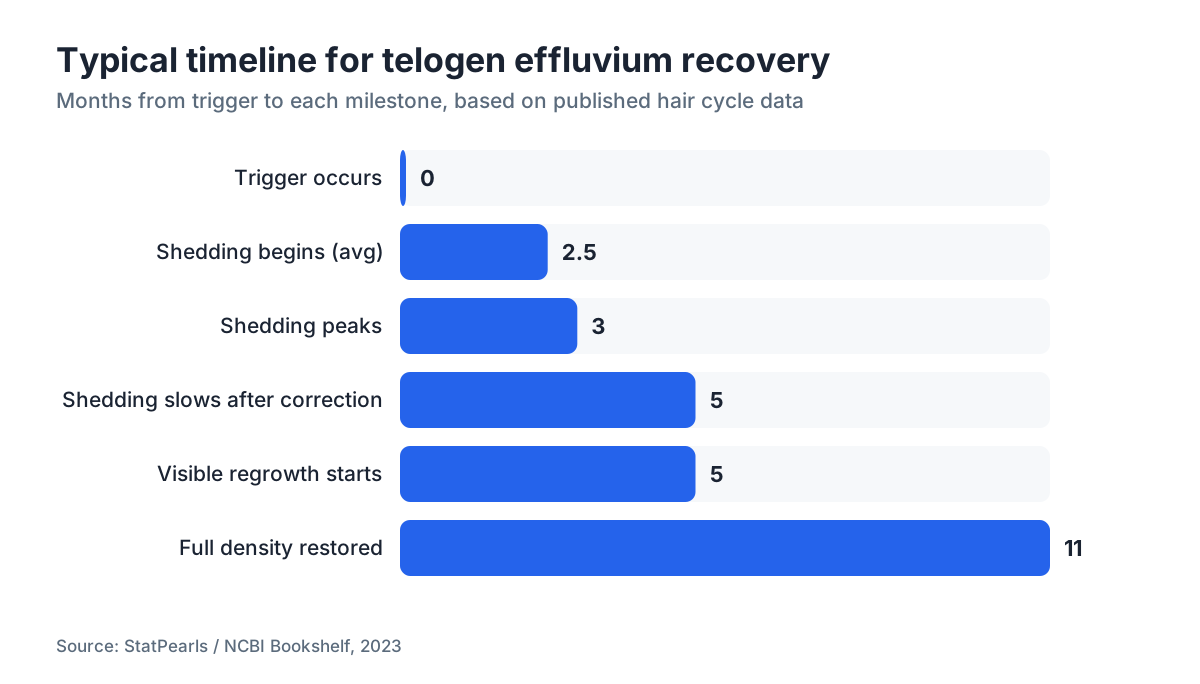
Yes, for most people. Acute telogen effluvium, meaning a single episode tied to one identifiable trigger, typically resolves within 3 to 6 months after the stressor is corrected. Full density can take up to 12 months to restore, because the new hairs replacing the shed ones still have to grow several centimeters before they show up at a normal length. [1]
Chronic telogen effluvium, defined as shedding lasting more than 6 months, is less predictable. It usually reflects a trigger that hasn't gone away, most often an ongoing nutritional deficiency, an untreated thyroid condition, or continued psychological stress. Shedding won't stop until the underlying problem is fixed.
Losing more than 100-150 hairs a day for longer than 6 months? See a board-certified dermatologist. They can run bloodwork to find a hidden cause instead of guessing.
How do you find and fix the root cause?
This is the single most effective thing you can do. No topical treatment will outperform identifying and removing the trigger.
A dermatologist will typically order a panel that includes a complete blood count, ferritin (more useful than hemoglobin, because ferritin drops before anemia is detectable), thyroid-stimulating hormone (TSH), vitamin D, vitamin B12, and zinc. The American Academy of Dermatology recommends this kind of workup for diffuse hair loss. [2]
Iron is the big one. A 2006 review in the Journal of the American Academy of Dermatology found an association between iron deficiency and chronic telogen effluvium, though the authors noted causality is not definitively established and optimal ferritin targets for hair are still debated. [3] Most dermatologists aim for a ferritin level above 40-70 ng/mL for hair health, compared to the lab's anemia cutoff of around 12-15 ng/mL. If you're at 14 ng/mL and your lab says you're normal, your hair may still be starving.
Thyroid dysfunction, both hypothyroidism and hyperthyroidism, is a well-documented cause of diffuse hair loss. Correcting thyroid levels with medication usually stops the shedding, though regrowth takes several months to catch up. [2]
Crash diets and very low calorie eating are common culprits, especially in women. The hair follicle is one of the body's most metabolically active structures, and it gets deprioritized the moment calories run short. If you've lost more than 15-20 pounds in a few months, that's your likely trigger.
Medications are another overlooked cause. Beta-blockers, retinoids, anticoagulants, and some antidepressants are among the documented triggers. Don't stop a prescribed medication without talking to your prescriber, but if you started something new 2-3 months before the shedding began, flag it at your appointment.
Which nutritional deficiencies most affect hair shedding, and how do you fix them?
Iron, vitamin D, zinc, and biotin show up most often in the literature, though the evidence varies a lot by nutrient.
Iron: Restore ferritin above 40-70 ng/mL through dietary iron (red meat, lentils, fortified cereals) and a supplement if bloodwork shows deficiency. Oral iron supplements typically take 3-6 months to meaningfully raise ferritin. Take iron with vitamin C to improve absorption, and away from calcium and coffee, which cut it. [11]
Vitamin D: Deficiency is extremely common and linked in several observational studies to hair loss, though the mechanism isn't fully understood. The standard repletion dose for deficiency (below 20 ng/mL) is typically 1,500-2,000 IU per day under physician guidance. [4]
Zinc: Deficiency causes diffuse hair loss. Over-the-counter zinc supplements in the range of 25-40 mg elemental zinc per day are commonly used, but don't guess on this one. High zinc supplementation without confirmed deficiency can impair copper absorption and make hair loss worse. Check levels first. [12]
Biotin: Probably the most overhyped supplement for hair. Biotin deficiency is genuinely rare in people eating a varied diet. The FDA has warned that biotin supplements can interfere with laboratory test results, which is a real clinical problem. [5] If your diet isn't severely restricted, skip biotin unless your dermatologist finds an actual deficiency.
For a broader look at what's actually worth buying, see our guide to hair loss supplements.
Does minoxidil help with telogen effluvium?
Minoxidil is FDA-approved for androgenetic alopecia, not telogen effluvium specifically. [6] Many dermatologists still use it off-label for telogen effluvium, and there's a reasonable rationale. Minoxidil shortens the telogen phase and extends the anagen (growth) phase, which can speed up regrowth after a shed.
One thing to know upfront: minoxidil can cause an initial shed of its own, usually 2-8 weeks after starting. That's not the treatment failing. It happens because minoxidil pushes resting follicles into a growth phase, which ejects the old telogen hair first. If you're already shedding from telogen effluvium, this early shed can feel alarming. It usually settles within 1-2 months.
For most cases with a clearly identified and corrected trigger, I'd wait and watch before starting minoxidil. If shedding is severe, dragging past 6 months, or you just want to speed up regrowth, it's a reasonable addition. Topical 2% and 5% minoxidil are both available over the counter. Some dermatologists now prefer low-dose oral minoxidil (typically 0.25-2.5 mg daily for women and 2.5-5 mg for men), which avoids scalp irritation and tends to have better adherence. [7]
More detail on whether minoxidil makes sense for you is in our articles on minoxidil for men and oral minoxidil. Read up on the minoxidil side effects before you start, especially if you choose the oral form.
Does finasteride or any DHT blocker help?
Finasteride is FDA-approved for male pattern hair loss, not for telogen effluvium. [8] It works by blocking the conversion of testosterone to DHT, the hormone that miniaturizes follicles in androgenetic alopecia. Telogen effluvium is not DHT-driven, so finasteride is not a standard treatment for it.
The two conditions can coexist, though. You can have telogen effluvium causing an acute shed on top of underlying androgenetic alopecia that was already there before the trigger hit. If a dermatologist finds pattern thinning underneath the reactive shed, they might recommend finasteride or another DHT blocker for the pattern loss while treating the telogen effluvium separately.
If your hair loss is purely reactive, with no family history of pattern baldness and no signs of miniaturization on trichoscopy or biopsy, finasteride does nothing for you. See our finasteride article for the full picture on who it helps and what the risks are.
What lifestyle and diet changes actually help?
Once the trigger is identified, a few practical changes support recovery without any prescription.
Protein intake matters. Hair is mostly keratin protein. Studies suggest that protein intake below about 0.8 grams per kilogram of body weight per day is associated with increased shedding. If you've been eating low-calorie or plant-heavy without tracking protein, getting to 1.0-1.2 g/kg/day is worth trying.
Stress reduction is more than a platitude. Psychological stress releases cortisol and other hormones that shorten the anagen phase. Chronically high cortisol has been linked in animal and observational human studies to telogen effluvium. Practical moves: regular aerobic exercise, consistent sleep of 7-9 hours, and therapy or medication for anxiety or depression if that fits your situation. None of this is glamorous, but it's the stuff that actually moves the needle.
Be gentle with your hair while it recovers. Avoid tight styles like ponytails and braids that pull at the roots. Skip or cut back on heat styling. Use a wide-tooth comb on wet hair. These won't cure telogen effluvium, but they protect fragile new growth from breaking off.
Shampoo choice is mostly irrelevant here. No clinical trial shows that any shampoo, whatever the ingredients, treats or resolves telogen effluvium. Caffeine and ketoconazole shampoos have modest evidence for androgenetic alopecia and get recommended sometimes, but don't expect them to change a telogen effluvium outcome.
How long does it take for hair to grow back after telogen effluvium?
Here's the honest timeline, because most people underestimate how long this takes.
Shedding usually peaks about 3 months after the trigger, then slows over the next 1-3 months once the cause is addressed. New anagen hairs start growing from the follicle fairly quickly after the stressor is removed, but scalp hair grows at roughly 0.35 mm per day, or about 1 cm per month. [1] So a hair that starts growing after your trigger is corrected will only be about 3-6 cm long after 3-6 months. Barely visible unless you go looking for it.
Full perceived density typically takes 9-12 months from when shedding stops, sometimes longer if your hair was long before the episode. Longer hair makes recovery look slower, because the fresh regrowth is much shorter than the strands around it.
Still no density back 12 months after correcting your trigger? Get a second evaluation. Persistent shedding might mean chronic telogen effluvium, a different diagnosis, or an untreated secondary cause.
When should you see a dermatologist?
Sooner than you probably think. Most people wait a year before seeking care, which delays diagnosis of correctable causes.
See a board-certified dermatologist if shedding has lasted more than 3 months with no obvious trigger you've addressed, if you're losing hair in a pattern (temples, crown) rather than diffusely, if you have other symptoms like fatigue, cold intolerance, or unexplained weight change that might point to thyroid disease, if your bloodwork from a primary care physician came back normal but shedding continues, or if you're a woman of reproductive age who hasn't checked ferritin specifically.
A dermatologist can do a trichoscopy (dermoscopy of the scalp) in the office, which shows follicle miniaturization and anagen-to-telogen ratios that no blood test can give you. A scalp punch biopsy is occasionally needed for ambiguous cases.
If you want a preliminary read before your appointment, the free AI analysis at MyHairline can help you understand your shedding pattern and organize your questions for a dermatologist visit. It won't replace the bloodwork or a hands-on exam, but it's a useful first orientation.
Are there any treatments that definitely don't work?
Yes, and being honest about this saves you money.
PRP (platelet-rich plasma) injections have some evidence for androgenetic alopecia but no high-quality controlled trials specifically for telogen effluvium. The cost runs $500-2,000 per session out of pocket, and results are inconsistent. Not worth it as a first-line treatment for an acute, trigger-driven shed that will likely resolve on its own.
Hair transplants are not a treatment for telogen effluvium. They address permanent follicle loss, not temporary shedding. A surgeon who recommends a hair transplant before your telogen effluvium has fully resolved is giving you bad advice. Wait until your hair has been stable for at least a year before you evaluate surgical options.
Most "hair growth" supplements have thin evidence. A 2023 review in Dermatology and Therapy noted that the quality of evidence for nutraceuticals in hair loss remains low, with most studies being small, uncontrolled, or industry-funded. [9] Saw palmetto, collagen peptides, and marine complex blends get marketed hard but have no convincing randomized trial data for telogen effluvium.
Scalp massage got studied in a 2016 trial in ePlasty that found 4 minutes daily increased hair thickness in nine healthy men over 24 weeks. Tiny study, no participants with telogen effluvium. [10] It's harmless and costs nothing, but don't expect dramatic results.
Low-level laser therapy (LLLT) has FDA clearance as a device but not FDA approval as a treatment, which is a meaningful legal distinction. The evidence in androgenetic alopecia is weak, and in telogen effluvium it's essentially non-existent.
What does a full telogen effluvium treatment plan look like?
Here's how I'd structure care, roughly in priority order.
Get bloodwork within the first month of noticeable shedding. At minimum: ferritin, TSH, complete blood count, vitamin D, and zinc. Don't accept normal hemoglobin as a substitute for ferritin.
Identify and correct the trigger. If it was a surgery or illness, your main job is patience. If it was a crash diet, add calories and protein. If it was a medication, talk to your prescriber about alternatives.
Correct any deficiencies with targeted supplementation. Iron if ferritin is low, vitamin D if deficient, zinc if deficient. Don't take a shotgun approach to supplements.
Improve diet quality overall. Adequate protein (aim for 1.0 g/kg/day), B vitamins from whole foods or a basic multivitamin, and enough calories.
Manage stress actively. This is not optional if stress was the trigger.
Consider topical or oral minoxidil only if shedding is severe, if it's been more than 3-4 months with the trigger corrected and shedding continues, or if you have concurrent androgenetic alopecia.
Follow up with a dermatologist at 3-4 months if you're not seeing progress, or right away if new symptoms appear.
One more thing to keep in mind: if you're a man whose shedding revealed an underlying receding hairline that was already there before the episode, those are two separate problems that need separate conversations. Read about receding hairlines and consider whether pattern loss is also part of your picture. A tool like the MyHairline AI scan can help you figure out if you're dealing with one thing or two.
Sources
- StatPearls, NCBI Bookshelf: Telogen Effluvium
- American Academy of Dermatology: Hair loss diagnosis and treatment
- Journal of the American Academy of Dermatology: Iron and hair loss (Trost et al., 2006)
- NIH Office of Dietary Supplements: Vitamin D Fact Sheet for Health Professionals
- U.S. Food and Drug Administration: Biotin safety communication
- FDA Drug Label: Minoxidil Topical Solution
- Journal of the American Academy of Dermatology: Oral minoxidil for hair loss (Randolph and Tosti, 2021)
- FDA Drug Label: Finasteride 1 mg (Propecia)
- Dermatology and Therapy: Nutraceuticals for hair loss review (2023)
- ePlasty: Standardized scalp massage results in increased hair thickness (Koyama et al., 2016)
- NIH Office of Dietary Supplements: Iron Fact Sheet for Health Professionals
- NIH Office of Dietary Supplements: Zinc Fact Sheet for Health Professionals