

TL;DR: Two treatments have the strongest evidence: finasteride (an oral DHT blocker, prescription) and minoxidil (topical or oral). Together they beat either one alone. Timing decides everything. Once a follicle dies, no drug brings it back, so early treatment matters more than which product you pick. See a dermatologist first for a real diagnosis.
What actually causes thinning hair and a receding hairline?
The cause behind most cases, by a wide margin, is androgenetic alopecia (AGA), also called male-pattern or female-pattern hair loss. It affects roughly 50% of men by age 50 and about 40% of women by age 70. [1] The driver is dihydrotestosterone (DHT), a hormone converted from testosterone by an enzyme called 5-alpha reductase. DHT binds to receptors in follicles that are genetically sensitive to it, shrinking them over time until they stop producing hair you can see.
Not every thinning scalp is AGA, though. Telogen effluvium is a temporary shed triggered by stress, illness, crash dieting, surgery, or thyroid problems. It looks scary and usually fixes itself within six to nine months once the trigger clears. Alopecia areata, traction alopecia, scalp fungal infections, and nutritional deficiencies each look different and need different treatment.
Get the cause right before you spend a dollar on treatment. A dermatologist can diagnose AGA by examining your scalp and, if needed, running bloodwork to rule out thyroid disease, iron deficiency, or hormonal issues. What causes hair loss walks through the full diagnostic picture.
Here is why early diagnosis matters so much. A DHT-shrunken follicle can be rescued if you intervene while it's still alive. A dead follicle cannot be revived by any medication that exists. That is the single most important fact in this article.
Does finasteride actually stop a receding hairline?
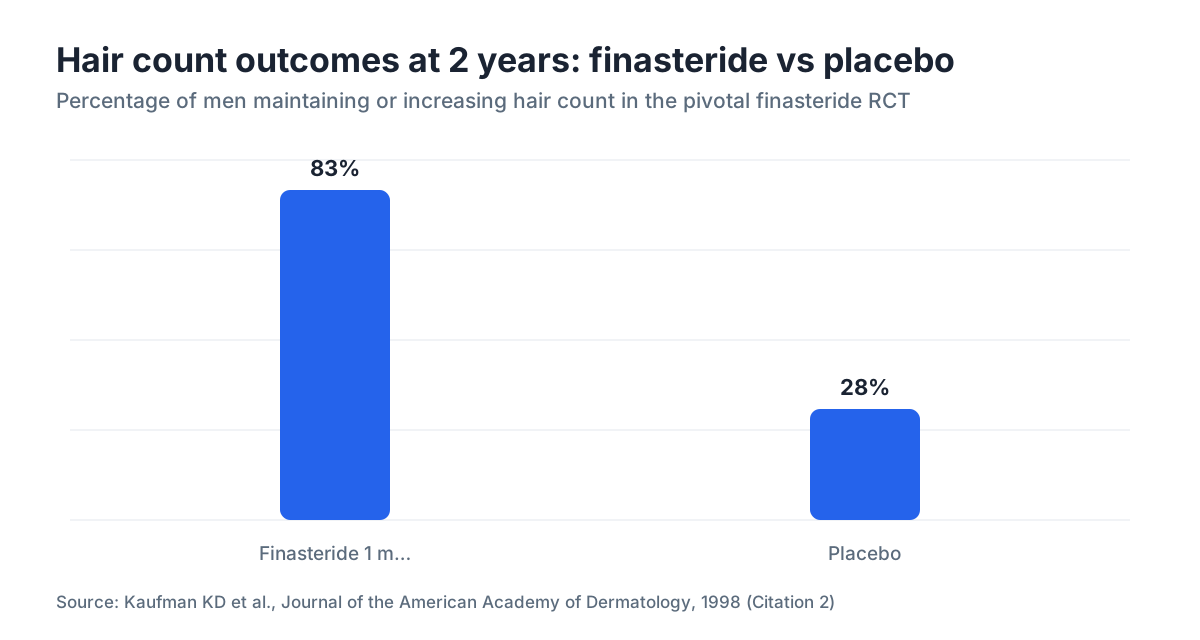
For most men, yes. Finasteride 1 mg daily (sold as Propecia, now widely generic) is the best-studied oral treatment for male-pattern hair loss. A two-year placebo-controlled trial in the Journal of the American Academy of Dermatology found that 83% of men on finasteride maintained or increased hair count, versus 28% on placebo, and 66% showed improvement by their own assessment. [2]
Finasteride blocks 5-alpha reductase type II, which drops serum DHT by roughly 70%. [2] That's enough to halt the shrinking process in most follicles and, in many men, bring back some hair, especially at the crown. The frontal hairline is harder. Regrowth at the temples is less reliable than at the vertex, though holding the hairline steady is a realistic goal.
Side effects are real, and you should know them before you start. The FDA label lists sexual side effects (lower libido, erectile dysfunction, reduced ejaculate volume) in about 3.8% of men in clinical trials, versus 2.1% on placebo. [3] A small number of men report sexual side effects that persist after they stop the drug, sometimes called post-finasteride syndrome, though the epidemiology and cause are still argued over. Finasteride is not for women who are pregnant or could become pregnant, because of fetal harm.
For women with AGA, finasteride is used off-label at higher doses (usually 2.5 mg to 5 mg). The evidence is growing but thinner than for men. Finasteride has the full breakdown of dosing, side effects, and what to expect month by month.
How does minoxidil help with thinning hair?
Minoxidil is the other first-line treatment and the only topical medication the FDA has approved for hair loss in both men and women. [4] It started as an oral blood pressure drug. Researchers noticed patients growing hair, and a topical version reached the scalp market in 1988. Nobody fully understands the mechanism, but minoxidil seems to stretch out the anagen (growth) phase of the hair cycle and may widen small blood vessels around follicles.
The standard topicals are 2% (approved for women) and 5% (approved for men, often used off-label in women). Foam tolerates better for women who hate a greasy scalp. A Cochrane review found 5% minoxidil solution grew significantly more hair than 2% at 48 weeks. [5]
Oral minoxidil, at low doses (0.25 mg to 5 mg daily), has picked up serious momentum lately. A 2021 systematic review in the Journal of the American Academy of Dermatology found it worked across multiple types of hair loss and was better tolerated than many patients expect, though it needs a prescription and blood pressure monitoring. [6] Oral minoxidil goes deep on dosing and who it suits.
The catch with topical minoxidil: you can't stop. Quit applying it and shedding returns to where it would have been within three to six months. Minoxidil for men covers the practical how-to. If side effects worry you before you start, minoxidil side effects has an honest rundown.
Is combining finasteride and minoxidil more effective than using one alone?
Yes, and by a real margin. A randomized controlled trial published in JAMA Dermatology compared finasteride alone, minoxidil alone, the combination, and placebo. The combination group showed significantly greater hair count and hair thickness gains than either drug by itself. [7]
The logic holds up. Finasteride goes after the hormonal root (DHT) while minoxidil stimulates the follicle directly. Two angles on one problem.
A dedicated article on finasteride and minoxidil together lays out the practical protocol if you want to run both.
For most men with AGA who are serious about keeping their hairline, starting on combination therapy is the strongest opening move. It costs more and means managing two products, but the clinical results are better. That trade is usually worth it.
What are DHT blockers and do they work?
A DHT blocker is anything that reduces DHT activity, either by cutting its production or blocking its receptor. Finasteride and dutasteride are the two prescription DHT blockers with clinical evidence behind them. Dutasteride blocks both type I and type II 5-alpha reductase (finasteride hits only type II), suppressing DHT by roughly 90% versus 70%, and a 2019 meta-analysis found it beat finasteride for hair count at 24 weeks. [8] It's used off-label for hair loss in many countries and approved for it in South Korea and Japan.
Then there's a whole category of topical DHT blockers: ketoconazole shampoo (some evidence for lowering scalp DHT), saw palmetto (weak, inconsistent results), and various supplement blends sold with big claims and thin data. Hair loss supplements shows what the evidence actually says about the over-the-counter options.
Honest take: if you want a DHT blocker that works, finasteride or dutasteride (with a doctor) is the answer. Saw palmetto is not a substitute. DHT blocker covers the full landscape.
What treatments work for a receding hairline specifically?
The frontal hairline is the hardest zone to restore. DHT-sensitive follicles there shrink early, and once they're gone, medication can't bring them back. Stopping the recession with finasteride and minoxidil, though, is a realistic goal for men in early Norwood stages (I through IIIa).
For men who've already lost real ground at the hairline, a hair transplant is the only intervention that reliably puts hair back there. Modern follicular unit extraction (FUE) moves individual follicles from the back and sides of the scalp (which resist DHT) to the front. Grafts typically run $3 to $10 each, and most hairline procedures need 1,500 to 3,000 grafts, putting the total between $4,500 and $30,000 depending on the clinic and how much you've lost. [9]
Platelet-rich plasma (PRP) injections are an add-on some dermatologists offer. The evidence is mixed, with some randomized trials showing modest density gains and others showing little. PRP isn't FDA-approved for hair loss, and results vary enough that I'd call it optional, not essential.
Low-level laser therapy (LLLT) devices (combs, helmets) are FDA-cleared for hair loss. Cleared means the FDA reviewed safety and basic efficacy claims but didn't demand the trial rigor a drug approval needs. Small trials show modest density improvements. Realistically, LLLT is a useful add-on if you're already on medication, not a standalone fix.
For women with a receding hairline, the options are narrower. Topical minoxidil is first-line, spironolactone is a common off-label choice for hormonal cases, and the same PRP and LLLT add-ons apply. Receding hairline covers the full staging and treatment path.
How long does it take to see results from hair loss treatment?
Patience isn't optional here. Minoxidil starts affecting the hair cycle within weeks, but because hairs pass through a resting phase before new growth, most people don't see real improvement for three to six months. You may even shed more in the first month as resting hairs get pushed out to make room. That's normal and expected.
Finasteride runs on a similar clock. DHT drops fast, but you're waiting on previously shrunken follicles to grow thicker hairs, and that takes multiple hair cycles. Most clinicians say judge results at 12 months, not 3.
The finasteride-minoxidil combination showed significant differences from placebo by 6 months in the JAMA Dermatology trial, but the best results came at 12 months. [7]
Hair transplant regrowth follows its own arc. Transplanted hairs usually shed within 2 to 6 weeks after the procedure (normal, called shock loss), then regrow starting around 3 months, with final results at 12 to 18 months.
The most common reason people quit treatments that work is expecting 90-day results on a 12-month timeline.
Can lifestyle changes help stop hair thinning?
For AGA driven by DHT, diet and lifestyle won't override the genetics. But some lifestyle factors genuinely speed up shedding, and those are worth fixing.
Chronically high cortisol (from poor sleep, extreme calorie cutting, or long stretches of stress) can push follicles into telogen and worsen shedding. That's not AGA, but it stacks on top and makes things look worse. Sorting out sleep and stress is a reasonable move either way.
A few nutritional deficiencies genuinely affect hair: iron deficiency (especially in women with heavy periods), zinc deficiency, and severe protein restriction can each cause or worsen shedding. Getting bloodwork that includes ferritin, zinc, and thyroid function beats buying a bottle of biotin on a hunch.
Biotin is massively overhyped. Deficiency is rare, and there's no good evidence extra biotin grows hair in people who aren't deficient. The American Academy of Dermatology warns that biotin supplements can throw off certain lab tests, which is a real clinical problem. [10]
Scalp hygiene matters less than the internet claims. Dandruff and seborrheic dermatitis cause inflammation that may worsen shedding, so treating them makes sense. But daily shampooing does not cause hair loss, and no shampoo grows hair.
Smoking deserves a mention. A 2020 cross-sectional study found a significant link between smoking and more severe AGA, with the proposed mechanism being impaired blood flow and oxidative stress at the follicle. [12] Quitting is the right call for a dozen reasons. Hair may be a small bonus.
Are there hair loss treatments specifically for women?
Female pattern hair loss (FPHL) looks different: diffuse thinning over the crown with the frontal hairline preserved (the Ludwig pattern), rather than the receding temples and vertex baldness common in men. The treatment options shift accordingly.
Topical minoxidil 2% or 5% is FDA-approved for women and the standard first-line treatment. [4] Oral minoxidil at 0.25 mg to 1 mg daily is increasingly used off-label, with good tolerability data emerging.
Spironolactone, an androgen receptor blocker, is widely prescribed off-label for women with FPHL, especially those with elevated androgens or a hormonal pattern to their loss. Doses usually run 50 mg to 200 mg daily. It needs monitoring and isn't safe in pregnancy.
Finasteride at 2.5 mg to 5 mg is used off-label for postmenopausal women. Randomized trial evidence is more limited than for men but generally positive.
A hair transplant is an option for women with stable, well-defined loss, though the diffuse nature of FPHL makes women less ideal candidates than men in many cases. A dermatologist who specializes in hair disorders is the right person to make that call.
Microneedling, alone or with minoxidil, has emerging evidence in women. A 2013 randomized controlled trial found microneedling plus minoxidil significantly beat minoxidil alone for hair count at 12 weeks, though the study was small. [11]
What should you do first if you notice your hair thinning?
Don't watch and wait longer than a few months. Hair loss is far easier to treat while there are still follicles to save.
Step one is a dermatologist. They can read the pattern, do a pull test, and run bloodwork (ferritin, TSH, free T3, zinc, plus androgens in women) to rule out reversible causes. This one visit is the highest-leverage thing you can do.
If you're a man with a classic receding hairline or crown thinning and normal bloodwork, AGA is almost certainly the answer. From there, the evidence-based options are finasteride, topical or oral minoxidil, or both.
If cost or access stalls you before the appointment, starting over-the-counter 5% topical minoxidil is low-risk and probably helpful. You won't regret starting it while you wait for a dermatology slot.
Want a clearer picture before your visit? A free AI scan at MyHairline (myhairline.ai/scan) can estimate your Norwood or Ludwig stage from photos. It won't replace a dermatologist's diagnosis, but it gives you something useful to walk in with.
Step three, once you have a diagnosis and a plan, is tracking with photos. Shoot consistent, well-lit photos from the same angles every 30 days. This matters because gradual change is almost impossible to spot in the mirror day to day but obvious in a side-by-side at 6 months.
What treatments are mostly a waste of money for hair loss?
A few categories deserve blunt honesty.
Most hair loss shampoos and "growth serums" sold without a prescription have no meaningful clinical evidence. Ketoconazole 1% shampoo (Nizoral) is the exception, with some modest data, mostly as an add-on. The rest are largely marketing.
Biotin, collagen, and most "hair vitamins" mainly treat deficiencies. If you're not deficient, they're unlikely to change your hair count. The hair loss supplement market is enormous and mostly unsupported by randomized trials.
Some people ask about creatine after a 2009 study found a 3-week creatine loading protocol raised DHT by 56% in rugby players. Does creatine cause hair loss looks at whether that's an actual concern in practice.
Castor oil, rosemary oil (more promising than the rest, with one small randomized trial comparing it favorably to 2% minoxidil, though that trial was small and used a non-standard minoxidil dose), and essential oil blends are unlikely to hurt. Their evidence base is thin, though. Don't spend real money on them or let them delay proven treatments.
Hair loss concealers, fibers (like Toppik), and volumizing sprays are fine for cosmetic use. They don't treat anything, but at least they're not pretending to.
Sources
- American Academy of Dermatology, Hair Loss Overview
- Kaufman KD et al., Journal of the American Academy of Dermatology, 1998: Finasteride 2-year placebo-controlled trial
- U.S. Food and Drug Administration, Propecia (finasteride) prescribing information
- FDA, Minoxidil Topical Solution Drug Approval History
- Cochrane Database of Systematic Reviews: Minoxidil for androgenetic alopecia
- Randolph M, Tosti A, Journal of the American Academy of Dermatology, 2021: Oral minoxidil systematic review
- Randomized controlled trial on combination finasteride and minoxidil therapy, JAMA Dermatology
- Gupta AK et al., Journal of Dermatological Treatment, 2019: Dutasteride vs finasteride meta-analysis
- International Society of Hair Restoration Surgery, Practice Census 2022
- American Academy of Dermatology, Hair Loss Overview
- Dhurat R et al., International Journal of Trichology, 2013: Microneedling RCT
- Trüeb RM, International Journal of Trichology, 2020: Smoking and androgenetic alopecia