
TL;DR: Hair loss caused by iron-deficiency anemia is reversible for most people, but only after ferritin levels are restored, more than hemoglobin. Full regrowth typically takes 3 to 6 months and sometimes up to a year. The hair loss follows a telogen effluvium pattern, meaning follicles are shedding, not dying. With corrected iron, the vast majority of those follicles cycle back into growth.
What is the connection between iron deficiency and hair loss?
Iron is required for ribonucleotide reductase, the enzyme that drives DNA synthesis in rapidly dividing cells. Hair follicles are among the fastest-dividing cells in the human body, so they're among the first to get shortchanged when iron runs low [1].
When the body senses iron stress, it prioritizes oxygen delivery to the organs it can't live without. Hair isn't one of them. The follicle responds by shifting prematurely from the anagen (active growth) phase into the telogen (resting) phase. This is the same mechanism behind telogen effluvium, which is the clinical name for diffuse shedding triggered by a physiological stressor [2].
The result is diffuse thinning across the scalp rather than a receding hairline or temples-first pattern. You lose hair from all over, including the top, sides, and back. That pattern is one of the cleaner diagnostic clues that something systemic is going on, not androgenetic alopecia. If you're unsure which type of hair loss you're dealing with, a quick look at what causes hair loss can help you separate the two.
Anemia itself is the late-stage presentation: hemoglobin has dropped enough to affect red blood cell count. But hair loss can appear well before a person is technically anemic. Depleted ferritin stores, even with normal hemoglobin, are enough to trigger shedding in some people [3].
Is the hair loss actually reversible, or is the damage permanent?
For iron-deficiency-related telogen effluvium, yes, the hair loss is reversible. The follicles are dormant, not destroyed. Once the nutritional deficit is corrected, follicles can re-enter the anagen phase and produce new hair [2].
There is an important caveat: if the deficiency is prolonged and severe, and if the person also has an underlying genetic predisposition to androgenetic alopecia, the iron deficiency can unmask or accelerate that pattern. In that scenario, you're dealing with two separate problems at once. The telogen component reverses with iron repletion; the androgenetic component does not, and needs its own treatment like finasteride or minoxidil for men.
A 2006 review in the Journal of the American Academy of Dermatology concluded that iron deficiency may be a reversible cause of hair loss, though the authors noted the evidence base for exact treatment thresholds was limited at the time [3]. The broader clinical consensus since then has shifted toward treating low ferritin proactively rather than waiting for frank anemia.
The key word is "reversible." You will not see regrowth while deficiency persists.
How long does it take for hair to grow back after fixing iron levels?
Expect 3 to 6 months before you see meaningful new growth, and up to 12 months for density to feel close to baseline [2]. This timeline frustrates people because the shedding often continues for a few weeks after you start supplementing, before the cycle turns around.
Here's why the delay exists. The hair growth cycle has three phases: anagen (growth, 2-7 years), catagen (transition, 2-3 weeks), and telogen (resting/shedding, about 3 months). When follicles prematurely entered telogen during the deficiency, they don't snap back the moment you take your first iron tablet. They complete their telogen phase, shed the old hair, and then restart anagen. That biological queue takes time to clear.
You'll typically notice the shedding slows first, around weeks 6 to 10. Then short, fine regrowth hairs become visible, especially along the hairline and part. Full density restoration can take the better part of a year. If you're not seeing improvement by month 6 despite confirmed normal ferritin, that's a signal to revisit the diagnosis.
What ferritin level is needed for hair regrowth?
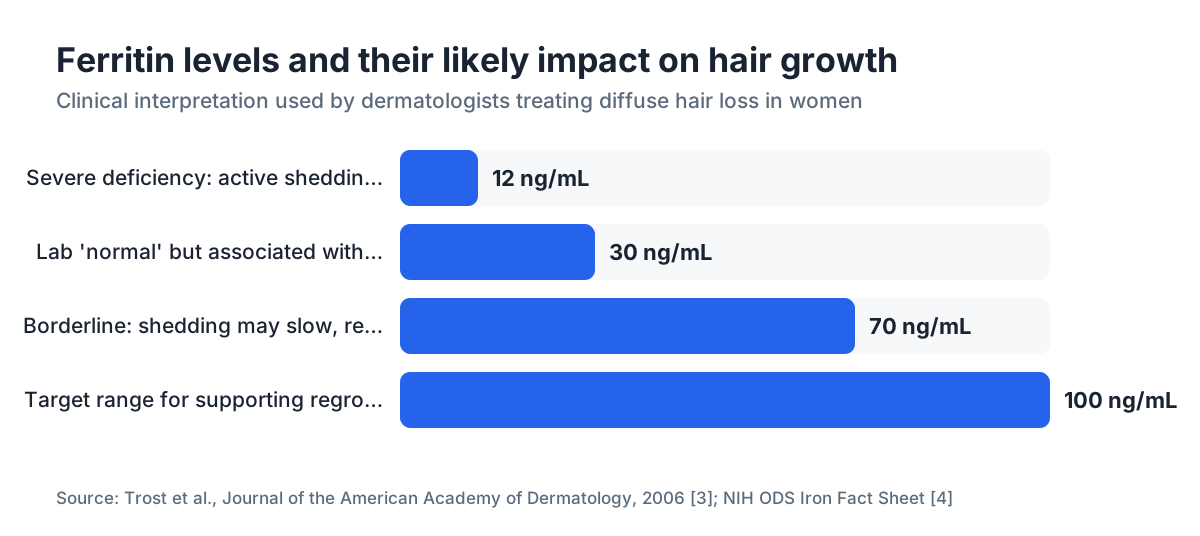
This is where honest uncertainty matters. Ferritin reference ranges in most labs flag levels above 12 ng/mL (or 12 micrograms per liter) as "normal," but the dermatology literature has long argued that cutoff is far too low for hair [3].
Several observational studies and clinical guidelines from hair loss specialists suggest that a ferritin of at least 40 ng/mL is required to stop shedding, and that levels of 70 ng/mL or higher may be needed to support active regrowth [3]. Some practitioners aim for 80 to 100 ng/mL in women with diffuse hair loss. Nobody has a clean randomized trial establishing the exact threshold, because funding those trials isn't profitable for supplement companies, and pharmaceutical companies have little incentive either.
In practical terms: if your ferritin is 15 ng/mL and your lab report says "normal," your hair disagrees. Always ask for the raw ferritin number, more than whether you "passed" the test.
Also test: a full iron panel (serum iron, TIBC, transferrin saturation), a complete blood count, and consider checking B12 and folate at the same time, since deficiencies often coexist [4]. Thyroid dysfunction can cause the same diffuse shedding and is worth ruling out alongside iron work.
| Ferritin level | What it likely means for hair |
|---|---|
| Below 12 ng/mL | Severe deficiency; active shedding very likely |
| 12-30 ng/mL | Technically "normal" by most labs; still associated with hair loss in studies |
| 30-70 ng/mL | Borderline range; shedding may slow but regrowth uncertain |
| 70-100+ ng/mL | Target range for supporting active hair regrowth per dermatology literature |
| Above 200 ng/mL | Potentially too high (ferritin is also an inflammatory marker); discuss with doctor |
How do you actually fix iron levels: diet vs. supplements vs. IV infusion?
The answer depends on how low you are, why you're low, and how fast you need to correct it.
For mild to moderate deficiency, oral iron supplements are the standard first step. Ferrous sulfate 325 mg (65 mg elemental iron) taken every other day has been shown in randomized trials to increase absorption more efficiently than daily dosing, because daily dosing blunts hepcidin-mediated uptake [4]. Taking iron with vitamin C (50-100 mg) increases absorption; taking it with calcium, coffee, or antacids blocks it.
Diet alone rarely corrects a true deficiency fast enough to stop hair shedding, though it matters for maintaining levels. Red meat, oysters, lentils, spinach, and fortified cereals are the main dietary sources. Heme iron from animal sources (absorption rate roughly 15-35%) absorbs significantly better than non-heme iron from plants (absorption rate roughly 2-20%), according to the NIH Office of Dietary Supplements [5].
If oral iron isn't tolerated (GI side effects are common) or if levels are severely depleted, intravenous iron infusion raises ferritin much faster, sometimes within 4-6 weeks. It requires a referral and carries small risks including allergic reactions, so it's not the first choice for mild cases.
Identify the underlying cause. Iron deficiency doesn't just happen. Heavy menstrual bleeding is the most common cause in premenopausal women. Gut malabsorption (celiac disease, inflammatory bowel disease, gastric bypass), low dietary intake, blood donation, and chronic blood loss from the GI tract all require their own treatment alongside supplementation. Supplementing without addressing the cause is like filling a bucket with a hole in it.
Who is most at risk for iron-deficiency hair loss?
Premenopausal women are by far the most affected group, because monthly menstrual blood loss increases iron requirements well above what most Western diets provide. The recommended dietary allowance for iron for women aged 19-50 is 18 mg per day versus 8 mg per day for men, according to the NIH [5].
Vegans and vegetarians are at elevated risk because plant-based diets provide only non-heme iron, which absorbs at a fraction of the rate of heme iron. Athletes, particularly endurance runners, lose iron through sweat and foot-strike hemolysis. People who donate blood frequently deplete ferritin faster than stores rebuild between donations.
Pregnant women have dramatically increased iron needs (27 mg/day per NIH) and are routinely supplemented, but postpartum is also a vulnerable window: the body has been iron-stressed for nine months and then faces hormonal upheaval, which is why postpartum hair shedding is so common. Some of that shedding is hormonal telogen effluvium; some is iron-related; often both.
Men can get iron-deficiency anemia too, usually from GI bleeding (ulcers, colorectal issues) or malabsorption. A man with unexplained diffuse hair loss and confirmed low ferritin should be worked up for a GI source, more than handed iron pills.
How do doctors diagnose whether hair loss is from iron deficiency?
There's no single definitive test, so diagnosis is built from a pattern of evidence.
Blood tests are the starting point. A full iron panel plus ferritin is the core. The American Academy of Dermatology recommends evaluating ferritin in women presenting with diffuse hair loss [6]. The clinical picture matters too: diffuse thinning with an increased daily shed count (over 100 hairs per day is often cited, though that number is imprecise), normal or widened part, no miniaturization of follicles at the scalp margin.
A trichoscopy exam (dermoscopy of the scalp) can help differentiate telogen effluvium from androgenetic alopecia. In telogen effluvium, follicle diameter is uniform; in androgenetic alopecia, you see miniaturized thin hairs alongside normal hairs [7]. A dermatologist can do this in-office without a biopsy.
A scalp biopsy can confirm increased telogen-to-anagen ratio (normally about 10-15% telogen; in active telogen effluvium it rises to 25% or more), but it's usually unnecessary when the clinical and lab picture is clear.
The pull test is a quick in-office screen: grasping about 60 hairs between the thumb and forefinger and gently pulling. Extracting 6 or more hairs is considered a positive result, consistent with active shedding. It's not specific to iron deficiency but helps gauge severity.
If you want a faster read on your shedding pattern before your dermatology appointment, MyHairline's free AI scan (/scan) analyzes your scalp photos and flags whether diffuse thinning fits a telogen pattern versus other types, which can help you walk into that appointment with a clearer picture.
Can anything speed up regrowth once iron is corrected?
There's genuine interest here but limited high-quality trial data specifically for post-iron-deficiency regrowth.
Minoxidil is the most evidence-backed option. It prolongs the anagen phase and increases follicle diameter, and it's FDA-approved for hair loss. It won't fix the underlying iron problem, but it can shorten the recovery window by nudging follicles back into growth faster. The minoxidil for men article covers dosing in detail; for women the standard topical dose is 2% solution or 5% foam once daily. Before adding minoxidil, check the minoxidil side effects profile, since initial shedding in the first 2-4 weeks is common and can be alarming if you're not expecting it.
Oral minoxidil at low doses (0.625 to 2.5 mg/day for women, 2.5-5 mg/day for men) is gaining traction with dermatologists for diffuse hair loss. There's more detail in the oral minoxidil piece. It's not FDA-approved specifically for hair loss (it's used off-label), so it requires a prescription and a conversation about blood pressure effects.
Check that other micronutrient deficiencies aren't compounding the problem. Vitamin D, zinc, and biotin deficiencies can all independently slow regrowth. Hair loss supplements marketed to address these are worth reviewing against the evidence at hair loss supplements before spending money.
Finasteride and DHT blockers aren't relevant here unless you have coexisting androgenetic alopecia. Iron-deficiency hair loss isn't driven by dihydrotestosterone. Using a DHT blocker won't do anything for a nutritional deficiency.
What if hair doesn't grow back after iron levels are normal?
If ferritin is genuinely in the 70-100 ng/mL range, has been there for at least 6 months, and hair density hasn't improved, then iron deficiency was either not the sole cause or not the main cause.
The most common explanation is coexisting androgenetic alopecia. In women especially, female pattern hair loss and iron deficiency frequently occur together. Correcting iron stops the acute shed but doesn't reverse the underlying genetic miniaturization pattern. A dermatologist can evaluate scalp biopsy or trichoscopy to check for follicle miniaturization.
Other things to rule out: thyroid disease (hypothyroidism causes diffuse shedding that mirrors iron-deficiency telogen effluvium almost exactly), autoimmune conditions including alopecia areata, and chronic stress or illness triggering a separate telogen effluvium episode.
A small percentage of people have what's called chronic telogen effluvium, which can persist for years with no clear single trigger despite normal labs. This is poorly understood. It's not a permanent hair loss condition in the sense that follicles are still intact, but it's frustrating and often resistant to simple interventions.
If you've confirmed good ferritin and still see progression of hair thinning, especially at the temples or part line, read up on receding hairline patterns and see a dermatologist who specializes in hair. The treatment path is different from nutritional deficiency entirely.
Are there differences between how iron deficiency affects women versus men?
Yes, meaningfully so.
Women are diagnosed with iron-deficiency hair loss far more often than men, partly because of higher prevalence of deficiency and partly because women tend to notice and report diffuse thinning more readily. The research base for ferritin thresholds in hair loss is drawn almost entirely from studies of women. Men can and do experience it, but when a man presents with diffuse hair loss and low ferritin, the reflex among dermatologists is to rule out a bleeding source before attributing hair loss to diet or menstrual loss.
Recovery timelines appear similar between the sexes once the root cause is treated, though this comparison isn't cleanly studied. Men with no competing androgenetic alopecia who restore ferritin tend to see good regrowth.
Postmenopausal women are interesting: iron requirements drop to 8 mg/day (same as men) after menopause ends monthly blood loss, but the damage from years of cycling in and out of low ferritin may have accelerated any underlying genetic hair loss tendency. So the picture postmenopause is more complicated than simply checking ferritin.
Does anemia from other causes (B12, folate, chronic disease) also cause reversible hair loss?
Yes, though the mechanisms differ.
Vitamin B12 deficiency causes a megaloblastic anemia and can independently trigger telogen effluvium. The hair loss component typically reverses with B12 repletion, though neurological symptoms from severe B12 deficiency may not fully reverse. B12 deficiency is especially common in vegans, people on long-term metformin, those who've had gastric bypass, and older adults with declining intrinsic factor production [4].
Folate deficiency works similarly, disrupting DNA synthesis in rapidly dividing cells including hair follicles.
Anemia of chronic disease (also called anemia of inflammation) is different and trickier. It's driven by inflammation, not iron shortage, and the body may actually have adequate or elevated ferritin while iron is functionally unavailable to tissues. Treating this type of anemia requires addressing the underlying inflammatory condition. Iron supplementation doesn't help and can be counterproductive. Hair loss in chronic disease is often multifactorial.
The takeaway: get a complete picture of which type of anemia is present before buying iron pills. Low hemoglobin alone doesn't tell you enough.
Sources
- Elsevier, Journal of Investigative Dermatology: Rushton DH (2002) Nutritional factors and hair loss
- American Academy of Dermatology Association: Telogen effluvium overview
- Journal of the American Academy of Dermatology: Trost et al. (2006) The diagnosis and treatment of iron deficiency and its potential relationship to hair loss
- NIH Office of Dietary Supplements: Iron Fact Sheet for Health Professionals
- NIH Office of Dietary Supplements: Iron Fact Sheet for Health Professionals
- American Academy of Dermatology Association: Hair loss in women guidelines
- American Academy of Dermatology Association: Diagnosing hair loss
- FDA Drug Label Database: Minoxidil topical solution prescribing information
- NIH National Institute of Diabetes and Digestive and Kidney Diseases: Anemia of chronic disease
- NIH Office of Dietary Supplements: Vitamin B12 Fact Sheet for Health Professionals