

TL;DR: Telogen effluvium is almost never permanent. Most cases resolve on their own within 3 to 6 months once the trigger is removed, with full regrowth by 12 months. Chronic telogen effluvium, lasting more than 6 months, affects a minority of patients and can persist for years, but even then the hair follicles stay alive and capable of regrowth. Permanent loss is rare and usually signals a second diagnosis.
What is telogen effluvium and why does it cause shedding?
Hair grows in cycles. Each follicle moves through anagen (active growth, lasting 2 to 6 years), catagen (a brief transition), and telogen (resting, lasting roughly 3 months before the hair sheds). Normally about 10 to 15 percent of your scalp follicles sit in telogen at any one time, which is why shedding 50 to 100 hairs per day is considered normal [1].
Telogen effluvium happens when a physical or emotional shock pushes a large share of follicles out of anagen and into telogen all at once. Two to four months later, those follicles shed their hairs in a wave. That lag between trigger and shedding is one reason the condition gets misdiagnosed so often. People blame the wrong thing because the real cause happened months earlier.
The follicles themselves are not destroyed. That is the single most reassuring fact about telogen effluvium. The hair bulb is still alive and sitting in the scalp. Once the follicle finishes its resting phase it will, under normal circumstances, push out a new hair. That is why the condition is almost always reversible.
For a broader look at what else can drive shedding, the what causes hair loss guide covers the full differential.
Is telogen effluvium permanent or will hair grow back?
In the vast majority of cases, no, it is not permanent. A 2016 review in the Journal of Clinical and Diagnostic Research noted that acute telogen effluvium, defined as lasting fewer than 6 months, typically resolves completely once the precipitating cause is corrected [2]. Most dermatologists quote a 3 to 6 month recovery window after the trigger is removed, with hair density returning to baseline by 9 to 12 months.
The reason recovery is so reliable is biological. Telogen effluvium does not damage the follicle structure the way androgenetic alopecia does. There is no miniaturization, no fibrosis around the follicle, no permanent loss of the dermal papilla. The follicle is simply paused.
Two things can make the picture messier. First, if the trigger has not actually been removed or treated, hair will not recover no matter how long you wait. Second, some people who appear to have telogen effluvium also carry underlying androgenetic alopecia (genetic thinning) that the shed unmasked. In those cases, the telogen effluvium resolves but a pattern of thinning remains. That remaining thinning is not from the telogen effluvium itself.
Bottom line: if your follicles are otherwise healthy and you removed the trigger, expect your hair back.
How long does telogen effluvium last?
Acute telogen effluvium, the most common form, typically runs its course in 3 to 6 months from the peak of shedding [2]. Because follicles shed together and then restart anagen together, patients often notice a wave of short regrowth hairs (sometimes called "baby hairs" around the hairline) within 3 to 4 months of peak loss.
Chronic telogen effluvium is defined as shedding that lasts beyond 6 months [3]. This form is less common and harder to pin down. The underlying causes tend to be ongoing rather than one-time events: persistent nutritional deficiencies, undertreated thyroid disease, chronic psychological stress, or an autoimmune condition that has not been identified. Even chronic telogen effluvium rarely ends in permanent baldness, though the prolonged thinning can be distressing.
A small subset of patients, more often women in midlife, have what researchers describe as diffuse thinning that is partly telogen effluvium and partly early androgenetic alopecia. Separating the two takes a dermatologist evaluation and sometimes a scalp biopsy.
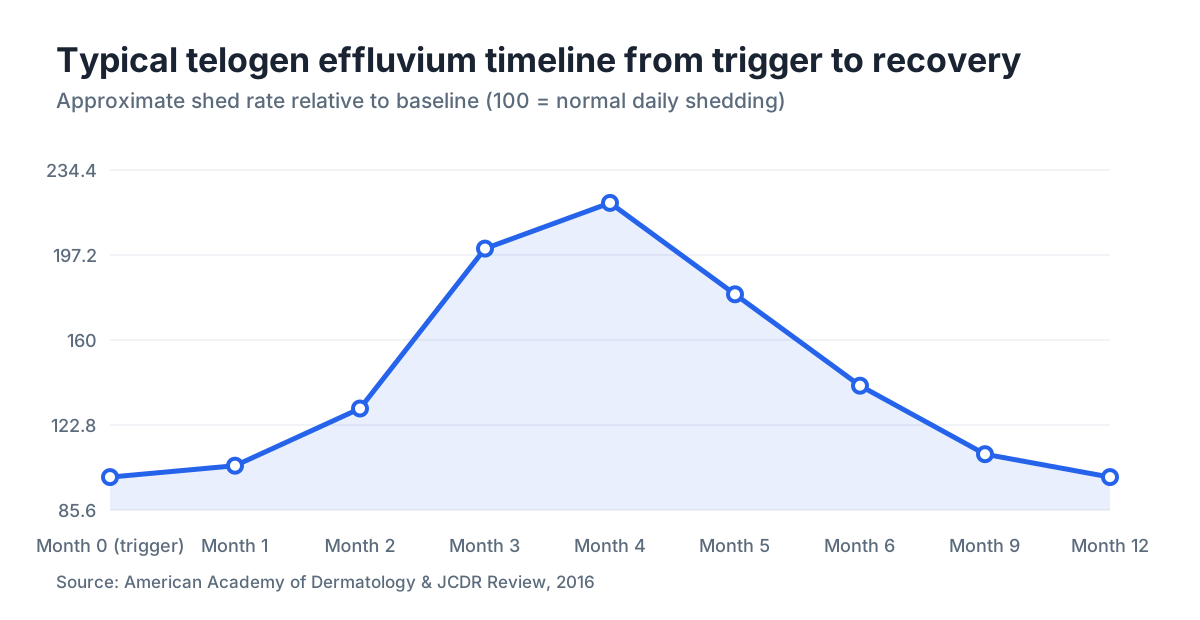
Time from trigger to peak shedding: 2 to 4 months. Time from trigger removal to regrowth beginning: 3 to 6 months. Time to full density restoration: 9 to 12 months in most acute cases [2].
What triggers telogen effluvium in the first place?
The triggers fall into a few clear categories, and knowing which one you had matters for predicting recovery.
Physical stressors are the most dramatic. High fever, major surgery, hospitalization, childbirth (postpartum telogen effluvium is one of the most common presentations), and significant blood loss can all push follicles into telogen [4]. Postpartum shedding typically starts 2 to 4 months after delivery and resolves by 12 months postpartum without any treatment in most women [4].
Nutritional deficiencies are a major and underdiagnosed driver. Iron deficiency, even without frank anemia, has substantial evidence linking it to telogen effluvium. A 2013 review in the Journal of the American Academy of Dermatology concluded that serum ferritin levels below 30 ng/mL may impair hair follicle cycling [5]. Low levels of zinc, protein, and B vitamins (especially biotin in cases of genuine deficiency) also appear in the literature, though the evidence is stronger for iron [5].
Medications are a frequently overlooked cause. Certain antidepressants, anticoagulants, retinoids, beta-blockers, and hormonal contraceptives can trigger a shed. If you started a new medication 2 to 4 months before your shedding began, that is worth discussing with the prescriber.
Thyroid dysfunction, both hypothyroidism and hyperthyroidism, is a classic cause. The American Academy of Dermatology lists thyroid disease among the top systemic conditions to rule out in a diffuse hair loss workup [6].
Severe caloric restriction or rapid weight loss, which has become more relevant with GLP-1 agonist use, triggers shedding through a mix of protein deficit and physiological stress.
Chronic psychological stress is real but harder to measure. It is often a contributing factor rather than the sole cause.
For a full picture of overlapping causes, including diet supplements that get blamed without evidence, see the hair loss supplements article.
What is the difference between telogen effluvium and permanent hair loss?
This is the question that keeps people up at night, and the honest answer is that telling them apart early can be difficult.
Androgenetic alopecia (AGA), the genetic form of hair loss, involves DHT-driven miniaturization of follicles over time. It follows a pattern: receding at the temples, thinning at the crown in men; diffuse thinning at the part in women. Telogen effluvium, by contrast, tends to shed diffusely across the whole scalp and does not follow a pattern [6].
The key structural difference: in AGA, follicles shrink and produce progressively thinner, shorter hairs until they stop producing visible hair entirely. That miniaturization can become irreversible if the follicle is lost. In telogen effluvium, follicle diameter stays normal. Trichoscopy (dermoscopy of the scalp) or a scalp biopsy can confirm this distinction [3].
One clinical clue: telogen effluvium usually presents with a positive "pull test," meaning 3 or more hairs pull out easily from a cluster of 40 to 60 hairs. But that test has variable sensitivity and specificity, so do not rely on it alone.
If you have a receding hairline or a family history of pattern baldness, a dermatologist should assess whether both conditions are present at once, because that combination changes treatment decisions.
For context on where DHT fits in: DHT blockers are the right treatment for AGA, not for telogen effluvium.
When does telogen effluvium become chronic and is that permanent?
Chronic telogen effluvium (CTE) is defined by shedding that lasts more than 6 months [3]. It most commonly affects women aged 30 to 60 and can persist for years, sometimes fluctuating in severity. This is understandably alarming, but even prolonged CTE is not the same as permanent loss.
A study in the British Journal of Dermatology found that most women with CTE keep a "normal to slightly reduced" hair density over long follow-up and do not progress to visible baldness [3]. The follicles cycle abnormally but they do not die. The paper concluded: "Chronic telogen effluvium is a benign condition that does not lead to baldness."
Living with years of fluctuating shedding and visible thinning is still no small thing. And some patients with a CTE diagnosis carry a concurrent early androgenetic alopecia that will progress on its own if left untreated.
The practical takeaway: chronic telogen effluvium needs investigation. If you have been shedding for more than 6 months, the priority is finding out whether the original trigger was ever truly resolved, whether there is an undiagnosed systemic illness, and whether AGA is also in the picture.
What tests should you get to diagnose and assess telogen effluvium?
A good workup starts with blood work. Most dermatologists and primary care physicians order:
- Complete blood count (to check for anemia)
- Serum ferritin (more telling than hemoglobin; ferritin below 30 ng/mL warrants iron supplementation in the context of hair loss) [5]
- Thyroid stimulating hormone (TSH)
- A metabolic panel
- Vitamin D level
- Zinc level
- In women: androgens (total and free testosterone, DHEA-S) and possibly a hormonal panel if cycle irregularities are present
The scalp exam matters too. A dermatologist using a dermatoscope can assess follicle miniaturization, hair shaft diameter variation, and yellow dot signs that point toward other diagnoses. A scalp biopsy, while invasive, is the most definitive way to separate CTE from other causes of diffuse thinning.
If you want a starting point before a clinic visit, the free AI hair analysis at MyHairline can help you document visible thinning patterns and generate specific questions to bring to your dermatologist. It does not replace a biopsy or blood work, but it is a useful first look.
Document your shed rate at home if you can. Collecting hairs in the shower drain over several days and counting them is imprecise but can help you track whether shedding is improving or getting worse over time.
Does anything actually speed up recovery from telogen effluvium?
Removing or treating the trigger is step one and far more important than anything you put on your scalp.
Beyond that, the honest evidence is modest. Minoxidil, the only topical hair growth treatment FDA-approved for general hair loss, is sometimes used off-label in telogen effluvium to shorten the shedding phase and coax follicles back into anagen [7]. The FDA-approved minoxidil label does not list telogen effluvium as an indication; the evidence base is mostly observational and expert opinion rather than randomized controlled trials in TE-specific populations [7]. If you are considering it, the minoxidil for men guide covers dosing and realistic expectations, and minoxidil side effects covers what to watch for. Oral minoxidil is also increasingly used; see oral minoxidil for the evidence there.
Finasteride and other DHT blockers are not indicated for telogen effluvium and are unlikely to help unless concurrent androgenetic alopecia is also present [8]. If you do have both, finasteride or the combination approach covered in finasteride and minoxidil becomes relevant.
Iron supplementation in confirmed iron-deficient patients has the strongest nutritional evidence. A 2017 study in Dermatology and Therapy showed that correcting serum ferritin to above 70 ng/mL improved hair shedding outcomes in iron-deficient women [9].
Biotin supplements are heavily marketed but the evidence only supports them in people with genuine biotin deficiency, which is rare. The FDA has warned that high-dose biotin can interfere with cardiac troponin lab tests, which is a real safety concern [10].
Stress reduction, adequate protein intake (at least 1.2 g/kg body weight per day for most adults), and correcting any identified deficiencies form the foundation. That is unglamorous advice. It is also what works.
Can telogen effluvium come back after it resolves?
Yes. Telogen effluvium is not a one-time event. Anyone who has had one episode has shown that their follicles answer systemic stress with a shed, and the same mechanism can fire again with a new stressor.
Some people notice recurrences tied to predictable events: illness, a period of severe dieting, a major life stressor. Others notice seasonal fluctuations, with more shedding in the fall. The seasonality is real, documented in studies tracking hair cycle variation across the year, though the size of the effect is usually small [11].
A recurrence does not mean permanent loss is coming. Each episode, if the trigger is removed, should resolve the same way the first one did. The risk of a recurrence causing permanent loss is negligible unless a second diagnosis like androgenetic alopecia is progressing in the background.
If recurrences are frequent and you cannot pin down a clear trigger, that pattern warrants a full dermatology workup to rule out CTE or an underlying systemic condition.
When should you see a dermatologist about hair shedding?
Most acute shedding episodes after an obvious trigger (childbirth, illness, extreme stress) do not require urgent specialist care. You can monitor at home, address nutrition, and watch for improvement over 3 to 6 months.
See a dermatologist if:
- Shedding is severe and shows no sign of slowing after 3 months of addressing the likely trigger
- You cannot identify a plausible trigger
- Shedding has lasted more than 6 months
- You notice a definite pattern to the thinning (temples, crown, part-widening) rather than diffuse loss
- You have systemic symptoms alongside hair loss: fatigue, weight changes, cold intolerance, irregular periods
- The pull test is dramatically positive across the whole scalp
- You are losing hair from eyebrows, eyelashes, or body hair, which points to other diagnoses
Dermatologists are also the right people to assess whether you need a biopsy and to prescribe prescription-strength treatments if needed. A primary care physician can order the bloodwork, but scalp evaluation really benefits from someone with a dermatoscope and experience reading hair disorders.
Hair loss timeline: what to expect month by month
Knowing the typical sequence helps you calibrate expectations and skip the panic at the peak.
Month 0: Trigger event (illness, surgery, crash diet, childbirth, start of medication, major stress).
Months 1 to 2: Most people notice nothing yet. Follicles are shifting into telogen silently.
Months 2 to 4: Shedding begins. This is the scariest phase. Hair comes out in larger numbers in the shower, on pillows, and while brushing. The scalp may look thinner, particularly at the temples and part.
Months 4 to 6: For acute TE after trigger removal, shedding typically peaks and then starts to slow. Short regrowth hairs may be visible.
Months 6 to 9: Shedding returns toward normal. The short new hairs become more visible. Hair may feel thinner overall because the new hairs are shorter and finer until they mature.
Months 9 to 12: Most patients with acute TE report a return to near-baseline density. Full maturation of all new hairs can take up to 18 months because each hair grows roughly 1 cm per month [1].
If the trigger has not been removed, this timeline resets and the shedding continues.
For context on what else can happen after treatments that change the hair cycle, the does creatine cause hair loss article is a good example of how to think critically about a proposed trigger.
Sources
- American Academy of Dermatology, Hair Loss: Overview
- Journal of Clinical and Diagnostic Research, 2016: Telogen Effluvium review
- British Journal of Dermatology, Chronic Telogen Effluvium study
- American Academy of Dermatology, Hair Loss Types and Causes
- Journal of the American Academy of Dermatology, Iron and Hair Loss review, 2013
- American Academy of Dermatology, Hair Loss: Diagnosis and Treatment
- FDA, Minoxidil Topical Solution Drug Label (DailyMed)
- FDA, Finasteride (Propecia) Drug Label (DailyMed)
- Dermatology and Therapy, Iron Supplementation and Hair Shedding, 2017
- FDA, Safety Communication: Biotin Interference with Lab Tests
- British Journal of Dermatology, Seasonal Hair Loss Study