TL;DR: Minoxidil oil dissolves minoxidil (usually 2% or 5%) into carrier oils like castor, argan, or rosemary instead of alcohol and propylene glycol. It may irritate the scalp less. The evidence for minoxidil itself is strong; the oil base is largely untested head-to-head. Expect the same 3-to-6-month wait before you judge results.
What exactly is minoxidil oil?
Minoxidil oil is a topical hair-loss treatment that carries the active drug minoxidil in an oil base instead of the alcohol-and-propylene-glycol solution you find in most pharmacy products. The drug is identical to what the FDA approved for androgenetic alopecia in 1988. What changes is the vehicle carrying it.
Most commercial minoxidil (Rogaine and its generics) uses propylene glycol and ethanol as solvents. They work. They're also responsible for the dryness, flaking, and scalp irritation a meaningful share of users report [1]. Oil-based formulas try to sidestep that by swapping in carrier oils, things like castor oil, argan oil, coconut oil, jojoba oil, or rosemary oil, which some people find gentler and easier to work into a styling routine.
You can buy minoxidil oil from compounding pharmacies, specialty hair brands, or make a rough version yourself by mixing pharmacy minoxidil solution into an oil (though solubility is limited and consistency matters a lot). The concentration is usually 2% or 5%, mirroring standard topical options.
The honest caveat up front: almost all the clinical evidence that makes minoxidil a first-line treatment was built on the alcohol-based solution and the foam. The oil vehicle itself has almost no standalone trial data. You're betting that a well-absorbed oil base delivers the drug to the follicle as reliably as the proven formulas. That may well be true, but it's an extrapolation.
How does minoxidil actually work in the scalp?
Minoxidil started as an oral blood-pressure drug in the 1970s. Doctors noticed patients growing unexpected hair as a side effect, and the topical version was born. The mechanism isn't completely nailed down even now, but the leading explanation involves potassium channel opening in the follicle, which increases blood flow and nutrient delivery to the dermal papilla, the cluster of cells that drives hair growth [2].
It also appears to prolong the anagen (growth) phase of the hair cycle and shorten the telogen (rest) phase. This is why many users see a shed of existing telogen hairs in the first four to eight weeks, sometimes called the minoxidil shed. If you're going through that, read up on telogen effluvium to understand what's actually happening.
For minoxidil in any vehicle to work, it has to reach the scalp skin and get absorbed into the follicular unit. That means penetration through the stratum corneum matters. Alcohol-based solutions penetrate quickly. Oil-based vehicles can also penetrate, but the rate depends heavily on the specific oil and whether any penetration enhancers (like peppermint oil or minoxidil's own small molecular size) are in play.
Minoxidil works at the follicle level, not at the oil level. The oil is a passenger.
What does the evidence say about minoxidil oil specifically?
Short answer: strong evidence for minoxidil, thin evidence for the oil formulation.
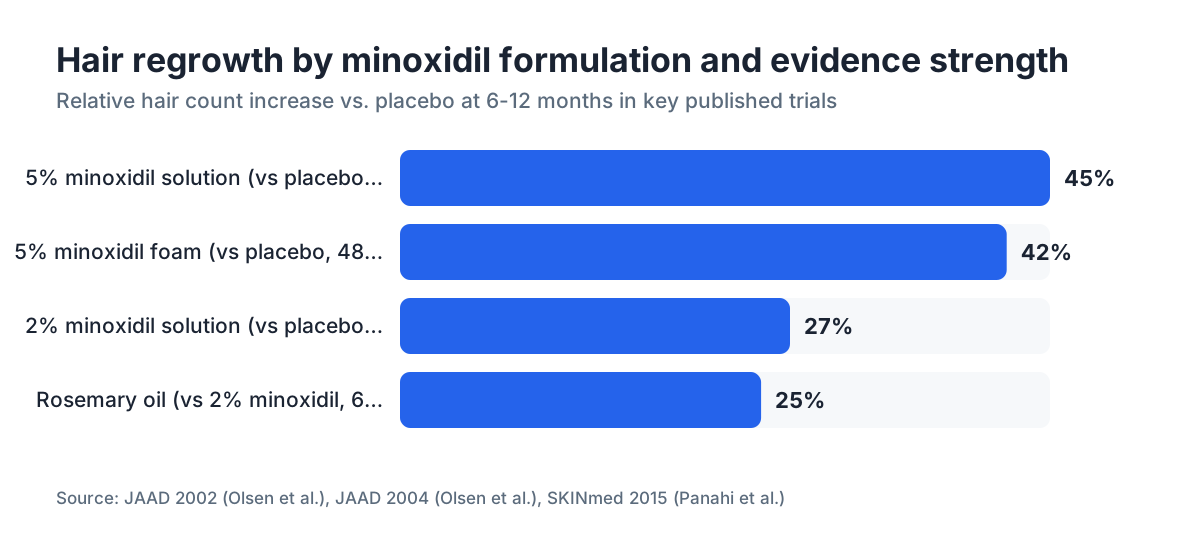
The trials that got 5% topical minoxidil approved used the propylene glycol solution. A 2002 multicenter trial published in the Journal of the American Academy of Dermatology found 5% topical minoxidil solution produced 45% more hair regrowth than 2% solution in men, measured over 48 weeks [3]. That's the backbone of what we know.
For oil-based minoxidil specifically, the published trial data is sparse. A handful of small studies and case series suggest oil-based or liposomal minoxidil formulations can deliver the drug transdermally, but none of them are large randomized controlled trials comparing oil directly to the standard solution on regrowth. Most of the enthusiasm for oil formulations comes from the dermatology compounding world, tolerability logic (less irritant solvent means better adherence means better results in practice), and anecdotal reports.
One angle worth knowing: a 2021 review in the Journal of Dermatological Treatment noted that vehicle formulation significantly affects minoxidil's skin penetration and that optimizing the vehicle could improve both tolerability and efficacy, but the authors stopped short of recommending any specific oil base [4].
So the honest position is this. If the oil vehicle delivers equivalent drug concentrations to the follicle, you should get equivalent results. Whether every commercial minoxidil oil actually achieves that is formulation-dependent and largely unverified by independent testing.
How does minoxidil oil compare to minoxidil foam and solution?
Here's a direct comparison of the three main topical forms:
| Feature | Alcohol/PG Solution | Minoxidil Foam | Minoxidil Oil |
|---|---|---|---|
| Clinical trial data | Extensive (FDA approval basis) | Solid (RCTs for foam) | Sparse |
| Scalp irritation risk | Higher (propylene glycol) | Lower (no PG) | Lowest reported |
| Scalp dryness | Common | Less common | Uncommon |
| Hair greasiness | Low | Low | Higher |
| Application ease | Easy | Easy | Can feel heavier |
| Cost (monthly) | $15-30 generic | $25-45 | $25-60 depending on brand |
| Availability | Any pharmacy | Most pharmacies | Specialty brands, compounders |
Foam was developed partly to fix the propylene glycol irritation problem, and it does that well. A 2004 randomized controlled trial found 5% minoxidil foam was as effective as 5% solution but with better tolerability [5]. So if you're just trying to escape irritation, foam is the more evidence-backed move.
The oil formulation wins on one thing: it fits more naturally into existing hair-care routines, especially for people who already use scalp oils, and it's a reasonable choice for those with very dry or sensitive scalps who can't tolerate foam either. The trade-off is you're applying an oily product, which can look and feel different on fine or thin hair.
Before you start, the minoxidil side effects guide covers what to watch for regardless of formulation. Read it first.
Rosemary oil vs minoxidil: are they actually comparable?
This comparison gets a lot of airtime on social media, so let's be precise about what the evidence says.
Rosemary oil is a botanical extract, mainly the compounds 1,8-cineole and rosmarinic acid, with some preliminary evidence of promoting hair growth. The most-cited study is a 2015 randomized controlled trial by Panahi et al. published in SKINmed, which compared 2% minoxidil solution to a rosemary oil preparation over six months in 100 patients with androgenetic alopecia. Both groups had similar hair count increases at six months, and rosemary caused significantly less scalp itching [6].
That's a genuinely interesting result. But context matters. It was a single study. The comparison arm was 2% minoxidil, not 5%. The sample size was small. It hasn't been replicated at scale.
The proposed mechanism for rosemary differs from minoxidil's. Rosemary oil may mildly inhibit 5-alpha reductase (the enzyme that converts testosterone to DHT), similar to the logic behind dht blockers. Minoxidil doesn't touch DHT at all; it works through vasodilation and potassium channels.
Some minoxidil oil products include rosemary oil as a carrier or complement, which is where the overlap gets interesting. The pitch is that you get minoxidil's proven growth stimulus plus rosemary's possible anti-DHT and scalp-health effects. Whether that combination outperforms minoxidil alone is unproven.
My honest read: rosemary oil is the most promising natural alternative to minoxidil, but "most promising natural alternative" still means far less evidence than the drug. If you have mild, early-stage loss and a strong aversion to pharmaceuticals, rosemary oil is reasonable to try. If your hairline is visibly receding, I'd go with the thing that has decades of trial data behind it. Hair loss supplements can play a supporting part, but they don't replace a drug with FDA backing.
Who is minoxidil oil actually a good fit for?
Minoxidil oil makes the most sense for a specific subset of users. It's probably not the right first choice for everyone.
Good candidates are people who've already tried the standard solution and hit scalp irritation, dryness, or flaking bad enough to hurt adherence. Adherence is huge with minoxidil. Missing doses regularly is almost as bad as not starting, so if an oil formulation means you actually use it twice a day, that's a real benefit.
People who already have a scalp oil routine (common in South Asian and Middle Eastern hair-care traditions, for instance) may find the oil format easier to fold in without it feeling like an extra clinical step.
It's also reasonable for people with very dry scalps or seborrheic dermatitis flares triggered by alcohol-based products, though they should check with a dermatologist first, since underlying scalp conditions can affect absorption and outcome.
Who should probably not start here: people just beginning treatment with no track record on topical minoxidil. Start with the standard foam or solution. They have the evidence, the reliable drug concentration, and a known pharmacokinetic profile. If irritation becomes a problem, then switch to the oil or foam.
For men specifically, the minoxidil for men guide covers dosing and realistic expectations in detail. Women can use minoxidil oil too, generally at 2% to avoid unwanted facial hair, though some dermatologists now prescribe 5% off-label for women as well.
How do you use minoxidil oil correctly?
The application principles are the same across all topical minoxidil formulations, but a few details shift with oil.
Apply to a dry or slightly damp scalp, not to hair shafts. Part the hair to expose the scalp in the affected area, then apply 1 mL per application (roughly a dropper-full for most oil products). Massage it lightly into the scalp with your fingertips and wash your hands right after. Minoxidil absorbed through the hands can cause unwanted effects.
Frequency is twice daily for most standard formulations. Some compounders offer higher-concentration oil products (10% or even 15% minoxidil) meant for once-daily use, but those concentrations have even less trial data and carry higher risk of systemic absorption. I'd be cautious.
With oil specifically: don't apply to a wet scalp dripping with water, because dilution changes the drug concentration. Let the scalp dry after washing, then apply. Oil on the scalp also attracts dust and product buildup faster than alcohol-based solutions, so washing your scalp 2-3 times a week (not stripping-level washes every day) is reasonable.
A note on timing: the drug needs roughly four hours on the scalp to absorb adequately. Applying at night and sleeping on it works for most people, though you'll want a pillowcase you don't care about. Morning application should happen before styling, with at least a 30-minute gap before any heat or heavy products.
If you're tracking progress, take photos in consistent lighting every 8 weeks. The mirror lies. Photos don't.
How long does minoxidil oil take to show results?
The timeline matches any topical minoxidil: expect nothing meaningful for the first three months, a real assessment at six months, and maximum effect somewhere between nine and twelve months of consistent twice-daily use.
The first four to eight weeks can bring increased shedding. This sounds alarming but reflects minoxidil pushing resting follicles into a new growth cycle, which temporarily displaces older hairs. It's normal. If you quit at week six because of the shed, you've stopped right before it would have turned around.
At twelve weeks, many users notice new short, fine hairs (vellus hairs) appearing, particularly at the hairline or crown. These will thicken over the following months if treatment continues.
At six months you should see a measurable difference in density if the drug is working. The clinical trials used standardized hair counts as the measure; in practice, you and your barber will notice.
If at six months of consistent use you see no change at all, that's worth raising with a dermatologist. Minoxidil doesn't work for everyone. The non-responder rate is meaningful. Estimates vary, but somewhere around 30-40% of users see minimal or no response [2]. Genetics, the extent of miniaturization already present, and whether the follicle is still alive all factor in.
For men with more advanced loss, minoxidil alone may not be enough. Combining it with finasteride and minoxidil together tends to produce better outcomes than either alone, based on the trial data.
What are the side effects and risks of minoxidil oil?
The side effects of minoxidil oil come from two sources: the active drug and the carrier oils.
From minoxidil itself, the main local side effects are scalp irritation, contact dermatitis, and unwanted facial hair growth (usually from the drug running off the scalp onto the face or being touched). These tend to be less common with oil formulations than with propylene glycol solutions, though that's based on tolerability reports rather than controlled trial data.
Systemic side effects from topical minoxidil are uncommon but not impossible. The FDA label for topical minoxidil notes that systemic absorption can occur, particularly with high concentrations or a damaged skin barrier, and in rare cases can cause fluid retention, chest pain, or heart palpitations [1]. These are much more associated with oral minoxidil than topical, but the risk isn't zero.
The carrier oils bring their own risks. Coconut oil and castor oil in particular can clog hair follicles in some people (comedogenicity varies by individual). If you develop new scalp acne or folliculitis after starting an oil formulation, that's worth considering. Argan oil and jojoba oil are lower on the comedogenic scale.
Allergic contact dermatitis to a specific carrier oil is also possible. If you develop a new rash, itching, or swelling beyond mild scalp irritation, stop use and see a dermatologist.
If you're pregnant or breastfeeding, topical minoxidil is generally not recommended. The FDA has not established safety in pregnancy for topical formulations.
Can you combine minoxidil oil with other hair loss treatments?
Yes, and for many people combination is the right strategy.
The strongest and most-studied combination for androgenetic alopecia in men is minoxidil plus finasteride. They work through different mechanisms: minoxidil stimulates growth via potassium channels and circulation, finasteride blocks DHT conversion. A 1999 study in Dermatology found the combination outperformed either drug alone in a 12-month trial [7]. You can absolutely use minoxidil oil as the topical component if that's your preferred formulation.
Rosemary oil is already a carrier ingredient in some minoxidil oil products, so in a sense that combination is baked in for certain brands. Whether adding more rosemary on top of the prescribed amount gives extra benefit is genuinely unknown.
Using minoxidil alongside a dermaroller or microneedling is another combination that's picked up serious trial support. A 2013 randomized controlled trial found that combining 5% minoxidil with weekly microneedling produced significantly greater hair count increases than minoxidil alone at 12 weeks [8]. The proposed mechanism is that microneedling creates micro-channels that improve drug penetration, which could matter even more for oil-based vehicles that rely on absorption.
For people further along, where miniaturization is advanced, hair transplant may eventually be on the table. Minoxidil before and after transplant is often recommended to protect existing non-transplanted hair.
If you're not sure where your loss sits on the severity scale, the free AI hair analysis at MyHairline can give you a starting Norwood stage assessment before you decide what combination makes sense.
How do you choose a minoxidil oil product worth buying?
This is where it gets practical, and honestly a little buyer-beware.
The minoxidil oil market isn't as tightly regulated as pharmaceutical solutions. Over-the-counter topical minoxidil at 2% (for any gender) and 5% (labeled for men) is FDA-approved as a drug. Products that clearly state minoxidil concentration and are sold as drug products are held to that standard. But some products marketed as "hair growth oil with minoxidil-like ingredients" or "natural minoxidil alternative oil" contain no minoxidil at all. Read the active ingredient label.
For legitimate minoxidil oil products, check these things:
First, the stated concentration. 5% is standard for men, 2% is standard for women. The actual concentration in the bottle matters and should be guaranteed by the manufacturer or compounder.
Second, the carrier oils used. Argan oil, jojoba oil, and rosemary oil are reasonable choices. Very heavy oils like pure castor oil can sit on the scalp rather than penetrate, which reduces drug delivery.
Third, whether the product is manufactured by a licensed compounding pharmacy (if it's a custom or specialty formula) or is an FDA-registered OTC drug product. Compounding pharmacies are regulated differently, and quality can vary.
Fourth, price. Monthly cost for a legitimate minoxidil oil runs roughly $25-60. Much cheaper and you should wonder about concentration accuracy. Much more expensive with lots of "proprietary blend" language and you're likely paying for marketing.
Fifth, avoid any product claiming to be a "cure" for hair loss. Minoxidil, in any vehicle, manages androgenetic alopecia. It does not cure it. Stop using it and the hair you kept typically falls out within three to six months.
Is minoxidil oil worth it compared to the standard options?
Here's my honest take.
If you tolerate standard minoxidil solution or foam fine, there's no strong evidence to switch to oil. The proven track record lives with the conventional formulations. Don't fix what isn't broken.
If you've struggled with scalp irritation, dryness, or adherence problems on alcohol-based minoxidil, oil is a reasonable next step. The drug is the same. A gentler delivery system you'll actually stick with is worth more than a theoretically superior one you skip every third day.
Rosemary oil alone, without minoxidil, is an interesting option for people with mild, early loss who are committed to a natural approach, but the evidence gap against pharmaceutical minoxidil is large. One trial against 2% minoxidil is not a replacement for decades of 5% minoxidil data.
For men with a receding hairline or thinning crown, the receding hairline guide is worth reading to see where minoxidil fits in the broader picture. Early action matters a lot, because minoxidil can't revive dead follicles.
If you've been putting off evaluating your hair loss because you're unsure what stage you're at or whether treatment makes sense yet, the free AI scan at MyHairline takes a few minutes and gives you a starting point with no commitment.
Minoxidil oil is a legitimate formulation, not a gimmick, but choose it for the right reasons. The drug does the work. The oil is just how it gets there.
Sources
- FDA, Rogaine (minoxidil) topical drug label
- StatPearls (NCBI Bookshelf), Minoxidil
- Olsen EA et al., Journal of the American Academy of Dermatology, 2002
- Journal of Dermatological Treatment, vehicle and penetration review, 2021
- Olsen EA et al., Journal of the American Academy of Dermatology, 2004 (foam vs solution RCT)
- Panahi Y et al., SKINmed, 2015 (rosemary oil vs minoxidil RCT)
- Khandpur S et al., Dermatology, 1999 (finasteride plus minoxidil combination trial)
- Dhurat R et al., International Journal of Trichology, 2013 (microneedling plus minoxidil RCT)
- American Academy of Dermatology, Hair loss: diagnosis and treatment
- FDA, OTC drug approval history for minoxidil topical