
TL;DR: Topical minoxidil (2% and 5% solutions and foam) is available over the counter without a prescription in the US. Oral minoxidil, originally approved as a blood pressure drug, requires a prescription because of its cardiovascular risks. A dermatologist or telehealth provider can prescribe oral minoxidil off-label for hair loss, typically at 0.625 to 2.5 mg daily for women and 2.5 to 5 mg daily for men.
What is minoxidil and how does it work for hair loss?
Minoxidil was first approved by the FDA in 1979 as an oral blood pressure drug under the brand name Loniten. Nobody planned it as a hair treatment. Patients taking it for high blood pressure started growing more body hair, including on their scalps, and researchers took notice. Topical minoxidil followed in 1988, when the FDA approved Rogaine for male pattern baldness. The 2% women's formulation arrived in 1991 [1].
The exact mechanism is still not fully understood, which is refreshingly honest for a drug that's been on the market for decades. Here's what researchers do know. Minoxidil is a potassium channel opener that widens blood vessels, which likely increases blood flow and nutrients to hair follicles. It also appears to extend the anagen (growth) phase of the hair cycle and may directly stimulate follicle cells. What it does not do is block dihydrotestosterone (DHT), the hormone that shrinks follicles in androgenetic alopecia. That's why many people combine it with a dht blocker like finasteride.
For a broader look at why follicles fail in the first place, see our guide on what causes hair loss.
Do you need a prescription for topical minoxidil?
No. Topical minoxidil is one of the rare hair loss treatments that genuinely does not require a prescription in the United States. The FDA approved it as an over-the-counter drug, so any pharmacy, big-box store, or online retailer can sell it without you seeing a doctor first [1].
The standard OTC strengths are 2% solution (historically marketed for women), 5% solution, and 5% foam. A 5% foam two-month supply typically costs $25 to $45 at major US pharmacies, though generic versions can run lower. Name-brand Rogaine carries a premium. Generics contain the same active ingredient at the same concentration.
One caveat matters here. "No prescription required" does not mean "no reason to see a doctor." Hair loss has many causes, including thyroid disorders, iron deficiency, telogen effluvium, and scalp conditions that minoxidil won't touch. If you haven't figured out why your hair is thinning, buying minoxidil without a diagnosis is a gamble. You might be treating the wrong problem for years.
If you have a receding hairline specifically, knowing your Norwood stage helps set realistic expectations for what topical minoxidil can and can't do.
Does oral minoxidil require a prescription?
Yes, always. Oral minoxidil is a prescription-only medication in the United States. It is FDA-approved as a blood pressure drug (brand name Loniten) but not specifically approved for hair loss. Doctors prescribe it for hair loss as an off-label use, which is legal and common in dermatology [2].
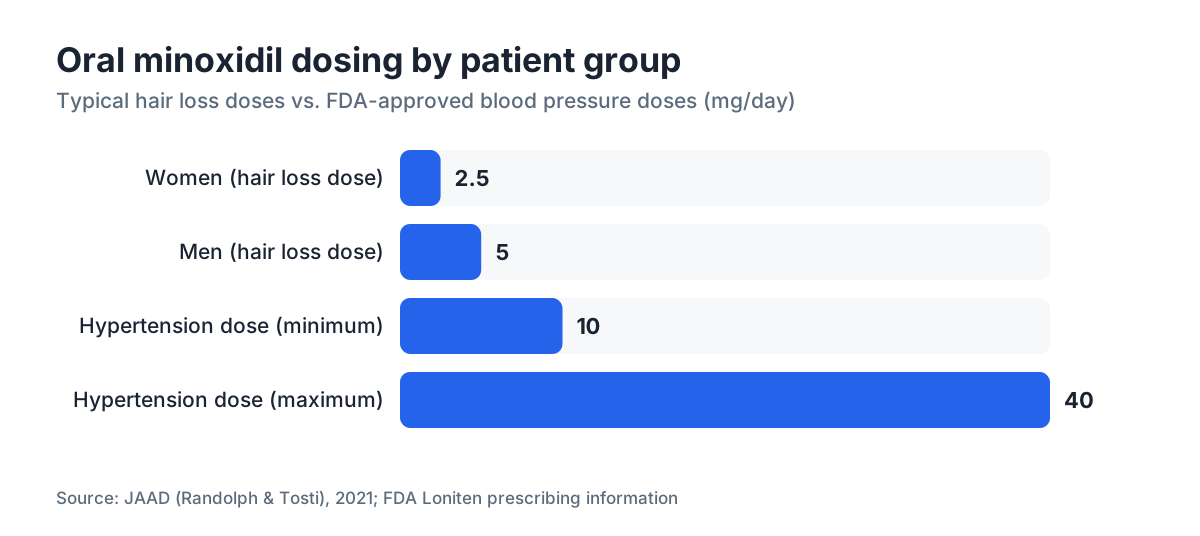
The prescription requirement exists because oral minoxidil carries real cardiovascular risks at higher doses. At blood pressure doses (10 to 40 mg/day), it can cause fluid retention, rapid heart rate, and in rare cases pericardial effusion (fluid around the heart). The low doses used for hair loss (0.625 to 5 mg/day) sit far below blood pressure doses, but the risks are not zero. That's why physician oversight matters.
For a complete picture of what to watch for, read through minoxidil side effects before starting either form.
Some compounding pharmacies also make topical minoxidil at higher concentrations (10% or 15%) or in combination formulas. Those need a prescription too, because they fall outside the FDA-approved OTC monograph.
To see how oral minoxidil compares to the topical form, the oral minoxidil guide covers the full picture.
What dose does a doctor prescribe for hair loss?
For hair loss, doctors prescribe oral minoxidil at doses far below what's used for blood pressure. A 2021 review in the Journal of the American Academy of Dermatology (JAAD) summarized the dosing ranges used in clinical practice [3]:
| Patient group | Typical hair loss dose | Blood pressure dose (for context) |
|---|---|---|
| Women | 0.625 to 2.5 mg/day | 10 to 40 mg/day |
| Men | 2.5 to 5 mg/day | 10 to 40 mg/day |
| Older or sensitive patients | Start 0.625 mg/day | 10 to 40 mg/day |
Dermatologists often start at the lower end and move up if the response is modest and side effects stay minimal. The 5 mg tablet is the most common commercially available form. Many prescriptions specify cutting tablets or using compounded lower doses to hit 2.5 mg or 1.25 mg.
For men combining treatments, finasteride and minoxidil together tends to outperform either alone in head-to-head data.
How do you get a prescription for oral minoxidil?
Three realistic paths exist in 2025.
First, see a dermatologist in person. This is the most thorough route. A dermatologist can examine your scalp, rule out other causes, possibly do a scalp biopsy or blood panel, and write the prescription with full context. Wait times vary widely by region, from a few days to several months.
Second, use a telehealth platform. Companies like Keeps, Hims, and Ro offer async or synchronous consultations with licensed physicians who can prescribe oral minoxidil. You fill out a health questionnaire, sometimes upload photos, and a physician reviews your case. If appropriate, they write the prescription and mail the medication. This works well for straightforward androgenetic alopecia. It's a worse fit if your hair loss pattern is unusual or you have significant other health conditions.
Third, ask your primary care physician. Many PCPs are comfortable prescribing low-dose oral minoxidil for hair loss now that the evidence base has grown. If your PCP isn't familiar with it, a brief mention of the JAAD off-label prescribing review can help the conversation.
Whatever path you choose, expect the prescriber to ask about cardiovascular history, current medications (especially other blood pressure drugs), and whether you have kidney or liver issues. Those aren't bureaucratic hurdles. They're the information needed to prescribe safely.
Not sure whether your hair loss pattern even warrants a prescription treatment? A free AI hair scan at MyHairline can help you understand your thinning pattern before you book an appointment, so you walk in knowing what to ask.
What are the real costs of getting and filling a minoxidil prescription?
Cost depends heavily on branded versus generic, and on which route you use to get the prescription.
Oral minoxidil 5 mg tablets (generic) typically run $15 to $40 for a 30-day supply at US pharmacies without insurance, based on GoodRx pricing as of early 2025. That's one of the more affordable prescription hair loss treatments available. Compounded lower-dose formulations can cost more, sometimes $50 to $80 per month, because compounding adds labor.
The telehealth consultation fee adds to your first-month cost. Platforms typically charge $15 to $30 for an initial consultation, sometimes bundled with a first medication shipment. Some charge a monthly subscription.
For comparison, topical minoxidil OTC costs roughly $15 to $45 for a two-month supply. So the prescription path carries both a consultation cost and a slightly higher ongoing medication cost, though the gap is small.
Finasteride, the other major medical treatment for male pattern hair loss, runs $20 to $50 per month generic. Pairing it with oral minoxidil doubles the medication cost, but the combination evidence is strong. A finasteride guide covers what to expect from that drug on its own.
A hair transplant sits in a different cost category entirely, ranging from roughly $4,000 to $15,000+ depending on technique and graft count. It doesn't replace medical therapy in most cases.
What does the clinical evidence say about oral minoxidil for hair loss?
The evidence base for low-dose oral minoxidil (LDOM) has grown a lot since 2018. It's still not enormous by pharmaceutical standards, but what exists is consistent.
A 2021 randomized controlled trial published in JAMA Dermatology compared low-dose oral minoxidil (0.5 mg/day in women) to topical 5% minoxidil in 90 women with female pattern hair loss. Both groups showed hair density improvement over 24 weeks, with the oral group showing non-inferior results and better tolerability. The study authors concluded that "low-dose oral minoxidil showed comparable efficacy to topical minoxidil with a good safety profile" [4].
For men, a 2022 review in Dermatology and Therapy pooled data from multiple studies using 2.5 to 5 mg oral minoxidil and found meaningful increases in hair count and patient-reported satisfaction across androgenetic alopecia, alopecia areata, and other diagnoses [5].
The most common side effects at hair loss doses are hypertrichosis (unwanted body hair growth, which affects roughly 15 to 20% of patients in some series) and mild fluid retention. Serious cardiovascular events at these low doses are uncommon in healthy people without pre-existing heart or kidney disease, but the safety data beyond two years stays thin. Honest caveat: nobody has decades of safety data on low-dose oral minoxidil for hair loss the way we do for topical minoxidil.
For minoxidil for men specifically, the topical versus oral tradeoff is worth reading in detail.
Who should not use minoxidil, even with a prescription?
Oral minoxidil is not appropriate for everyone. The FDA's prescribing information for Loniten lists contraindications and precautions that carry down to lower doses [2].
People who should not use oral minoxidil include those with a pheochromocytoma (an adrenal tumor that can cause severe hypertension if blood vessel dilators are used), those with pulmonary hypertension caused by mitral stenosis, and anyone with serious pre-existing cardiovascular disease without close physician supervision. Pregnancy is also a concern. Minoxidil is a category C drug, meaning animal studies showed fetal risk and adequate human studies don't exist.
For topical minoxidil, the OTC label says not to use it if your scalp is irritated or sunburned, and not to use it in people under 18. Women who are pregnant or breastfeeding should avoid even topical minoxidil, since some systemic absorption occurs.
People taking other blood pressure medications need to watch for additive blood pressure lowering effects. That's one reason a thorough medication review before prescribing matters.
If your hair thinning might be related to stress or illness rather than genetics, check whether telogen effluvium matches your pattern before starting any medication. That condition often resolves on its own.
How long does it take to see results from minoxidil?
Slow. Minoxidil works on the hair growth cycle, and the cycle is slow.
Most dermatologists tell patients not to judge results before four months. The reason: minoxidil first pushes resting (telogen) hairs to shed early so new anagen hairs can come in. That initial shedding around weeks 4 to 8 is alarming if you don't expect it, but it's a normal part of how the drug works, not a sign it's failing.
Meaningful density improvements usually show up at four to six months. Peak effect generally lands around 12 months of consistent use [3]. After that, maintenance rather than continued improvement is the realistic expectation.
Here's the part people skip. You have to keep using it. Minoxidil does not change the underlying genetic programming of your follicles. Stop using it and the hairs it maintained will shed within three to six months. This is a lifetime commitment if you want to keep the results.
Oral minoxidil appears to follow a similar timeline. The 2021 JAMA Dermatology RCT used a 24-week endpoint and showed clear differences from baseline at that point, with improvements continuing throughout.
Is there a difference between brand-name and generic minoxidil?
Generics have the same active ingredient at the same concentration. FDA approval of a generic requires proving bioequivalence to the brand-name product [6]. For oral minoxidil, generic tablets have been available for decades, since Loniten's patent expired long ago. For topical minoxidil, dozens of generics compete with Rogaine.
The main differences between topical products are the vehicle (solution versus foam) and added ingredients like propylene glycol, which can irritate the scalp in some people. If a solution irritates your scalp, switching to foam often fixes it, not because the minoxidil is different, but because the foam formulation drops the propylene glycol.
For prescription compounded products, the rules change. Compounded medications are not FDA-approved and not required to prove bioequivalence. Quality varies by pharmacy. If you're getting a compounded topical minoxidil at a non-standard concentration, choose a compounding pharmacy accredited by PCAB (the Pharmacy Compounding Accreditation Board).
Can minoxidil be combined with other hair loss treatments?
Yes, and the combination approach is mainstream in dermatology.
The most studied combination is minoxidil plus finasteride. A 2019 study in Dermatologic Therapy found the combination produced significantly greater hair count increases than either drug alone in men with androgenetic alopecia [7]. The logic is complementary. Minoxidil stimulates growth and extends anagen; finasteride cuts DHT, addressing the hormonal driver. For men with moderate to advanced androgenetic alopecia, many dermatologists now treat the combination as a first-line approach rather than a second-line add-on.
Minoxidil is also used alongside platelet-rich plasma (PRP) therapy, low-level laser therapy (LLLT), and before or after a hair transplant. The evidence for those combinations is weaker but not absent.
For women, combining oral minoxidil with spironolactone is common when there's a hormonal component to the loss. Spironolactone is an anti-androgen and also a diuretic, which can partly offset the fluid retention minoxidil sometimes causes.
Some patients research hair loss supplements as add-ons. The evidence for most supplements is weak next to minoxidil or finasteride, but correcting a biotin deficiency and keeping iron levels adequate does matter if you're deficient.
What should you tell your doctor when asking for a minoxidil prescription?
Come prepared. The more you give the prescriber, the better the decision they can make.
Bring or describe your family history of hair loss on both sides. Tell them how long the thinning has been happening, where it started, and whether the loss has been gradual or sudden. Sudden diffuse shedding points toward telogen effluvium more than androgenetic alopecia.
List every medication you take, especially blood pressure drugs, diuretics, and anything with hormonal effects. If you use NSAIDs regularly, mention that too.
Mention any symptoms beyond hair loss: fatigue, weight changes, temperature sensitivity, or nail changes. These can flag thyroid problems or nutritional deficiencies that need addressing alongside or instead of minoxidil.
Ask specifically about blood pressure monitoring. Some dermatologists check a baseline blood pressure reading before starting oral minoxidil and recheck after a few weeks. At the hair loss doses typically used, significant blood pressure drops are uncommon in people who aren't already hypertensive, but it's good practice.
If you've already tried topical minoxidil and had limited results or poor adherence because of scalp greasiness, say so. That's often the strongest argument for switching to the oral route.
Before your appointment, knowing your loss pattern more precisely helps. The free AI scan at MyHairline can help you describe what you're seeing more accurately to your doctor.
Does insurance cover a minoxidil prescription?
Usually not. Both topical OTC and oral prescription minoxidil are typically treated as cosmetic by US health insurers. Androgenetic alopecia is classified as a cosmetic condition rather than a medical one for insurance purposes, so even though oral minoxidil is a legitimate prescription drug, most plans will not cover it when the indication is hair loss.
Exceptions exist. If a physician codes the prescription for a non-cosmetic indication where it's FDA-approved (hypertension), some plans may cover it. But that requires a genuine hypertension diagnosis, and the doses prescribed for hypertension run much higher than those used for hair loss.
Because generic oral minoxidil tablets are cheap to begin with ($15 to $40 a month without insurance), the lack of coverage stings less than it does for drugs like finasteride's brand-name versions. GoodRx and similar discount cards can cut pharmacy costs further. The bigger out-of-pocket variable is usually the consultation cost if you see a dermatologist in person, which can run $150 to $400 depending on location and whether you have insurance covering the visit.
Sources
- FDA, Drug Approval Package for Rogaine (minoxidil topical) 5%
- FDA, Loniten (minoxidil) prescribing information
- Randolph M & Tosti A, Journal of the American Academy of Dermatology, 2021; Oral minoxidil treatment for hair loss: A review of efficacy and safety
- Ramos PM et al., JAMA Dermatology, 2021; Oral Minoxidil 0.5 mg/day for female pattern hair loss: A randomized clinical trial
- Vano-Galvan S et al., Dermatology and Therapy, 2022; Oral minoxidil for hair loss: A systematic review
- FDA, Generic Drugs: Bioequivalence overview
- Hu R et al., Dermatologic Therapy, 2019; Combined treatment with oral finasteride and topical minoxidil in male androgenetic alopecia: a randomized and comparative study
- Blume-Peytavi U et al., Journal of the American Academy of Dermatology, 2011; A randomized, single-blind trial of 5% minoxidil foam once daily versus 2% minoxidil solution twice daily in the treatment of female pattern hair loss
- AAD, American Academy of Dermatology, Hair Loss: Diagnosis and Treatment
- GoodRx, Minoxidil drug prices
- Suchonwanit P et al., Drug Design Development and Therapy, 2019; Minoxidil and its use in hair disorders: a review