TL;DR: Generic topical minoxidil costs $5, $15 a month at most pharmacies and online retailers. Brand-name Rogaine costs $30, $50 for the same amount. Oral minoxidil, prescribed off-label, typically runs $10, $30 a month at a compounding pharmacy. The active ingredient is identical across generics and brand, so almost everyone overpays if they buy Rogaine.
How much does minoxidil cost per month?
Anywhere from $5 to $50 a month. What decides your number is whether you buy generic or brand, and whether you buy topical or oral. Nothing else moves the price much.
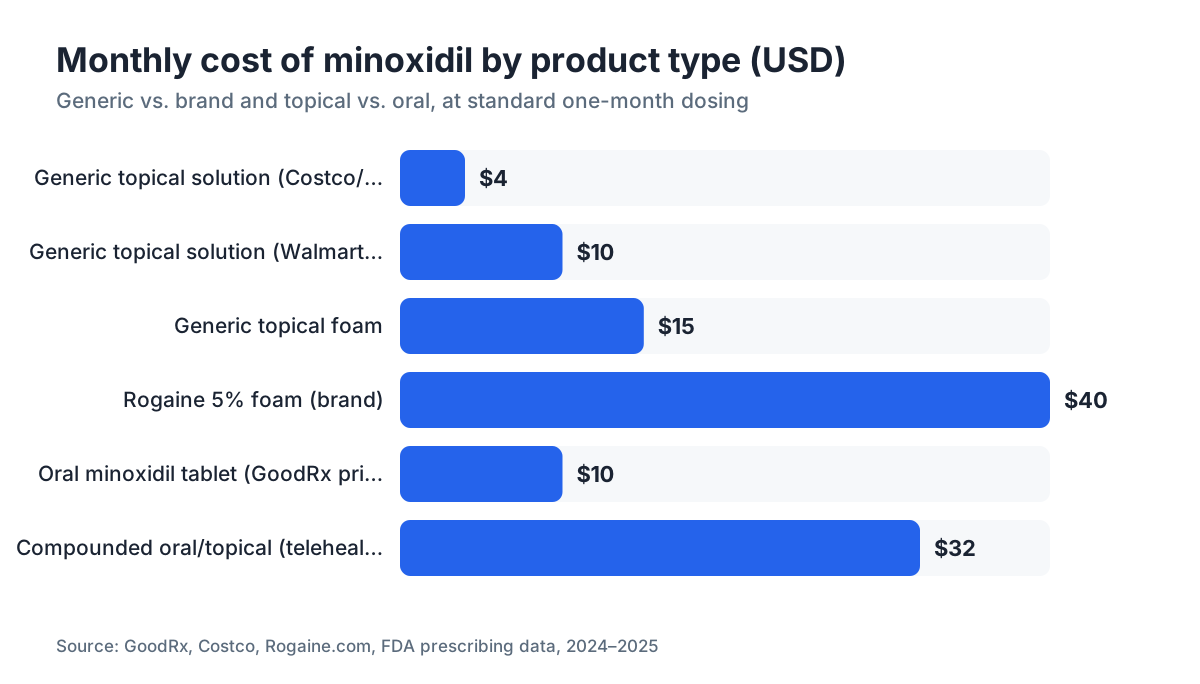
Generic 5% minoxidil foam or solution, the form most men use, costs roughly $5, $15 for a one-month supply at Walmart, Costco, CVS, Amazon, or Target. Brand-name Rogaine in the same 5% foam typically runs $30, $50 for 60 mL (a one-month supply) or about $75, $100 for a three-month kit [1]. The FDA approved the first generic topical minoxidil in the early 2000s. That's why the gap is now this wide.
Oral minoxidil is a different animal. It's a prescription-only tablet, prescribed off-label by dermatologists at low doses (0.625 mg to 5 mg daily for hair loss, far below its FDA-approved hypertension dose). The tablets are cheap: generic 2.5 mg tablets often cost under $20 for a 90-day supply through discount pharmacy programs like GoodRx [2]. The prescription is what costs you. Expect a consultation fee of $50 to $200 depending on the provider.
Compounded minoxidil covers two things: topical formulas that mix minoxidil with finasteride or retinol, and oral capsules from a compounding pharmacy. Both usually run $20, $40 a month through telehealth platforms. The compounding step is the reason it costs more than plain generic tablets.
Generic vs. brand-name minoxidil: is Rogaine worth the price?
No, not for most people.
The FDA requires generic drugs to contain the same active ingredient at the same concentration, in the same dosage form, by the same route, with bioequivalence demonstrated to the brand [3]. Generic 5% minoxidil foam or solution clears that bar before it reaches a shelf. Inactive ingredients can differ a little, which occasionally matters if you have a specific skin sensitivity. For nearly everyone, the product is functionally identical.
Rogaine charges a premium because it was the original FDA-approved brand (2% solution in 1988, then the 5% men's version in 1997) [4]. That name still commands a price three to five times higher than generics. No peer-reviewed evidence shows Rogaine works better than generic minoxidil at the same concentration.
One scenario where brand might matter: some people find Rogaine foam's vehicle (the carrier that delivers the drug) less irritating than cheaper solution generics, because the foam uses ethanol instead of propylene glycol. If a solution generic has burned or flaked your scalp, switching to any foam, generic foam included, usually fixes it. You don't have to pay for the Rogaine name to get foam.
Buy the cheapest generic at the concentration your dermatologist recommends. The savings are real and the results are the same.
What are the different forms of minoxidil and what does each cost?
Minoxidil comes in five practical forms for hair loss. Each sits at a different price.
| Form | Typical monthly cost | Prescription needed? | Notes |
|---|---|---|---|
| 2% topical solution | $5, $10 | No (OTC) | FDA-approved for women; often cheaper than 5% |
| 5% topical solution | $5, $12 | No (OTC) | Most common form for men |
| 5% topical foam | $10, $20 generic / $30, $50 Rogaine | No (OTC) | Less irritating for sensitive scalps |
| Oral tablet (generic) | $8, $20 | Yes (Rx) | Prescription + consult fee adds cost |
| Compounded topical or oral | $20, $45 | Yes (Rx) | Often includes finasteride or other ingredients |
The solution is the cheapest and has been sold longest. The foam runs a little more but applies without dripping and dries faster. Oral minoxidil took off around 2020 because it skips the twice-daily scalp routine, but you need a dermatologist or telehealth consult to get it.
For how oral minoxidil works and its specific risks, see our guide on oral minoxidil. The minoxidil side effects article covers what to watch for at each dose.
Where to buy minoxidil and how prices compare by retailer
Prices swing more than you'd think for the exact same product.
Costco has the lowest unit price for topical solution, often selling a six-month supply (Kirkland Signature, a licensed generic) for $20, $30, which works out to $3, $5 per month [5]. This is the deal experienced hair loss forum users point to first.
Amazon, Walmart, and Target usually run $8, $15 for a one-month supply of 5% solution or foam. Prices move with promotions, so check all three before you buy.
CVS, Walgreens, and Rite Aid charge the most for generics, often $15, $25, and they stock Rogaine front and center. They're handy if you need it today. You pay for that convenience.
Online telehealth platforms (Hims, Keeps, Ro, and others) bundle a prescription consultation with monthly shipments. Their pricing often runs $20, $40 per month all-in. That looks steep for topical minoxidil by itself, but it's fair if you're also getting a physician review or a combination formula. For plain generic topical minoxidil, Costco is cheaper.
GoodRx and similar discount programs cut the cost of oral minoxidil tablets sharply. A 90-day supply of 2.5 mg generic tablets can run under $15 with a GoodRx coupon at many chains [2]. Again, the consultation is the expensive part, not the drug.
For what the next step up costs, see our hair transplant pricing guide. The lifetime gap between topical minoxidil and a transplant is large.
How much does minoxidil cost per year, and does that change over time?
Generic topical minoxidil at Costco prices costs roughly $40, $60 a year. At pharmacy retail prices it's $100, $180. Rogaine at full price runs $360, $600 a year.
Stretch that over five years and the gap between Rogaine and Kirkland generic is about $1,500, $2,700. Real money for an identical active ingredient.
Generic topical minoxidil has held flat or drifted down over the past decade as more manufacturers entered the market. Oral generic tablet prices stayed low too, because the drug has been generic for decades (first approved as the hypertension drug Loniten in 1979) [6]. Telehealth pricing has gotten more competitive since 2021 as more companies piled in.
Here's the cost people underestimate: minoxidil needs continuous use to hold results. A 2004 review in the British Journal of Dermatology by Messenger and Rundegren concluded that hair gained on minoxidil is lost within months of stopping [7]. This is a long-term expense, not a one-time treatment. At $5, $10 a month, manageable. At $40, $50 a month, it adds up hard across years.
Does insurance cover minoxidil?
Almost never.
Topical minoxidil is sold over the counter, and insurance doesn't cover OTC drugs. Oral minoxidil for hair loss is prescribed off-label, and most plans exclude coverage for cosmetic or off-label prescriptions. A few plans with unusually generous provisions might cover it, but that's rare enough that you shouldn't count on it.
HSA (Health Savings Account) and FSA (Flexible Spending Account) money can sometimes go toward minoxidil if a doctor prescribes it. OTC minoxidil generally does not qualify for FSA spending without a prescription [8]. If your dermatologist writes an Rx for topical minoxidil (some do, even though it's OTC), that prescription version may qualify. Ask your prescriber and your FSA administrator before you assume anything.
Medicaid and Medicare do not routinely cover minoxidil for hair loss. Some Medicaid plans cover oral minoxidil tablets prescribed for hypertension, the original on-label use, but not for hair loss.
How does minoxidil price compare to finasteride and other hair loss treatments?
This is where the comparison gets useful.
Generic oral finasteride 1 mg costs $10, $25 a month at most pharmacies, often less with GoodRx. Brand-name Propecia runs $70, $100+, which almost nobody pays now that generics are everywhere. Finasteride needs a prescription and ongoing monitoring, which adds cost if you see a physician regularly [9]. See our full guide on finasteride for dosing and what the evidence says.
| Treatment | Monthly cost range | Prescription? | Evidence grade |
|---|---|---|---|
| Generic topical minoxidil 5% | $5, $15 | No | FDA-approved (androgenetic alopecia) |
| Generic oral finasteride 1 mg | $10, $25 | Yes | FDA-approved (men only) |
| Oral minoxidil (low dose) | $8, $20 + consult | Yes | Strong off-label evidence |
| Combined minoxidil + finasteride | $25, $50 (compounded) | Yes | Good evidence for combo [10] |
| Hair transplant (lifetime) | $4,000, $15,000 one-time | Surgeon referral | Permanent but not cheap |
| Hair loss supplements | $20, $60 | No | Weak to no evidence |
The finasteride and minoxidil combination is worth knowing about. A study in JAMA Dermatology found combined oral finasteride and topical minoxidil outperformed either drug alone for androgenetic alopecia [10]. If you're paying for two drugs anyway, combining them through a compounding pharmacy is often cheaper than buying both separately.
DHT blockers, supplements, and topical serums sit in the low-evidence tier. They cost $20, $60 a month and the data behind them is far thinner than for minoxidil. See our DHT blocker and hair loss supplements guides for what the evidence actually shows.
Is minoxidil cheaper through telehealth platforms?
Depends entirely on what you're comparing.
Stack a telehealth platform's all-in price ($20, $40/month for oral or compounded minoxidil, consultation included) against plain generic topical minoxidil at Costco ($3, $5/month), and telehealth loses badly. That comparison isn't fair, though, because you're buying different things.
Compare telehealth against a traditional dermatology visit ($150, $300 out of pocket without insurance) plus a separately filled prescription, and the platforms often win. Many charge $0, $25 for the first consultation, then $20, $40 monthly for the prescription and drug together. Over a year that can cost less than two in-person derm visits plus pharmacy fills.
The real value of telehealth here is access, not price. If you want oral minoxidil, or a combination formula, or finasteride, and you can't get a dermatologist appointment quickly, telehealth is the practical route. If you only want topical minoxidil and already know which generic to buy, skip the platform.
Still not sure what's causing your hair loss before you spend anything? A baseline read on your hairline helps. MyHairline's free AI hair analysis (/scan) can flag whether your pattern looks like androgenetic alopecia or something else, which tells you whether minoxidil is even the right place to start.
How much minoxidil do you actually use per month?
This decides your real cost, because some people overuse it and burn through a bottle early.
The FDA-approved dose for topical 5% solution is 1 mL on the scalp twice daily. That's 2 mL a day, about 60 mL a month. Standard bottles come in 60 mL sizes for exactly this reason: one bottle is one month at the approved dose [4].
For 5% foam, the approved dose is half a capful (about 0.5 g of foam) twice daily. A 60 g can lasts roughly a month.
For oral minoxidil used off-label for hair loss, doses typically run 0.625 mg to 2.5 mg daily for women and up to 5 mg daily for men, though practice varies and there's no single FDA-approved hair loss dose for the tablet. The 2.5 mg tablet is common, one a day for most people. A 30-tablet supply covers a month.
Applying more topical minoxidil than recommended, hoping for faster results, buys you nothing except a higher bill. FDA prescribing guidance states that applying more than the recommended amount does not improve results and raises systemic absorption [4]. More isn't better here.
What's the cheapest way to use minoxidil without compromising effectiveness?
Buy Kirkland Signature 5% minoxidil solution from Costco. It's the most-referenced generic equivalent, it's consistently the cheapest per month, and it uses the same formula as brand-name Rogaine solution at a fraction of the price.
If you prefer foam because it's easier to apply or gentler on your scalp, buy store-brand foam from Target or Walmart instead of Rogaine. The difference is $15, $30 a month for the identical product.
If you want oral minoxidil, use GoodRx to compare pharmacy prices before you fill. The spread between the priciest and cheapest pharmacy for the same generic tablet can be $10, $15 a month, which adds up.
Check your pattern before you commit to anything. Minoxidil works best for vertex (crown) thinning and worst for a deeply receding hairline. If your main concern is a receding hairline, minoxidil alone may disappoint you, and adding finasteride or seeing a dermatologist first is worth the upfront cost. Spending $10 a month on a drug that isn't addressing your actual pattern is still $120 a year gone.
If you're still working out what's driving your thinning, our article on what causes hair loss covers the full range. Getting the diagnosis right saves money later. MyHairline's free AI scan (/scan) is one fast way to read your pattern before you set a treatment budget.
Can minoxidil cost more in some countries, and does that affect buying options?
Yes, and by a lot.
In the United States, minoxidil is cheap partly because it's OTC and the market is crowded with competitors. In several European countries, some formulations still require a prescription, which tacks on a consultation fee. The UK reclassified topical minoxidil in 2023 to allow pharmacist sales without a full GP consultation, which lowered the effective cost for British users [12].
In Canada, generic topical minoxidil is also OTC and priced close to the US. In Australia, minoxidil is a Pharmacy Medicine (Schedule 2 or 3 depending on strength), so it's OTC but sold through pharmacies, and prices tend to run a bit higher than US generics.
International online pharmacies that ship minoxidil into the US operate in a legal gray area. The FDA generally does not permit importing prescription drugs, and even OTC drugs from foreign pharmacies carry quality and labeling risks. Stick to US-licensed retailers.
If your hair loss isn't standard androgenetic alopecia, say telogen effluvium, the math changes. Telogen effluvium often resolves on its own, so paying for minoxidil long-term to treat a temporary shed is usually wasted money.
Sources
- Johnson & Johnson / Rogaine official product page
- GoodRx, minoxidil tablet pricing
- FDA, Generic Drugs overview (Office of Generic Drugs)
- FDA, Rogaine 5% Topical Solution Prescribing Information (NDA 019501)
- Costco, Kirkland Signature Minoxidil product listing
- FDA, Loniten (minoxidil tablets) label history
- Messenger AG, Rundegren J, 'Minoxidil: mechanisms of action on hair growth', British Journal of Dermatology, 2004
- IRS, Publication 502, Medical and Dental Expenses (HSA/FSA eligible items)
- FDA, Propecia (finasteride 1 mg) label
- Hu R et al., 'Combined treatment with oral finasteride and topical minoxidil in male androgenetic alopecia', JAMA Dermatology, 2015
- American Academy of Dermatology, Hair loss: diagnosis and treatment
- Medicines and Healthcare products Regulatory Agency (MHRA)