TL;DR: Oral finasteride (1 mg daily, brand name Propecia) is the most evidence-backed pill for male pattern hair loss. It blocks DHT, the hormone that shrinks follicles. About 87% of men who take it stop losing hair; roughly 66% see some regrowth. It takes 3 to 6 months to see results and works only while you keep taking it.
What is oral finasteride and how does it work?
Finasteride is a 5-alpha-reductase inhibitor. That enzyme converts testosterone into dihydrotestosterone (DHT), which is the androgen that miniaturizes genetically susceptible hair follicles over time. Block the enzyme, cut DHT levels, and the follicles that haven't fully died yet get a chance to recover.
The FDA approved a 1 mg oral dose of finasteride for male pattern hair loss (androgenetic alopecia) in December 1997 under the brand name Propecia [1]. A 5 mg version called Proscar was approved earlier, in 1992, for benign prostatic hyperplasia. Same molecule, very different dose.
A single 1 mg daily dose reduces scalp DHT by roughly 60% and serum DHT by about 70% within 24 hours [2]. That's a big drop. The follicles don't reverse decades of damage instantly, but many that are dormant rather than dead respond over 6 to 24 months.
If you want a deeper look at the broader DHT-blocking category, the dht blocker overview covers how finasteride compares to other options including topical antiandrogens.
How effective is oral finasteride at stopping hair loss and regrowing hair?
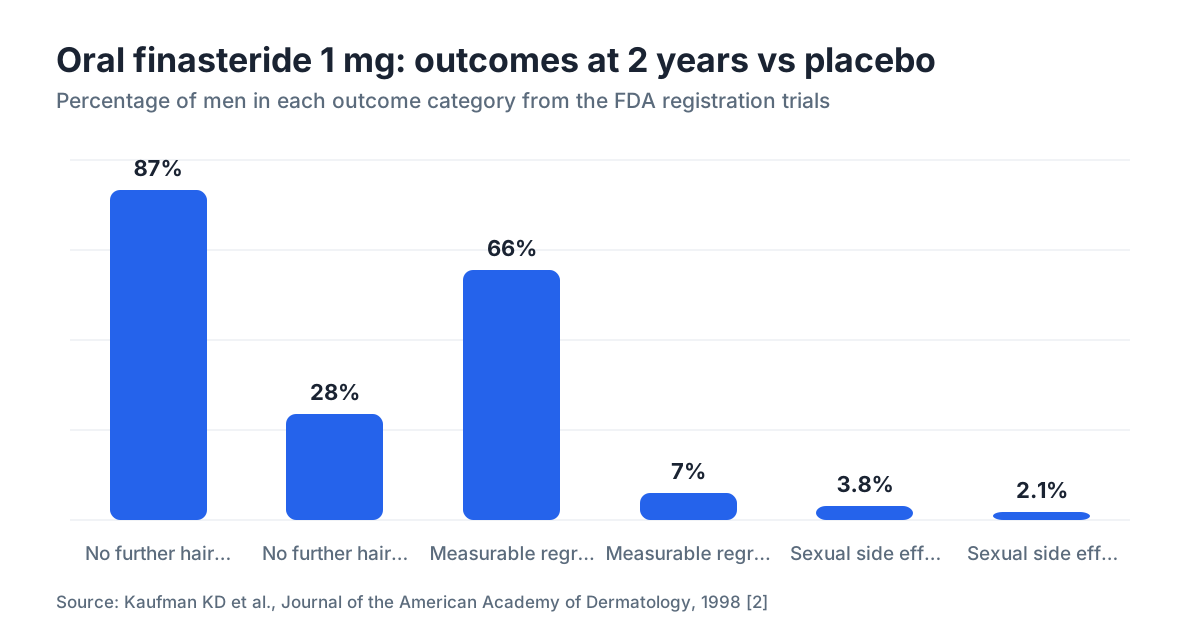
The numbers come from two large randomized controlled trials submitted to the FDA before approval. In men with mild to moderate vertex (crown) hair loss, 83 to 87% who took 1 mg finasteride daily had no further hair loss at two years, compared to roughly 28% on placebo. Hair count increased by a mean of about 107 hairs per square centimeter at two years in the finasteride group [2].
Regrowth is less universal than stabilization. About 66% of men see some measurable increase in hair count. A smaller fraction, maybe 30 to 40%, see cosmetically obvious improvement. The rest stabilize, which is still a meaningful win if you're watching your hairline move.
Front hairline results are weaker than crown results. The original trials focused on the vertex and mid-scalp. Frontal regrowth happens but is less predictable, and men with Norwood 5 or higher patterns tend to get less benefit than those at Norwood 2 to 4. Understanding where you are on the receding hairline scale helps set realistic expectations before you start.
One long-term extension study followed men for five years. About 48% maintained the improvement they had at two years, and 42% maintained baseline levels. Fewer than 10% showed net decline versus their pre-treatment baseline at five years [9]. Those numbers make a reasonable case for continuing the drug indefinitely if you tolerate it.
Finasteride does nothing if your follicles are completely scarred. That's why earlier is better. The drug is preserving, not resurrecting.
What is the right dosage of oral finasteride?
For hair loss the FDA-approved dose is 1 mg once daily [1]. You take it with or without food, same time each day. Missing a day isn't catastrophic, but inconsistent use reduces the cumulative DHT suppression that drives results.
The 5 mg Proscar tablet costs less per pill and some men cut it into quarters or fifths. Pharmacologically the 1 mg and the 1 mg fragment of a 5 mg pill are equivalent. Whether splitting tablets is the right call for you is a conversation for your prescriber, since tablet coatings and splitting accuracy vary.
Some dermatologists and hair restoration clinics now prescribe finasteride compounded into topical solutions or sprays, partly to reduce systemic exposure. The oral form is what carries 25-plus years of safety data. Topical finasteride is newer, with smaller trials, and a separate discussion. This article is about the oral pill specifically.
Higher doses, say 5 mg daily for hair loss, don't meaningfully outperform 1 mg in published comparisons and carry more side effect risk. There's no good reason to go above 1 mg for androgenetic alopecia.
What are the side effects of oral finasteride?
This is the question that stops most men from starting, and the numbers deserve honest unpacking.
In the two registration trials, sexual side effects (decreased libido, erectile dysfunction, reduced ejaculate volume) occurred in about 3.8% of finasteride users versus 2.1% in the placebo group [2]. That's a real difference but a small one in absolute terms. The trial data also showed that 58% of men who experienced sexual side effects saw them resolve while continuing the drug, and 100% resolved after stopping.
Post-finasteride syndrome (PFS) is a separate and disputed phenomenon: a subset of men report persistent sexual, cognitive, or mood symptoms after stopping finasteride, lasting months or years. The FDA added a label update in 2012 to include reports of persistent side effects [3]. The true incidence is unknown because it's based on voluntary adverse event reports, not controlled studies. Nobody has good prospective data on how common persistent effects are. Some advocacy groups document real cases of prolonged symptoms, while decades of use suggest most men take finasteride without long-term harm. Both things can be true.
The drug also carries a well-established risk of lowering PSA (prostate-specific antigen) levels by about 50%, which can mask early prostate cancer detection. The FDA label specifically says clinicians should double the measured PSA to account for this when monitoring patients [1].
Finasteride is absolutely contraindicated in pregnancy. Women who are or may become pregnant should not handle crushed or broken tablets; the drug can cause genital birth defects in male fetuses. Intact tablets have a film coating that prevents absorption through intact skin, but broken tablets don't [10].
Gynecomastia (breast tenderness or tissue growth) is rare but documented. The label lists it. If you notice breast changes, that's a reason to call your doctor, not wait.
Mental health effects including depression were added to the label following post-marketing reports. The causal evidence is weaker than for sexual side effects, but it's real enough that the FDA includes it [3].
| Side effect | Finasteride 1 mg (%) | Placebo (%) |
|---|---|---|
| Decreased libido | 1.8 | 1.3 |
| Erectile dysfunction | 1.3 | 0.7 |
| Ejaculation disorder | 1.2 | 0.7 |
| Any sexual side effect | 3.8 | 2.1 |
Source: FDA-approved Propecia prescribing information, 2012 [2]
How long does finasteride take to work?
Realistic timeline: you probably won't notice anything in the first two to three months. Some men get a temporary bump in shedding early on, similar to what happens with minoxidil, as follicles cycle out old miniaturized hairs to make room for new ones. This usually settles by month three or four.
Most men see measurable stabilization by month six. Visible cosmetic improvement, if it's going to happen, is usually apparent by month twelve. The studies that show the best regrowth numbers ran for two full years, and hair count kept improving between year one and year two [2].
If you've taken it faithfully for twelve months and your hair loss has continued at the same rate it was before you started, finasteride probably isn't working for you. That doesn't mean you're out of options. Combination therapy with oral minoxidil or topical minoxidil is the next logical step.
The drug only works while you take it. DHT levels return to normal within about two weeks of stopping, and hair loss typically resumes within six to twelve months. There's no 'loading up' benefit you keep. Think of it as maintenance medication, like a blood pressure pill.
Who is oral finasteride actually right for?
Men with androgenetic alopecia (male pattern baldness) who aren't planning to have children in the near term and who have no history of depression or sexual dysfunction that might be worsened by the drug. That's the core candidate.
Finasteride is FDA-approved only for men. It is not approved for women, and the evidence for women is much thinner. Postmenopausal women have been studied in small trials with modest results. Premenopausal women should generally not take it given the pregnancy risk. A dermatologist prescribing it off-label for a postmenopausal woman with female pattern hair loss is doing something within the range of reasonable practice, but that's a case-by-case clinical decision, not a general recommendation.
Younger men, say late teens to mid-20s, sometimes ask about it. There's no age cutoff in the label, but some clinicians are more cautious with very young patients given the question of long-term effects and the importance of sexual function at that life stage. Shared decision-making matters here.
If you're not sure what kind of hair loss you have, that matters. Finasteride does nothing for alopecia areata, telogen effluvium, or scarring alopecias. If your shedding pattern doesn't fit androgenetic alopecia, get a diagnosis before spending years on this drug. The what causes hair loss primer is a good place to start untangling the possibilities, and telogen effluvium explains the most common condition that gets mistaken for pattern loss.
Is oral finasteride better than topical minoxidil, or should you combine them?
Finasteride and minoxidil work through completely different mechanisms. Finasteride reduces DHT. Minoxidil is a vasodilator that extends the anagen (growth) phase of the hair cycle and appears to affect follicle potassium channels, though the full mechanism still isn't nailed down.
A randomized trial published in the Journal of the American Academy of Dermatology in 1999 compared finasteride 1 mg alone, minoxidil 2% alone, and the combination over twelve months. The combination beat either drug alone on hair count endpoints [4]. That's the core rationale for combination therapy, and the logic has held up in later smaller studies.
The practical question is which one to start with. If you can only afford or tolerate one, finasteride is generally the more potent option for pure stabilization. Minoxidil alone doesn't reduce DHT, so you're not touching the root hormonal driver. But minoxidil has no hormonal side effects, which makes it the easier starting point for people who are anxious about finasteride's profile.
The finasteride and minoxidil combination article goes much deeper on dosing strategies and trial data for the combo. For the side-effect picture on minoxidil specifically, minoxidil side effects is worth reading before you add it.
Oral minoxidil versus topical minoxidil is a separate choice inside the minoxidil question. Oral minoxidil at low doses (0.625 to 2.5 mg daily for men) has shown strong results in several recent open-label trials, with some researchers suggesting it beats topical on adherence since it's a single pill [5]. That said, it carries its own cardiovascular side effect profile. Read the oral minoxidil breakdown before combining.
If you're trying to figure out where you stand before committing to a treatment plan, MyHairline's free AI hair analysis at myhairline.ai/scan can help you identify your Norwood stage from photos, which at least gives you a cleaner starting point for the conversation with your doctor.
How much does oral finasteride cost and is it covered by insurance?
Generic finasteride 1 mg is widely available in the US. At most major pharmacy chains and through online services, the cash price with a GoodRx-type coupon runs roughly $20 to $40 for a 90-day supply, or about $0.22 to $0.45 per day. Brand-name Propecia is much more expensive, typically $60 to $90 per month, and there's no meaningful clinical reason to choose it over generic.
The 5 mg generic (Proscar) costs about the same or slightly less for a 30-count supply. If your doctor is comfortable with you cutting tablets, you can sometimes get a better per-dose price this way, though the math varies by pharmacy.
Insurance coverage is spotty. Most commercial plans classify finasteride for hair loss as cosmetic and don't cover it, even though the same molecule prescribed for BPH (at 5 mg) is frequently covered. If you're prescribed the 5 mg dose for an on-label BPH indication, coverage improves dramatically. Talk to your prescriber if cost is a barrier.
Telehealth hair loss services like Hims, Keeps, and others bundle a prescription plus delivery for roughly $20 to $40 per month, which is competitive with in-person pharmacy pricing once you factor in the cost of a dermatology visit.
What happens when you stop taking finasteride?
Hair loss resumes. That's the short answer, and it's the thing to understand before you start.
DHT levels return to baseline within one to two weeks of your last dose. Follicles that were in a protected state during treatment start the miniaturization process again. Most men who stop notice accelerated shedding within six to twelve months, and by eighteen to twenty-four months they're often back to where they'd have been had they never started, or sometimes worse, because the untreated pattern kept advancing in some follicles while they thought they were protected.
There is no 'taper off' strategy that meaningfully slows this rebound. Either you're suppressing DHT or you're not.
This is the main practical argument for combining finasteride with procedures like hair transplantation rather than treating them as alternatives. A transplant moves DHT-resistant donor follicles, which don't respond to DHT. Finasteride protects the native hair that remains. Many hair restoration surgeons recommend continuing finasteride after a transplant for exactly this reason. The hair transplant article covers how the two strategies interact.
What do doctors and dermatologists actually recommend?
The American Academy of Dermatology's guidelines list finasteride 1 mg daily as a first-line treatment for androgenetic alopecia in men, with a strength of recommendation of A (strong evidence) [6]. That's as high as the rating goes.
The AAD also notes that topical minoxidil is the only other A-rated treatment for men. Everything else, including supplements, low-level laser therapy, and platelet-rich plasma, has weaker evidence ratings.
Practicing dermatologists vary in how they handle the side effect conversation. Some give patients the full label rundown and let them decide. Others downplay risks they consider statistically small. Neither extreme is ideal. The honest position: the drug works for most men, carries real but low-probability sexual side effects that usually resolve, and carries a smaller, more contested risk of persistent symptoms that warrant a serious informed consent discussion.
If you have a history of depression or mood instability, many dermatologists will either avoid prescribing it or monitor more closely. Same with men who already have some degree of sexual dysfunction: adding a drug that has even a small chance of worsening it isn't a neutral decision.
A baseline PSA test before starting is reasonable if you're over 40, since the drug will suppress your PSA by roughly 50% going forward, changing your cancer screening baseline permanently while you're on it.
Are there alternatives to oral finasteride for people who can't or won't take it?
Yes, several. How good they are depends on your situation.
Topical minoxidil is the most common first alternative, and it works without any hormonal mechanism. It's available over the counter and the minoxidil for men guide covers application, dosing, and realistic outcomes in detail.
Oral minoxidil at low doses is an increasingly used alternative for people who want a pill without hormonal side effects. It's not FDA-approved for hair loss (it's approved for hypertension), so it's prescribed off-label, but the evidence base has grown a lot since 2020.
Dutasteride is a related 5-alpha-reductase inhibitor that blocks both type I and type II 5-alpha-reductase (finasteride only blocks type II). It suppresses DHT more completely, around 90% versus 70% for finasteride [7]. It's FDA-approved for BPH but not for hair loss in the US. It's approved for hair loss in Japan and South Korea. Off-label use for hair loss exists and there's reasonable evidence it beats finasteride for regrowth, but the side effect profile may be more pronounced.
Spironolactone is an antiandrogen used in women with androgenetic alopecia, typically off-label. It's not used in men for hair loss because of feminizing side effects.
Low-level laser therapy has mixed evidence and isn't directly comparable to medications. It won't produce the results finasteride does for most men, but it has a clean safety profile.
Hair transplantation is the option when medications haven't worked or aren't appropriate. It doesn't prevent future loss of native hair, which is why most surgeons still recommend continuing medication alongside it.
For anyone going down the supplement path hoping to avoid prescription drugs, the hair loss supplements article gives an honest look at what has even marginal evidence and what's mostly marketing.
What questions should you ask your doctor before starting?
A few that actually matter:
Is my hair loss pattern consistent with androgenetic alopecia? If there's any doubt, you want a diagnosis first. Scalp biopsy, pull test, or dermoscopy can help distinguish pattern loss from other causes.
Should I get a baseline PSA? If you're over 40, or if your family has a history of prostate cancer, you want a number on record before finasteride changes your benchmark.
What's your experience treating patients with sexual side effects from finasteride? A dermatologist who sees hair loss patients regularly should have an honest answer.
Am I a good candidate for combination therapy from the start? Some clinicians prefer starting with finasteride alone and adding minoxidil only if needed. Others start both at once. There's no single right answer, but you want the reasoning explained.
How will we measure whether it's working? Standardized photos every six months, global photography, or trichoscopy are more reliable than your own daily mirror check.
If you want to understand your Norwood stage better before that conversation, MyHairline's AI scan tool at myhairline.ai/scan gives you a starting framework from a photo, which you can then bring to a clinical appointment.
Sources
- FDA, Propecia (finasteride) prescribing information
- Kaufman KD et al., Journal of the American Academy of Dermatology, 1998; finasteride 1 mg registration trial data
- FDA Drug Safety Communication: finasteride label update, 2012
- Leyden J et al., Journal of the American Academy of Dermatology, 1999; finasteride plus minoxidil combination trial
- Randolph M, Tosti A; oral minoxidil review, Journal of the American Academy of Dermatology, 2021
- American Academy of Dermatology, Clinical Guidelines for Androgenetic Alopecia
- Bramson HN et al., Journal of Pharmacology and Experimental Therapeutics, 1997; dutasteride vs finasteride DHT suppression comparison
- FDA, Proscar (finasteride 5 mg) prescribing information
- Finasteride Male Pattern Hair Loss Study Group, New England Journal of Medicine, 1998
- National Institutes of Health, MedlinePlus: finasteride drug information