
TL;DR: Oral treatments for alopecia include finasteride and dutasteride for androgenetic alopecia, JAK inhibitors (baricitinib, deuruxolitinib) for alopecia areata, and low-dose oral minoxidil for both. Response rates vary widely by type: finasteride regrows hair in roughly 66% of men over two years, while baricitinib achieves meaningful regrowth in about 38% of severe alopecia areata patients. No oral treatment is a cure.
What is alopecia and which types respond to oral treatment?
Alopecia is a broad medical term for hair loss. It covers several distinct conditions that have different causes, different immune mechanisms, and very different responses to treatment. Getting this distinction right matters enormously, because the oral drug that works well for one type can be completely useless, or even harmful, for another.
The main types you'll encounter:
Androgenetic alopecia (AGA) is the most common form, affecting an estimated 50 million men and 30 million women in the United States alone [1]. It's driven by dihydrotestosterone (DHT), a hormone that progressively miniaturizes hair follicles. Oral 5-alpha reductase inhibitors like finasteride and dutasteride target this mechanism directly. Oral minoxidil works through a different, partially understood pathway that improves follicle blood flow and prolongs the anagen (growth) phase.
Alopecia areata (AA) is an autoimmune condition where the immune system attacks hair follicles. About 2% of the global population will develop it at some point [2]. It can appear as patchy loss, total scalp loss (alopecia totalis), or complete body hair loss (alopecia universalis). JAK inhibitors are now the main oral treatment advance for this type.
Telogen effluvium is diffuse shedding triggered by physical or emotional stress, illness, or nutritional deficiency. It generally resolves on its own. Oral treatments are rarely indicated unless there's an underlying deficiency driving it. You can read more about this condition in our article on telogen effluvium.
Traction alopecia and scarring alopecias typically require stopping the causative mechanical force or treating the underlying inflammatory skin disease. Oral treatments have limited roles here.
This article focuses on the first two types. They have the most clinically studied oral options and the most people actively searching for answers.
How does oral finasteride work for androgenetic alopecia?
Finasteride 1 mg daily is the FDA-approved oral treatment for male androgenetic alopecia. It was approved in 1997 under the brand name Propecia, and generic versions now cost as little as $10 to $30 per month depending on pharmacy and dosage source [3].
Finasteride works by inhibiting the type II 5-alpha reductase enzyme, which converts testosterone to DHT. Scalp DHT levels drop by roughly 60% within weeks of starting. Over time, follicles that were miniaturizing stabilize, and many partially miniaturized ones recover enough to produce visible hair again.
The five-year clinical trial published in the Journal of the American Academy of Dermatology found that 66% of men taking finasteride 1 mg daily showed increased hair count versus baseline, compared to continued loss in the placebo group [4]. About 48% of men showed visible improvement by investigator assessment at two years.
Two things matter for expectations. First, finasteride is much better at slowing or stopping loss than it is at regrowing what's already gone. Second, effects take time. Most men see meaningful change at 12 months, with peak benefit closer to two years. Stop taking it and the DHT-blocking effect disappears within days, with loss resuming over the following 9 to 12 months.
Finasteride is not FDA-approved for women, and it's contraindicated in women who are or may become pregnant because it can cause birth defects in male fetuses. That said, some dermatologists prescribe it off-label to postmenopausal women. The evidence is thinner here and the FDA label is explicit about the pregnancy risk.
For a deeper look at how finasteride compares to topical options, see our guide on finasteride.
Sexual side effects are the most discussed concern. The FDA label states that 3.8% of men in clinical trials reported decreased libido, erectile dysfunction, or ejaculation disorders versus 2.1% in the placebo group [3]. A smaller subset of men report persistent sexual dysfunction even after stopping (post-finasteride syndrome), though this remains contested in the medical literature. Any man who has sexual side effects should talk to his prescribing doctor right away.
Dutasteride inhibits both type I and type II 5-alpha reductase and reduces scalp DHT by around 90%. It's not FDA-approved for hair loss in the US, though it is approved for this indication in South Korea and Japan. Some US dermatologists prescribe it off-label, often at 0.5 mg daily. Head-to-head trials show consistently greater hair count increases with dutasteride than finasteride, but the side effect profile is broadly similar and the package insert carries the same pregnancy contraindication [5]. For more context on how DHT-blocking drugs work as a class, see dht blocker.
What is oral minoxidil and how is it different from the topical version?
Oral minoxidil is a low-dose version of a blood pressure drug that has become one of the more interesting off-label treatments in dermatology over the past decade. The topical form (2% and 5% solutions, 5% foam) is FDA-approved for hair loss and widely available over the counter. Oral minoxidil for hair loss is off-label in most countries, typically used at doses of 0.25 mg to 5 mg daily, far below the 10 to 40 mg doses used for hypertension.
A 2022 retrospective study published in the Journal of the American Academy of Dermatology Innovations reviewed 1,404 patients taking low-dose oral minoxidil and found that 79% experienced meaningful improvement in hair density across a range of hair loss diagnoses including AGA, alopecia areata, and others [6]. The most commonly used dose was 1 mg in women and 2.5 mg in men.
Why would someone choose oral over topical? Consistency is the honest answer. Topical minoxidil requires twice-daily application, leaves residue, and compliance tends to drift. A once-daily pill is simpler. Some patients also get better systemic coverage for diffuse loss patterns.
The trade-off is a different side effect profile. The most common issue is hypertrichosis, meaning unwanted hair growth on the face or body, reported in roughly 15 to 20% of patients at doses of 2.5 mg or higher [6]. Fluid retention is possible. Blood pressure effects are generally modest at low doses but need monitoring, especially in anyone with cardiovascular history. Prescribers typically check blood pressure at baseline and periodically after.
For a complete breakdown of how oral minoxidil compares to topical and what the side effect rates look like in practice, see oral minoxidil. For the topical version's side effect profile specifically, see minoxidil side effects.
Combining oral minoxidil with finasteride has become a popular approach. The two work through entirely different mechanisms, so combining them doesn't duplicate effects. Several small studies suggest additive benefit. We cover this combination in detail at finasteride and minoxidil.
What oral treatments are FDA-approved for alopecia areata?
This is where the field has genuinely changed. For decades, alopecia areata had no FDA-approved systemic treatment and patients relied on intralesional corticosteroid injections, topical immunotherapy, or broad immunosuppressants used off-label. That changed in 2022 and 2023 with the approval of two JAK (Janus kinase) inhibitors.
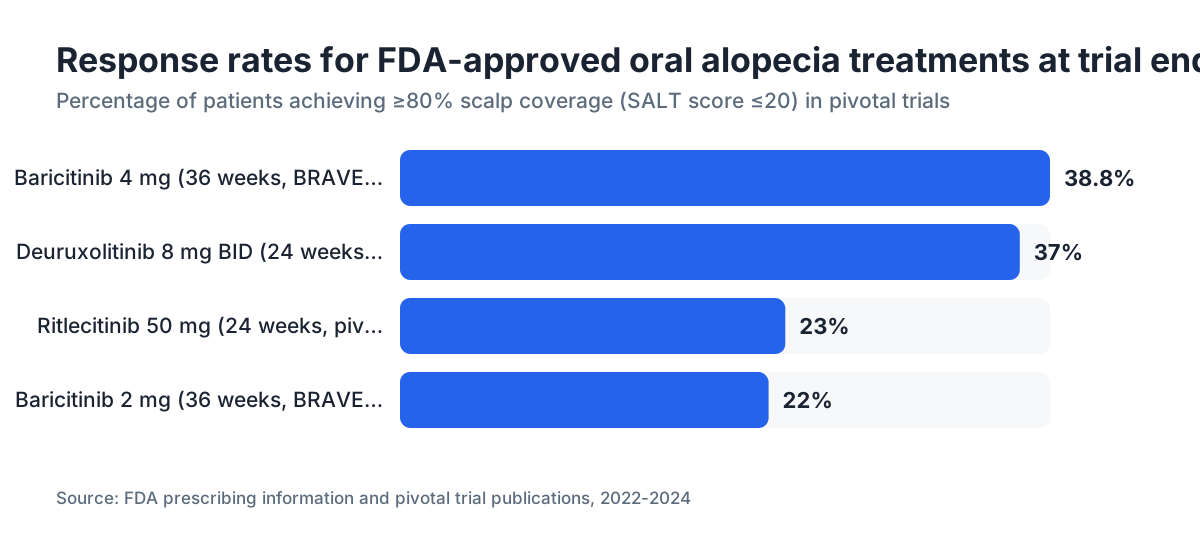
Baricitinib (Olumiant) was approved by the FDA in June 2022 specifically for severe alopecia areata, making it the first drug ever approved for the condition in the United States [7]. It's a JAK1/JAK2 inhibitor. In the BRAVE-AA trials, 38.8% of patients taking 4 mg daily achieved a SALT (Severity of Alopecia Tool) score of 20 or lower, meaning 80% or more scalp coverage, after 36 weeks. That's a real response in a population where many had been bald for years.
The FDA approved baricitinib with a boxed warning covering serious infections, malignancy, and major adverse cardiovascular events, consistent with other JAK inhibitors. Patients need to be screened for tuberculosis and should not be on live vaccines during treatment [7].
Ruxolitinib (Opzelura) is a JAK1/JAK2 inhibitor approved by the FDA in September 2022 for alopecia areata, though its approved form for this indication is a topical cream (1.5%), not an oral. The oral form of ruxolitinib (Jakafi) is approved for other conditions, and some dermatologists use it off-label for severe alopecia areata.
Deuruxolitinib (Leqselvi) received FDA approval in June 2024 for adults with severe alopecia areata, becoming the second oral JAK inhibitor specifically approved for the condition [8]. In the THRIVE-AA1 and THRIVE-AA2 trials, roughly 30 to 40% of patients on the 8 mg twice-daily dose achieved 80% or more scalp coverage at 24 weeks.
These are not cheap drugs. Baricitinib lists at over $24,000 per year at US retail prices before insurance and manufacturer copay assistance programs. Insurance coverage requires meeting severity criteria and often prior authorization.
| Drug | FDA approval for AA | Dose | Response rate (SALT ≤20 at trial endpoint) | Boxed warning |
|---|---|---|---|---|
| Baricitinib (Olumiant) | June 2022 | 2 mg or 4 mg daily | 38.8% (4 mg, 36 weeks) | Yes (JAK class) |
| Deuruxolitinib (Leqselvi) | June 2024 | 8 mg twice daily | ~35-40% (24 weeks) | Yes (JAK class) |
| Ruxolitinib oral (Jakafi) | Not approved for AA | Varies (off-label) | Modest data, no AA approval | Yes (JAK class) |
| Tofacitinib oral | Not approved for AA | Off-label | Case series, variable | Yes (JAK class) |
Are there other oral drugs used off-label for alopecia areata?
Before JAK inhibitors arrived, dermatologists used several other systemic drugs off-label for moderate to severe alopecia areata. Some are still used, particularly when cost or access is a barrier.
Oral corticosteroids (prednisone, prednisolone, dexamethasone) can trigger regrowth in a high proportion of patients, but hair often falls out again when the drug stops. Long-term use causes well-documented serious side effects including osteoporosis, weight gain, glucose intolerance, and adrenal suppression. A pulsed-dose approach (dexamethasone 5 mg twice weekly, for example) has been used to try to reduce cumulative steroid burden, with response rates reported in the 40 to 60% range in smaller studies. No large randomized controlled trial confirms this.
Oral tofacitinib is a JAK1/JAK3 inhibitor approved for rheumatoid arthritis and other autoimmune conditions. Case series and small open-label studies showed meaningful hair regrowth in some alopecia areata patients. Response rates in published case series ranged from 50 to 77% but these were small, uncontrolled, and likely overestimate real-world benefit. The FDA has not approved it for alopecia areata.
Methotrexate is an immunosuppressant used off-label, sometimes in combination with oral steroids. The evidence is largely from retrospective studies and case reports. It requires regular blood monitoring for liver toxicity and cytopenias.
Oral spironolactone is used in women with androgenetic alopecia, not alopecia areata. It works by blocking androgen receptors and reducing circulating androgens. It's not FDA-approved for hair loss but is commonly prescribed off-label by dermatologists at doses of 50 to 200 mg daily for female pattern hair loss. It causes birth defects and is contraindicated in pregnancy. It also causes hyperkalemia in some patients, so potassium and kidney function need monitoring. For context on female hair loss causes more broadly, see what causes hair loss.
None of these off-label options should be started without close medical supervision. The bar for a dermatologist to prescribe them has generally risen now that FDA-approved JAK inhibitors exist for AA specifically.
How do doctors decide which oral treatment to prescribe?
This is rarely as straightforward as it looks from the outside. A dermatologist isn't just matching a drug to a diagnosis name. They're looking at the type of alopecia, its extent, duration, rate of progression, the patient's age and sex, pregnancy status, cardiovascular and metabolic health, and what the patient is willing to tolerate in terms of monitoring and side effects.
For androgenetic alopecia in men, finasteride is almost always the first oral option considered. If it's not working after 12 months or the patient is intolerant, dutasteride off-label or oral minoxidil gets added or substituted. Many dermatologists now start oral minoxidil at very low doses (0.625 to 1.25 mg) alongside finasteride right away for faster results, though the combined approach adds monitoring complexity.
For women with AGA, finasteride and dutasteride are used off-label. Spironolactone is probably more commonly prescribed in premenopausal women because the androgen-blocking mechanism suits the typical hormonal picture and the contraceptive co-prescription requirement (women taking spironolactone are generally advised to use contraception) is more straightforward than finasteride's teratogenicity management. Oral minoxidil at 1 mg is increasingly popular for women.
For alopecia areata, severity drives the decision. Patchy AA affecting less than 50% of the scalp may be managed with intralesional steroids or topical approaches first. If it's progressing, extensive, or the patient has alopecia totalis or universalis, systemic treatment gets considered. The JAK inhibitors are now first-line for severe or rapidly progressing disease in adults, though the cost and monitoring burden are real factors.
A scalp biopsy and blood panel (CBC, metabolic panel, thyroid function, ferritin, testosterone, DHEA-S in women) often precede the prescription to confirm diagnosis and rule out contributing systemic causes.
If you're tracking your hairline progression and want a baseline to show your doctor, the free AI analysis at MyHairline can give you an objective read on your Norwood or Ludwig stage from a photo before your appointment.
What are realistic response rates and timelines across oral treatments?
Honest expectations matter here. Every oral alopecia treatment takes months to show effect, and none regrows hair in every patient.
| Treatment | Condition | Typical onset of visible effect | Response rate (study) | Key limitation |
|---|---|---|---|---|
| Finasteride 1 mg | Male AGA | 6-12 months | 66% increased hair count at 5 years [4] | Reverses on stopping; sexual side effects |
| Dutasteride 0.5 mg | Male AGA (off-label) | 6-12 months | Greater than finasteride in head-to-head trials [5] | Not FDA-approved for hair loss in US |
| Oral minoxidil 1-2.5 mg | AGA, AA, others | 3-6 months | 79% meaningful improvement in retrospective study [6] | Off-label; hypertrichosis common |
| Spironolactone 100-200 mg | Female AGA (off-label) | 6-12 months | ~40-50% in observational studies | Not FDA-approved; contraindicated in pregnancy |
| Baricitinib 4 mg | Severe AA | 16-36 weeks | 38.8% SALT ≤20 at 36 weeks [7] | Boxed warning; high cost |
| Deuruxolitinib 8 mg BID | Severe AA | 12-24 weeks | ~35-40% SALT ≤20 at 24 weeks [8] | Boxed warning; recent approval |
| Oral tofacitinib | Severe AA (off-label) | 12-24 weeks | Variable, case series only | Not FDA-approved for AA |
| Oral corticosteroids | AA (off-label) | 4-12 weeks | 40-60% pulsed regimens (small studies) | High relapse rate; serious long-term side effects |
One pattern shows up across all these treatments. The patients with the worst disease at baseline tend to have the lowest response rates. Someone with alopecia universalis (total body hair loss for over five years) is much harder to treat than someone with a new-onset 3 cm patch.
Another honest point: most of these studies measure response at the end of a trial period, not durable remission. With JAK inhibitors especially, early data suggests hair loss often returns when treatment stops. Long-term open-label extensions are ongoing but we don't yet have five-year durability data comparable to what exists for finasteride.
What are the main side effects of oral alopecia treatments?
Every oral treatment for alopecia carries some risk, and the severity of those risks varies a lot.
Finasteride's most talked-about side effects are sexual: decreased libido, erectile dysfunction, and reduced ejaculate volume. The FDA label reports these in 3.8% of men versus 2.1% on placebo [3]. They typically resolve on stopping the drug, but persistent symptoms after discontinuation (post-finasteride syndrome) are reported by a small number of patients. Finasteride also decreases PSA levels by about 50%, which can mask prostate cancer screening results. Any man over 40 should make sure his doctor knows he's on finasteride before a PSA test.
Dutasteride carries a similar sexual side effect profile, plus a longer half-life (about five weeks versus six to eight hours for finasteride), which means side effects, if they occur, take longer to clear after stopping.
Oral minoxidil's main issues are hypertrichosis (unwanted facial/body hair in 15-20% of patients, more common in women at higher doses), fluid retention, and palpitations or rapid heart rate. Rare but serious: pericardial effusion has been reported at higher antihypertensive doses. At low hair-loss doses this appears uncommon, but it's why prescribers check baseline blood pressure and cardiac history [6].
Spironolactone can raise blood potassium (hyperkalemia), lower blood pressure, cause irregular periods in premenopausal women, and cause breast tenderness. Baseline and periodic potassium and kidney function testing is standard.
JAK inhibitors carry the most serious warning labels in this group. The FDA requires a boxed warning on all JAK inhibitors covering increased risk of serious infections (including tuberculosis reactivation, herpes zoster, opportunistic infections), malignancy (including lymphoma), major adverse cardiovascular events (heart attack, stroke), and thrombosis [7]. These risks are drawn partly from data in rheumatoid arthritis patients who are older and have more comorbidities than typical alopecia areata patients, and the absolute magnitude in the younger AA population may be lower. But the warnings are real and pre-treatment screening is mandatory.
Oral corticosteroids at any sustained dose risk bone density loss, glucose dysregulation, weight gain, cataracts, hypertension, and adrenal suppression. They are used sparingly and for short periods.
Can women use oral treatments for hair loss?
Yes, several oral treatments are used in women, but the FDA-approval picture is different and the prescribing logic changes based on menopausal status and plans for pregnancy.
Oral minoxidil at low doses (typically 1 mg daily) has the best tolerability profile for women and works across multiple hair loss types. It's the off-label option most dermatologists are comfortable starting in women of reproductive age, provided there are no cardiovascular contraindications.
Spironolactone is probably the most commonly prescribed oral treatment for premenopausal women with androgenetic alopecia in the US. It's not FDA-approved for hair loss, but it has decades of use in dermatology. The standard recommendation is to use reliable contraception alongside it.
Finasteride and dutasteride are sometimes prescribed to postmenopausal women. A 2000 study of 137 postmenopausal women published in the Journal of the American Academy of Dermatology found no significant benefit from finasteride 1 mg versus placebo, which is consistent with what the FDA label reflects [4]. Dutasteride may perform better in postmenopausal women because of its broader DHT suppression, but the evidence base is thin.
For women with alopecia areata, baricitinib and deuruxolitinib are approved regardless of sex, with the same boxed warnings and monitoring requirements. Pregnancy is a contraindication for JAK inhibitor use.
One thing that gets underappreciated: iron deficiency is a common and correctable contributor to diffuse hair loss in women, and no oral hair drug will work well on top of a ferritin level below 30 ng/mL. Checking and correcting nutritional status before or alongside a prescription drug is worth doing.
How do oral treatments compare to topical and surgical options?
Oral treatments are not automatically superior to topical ones. They're a different delivery method with different systemic exposure, different side effect profiles, and sometimes different efficacy.
For AGA, the classic comparison is oral finasteride versus topical minoxidil. Finasteride addresses the hormonal cause and tends to be better at the crown and mid-scalp. Topical minoxidil works better at maintaining and modestly thickening existing hair across the entire scalp. Many dermatologists and patients find combining them more effective than either alone, which is why finasteride and minoxidil as a combination has strong real-world adoption.
Oral minoxidil versus topical minoxidil is a compliance versus side effect trade-off. Topical stays local (though some does get absorbed systemically). Oral is more convenient but causes more systemic effects including hypertrichosis.
Hair transplant surgery is a permanent structural solution, not a drug. It moves existing DHT-resistant follicles from the back of the scalp to thinning areas. It doesn't stop ongoing AGA progression elsewhere, which is why most surgeons recommend continuing oral finasteride post-transplant to protect non-transplanted native hair. See hair transplant for a full breakdown of cost, candidacy, and technique differences.
For alopecia areata, topical options (corticosteroids, topical JAK inhibitors like ruxolitinib cream) work well for localized patches. Oral or systemic treatment becomes necessary when loss is extensive, progressing, or not responding to topical approaches.
Supplements sit in a different category. Biotin, saw palmetto, marine collagen, and various vitamins are marketed heavily for hair loss. The evidence for most is weak. Saw palmetto has some DHT-inhibiting properties in vitro but no strong clinical trial data. Biotin deficiency can cause hair loss but supplementing beyond what food provides doesn't help if you're not deficient. Our guide on hair loss supplements covers the evidence levels for each.
If you want to track whether a treatment is working over time, having baseline photos with consistent angle and lighting is invaluable. A tool like the free AI scan at MyHairline gives you an objective stage assessment you can compare at 6 and 12 months.
What does oral treatment cost and will insurance cover it?
Cost varies enormously depending on whether the drug is brand-name or generic, and whether insurance treats hair loss as cosmetic or medical.
Generic finasteride 1 mg runs approximately $10 to $30 per month at major US pharmacies, and often less with discount programs like GoodRx. This makes it one of the cheapest chronic treatments in dermatology.
Generic dutasteride 0.5 mg (originally Avodart, approved for BPH) costs roughly $15 to $50 per month. It's frequently covered by insurance when prescribed for BPH but coverage for off-label hair loss use is spotty.
Oral minoxidil is inexpensive. Generic minoxidil tablets (originally 10 mg antihypertensive) cut or compounded down to 1 to 2.5 mg doses cost around $10 to $20 per month. Some compounding pharmacies offer pre-dosed capsules for similar prices.
Spironolactone generic runs about $10 to $30 per month.
JAK inhibitors are where cost becomes a serious barrier. Baricitinib (Olumiant) 4 mg lists at over $2,000 per month, though the manufacturer (Eli Lilly) offers a copay assistance card that can bring patient costs to $0 for commercially insured patients who qualify. Medicare and Medicaid coverage is less predictable. Prior authorization is almost universal, requiring documentation of disease severity.
Deuruxolitinib (Leqselvi, from Sun Pharmaceutical) has a similar price range and similar manufacturer assistance programs.
Insurance coverage for AGA drugs is generally poor. Finasteride for male pattern baldness is often classified as cosmetic and not covered. Finasteride or dutasteride prescribed for BPH (if the patient also has BPH) may be covered. Alopecia areata, especially severe disease, has better coverage odds because it's clearly a medical diagnosis, but this varies significantly by insurer and plan.
Are there any new oral treatments in clinical trials?
The pipeline for alopecia treatments is more active now than it has been in decades, largely driven by the AA space.
Several additional JAK inhibitors are in Phase 2 and Phase 3 trials for alopecia areata. Povorcitinib (INCB054707) from Incyte is in Phase 3 trials and showed promising early response rates. Litfulo (ritlecitinib, a JAK3/TEC inhibitor) was approved by the FDA in June 2023 for severe alopecia areata in adults and adolescents aged 12 and older, making it the first approved treatment for the adolescent age group [9]. It's an oral capsule at 50 mg once daily.
For androgenetic alopecia, the pipeline is thinner. Clascoterone (Winlevi) is a topical androgen receptor inhibitor approved for acne, and oral androgen receptor antagonists are being studied for AGA, but no oral version has reached late-stage trials specifically for hair loss as of mid-2026.
Research into prostaglandin analogs, Wnt pathway activators, and stem cell approaches continues but most remains preclinical or early-phase.
The AAD maintains a regularly updated summary of alopecia areata treatment guidelines that reflects where the field consensus sits [10]. For the most current trial enrollment options, the NIH's ClinicalTrials.gov database is the reliable public resource [11].
One area generating interest is combination JAK inhibitor plus oral minoxidil regimens for severe AA with prolonged disease, on the theory that opening follicles with the JAK inhibitor and then stimulating growth with minoxidil could improve regrowth depth. Clinical trial data on this is not yet mature.
Sources
- American Academy of Dermatology (AAD), Hair loss statistics
- National Alopecia Areata Foundation, About alopecia areata
- FDA, Propecia (finasteride) prescribing information
- Kaufman et al. (1998), Journal of the American Academy of Dermatology: 5-year finasteride trial
- Zhou et al. (2019), Journal of the American Academy of Dermatology: dutasteride versus finasteride meta-analysis
- Vañó-Galván et al. (2022), JAAD Innovations: Low-dose oral minoxidil retrospective study of 1,404 patients
- FDA, Olumiant (baricitinib) prescribing information and approval announcement
- FDA, Leqselvi (deuruxolitinib) approval announcement, June 2024
- FDA, Litfulo (ritlecitinib) approval announcement, June 2023
- AAD, Alopecia areata: diagnosis and treatment
- NIH ClinicalTrials.gov, Alopecia areata trial registry