
TL;DR: Most clinics start you on 3 to 4 sessions spaced 4 to 6 weeks apart, then move to one maintenance session every 6 to 12 months. A 2019 systematic review found meaningful hair density improvements in the majority of androgenetic alopecia patients, but results vary a lot by patient, provider, and PRP preparation method. No protocol is universally standardized.
What is PRP therapy for hair loss and how does it work?
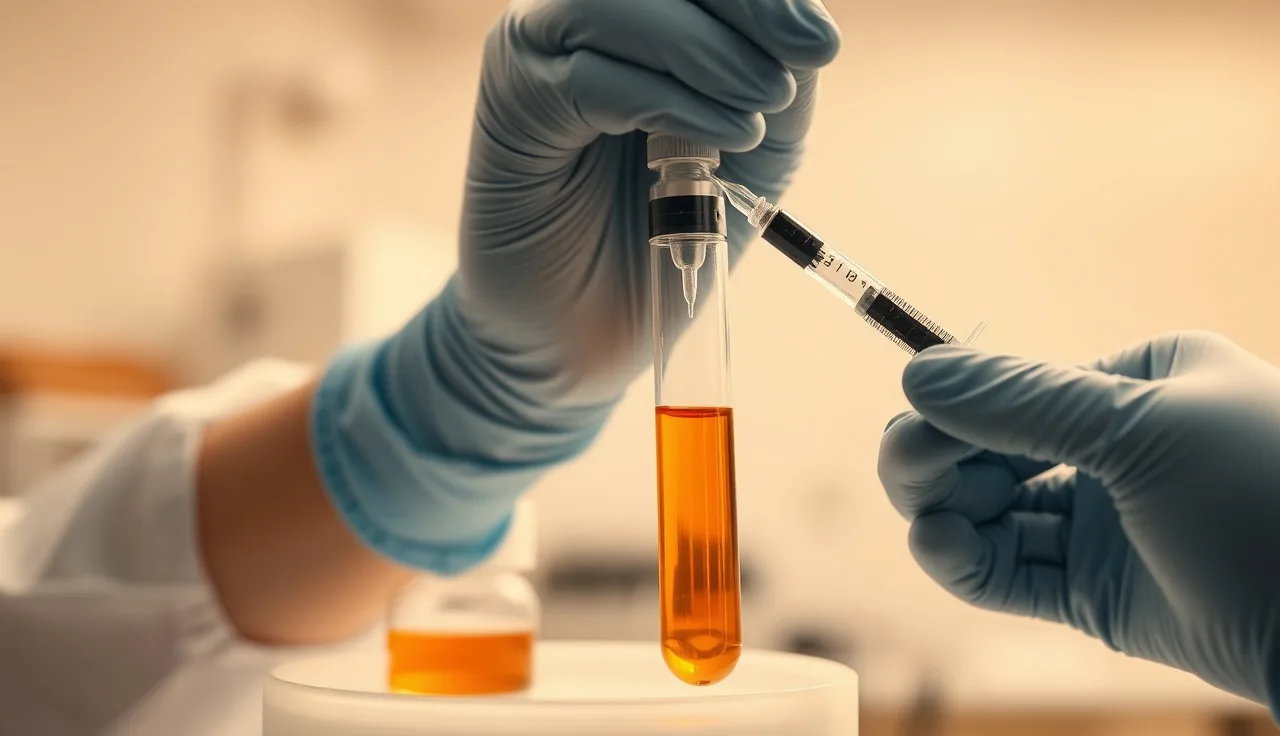
Platelet-rich plasma (PRP) therapy takes a small sample of your own blood, spins it in a centrifuge to concentrate the platelets, then injects that concentrate into your scalp where hair is thinning or receding. The idea is that platelets carry growth factors, including platelet-derived growth factor (PDGF), vascular endothelial growth factor (VEGF), and transforming growth factor beta (TGF-b), that may wake up dormant follicles and stretch out the anagen (growth) phase of the hair cycle [1].
It is not a drug. The FDA has cleared the centrifuge devices used to prepare PRP as Class II medical devices, but PRP itself is an autologous (your own cells) biologic and is not FDA-approved to treat any specific condition, hair loss included [2]. That gap matters. It means the clinical protocols are not standardized the way a drug label would be.
Each session takes roughly 60 to 90 minutes, most of it spent waiting on the centrifuge. The injections sting but are tolerable with a topical anesthetic.
PRP is used most often for androgenetic alopecia (male and female pattern baldness) and has some evidence behind it for telogen effluvium. It is not a substitute for a hair transplant once follicles have already died, and it is not a cure. It works best when there are still living, miniaturized follicles to stimulate.
How many PRP sessions does the research actually recommend?
The honest answer: there is no single agreed protocol, and that is a real weakness of the current evidence.
The most studied and commonly used schedule is 3 to 4 sessions, each separated by 4 to 6 weeks, followed by maintenance every 6 to 12 months. A 2019 systematic review published in Aesthetic Plastic Surgery analyzed 11 studies covering 262 patients and found that most protocols using 3 or more initial sessions produced statistically significant increases in hair density and thickness compared to baseline [1]. Protocols using fewer than 3 sessions tended to show weaker, less consistent results.
A 2023 meta-analysis in the Journal of Dermatological Treatment pooled 19 randomized controlled trials and concluded: "PRP treatment significantly increased hair density, hair thickness, and hair growth compared to placebo," with the strongest effects at the 3-month mark after finishing the initial series [3].
Some high-volume dermatology practices run monthly sessions for 6 months before switching to maintenance. A few academic protocols, particularly for female pattern hair loss, tested monthly injections for 3 months then reassessed. The variation comes down to a handful of variables:
- PRP concentration (platelet counts vary 2-fold to 9-fold across preparation methods)
- Injection depth and scalp coverage
- Activation method (calcium chloride vs thrombin vs no activator)
- Patient baseline severity
Practical planning: budget for 3 to 4 initial sessions. If a clinic pushes more than 6 sessions in the first year before any reassessment, ask to see the evidence for that specific protocol.
How long between PRP sessions, and when do you see results?
The 4-to-6-week spacing is not arbitrary. Hair follicles cycle slowly, and the growth factors released after each injection are thought to work over a window of roughly 4 to 8 weeks. Packing sessions closer together (every 2 weeks, say) has not been shown to work better. It just costs more [1].
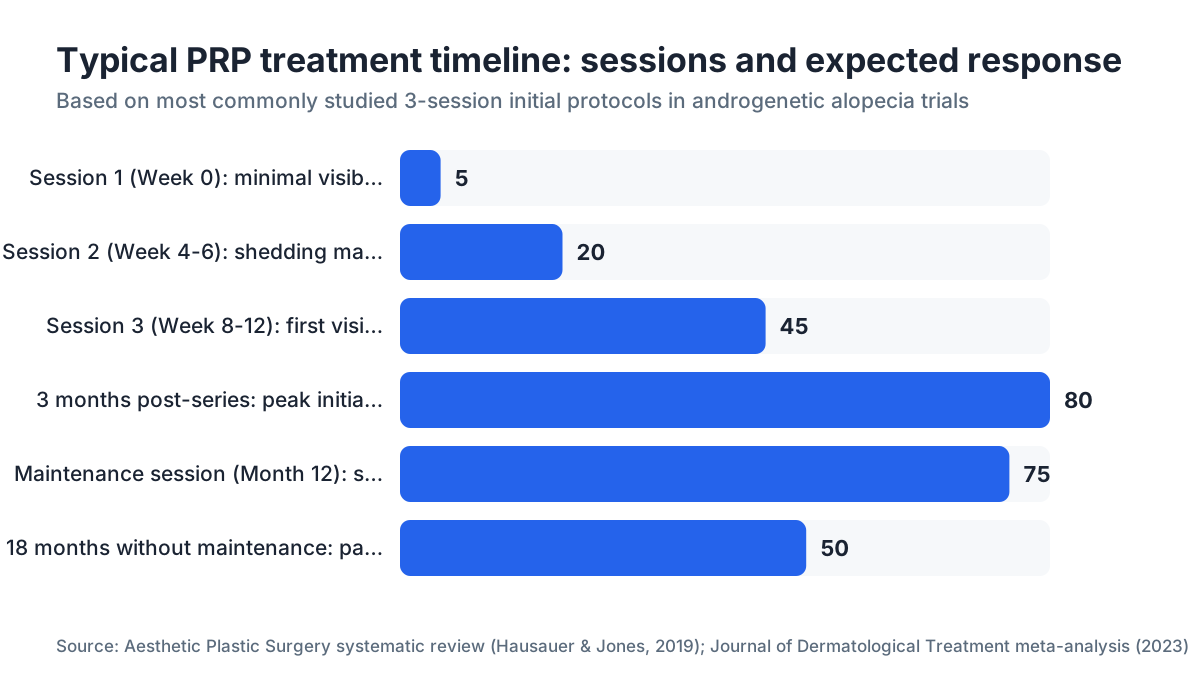
Results are slow. Most patients notice nothing until after their second or third session, and the clearest improvement usually shows up 3 to 6 months after the first injection, which tracks with a full anagen cycle.
The timeline most practitioners describe:
| Timepoint | What to expect |
|---|---|
| After session 1 | Scalp feels fuller to the touch for some patients; no visible density change yet |
| After session 2 (4-6 wks) | Shedding may slow; some patients notice reduced hair fall |
| After session 3 (8-12 wks) | First visible density improvement in responsive patients |
| 3-6 months post-series | Peak initial response; assessable with photos or dermoscopy |
| 12 months | Maintenance session due for most protocols |
Patients who see no measurable change after a full 3-session course plus a 3-month wait are unlikely to be strong responders. Paying for more sessions past that point, with no objective assessment, is probably wasted money.
Does PRP actually work, and what does the evidence show?
The evidence is genuinely encouraging but not home-run definitive. Most trials are small, protocols vary so much that pooling results is hard, and clean placebo controls are tough to run (a saline scalp injection is a reasonable control, but the needle itself may cause minor mechanical stimulation).
The most cited positive findings:
- A 2017 randomized controlled trial in the International Journal of Trichology found that androgenetic alopecia patients who got 3 PRP sessions had significantly greater increases in hair count per square centimeter than the placebo group at 6 months [4].
- A 2022 systematic review noted moderate-quality evidence for PRP improving hair density in androgenetic alopecia, with the caveat that "standardization of PRP preparation and injection protocols is needed before definitive conclusions can be drawn" [5].
What PRP reliably does not do: it does not regrow hair where follicles are completely dead (end-stage scarring alopecia), and it does not match a hair transplant in patients at advanced Norwood stages (V and above). For those patients, PRP is sometimes used as a post-transplant add-on to improve graft survival, not as a standalone fix.
Who responds best? Current data points to patients earlier in their hair loss, with miniaturized follicles still present (confirmed by trichoscopy or scalp biopsy), and under age 50. Smokers and patients with platelet disorders tend to respond poorly [1][4].
If you want to track real progress instead of squinting at your mirror, the free AI hair scan at MyHairline gives you a consistent baseline before you start and a comparison point at 3 and 6 months. That beats bathroom lighting.
How much do PRP hair loss sessions cost, and is it covered by insurance?
PRP for hair loss counts as cosmetic to virtually every US insurer, so it is not covered. You pay out of pocket every time.
Costs swing by geography, provider type (plastic surgeon vs dermatologist vs med spa), and the PRP kit used. The realistic US range is $400 to $1,500 per session [6]. Most patients in major metro areas pay $700 to $900. Some practices offer package pricing on the initial 3-session series, knocking 10 to 20 percent off the per-session rate.
Over a 2-year horizon (3 initial sessions plus 2 annual maintenance sessions), total out-of-pocket cost commonly lands between $3,000 and $6,000.
Compare that to finasteride (a DHT-blocking pill with strong level-1 evidence for androgenetic alopecia) at $10 to $60 per month depending on brand vs generic, and topical minoxidil for men at $20 to $50 per month. Neither needs clinic visits. PRP is not a replacement for those if cost efficiency is your priority; many patients run PRP alongside them as an add-on [7].
If you are looking at PRP mainly because you are worried about minoxidil side effects or want to skip daily medication, that is a legitimate reason to consider it. Just know the evidence base for finasteride and minoxidil is a good deal stronger than for PRP [7][8].
What are the side effects and risks of PRP scalp injections?
Because PRP uses your own blood, the immune reaction risk is very low. You cannot be allergic to your own platelets.
The most common side effects, reported across most trials:
- Pain and pressure during injection (most patients rate this 3 to 5 out of 10 with no anesthetic; lower with topical numbing cream)
- Scalp tenderness for 24 to 72 hours after
- Temporary swelling, redness, or bruising at injection sites
- Mild headache the same day
Serious complications are rare but documented: infection at the injection site (very uncommon with sterile technique), and injury to blood vessels if an untrained provider does the injecting.
The American Academy of Dermatology does not flag PRP for significant serious safety concerns when a trained provider performs it, but it notes efficacy evidence is still evolving [5].
One thing to check: if you take blood thinners (warfarin, newer oral anticoagulants), NSAIDs, or high-dose fish oil, tell your doctor before your session. These can affect platelet function and possibly cut PRP efficacy [4].
Calcium chloride and other activators sometimes added to PRP are generally regarded as safe at the concentrations used. Some providers skip activation entirely, and the evidence does not clearly favor one approach over the other.
How does PRP compare to finasteride and minoxidil for hair loss?
This is probably the most useful question to answer before spending money, and the answer is not flattering to PRP.
Finasteride (1 mg/day oral) has decades of randomized controlled trial data and FDA approval specifically for male androgenetic alopecia. Studies consistently show hair count increases of 10 to 15 percent over baseline at 2 years, with 83 percent of men maintaining or increasing hair count vs placebo [8]. It works continuously as long as you take it. The tradeoff is potential sexual side effects, which hit a small share of users. Our full write-up on finasteride covers it.
Minoxidil 5% topical has FDA approval for male and female pattern baldness and shows roughly 20 to 25 percent improvement in hair count at 12 months in controlled trials. Oral minoxidil at low doses (0.25 to 2.5 mg/day for women, up to 5 mg for men) has growing evidence too.
PRP sits in a different category: no FDA approval for hair loss, smaller and less standardized trials, and a much higher yearly cost. It has one genuine advantage. It is a procedure, not a daily pill. Patients who are poor candidates for oral DHT blockers (women of childbearing age cannot take finasteride) or who want to avoid systemic medication have a real reason to consider it.
Combination therapy is where the data gets interesting. A 2020 study in Dermatologic Surgery found that PRP plus minoxidil beat either alone at 12 months in patients with early androgenetic alopecia [9]. The finasteride and minoxidil combination is already the most evidence-backed medical approach; adding PRP on top is reasonable for patients who can afford it and want every tool on the table.
| Treatment | FDA approved for hair loss | Evidence level | Annual cost (est.) | Requires clinic |
|---|---|---|---|---|
| Finasteride 1mg (generic) | Yes (men) | Level 1 RCTs | $120-$720 | No |
| Minoxidil 5% topical | Yes | Level 1 RCTs | $240-$600 | No |
| Oral minoxidil | No (off-label) | Growing RCT data | $120-$360 + visits | Prescription only |
| PRP | No | Moderate RCTs | $2,000-$4,500+ | Yes |
| Hair transplant | N/A (surgical) | High for appropriate candidates | $4,000-$15,000 one-time | Yes |
Who is a good candidate for PRP hair loss treatment?
Not everyone benefits equally, and a few patient types are likely throwing money away.
Good candidates tend to be:
- Men and women with androgenetic alopecia at Norwood I through IV (or Ludwig I through II in women), where living follicles are still present and active [1][4]
- Patients with diffuse thinning or a receding hairline who show miniaturization on dermoscopy
- People who want to avoid or cannot tolerate systemic medications
- Patients trying to improve results after a hair transplant (PRP is sometimes used to lift graft survival in the weeks after surgery)
Poor candidates include:
- Patients with end-stage hair loss (Norwood V through VII) where follicles are gone
- Anyone with active scalp infection, clotting disorders, or certain autoimmune conditions
- Smokers (smoking impairs platelet function, which likely cuts growth factor release)
- People on anticoagulant therapy without physician clearance
- Patients expecting results equivalent to a surgical hair transplant
Not sure where you fall? A trichoscopy by a board-certified dermatologist is the right starting point, not a sales consultation at a med spa. Some med spas run PRP programs without physician oversight, and the quality of PRP preparation at those places is harder to verify.
How do you choose a provider and what questions should you ask?
The quality of PRP hangs on the preparation. Platelet concentration in commercial kits ranges enormously: a 2018 review in PRSGO found concentrations varying from 2 times to 9 times baseline platelet levels depending on the system [10]. Higher platelet concentrations generally mean more growth factor release, but no single kit has won a head-to-head hair loss trial.
Questions worth asking before you book:
- What platelet concentration does your system achieve? A good provider can tell you.
- Are you a board-certified dermatologist or plastic surgeon, or is this supervised by one on-site?
- Do you use a topical anesthetic? (Most reputable providers do.)
- What baseline assessment do you run before treatment? Dermoscopy or standardized photography is reasonable; "looking at your hair in the mirror" is not.
- How will we measure response? If they can't answer this, walk away.
- What is your refund or credit policy if I see no results after the full initial series?
The price gap between a board-certified dermatologist's office and a med spa can be modest (both often charge $700 to $900 per session in the same city), so there is no strong financial reason to skip physician oversight.
Still figuring out where your hair loss stands before you book? The MyHairline AI scan is a free way to get an objective read on your thinning pattern and Norwood stage before your first consult.
Can PRP stop hair loss permanently, or do you need it forever?
No, PRP does not stop hair loss permanently. Androgenetic alopecia is a genetic and hormonal process driven mainly by dihydrotestosterone (DHT). PRP may temporarily improve follicle function and slow the miniaturization, but it does not touch your genetics or block DHT. Stop the sessions and the underlying process rolls on.
A 2021 follow-up study tracked patients 18 months after finishing their initial PRP series without maintenance and found a statistically significant decline in hair density back toward baseline by month 18, though not fully back to pre-treatment levels [3].
That is why maintenance sessions are standard in every evidence-based protocol. Most clinicians recommend one session every 6 to 12 months to hold the gains. Think of it like a gym membership: the gains need ongoing effort.
For patients who want a more permanent structural change, a hair transplant moves DHT-resistant follicles to thinning areas, which is a fundamentally different approach. PRP and transplants are sometimes combined, but they address different problems.
For a longer-term medical approach, a DHT blocker like finasteride hits the root hormonal driver of androgenetic alopecia and keeps working as long as you take it. Many dermatologists recommend pairing a DHT blocker with PRP for patients who want both chemical and physical stimulation of the follicles.
Are there any hair loss supplements that work alongside PRP?
Some patients ask whether stacking hair loss supplements on top of PRP will amplify results. The honest answer: probably not much, unless you have a documented nutritional deficiency.
Nutrient deficiencies (iron, vitamin D, zinc, biotin) can independently cause or worsen shedding, and correcting a real deficiency can improve hair health. But taking high-dose biotin when your levels are already normal has not been shown to speed regrowth, and the FDA has warned that high biotin intake can interfere with certain lab tests, including cardiac troponin [11].
The supplements with the most evidence for hair are the ones fixing an underlying deficiency, not the ones marketed as "hair growth" products. If your dermatologist suspects a nutritional component, they will usually order bloodwork first.
A few trials have looked at nutraceuticals like marine-sourced proteins (Viviscal) or saw palmetto as a mild DHT blocker in supplement form. The evidence is weaker than for PRP and much weaker than for finasteride. They are unlikely to harm you, but they probably add little on top of a medically supervised program.
Sources
- Aesthetic Plastic Surgery, Hausauer & Jones systematic review (2019)
- U.S. Food and Drug Administration, Center for Devices and Radiological Health
- Journal of Dermatological Treatment, meta-analysis of 19 RCTs (2023)
- International Journal of Trichology, Gentile et al. RCT (2017)
- American Academy of Dermatology, hair loss treatment clinical guidance
- American Board of Cosmetic Surgery, PRP cost guide
- American Academy of Dermatology, minoxidil and finasteride evidence summary
- New England Journal of Medicine, finasteride for male pattern hair loss 5-year study (1998, Merck Research)
- Dermatologic Surgery, PRP plus minoxidil combination study (2020)
- Plastic and Reconstructive Surgery Global Open (PRSGO), PRP preparation variability review (2018)
- U.S. Food and Drug Administration, biotin lab test interference safety communication