

TL;DR: Donating blood lowers iron stores (ferritin), and low ferritin is one of the best-documented triggers of telogen effluvium, a diffuse hair-shedding condition. Shedding usually starts 6 to 12 weeks after the trigger and clears on its own within 3 to 6 months once ferritin recovers. Frequent donors and people with already-low iron carry the highest risk.
What is telogen effluvium and why does blood donation trigger it?
Telogen effluvium (TE) is diffuse hair shedding that happens when more follicles than normal shift into the telogen (resting and shedding) phase at the same time. The American Academy of Dermatology describes it as thinning spread evenly across the scalp rather than patchy bald spots, and it is the second most common cause of hair loss seen in clinics [1].
Every follicle cycles through three phases: anagen (active growth, 2 to 6 years), catagen (a brief transition), and telogen (rest, about 3 months before the hair drops). At any moment roughly 10 to 15% of scalp hairs sit in telogen. A big physiological stress pushes a larger chunk of follicles into telogen all at once. About 2 to 3 months later they shed together, and that is when you see handfuls in the shower or on the pillow [2].
Blood donation sets this off mostly through iron loss. A standard whole-blood donation pulls out roughly 200 to 250 mg of iron [3]. That sounds modest. But serum ferritin, the marker of stored iron, can drop a lot after even one donation, especially in women, people with borderline iron, or frequent donors. The hair follicle is one of the most metabolically active tissues in the body, and it needs iron for DNA synthesis and energy during anagen. Drop the ferritin far enough and follicles bail into telogen early.
The link between low ferritin and shedding is real and reasonably backed by data. A 2006 review in the Journal of the American Academy of Dermatology concluded that "the role of iron deficiency without anemia in hair loss remains controversial but increasing evidence suggests serum ferritin levels below 10-15 ng/mL are associated with telogen effluvium" [4]. Plenty of clinicians use a higher bar in practice, often 30 to 40 ng/mL or even 70 ng/mL, before calling ferritin adequate for hair. The evidence for those higher targets is weaker.
So donation does not yank hairs out directly. It starts a chain: donation drops iron stores, low iron stresses the follicle matrix, follicles shift to telogen, and 6 to 12 weeks later the shedding shows up. Our guide to what causes hair loss covers the full list of triggers.
How much does a blood donation actually lower your ferritin?
A single whole-blood donation (about 450 to 500 mL) carries roughly 200 to 250 mg of elemental iron out with it [3]. The American Red Cross says most people take 24 to 32 weeks to replace the iron lost from one whole-blood donation, depending on diet and starting stores [5].
Before-and-after studies show real drops. A 2020 analysis in the American Journal of Hematology found that among repeat whole-blood donors, median ferritin fell with each donation, and women hit iron-deficient levels (ferritin under 12 ng/mL) after fewer donations than men [6]. Your starting number decides a lot. Walk in at a ferritin of 80 ng/mL and you have a cushion. Walk in at 20 ng/mL and one donation can drop you below the line where follicles start to protest.
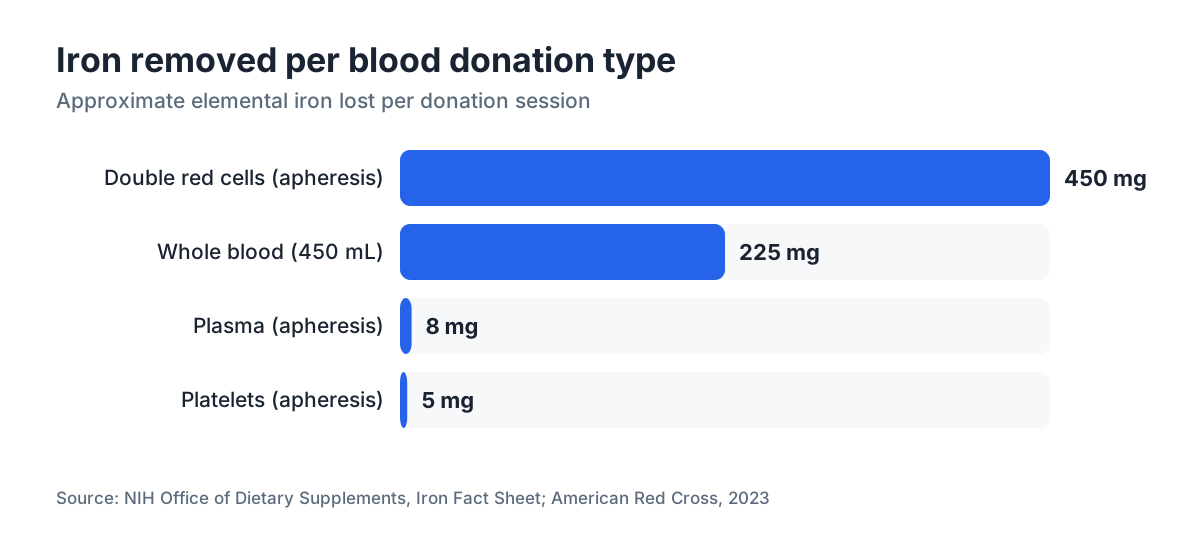
Platelet and plasma donations take out far less iron. Apheresis procedures return your red cells, so the iron cost per session is tiny, and frequent platelet donors face much lower TE risk than whole-blood donors.
Double red cell donations (automated collections that pull two units of red cells) remove roughly twice the iron of a single whole-blood donation and are more likely to drag ferritin into hair-loss range.
Here is a rough comparison of iron loss by donation type:
| Donation type | Approximate iron removed per donation | Typical ferritin recovery time |
|---|---|---|
| Whole blood (450 mL) | 200-250 mg | 24-32 weeks [5] |
| Double red cells (apheresis) | 400-500 mg | ~48-52 weeks (estimated) |
| Platelets (apheresis) | Minimal (<10 mg) | Days |
| Plasma (apheresis) | Minimal (<10 mg) | Days |
Those recovery windows assume no iron supplement. Donate every 56 days (the FDA minimum interval for whole blood in the US) [7] without supplementing, and your ferritin can step down with each donation even when a single one alone would not have caused trouble.
Who is most at risk for post-donation telogen effluvium?
Not everyone who donates loses noticeable hair. Risk stacks when factors pile up.
Women of reproductive age lead the list. Menstruation already drains iron every month. Add a donation and the deficit builds faster. A 2020 study in the American Journal of Hematology found female donors had markedly higher rates of iron deficiency than non-donors, with frequent donors showing the steepest drops [6].
Frequent donors come next. Donate every 56 days (the legal minimum in the US) and ferritin barely recovers before the next withdrawal. Plenty of high-volume donors, especially men who feel fine and clear the hemoglobin screen, are carrying ferritin in the single digits without knowing it, because pre-donation screening checks hemoglobin, not ferritin.
Low-iron diets add risk too. Vegetarians and vegans get iron only from plant sources (non-heme iron), which absorbs roughly 2 to 5 times less efficiently than heme iron from meat [3]. That thinner buffer starts them closer to the edge.
Recent surgery, a major illness, or another stressor near the time of donation can tip follicles into telogen when the donation alone would not have.
People with a personal or family history of androgenetic alopecia (pattern hair loss) often shed more visibly because their follicles already sit under hormonal pressure. TE in that setting can uncover or speed up pattern loss. Our overview of telogen effluvium explains how to tell the two apart.
How long does hair shedding last after blood donation?
TE runs on the hair cycle, not on your calendar of worry. After the donation that drops ferritin below threshold, expect a lag of 6 to 12 weeks before shedding shows up. Full recovery of visible density usually takes 6 to 12 months from the point the trigger is removed.
The follicles that switched to telogen at the time of the trigger have to finish resting before they drop. Most people notice the problem two to three months after the donation, not right away. That gap makes it genuinely hard to connect cause and effect without a careful history.
Once shedding starts, it usually peaks around weeks 10 to 16, then slows. Correct the iron deficit and most people see shedding return to baseline within 3 to 6 months of starting treatment. Regrowth of the shed hairs takes longer: the new anagen hairs need their own 3 to 6 month growth run before they are long enough to notice [2].
TE lasting more than 6 months is chronic TE. If shedding does not slow after ferritin is genuinely replete (most clinicians want above 30 to 40 ng/mL, ideally higher), it is time to look for other causes running alongside: thyroid trouble, other nutritional gaps, ongoing emotional or physical stress, or medications. A dermatologist can run a scalp pull test and trichoscopy to read the phase ratio directly.
Here is the reassuring part. Most post-donation TE is self-limiting. The follicles are not damaged. Correct the iron, clear any other active trigger, and regrowth is the expected outcome.
What ferritin level do you need to check, and what do the numbers mean?
Serum ferritin is the test you want. Your GP can order it, and it is usually covered when there is a documented symptom like hair shedding.
The reference range on most lab reports is wide: roughly 12 to 150 ng/mL for women, 12 to 300 ng/mL for men. But "normal" and "optimal for hair" are not the same thing. Here is how most hair-focused clinicians read the numbers:
| Ferritin (ng/mL) | Clinical interpretation for hair health |
|---|---|
| Below 12 | Iron deficiency, high TE risk |
| 12-30 | Low-normal, likely suboptimal for follicles |
| 30-70 | Acceptable, sufficient for most people |
| Above 70 | Generally adequate for hair cycling |
The 2006 JAAD review by Trost, Bergfeld, and Calogeras noted that some clinicians aim to keep ferritin above 40 ng/mL in women with hair loss, while admitting the evidence for a specific target is still thin [4]. Nobody has run a large randomized trial pinning down the exact ferritin number that restores normal cycling.
One catch: ferritin is an acute-phase reactant. It climbs with inflammation, infection, liver disease, and some cancers even when total body iron is actually depleted. If you are sick or have an inflammatory condition, ferritin can read falsely reassuring. Checking C-reactive protein (CRP) at the same time helps you put the number in context.
A donor with shedding gets the clearest picture from a full iron panel (ferritin, serum iron, TIBC, transferrin saturation) plus a complete blood count. Hemoglobin can look normal while ferritin is critically low, which is exactly why the donor hemoglobin screen tells you almost nothing about your hair risk.
How do you treat telogen effluvium caused by blood donation?
The main treatment is fixing the iron deficit. Simple to say. In practice it takes longer than most people expect and needs some care with the details.
Oral iron is the standard first step. Ferrous sulfate 325 mg (65 mg elemental iron) once daily is common. Some hematologists and gastroenterologists prefer every-other-day dosing, based on a 2017 Lancet Haematology study showing alternate-day dosing gives better fractional absorption because it keeps hepcidin lower between doses [8]. Absorption runs roughly 2 to 3 times higher on an empty stomach, but the GI side effects (nausea, constipation) drive many people to take it with food. A small amount of vitamin C-rich food helps absorption without the full-meal penalty.
How long until ferritin rises enough to matter for hair? At a modest oral dose, plan on 3 to 6 months of consistent supplementation to meaningfully rebuild depleted stores. Recheck ferritin at 3 months to confirm the direction and size of the change.
Pause donations during recovery. The FDA sets a 56-day minimum between whole-blood donations [7], but nothing forces you to donate at the minimum. Low ferritin and active shedding make a 6 to 12 month break medically reasonable.
Minoxidil sometimes gets added to hit the shedding more directly. It does not fix the iron deficit, but it can help hold follicles in anagen. If you go that way, our guide to minoxidil for men walks through dosing, timelines, and realistic expectations. One caveat: layering a separate treatment before the root cause is fixed is not always the right first move. Correcting ferritin alone often clears TE fully.
If oral iron is not raising ferritin after 3 to 6 months of good compliance, intravenous iron is an option (used more for people with GI conditions that block absorption, or very deep deficits). That needs a referral to a hematologist or gastroenterologist.
A couple of supporting measures carry modest evidence: adequate protein (hair is keratin, and very low protein diets can keep TE going on their own) and screening for thyroid trouble. Low thyroid function is common in the same group prone to iron deficiency and causes TE independently. A TSH test alongside the iron panel is cheap and useful.
Not sure whether your loss is TE, pattern loss, or something else? Getting an objective read on your scalp before you commit to a plan makes sense. MyHairline's free AI scan at /scan can characterize your shedding pattern and help you decide what to bring to a dermatologist.
Can you prevent telogen effluvium if you want to keep donating blood?
Yes, with some planning. Stopping donations is not the only path.
The most direct move is supplementing iron before and between donations. The American Red Cross recommends that whole-blood donors consider a daily low-dose iron supplement (around 18 to 38 mg elemental iron) to offset donation losses, based on the RISE trial, which found supplemented donors recovered ferritin much faster [5].
Get ferritin tested before donating, at baseline and then every 6 to 12 months if you are a regular. The standard pre-donation hemoglobin screen will not catch low ferritin. Order it through your GP, or use one of the many direct-to-consumer lab services. Donating with ferritin below 30 ng/mL is risky for your hair; below 20 ng/mL, delay until your stores come back up.
Space donations out. The 56-day minimum is a floor set to protect hemoglobin, not ferritin. Many blood banks suggest 3 to 4 months between donations when ferritin sits in the lower range. Some centers now track ferritin over time and defer depleted donors, though that is not universal.
Committed to high-frequency donation? Switching from whole blood to platelets or plasma wipes out almost all the iron loss per session. You can donate platelets up to 24 times a year under FDA rules [7] with negligible iron impact.
Eating heme iron (red meat, organ meats, shellfish) in the weeks around a donation rebuilds stores faster. Pair non-heme foods (legumes, spinach, fortified cereals) with vitamin C to boost absorption. Keep calcium-rich foods, coffee, and tea outside a 1 to 2 hour window around iron-rich meals, since they block absorption.
Is this TE from blood donation or is something else causing the shedding?
Blood donation is one cause of TE, and it shares the stage with a long list of others. The timing clue matters most: donation-related shedding usually starts 6 to 12 weeks after the donation that caused it.
Other common TE triggers to rule out:
- Thyroid dysfunction (both underactive and overactive): TSH is cheap and belongs in any workup.
- Post-illness shedding: COVID-19 in particular caused widespread TE in 2020 and 2021. A study in the Journal of the American Academy of Dermatology reported hair loss as one of the most common post-COVID symptoms, with a delay matching classic TE timing [10].
- Crash dieting or very low calorie intake: fast weight loss drops ferritin and overall nutrition at the same time.
- Medications: starting or stopping hormonal contraceptives, isotretinoin, some blood pressure drugs, and others.
- Major surgery or serious illness.
- Severe psychological stress.
- Zinc, vitamin D, or B12 deficiency.
Triggers often stack. A woman who donates often, eats little meat, uses hormonal contraception, then hits a stressful stretch can get TE that looks out of proportion to any single cause.
To separate post-donation TE from androgenetic alopecia (pattern hair loss), look at the pattern and the pull test. TE sheds diffusely across the whole scalp; pattern loss thins mostly at the crown and temples. In TE, a pull test (grasping 40 to 60 hairs and sliding) yields more than 6 telogen hairs from the group. A dermatologist or trichologist can run formal trichoscopy, which shows the telogen-to-anagen ratio at scalp level.
If you have a family history of hair loss or see miniaturization (thinner-diameter hairs replacing the ones you shed), androgenetic alopecia may be running alongside the TE. Treating only the TE helps temporarily, but the androgen-driven part needs its own plan long-term. Our guides on finasteride and DHT blockers cover that angle.
What does the research actually say about iron, ferritin, and hair loss?
The research points one direction but is not fully settled, so here is the honest split between what we know and what we assume.
The strongest evidence links overt iron deficiency anemia to TE. That is not seriously debated. The harder question is whether low ferritin without anemia (iron deficiency without anemia, or IDWA) causes TE. Here the literature gets more careful.
The 2006 systematic review by Trost, Bergfeld, and Calogeras in JAAD looked at iron and diffuse hair loss and concluded: "Iron deficiency may be related to many forms of hair loss, and although association does not confirm causality, it seems reasonable to evaluate and treat iron deficiency in female patients with hair loss" [4]. That is a measured, honest line from a reputable source. Association, not proven cause.
Observational studies keep finding lower ferritin in women with chronic diffuse telogen loss compared to controls, even when ferritin sits above the anemia threshold [4]. Nobody has run a large double-blind RCT that gives iron to iron-deficient TE patients versus placebo and counts hairs at 6 months. What exists is mostly observational.
That matters when someone wants a firm causal number. We cannot give one. What we can say: correcting low ferritin is low-risk, often free with dietary changes or cheap with supplements, and clinically reasonable for anyone with documented low stores and active shedding.
For donors specifically, the RISE trial (Randomized Iron Supplementation to Enhance Red Cell Recovery After Blood Donation) was a rigorous RCT published in Transfusion. Donors randomized to iron (38 mg/day elemental iron as ferrous gluconate) recovered ferritin to baseline in about 8 weeks versus more than 24 weeks on placebo [5]. That study was built to measure red cell recovery, not hair, but the ferritin recovery data applies directly to the TE question.
Should you stop donating blood if you are experiencing hair loss?
This is a real decision and deserves a real opinion, not a reflexive hedge. If your ferritin is below 30 ng/mL and you are actively shedding, pause whole-blood donations for 3 to 6 months while you supplement iron.
The benefit of donating in that moment goes to the blood supply; the cost lands on your iron stores and possibly your hair. That trade-off is yours to make. Just do not make it blind.
If your ferritin is above 50 to 70 ng/mL and you supplement iron consistently, there is no clear evidence that continuing to donate at a normal pace (every 3 to 4 months rather than the 8-week minimum) will cause TE.
Donating blood is genuinely worth doing. The US blood supply runs on voluntary donors, and a healthy person with good iron stores who gives three times a year and supplements iron is doing something meaningful at little personal risk. The aim is informed, strategic donation, not quitting.
Here is what you should not do: donate at the minimum legal interval, never check ferritin, eat a low-iron diet, then wonder why your hair is falling out two years later. That whole scenario turns on a single blood test.
If hair loss keeps going after you correct iron and pause donations, it is time for a broader workup. For some people, TE from one trigger has uncovered or sped up underlying pattern hair loss that will not resolve on its own. Our overview of what causes hair loss and a baseline assessment through MyHairline's free AI scan at /scan can help you figure out what you are actually dealing with before you spend money on treatments.
Are there any treatments specifically proven to speed up TE recovery?
Correcting the underlying cause is the only thing with genuine evidence behind it. Iron when ferritin is low is the closest thing to a specific treatment for post-donation TE.
Beyond iron, the evidence thins out fast. Minoxidil (topical or oral) is widely used for TE and has a plausible basis: it lengthens anagen and may cut premature catagen entry. But no large RCT in TE patients shows it shortens shedding. The AAD lists minoxidil as an option for TE while noting the evidence is weaker than for androgenetic alopecia [1]. Our piece on minoxidil side effects is worth reading first, since the initial shed (a known minoxidil effect in the first 4 to 8 weeks) can rattle you when you are already shedding.
Biotin is popular and mostly unsupported in people who are not actually biotin deficient. True biotin deficiency is rare. A 2017 FDA safety communication warned that high-dose biotin can interfere with certain lab tests, including thyroid panels [9]. Take large biotin doses before a thyroid test and you can get falsely abnormal TSH results. That is a real problem, not a hypothetical one.
Zinc has modest evidence in zinc-deficient TE patients. If nobody has checked your zinc and you have significant dietary restrictions, add it to the panel.
We review the collective evidence on hair-loss supplements in our piece on hair loss supplements. The short version: fix documented deficiencies first, and skip the products aimed at problems you have not confirmed you have.
Patience is the hardest recommendation and the one most consistent with the evidence. Most post-donation TE clears fully within 6 to 12 months of fixing the iron. Stacking unproven treatments does not clearly speed that up.
Sources
- American Academy of Dermatology - Hair loss types and causes
- Miteva M, Tosti A. Hair and scalp dermatoscopy. Journal of the American Academy of Dermatology, 2012
- National Institutes of Health Office of Dietary Supplements - Iron Fact Sheet for Health Professionals
- Trost LB, Bergfeld WF, Calogeras E. The diagnosis and treatment of iron deficiency and its potential relationship to hair loss. Journal of the American Academy of Dermatology, 2006
- American Red Cross - Iron and Blood Donation (RISE trial results)
- Mast AE et al. Longitudinal changes in iron stores of blood donors. American Journal of Hematology, 2020
- U.S. Food and Drug Administration - Blood & Blood Products (donation frequency regulations, 21 CFR Part 630)
- Stoffel NU et al. Iron absorption from oral iron supplements given on consecutive versus alternate days and as single morning doses versus twice-daily split dosing. Lancet Haematology, 2017
- U.S. Food and Drug Administration - Biotin Interference with Troponin Lab Tests: Assays Subject to Biotin Interference (FDA Safety Communication)
- Post-COVID telogen effluvium. Journal of the American Academy of Dermatology, 2021