

TL;DR: Telogen effluvium (TE) is diffuse, temporary hair loss where a physiological shock pushes many follicles out of growth and into resting phase at once. Shedding usually starts 2 to 3 months after the trigger, peaks, then resolves on its own within 6 to 12 months once the trigger is gone. The follicles stay intact, so acute TE is almost always reversible.
What is telogen effluvium, exactly?
Telogen effluvium is a disruption of the normal hair growth cycle that pushes more hairs than usual into the telogen, or resting, phase at the same time. When those resting hairs reach the end of their cycle, they fall out together. The result is diffuse shedding across the whole scalp, not a localized bald patch. The name pairs the Latin word for shedding (effluvium) with the phase name (telogen).
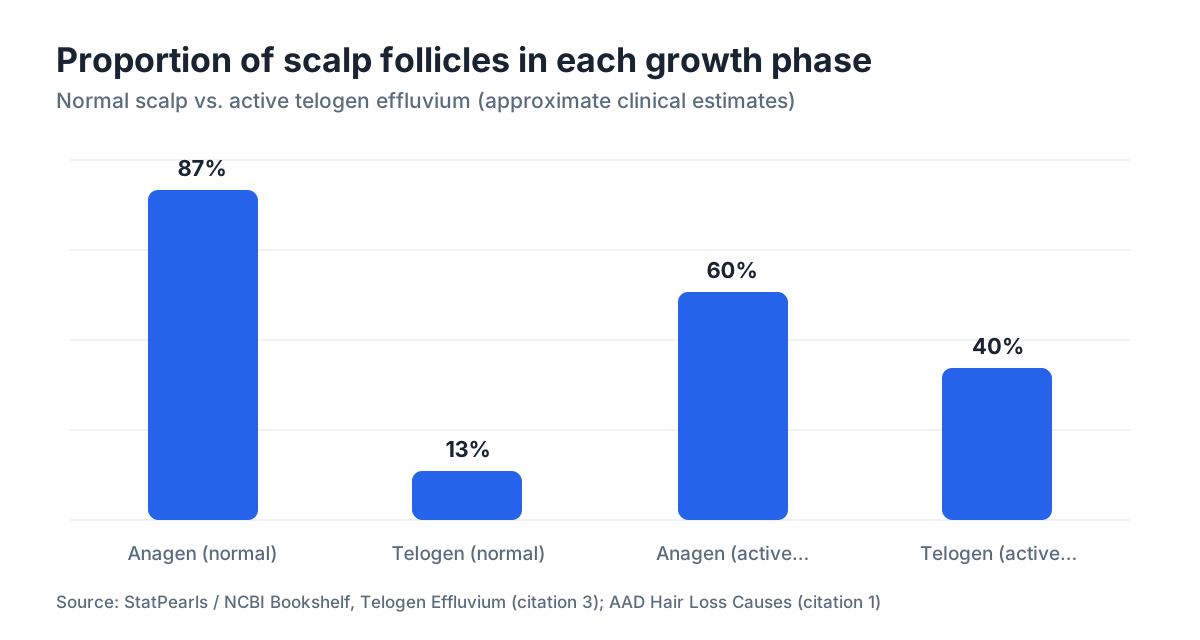
Under normal conditions, roughly 85 to 90 percent of your scalp hairs are in the anagen (active growth) phase at any given moment, and only about 10 to 15 percent are in telogen [1]. A healthy scalp sheds somewhere between 50 and 100 hairs a day. In telogen effluvium, a systemic stressor flips a larger share of follicles into telogen simultaneously. When those follicles shed, daily losses can climb to 300 or even 400 hairs, which is when people notice clumps in the shower drain or on a brush.
The follicle itself is not damaged or destroyed in acute telogen effluvium. The hair root is intact. That single fact is the reason TE is typically reversible once the trigger resolves.
TE is one of the most common causes of hair loss dermatologists see. It affects men and women, though women get diagnosed more often, partly because postpartum shedding is such a frequent trigger. For the broader picture, see our overview of telogen effluvium.
How does the hair growth cycle work, and where does TE fit in?
TE happens because a stressor forces many follicles into the resting phase at once, so they later shed together instead of spreading the loss out. To see why, you need a quick map of the four phases every follicle moves through independently of its neighbors.
Anagen is the active growth phase. Scalp hair stays in anagen for two to six years, which is why it grows long while eyebrow hair tops out at a centimeter or two [2]. Catagen is a short two to three week transition where the follicle shrinks and detaches from its blood supply. Telogen is the resting phase, lasting roughly two to four months, during which the old hair stays put but growth stops. Exogen is the shedding phase, often triggered by a new anagen hair pushing up beneath the old one.
In a healthy scalp, follicles cycle out of sync, so shedding stays spread out and barely noticeable. A severe physiological stressor broadcasts a stop-growing signal across many follicles at once, pushing a disproportionate number into telogen together. Two to four months later, when those follicles finish telogen and shed, the loss looks sudden and diffuse.
That two to four month lag is one of the most useful diagnostic clues in TE. The shedding shows up well after the trigger, which is exactly why so many people can't connect the two. The chart below shows the approximate proportion of follicles in each phase under normal conditions versus during active TE.
What causes telogen effluvium?
Almost any significant physiological or psychological shock can trigger TE. The most common causes documented in clinical literature include [3]:
Major illness or surgery. High fevers (above about 38.9°C / 102°F), sepsis, hospitalization, and general anesthesia are well-established triggers.
Nutritional deficiencies. Iron deficiency is the most studied, and ferritin levels below 30 ng/mL have been associated with increased shedding in several studies, though the exact threshold is debated [4]. Severe caloric restriction, crash dieting, and protein deficiency can also trigger TE.
Hormonal shifts. Postpartum hair loss, one of the most recognizable forms of TE, happens because pregnancy holds follicles in extended anagen (high estrogen), and then the postpartum drop in estrogen lets them all enter telogen at once. Thyroid dysfunction, both hypothyroidism and hyperthyroidism, is another well-established hormonal trigger [3].
Medications. A long list of drugs can induce TE, including anticoagulants, retinoids, beta-blockers, and some antidepressants. The FDA label for isotretinoin, for example, lists alopecia and hair thinning as known adverse reactions [5].
Psychological stress. Severe emotional distress can trigger TE, though this is hard to study cleanly because stress often travels with poor nutrition and sleep.
Scalp conditions and inflammation. Severe seborrheic dermatitis or scalp psoriasis affecting the follicular environment can push follicles prematurely into telogen.
Sometimes the trigger is obvious in hindsight. Someone who got COVID-19 in January and started shedding heavily in March has a clear timeline. Other times, finding the trigger takes a thorough history with a dermatologist, including bloodwork to rule out thyroid disease, iron deficiency, and other systemic causes. For a wider look at what drives hair loss, see what causes hair loss.
What are the symptoms of telogen effluvium?
The defining symptom is diffuse shedding. Hair comes out in larger-than-normal quantities across the whole scalp, not concentrated at the temples or crown. People notice it most in the shower, on the pillowcase, or on a brush.
The pull test is a simple clinical screen. A dermatologist grasps about 40 hairs between two fingers and pulls gently along the shaft. Extracting more than six telogen hairs (identifiable by their club-shaped, unpigmented roots) counts as positive in most clinical protocols, though exact thresholds vary by source [6].
Overall density drops visibly, and the scalp shows through more, especially at the part line or under bright light. Unlike androgenetic alopecia, the hairline usually stays intact. There is typically no scarring, no scalp pain, and no obvious inflammation.
In chronic TE, which lasts more than six months, the shedding fluctuates in waves rather than showing one clear peak. The follicle cycle has become dysregulated instead of reacting to a single trigger.
One thing to flag: TE and androgenetic alopecia (pattern hair loss) often coexist. A person can carry a genetic predisposition to pattern thinning that only becomes visible when TE strips away the density that was hiding it. That overlap is a big reason self-diagnosis is unreliable and why bloodwork and a proper exam matter.
How is telogen effluvium diagnosed?
There is no single definitive test. Diagnosis is clinical, based on your history, the pattern of shedding, and tests that rule out other causes.
A dermatologist takes a detailed timeline, looking for a significant event two to four months before the shedding started. They examine the scalp for pattern thinning, scarring, or inflammation. Dermoscopy (a magnified scalp exam) can confirm the presence of telogen hairs and rule out follicle miniaturization, which points to androgenetic alopecia instead.
Bloodwork is standard. A basic panel usually includes [3]:
| Test | Why it matters |
|---|---|
| Complete blood count (CBC) | Rules out anemia |
| Ferritin | Low levels associated with shedding |
| Thyroid-stimulating hormone (TSH) | Thyroid disease is a common trigger |
| Total T3, free T4 | Confirms or excludes thyroid dysfunction |
| Vitamin D | Deficiency linked to multiple hair conditions |
| Zinc | Deficiency can trigger TE |
| Testosterone / DHEAS (women) | Rules out androgen excess |
A scalp biopsy is rarely needed for straightforward acute TE, but it can help separate chronic TE from androgenetic alopecia or other conditions when the picture is unclear. Trichoscopy, a non-invasive dermoscopy technique, is increasingly replacing biopsy as the first-line confirmatory tool in experienced hands.
If you want a first pass at your own shedding pattern before a dermatology appointment, the free AI hair analysis at MyHairline gives you a starting visual read on scalp density and pattern.
How long does telogen effluvium last?
Acute TE typically resolves within six months of the trigger resolving [3]. Full regrowth to baseline density often takes longer, sometimes 12 to 18 months, because each follicle has to complete a new anagen cycle at its own pace.
The timeline looks roughly like this in most cases:
- Trigger occurs (illness, surgery, delivery, crash diet).
- Two to four months pass.
- Heavy shedding begins and peaks.
- Shedding tapers over one to three months as follicles resynchronize.
- New anagen hairs appear as short, fine regrowth (the baby hairs people notice).
- Full density returns over six to eighteen months.
Chronic telogen effluvium is shedding that persists beyond six months. Some researchers treat it as a separate entity with different mechanics: instead of one trigger causing a synchronized wave, chronic TE involves repeated or ongoing cycling of follicles. It is more common in women aged 30 to 60 and can last years. Chronic TE rarely causes complete baldness (the hair usually stabilizes at a reduced but still substantial density), but it is more distressing than the acute form because there is no clear it-will-be-done-by-March endpoint.
In both forms, treating the underlying trigger is the single most effective move. No strong randomized trial shows that any topical or oral treatment meaningfully shortens true TE once the trigger is gone, though some clinicians suggest minoxidil for men to support follicle function during recovery.
Is telogen effluvium the same as pattern hair loss?
No. They are distinct conditions with different causes, patterns, and outcomes, though they can happen together.
Androgenetic alopecia (AGA), or pattern hair loss, comes from genetic sensitivity to dihydrotestosterone (DHT), which shrinks follicles over years. The hair thins and shortens in a predictable pattern: the hairline recedes at the temples in men, the part widens in women. These follicles are more than misphased. They are being structurally damaged over time.
Telogen effluvium is diffuse, cycle-based, and typically reversible. The follicles are structurally normal. The hairline is preserved. The shedding is triggered by an outside event, not genetics.
The confusion comes from two things. Both cause noticeable loss and can look similar at a glance. And they frequently coexist: if genetic thinning is quietly underway, a bout of TE can strip enough density to make the pattern suddenly obvious. Someone might think TE caused their receding hairline, when the recession was already happening and TE just exposed it. For more on that, see our receding hairline overview.
The distinction changes treatment completely. TE on its own does not need a DHT blocker like finasteride. AGA does. Treating a temporary TE episode with finasteride isn't necessarily wrong if there's concurrent AGA, but it isn't treating the TE itself.
Does telogen effluvium go away on its own, or does it need treatment?
Acute TE in an otherwise healthy person, where the trigger has been found and resolved, usually goes away on its own. Correcting a nutritional deficiency (iron, protein, zinc), treating thyroid disease, recovering from surgery, or waiting out the postpartum hormonal shift lets the cycle normalize without drugs.
Still, going away on its own takes time, and the waiting period is genuinely distressing. Clinicians often recommend a few evidence-informed supportive steps:
Fix nutritional gaps first. Getting ferritin above 70 ng/mL is a commonly cited target in dermatology practice, though the evidence for that specific number is not ironclad [4]. Protein intake of at least 50 grams a day (the US recommended dietary allowance for adults) supports follicle function [7].
Address the trigger directly. If the trigger is ongoing (chronic stress, an ongoing medication, untreated thyroid disease), the shedding continues or recurs. No topical treatment makes up for an active trigger.
Topical minoxidil. Some dermatologists suggest it during recovery to maintain follicle cycling and shorten the visible thinning period. The evidence for this specific use is limited, since most minoxidil trials focus on AGA rather than TE. If you go this route, read up on minoxidil side effects first, because stopping minoxidil abruptly can itself cause a brief shed.
Hair loss supplements. Biotin, marine collagen, and similar products get marketed hard for TE. The evidence is weak. Biotin deficiency is genuinely rare, and supplementing above your baseline doesn't appear to speed recovery in people who aren't deficient [8]. For a realistic look at what actually has data behind it, see our hair loss supplements breakdown.
What to skip: expensive regrowth serums with no peer-reviewed evidence, crash diets during recovery (they can trigger a second TE), and heavy heat styling that adds breakage when hair is already fragile.
Can telogen effluvium be caused by COVID-19?
Yes. Post-COVID hair loss is telogen effluvium, not a new hair condition. The fever, the systemic inflammation, the physiological stress of the illness, and in severe cases hospitalization, are all textbook TE triggers. This became one of the most discussed causes of TE during and after 2020.
The American Academy of Dermatology has flagged hair loss as one of the most reported lingering symptoms in COVID-19 patients, and classifies post-COVID shedding as telogen effluvium [9]. Studies on long COVID consistently find diffuse shedding peaking two to three months after acute infection, with some reports citing hair loss in 25 to 30 percent of patients in the months following infection. Those estimates vary widely by study method.
The recovery timeline for post-COVID TE mirrors standard acute TE: most people stabilize within six months and see meaningful regrowth within a year. Concurrent nutritional deficiencies and the stress of a serious illness can drag out the shed, which is why addressing iron, protein, and vitamin D makes sense in this group specifically.
One practical note: the vaccine has been linked to rare cases of TE, likely through the same immune-activation and fever mechanism. That shedding is temporary and follows the same pattern. The benefit-to-risk math on vaccination sits separate from the hair question.
What is chronic telogen effluvium and how is it different from acute TE?
Chronic telogen effluvium (CTE) is diffuse shedding lasting more than six months. The distinction matters because management and prognosis differ from acute TE.
In CTE, the shedding fluctuates instead of following a single wave. Hair sheds heavily for a few weeks, slows, then picks up again. Patients often describe it as cyclical. It shows up most in women aged 30 to 60 with thick hair. Dermatologist Vera Price, who described CTE as a distinct entity in a 1996 paper in the Archives of Dermatology, noted the prognosis is generally good in terms of avoiding significant baldness, but the condition can run for years [10].
CTE usually doesn't respond to a single trigger-removal strategy, because the trigger may be multifactorial or unclear. Management focuses on thorough bloodwork to find and fix any correctable deficiencies, ruling out concurrent AGA, and monitoring over time. Some dermatologists trial topical minoxidil to steady the cycle.
The psychological weight of CTE is real and often underappreciated. The fluctuating, unpredictable shedding, paired with the absence of a clear fix, makes it harder to cope with than the acute form. That emotional side is worth raising with your doctor, more than the hair counts.
How is telogen effluvium different from alopecia areata?
Alopecia areata (AA) is an autoimmune condition where the immune system attacks the follicle directly, causing patchy, often sudden loss. The pattern is the key difference. Alopecia areata produces discrete round or oval patches of complete hair loss, while telogen effluvium produces diffuse thinning across the whole scalp with no bald patches [12].
On dermoscopy, alopecia areata shows characteristic exclamation mark hairs and yellow dots. TE shows increased telogen hairs without those inflammatory markers.
Prognosis and treatment differ completely. Alopecia areata may spontaneously remit, but extensive cases need immunosuppressive treatment (topical or injectable corticosteroids, JAK inhibitors in severe cases). TE, as covered, is managed by addressing the trigger.
There's one overlap worth knowing. A severe physiological stressor can sometimes trigger alopecia areata in a genetically susceptible person, so the same event can rarely cause both at once. A dermatologist can tell them apart with a clinical exam.
When should you see a doctor about hair shedding?
See a dermatologist if shedding is heavy and has lasted more than two to three months, if you notice patterned thinning or a receding hairline alongside the diffuse shedding, or if you have other symptoms that suggest a systemic cause (fatigue, weight change, cold intolerance, irregular periods). Those warrant bloodwork.
Also see a doctor if the home pull test is consistently positive (clumps releasing with gentle traction), if you see smooth bald patches rather than diffuse thinning, or if your scalp is itchy, inflamed, or painful.
You don't need an urgent visit for a single heavy shed day or the normal post-shower hair on the drain. Context matters. But if you're genuinely losing ground on density over weeks, early evaluation pays off, because some triggers (thyroid disease, iron deficiency anemia) are straightforward to treat and the sooner they're caught, the faster recovery goes.
For a preliminary read on your pattern before booking, MyHairline's free AI scan can help you tell whether your shedding looks diffuse or patterned, and whether it matches common TE presentations.
If bloodwork and exam point toward androgenetic alopecia running alongside the TE, your dermatologist may discuss options like finasteride or the combination of finasteride and minoxidil, though those treat AGA, not TE itself.
Sources
- American Academy of Dermatology, Hair Loss: Who Gets and Causes
- StatPearls (NCBI Bookshelf), Hair Follicle Anatomy
- StatPearls (NCBI Bookshelf), Telogen Effluvium
- Journal of the American Academy of Dermatology, Trost et al., The role of iron and zinc in the pathophysiology of hair loss
- FDA, Accutane (isotretinoin) prescribing information
- StatPearls (NCBI Bookshelf), Telogen Effluvium
- USDA Dietary Reference Intakes for Protein
- NIH Office of Dietary Supplements, Biotin Fact Sheet for Health Professionals
- American Academy of Dermatology, COVID-19 and Hair Loss
- Price VH, Archives of Dermatology, Telogen Effluvium (1996)
- National Alopecia Areata Foundation, Understanding Alopecia Areata