

TL;DR: Telogen effluvium (TE) is a sudden, diffuse shedding of scalp hair. A physical or emotional shock pushes follicles into a resting phase, and they let go weeks later. In men, common triggers include illness, crash dieting, surgery, and psychological stress. Most cases clear up on their own within 3 to 6 months once the trigger is gone, though chronic cases can last a year or longer.
What is telogen effluvium and why does it happen in men?
Telogen effluvium is diffuse, temporary hair loss. A large batch of follicles enters the telogen (resting) phase early, then sheds all at once weeks to months later. It is not male-pattern baldness, and it does not follow the receding-hairline pattern that androgenetic alopecia does. The shedding is usually even across the scalp, sometimes worse on top, and it alarms men who suddenly see clumps in the shower drain or on the pillow.
Normally about 85 to 90 percent of your scalp hairs are in the anagen (growth) phase at any moment, with roughly 10 to 15 percent resting in telogen [1]. A big stressor pushes an abnormally high share of follicles into telogen all at once. Two to four months later those follicles finish resting, the hairs release together, and that sudden volume is what men notice [2].
Dermatologist Albert Kligman named the condition in 1961. It is one of the most common causes of hair loss seen in dermatology offices, and it is misdiagnosed constantly. The shedding starts so long after the trigger that men rarely connect the two.
What are the most common triggers of telogen effluvium in men?
Any real physiological or psychological shock can set it off. The 6-to-16-week delay between the event and the visible shedding is what makes the cause hard to spot without the right questions [2].
The triggers I see most in men:
- High fever or severe infection (COVID-19 is a documented trigger, with multiple published case series reporting diffuse shedding 2 to 3 months after infection [3])
- Major surgery or hospitalization
- Rapid weight loss or crash dieting, where caloric restriction below roughly 1,200 kcal per day starves follicles of protein and micronutrients
- Severe psychological stress: job loss, bereavement, divorce
- Iron deficiency or ferritin below about 30 ng/mL (some dermatologists use 40 to 70 ng/mL as a functional target for hair, though the evidence for precise cutoffs is debated)
- Thyroid dysfunction, both hypothyroid and hyperthyroid states
- Starting or stopping certain medications, including beta-blockers, anticoagulants, retinoids, and anabolic steroids
- Protein malnutrition and deficiencies in zinc, biotin, or vitamin D [4]
Men in physically demanding jobs, hard training blocks, or aggressive food restriction get this more than people realize. A soldier finishing a long field exercise, or a lifter doing a brutal cut before a competition, can shed noticeably 2 to 3 months later with no scalp disease at all.
Black men deserve a specific mention. Some styling practices common in the Black community, including tight braids, locs, and chemical relaxers, put sustained mechanical tension on follicles. That usually causes traction alopecia (a separate condition), but the inflammation and trauma can stack on top of a shedding episode. If you are shedding diffusely alongside tension styles or chemical treatments, see a board-certified dermatologist who works with textured hair [4].
What does telogen effluvium look like versus male-pattern baldness?
This is the question that decides what you do next.
Male-pattern baldness (androgenetic alopecia) follows a predictable script. The hairline recedes at the temples, the crown thins, and the two areas eventually meet. It is driven by DHT acting on genetically sensitive follicles, and it does not reverse on its own. Our what causes hair loss guide walks through that pattern.
Telogen effluvium looks nothing like it. The shedding is diffuse, spread across the whole scalp rather than parked at the temples or crown. The hairline stays intact. Men describe their hair as "thinner all over" rather than bald in specific spots. On a pull test (gently grasping 40 to 60 hairs between two fingers and pulling), more than 6 hairs releasing easily counts as positive and points to active telogen effluvium [2].
The two can coexist, and that is where it gets messy. A man with underlying androgenetic alopecia who then hits a big stressor can have both at once: the slow genetic loss plus a sudden TE episode on top. If the hairline was already receding before the shedding started, the baseline problem is probably androgenetic and needs its own plan.
| Feature | Telogen Effluvium | Male-Pattern Baldness |
|---|---|---|
| Pattern | Diffuse, even across scalp | Temples, crown, Norwood pattern |
| Onset | Sudden, after an identifiable stress | Gradual over years |
| Hairline | Usually preserved | Recedes progressively |
| Reversible | Usually yes (acute form) | No, but treatable |
| Hair pull test | Often positive | Usually negative |
| Scalp biopsy | Increased telogen follicles | Miniaturized follicles |
How long does telogen effluvium last in men?
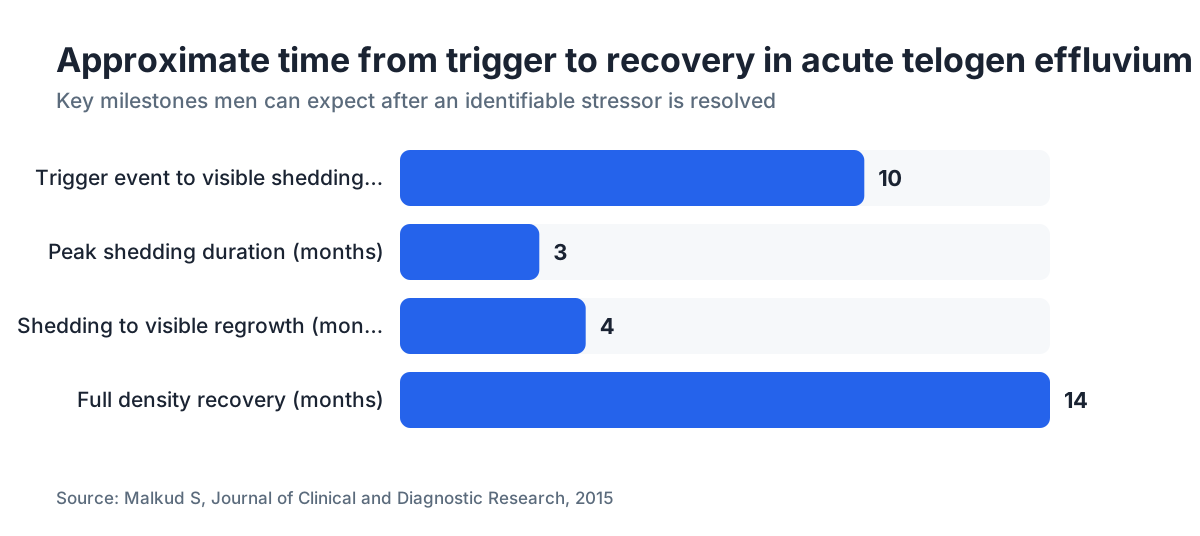
Acute telogen effluvium usually runs its course in 3 to 6 months from peak shedding, and most men see near-complete regrowth within 6 to 12 months of the trigger resolving [2]. The shedding is not permanent because the follicles are not damaged. They were just put to sleep early.
Chronic telogen effluvium is shedding that lasts more than 6 months. It is less common in men than in women, but it happens, and it usually means either an ongoing trigger (an undiagnosed thyroid problem, continued nutritional deficiency, unresolved chronic stress) or several overlapping triggers. A small share of chronic cases never turn up a cause even after a full workup, and those can drag on for years with fluctuating intensity.
Regrowth usually starts with fine "baby hairs" along the hairline and part lines. Men often spot these short, wispy hairs before they realize the shedding has slowed. Full density takes time. Hair grows only about 6 inches a year, so a scalp that dropped 30 percent of its hairs will not look restored for 12 to 18 months even if the follicles restarted right away.
One honest caveat. In men with both TE and underlying androgenetic alopecia, the TE episode can expose how much MPB was already underway. The hair you regrow may still be thinner than it was two years ago, because the MPB kept progressing underneath.
How is telogen effluvium diagnosed?
Diagnosis starts with a careful history. A dermatologist asks about the 3 to 5 months before shedding began: illnesses, surgeries, big stress, diet changes, medication changes, weight swings. That history alone often points straight at the cause.
Blood work is standard and should include [4]:
- Complete blood count (checking for anemia)
- Serum ferritin (iron stores)
- Thyroid-stimulating hormone (TSH)
- A metabolic panel
- Zinc, vitamin D, and B12 if deficiency is suspected
A hair pull test in the office confirms active shedding. Trichoscopy (dermoscopy of the scalp) helps separate TE from alopecia areata or androgenetic alopecia by looking at follicle structure and the ratio of terminal to vellus hairs.
Scalp biopsy is rarely needed for straightforward acute TE, but it earns its place in chronic cases or when the diagnosis is genuinely uncertain. A biopsy showing more than 20 to 25 percent telogen follicles (versus the normal 10 to 15 percent) fits telogen effluvium [2].
Self-diagnosis is risky. A man who talks himself into TE and waits 6 months may be delaying treatment for androgenetic alopecia, where every month of inaction means more follicle miniaturization. If you are not sure which one you have, see a dermatologist or run a structured assessment. The free AI scan at MyHairline can help you read your pattern and decide whether an in-person visit is urgent before you book.
For the wider view across all demographics, the telogen effluvium overview covers the condition in everyone.
What lab values should men check when they're losing hair suddenly?
Blood work is where a lot of men get shortchanged. A basic hair loss panel should cover ferritin, TSH, CBC, zinc, and vitamin D at minimum [4]. Here is why each one earns its spot.
Ferritin, not serum iron, is the marker that matters. Ferritin reflects stored iron, and follicles are metabolically busy and sensitive to iron running low. Some dermatologists aim for ferritin above 40 to 70 ng/mL for hair, though the evidence for a hard threshold is soft. A 2006 review in the Journal of the American Academy of Dermatology reported that iron deficiency may cause or worsen telogen effluvium and that correcting iron stores can help recovery [5].
TSH screens for both hypothyroidism and hyperthyroidism, either of which can trigger TE. A TSH outside the roughly 0.5 to 4.5 mIU/L reference range needs a closer look.
Zinc deficiency is linked to diffuse hair loss, and low zinc can slow follicle cell division. Dieting, malabsorption, or high-dose iron supplements can all drop it.
Vitamin D receptors sit inside hair follicles, and low vitamin D has been tied to telogen effluvium in observational studies, though causality is not settled [4]. Fixing a deficiency costs almost nothing and carries no real downside.
If all of these come back normal and you are a man over 30 with diffuse thinning, diffuse-pattern androgenetic alopecia is more likely than you might guess, and that means a different conversation about DHT blockers or finasteride.
Does telogen effluvium grow back on its own?
For acute telogen effluvium with a clear trigger, usually yes. Once the stressor lifts and any deficiencies are corrected, follicles re-enter the anagen phase on their own schedule. You do not need a drug or a procedure for the TE itself.
The American Academy of Dermatology says telogen effluvium is typically self-limiting and that hair regrows without specific treatment once the cause is found and addressed [4]. That is not a cure claim. It is just the natural course of the condition when the trigger goes away.
What men can actually do to help recovery:
- Correct deficiencies found on bloodwork
- Eat enough protein (general guidance is 1.2 to 1.6 g per kg of body weight per day for men under heavy physical stress)
- Manage ongoing psychological stress with whatever genuinely works for you
- Stop adding follicle trauma: harsh chemical treatments, very tight styles, aggressive scalp scrubbing
Minoxidil does not treat the cause of TE, but some dermatologists prescribe it during recovery to nudge follicles back into anagen faster. The evidence for that specific use is thin. If you are weighing it, read the minoxidil for men breakdown and understand what the drug does and does not do. If you are already on it and shedding more in the first weeks, that is a known phenomenon covered in the minoxidil side effects guide.
Can stress, diet, or COVID-19 really cause this much hair loss?
Yes, and the COVID-19 data is now clear. Multiple published case series found that post-COVID shedding, usually showing up 2 to 3 months after the acute illness, fit telogen effluvium. A 2021 study in The Lancet reported that hair loss was one of the most common long-COVID symptoms at 6 months after hospital discharge, affecting about 22 percent of surveyed patients [3]. The shedding comes from the physiological stress of the illness, not a direct viral attack on follicles.
Diet hits just as hard. The follicle matrix is one of the fastest-dividing cell populations in the body and needs a steady supply of amino acids, iron, and micronutrients. Crash dieting, long fasts, or a sustained caloric deficit cut that supply off. Men doing aggressive cuts for bodybuilding or combat sports, or men who dropped a lot of weight fast, are at real risk of a TE episode a couple of months later.
Psychological stress works through a different door. Cortisol and other stress hormones can shift the hair cycle and may speed the move from anagen to telogen. A 2021 study in Nature identified a mechanism where chronic stress raises corticosterone (the rodent version of cortisol), which blocks the signaling hair follicle stem cells need to switch on [6]. Whether it operates at the same scale in humans is still being sorted out, but the clinical link between psychological stress and TE is well established.
For men wondering about other suspects like creatine, the does creatine cause hair loss article covers what the data actually shows.
Should men with telogen effluvium also worry about permanent hair loss?
This is the right question, and the honest answer depends on what sits underneath the TE.
Telogen effluvium itself does not damage follicles and does not cause permanent loss. The follicles are dormant, not dead. Regrowth is expected once the trigger clears.
But TE does not shield you from androgenetic alopecia if you are genetically prone to it. And in men, androgenetic alopecia is common. Estimates suggest it affects roughly 50 percent of men by age 50 [7]. A TE episode in a man already on a slow MPB slide can briefly speed up the apparent thinning and reveal miniaturized hairs that were there all along.
If your shedding started at 22 or 23 with no clear trigger, and your father or maternal grandfather has heavy hair loss, the odds that some of your thinning is androgenetic are real. Waiting to see if it grows back is reasonable for 3 to 4 months. After that, if density is not recovering or the hairline is clearly pulling back, see a dermatologist and talk about finasteride and minoxidil together.
Some men hope hair loss supplements will fix it. Supplements can correct documented deficiencies, but there is no evidence they reverse androgenetic alopecia or speed TE recovery beyond what fixing the deficiency already does.
What treatments actually help telogen effluvium in men?
Let's be blunt about what the evidence supports.
Fixing the trigger is the single most effective thing you can do. Iron deficiency? Treating it rebuilds ferritin and, over months, supports recovery. Hypothyroidism? Thyroid replacement is what helps your hair. Crash diet? Getting back to enough calories and protein is the treatment. No topical or oral drug beats fixing the root cause.
Minoxidil (topical or oral) is sometimes used off-label to speed regrowth. It works by extending the anagen phase. The FDA approved topical minoxidil for androgenetic alopecia, not TE specifically [8], so its use in TE is borrowed from mechanism and clinical experience rather than TE-specific trials. If a dermatologist suggests it and you do not have underlying MPB, it is typically short-term during recovery. Low-dose oral minoxidil (1.25 to 2.5 mg daily in men) is used more and more; the oral minoxidil guide covers the evidence and risks.
Finasteride is usually the wrong drug for pure TE in men without androgenetic alopecia. It blocks DHT conversion and is approved for MPB, not TE [9]. If you have both at once, finasteride may help the MPB piece, but it does nothing for the TE trigger.
Platelet-rich plasma (PRP) injections get pitched by some clinics for TE. The evidence for TE specifically is thin, though there are some small studies in androgenetic alopecia. I would not spend money on PRP for an acute TE episode. If regrowth is stalled 6 to 9 months after the trigger cleared, that is the moment to revisit options, including a dermatology workup to rule out another cause.
Hair transplants are not a treatment for TE [10]. Transplanting into a scalp that is actively shedding can make things worse, and the cause has to be handled first. If permanent loss from androgenetic alopecia sits alongside a resolved TE, a transplant conversation becomes fair, but only after shedding stabilizes. The hair transplant guide covers the timing rules.
When should men see a doctor about hair shedding?
See a dermatologist or your primary care doctor sooner rather than later if:
- You are shedding more than about 150 to 200 hairs a day consistently (the commonly cited normal range is 50 to 100 per day, though what counts as normal varies a lot person to person) [1]
- Shedding has lasted more than 3 months with no sign of slowing
- You have other symptoms: fatigue, unexplained weight change, feeling cold all the time, or changes in your nails or skin (these can point to systemic disease)
- The hairline is clearly receding, more than diffusely thin
- You are under 25 and losing hair fast, since early-onset androgenetic alopecia benefits most from early treatment
- The loss is patchy rather than diffuse, which can mean alopecia areata rather than TE
A board-certified dermatologist (look for FAAD after their name) is the right specialist. General practitioners can order initial bloodwork but may not know the fine points of separating TE from early androgenetic alopecia or alopecia areata.
Men wait too long, partly because hair loss carries stigma and partly because TE often does resolve on its own. The practical rule: if you are not seeing real recovery 4 to 5 months after the trigger ended, do not keep waiting. If you cannot name any trigger at all, get evaluated now.
For a quick, cost-free start, MyHairline's AI hair scan can help you read your pattern and tell whether it looks more like TE or androgenetic alopecia before you walk into any appointment.
Sources
- American Academy of Dermatology (AAD), Hair Loss: Who Gets and Causes
- Malkud S. Telogen Effluvium: A Review. Journal of Clinical and Diagnostic Research, 2015
- Huang C et al. 6-month consequences of COVID-19 in patients discharged from hospital. The Lancet, 2021
- American Academy of Dermatology (AAD), Telogen Effluvium: Diagnosis and Treatment
- Trost LB, Bergfeld WF, Calogeras E. The diagnosis and treatment of iron deficiency and its potential relationship to hair loss. Journal of the American Academy of Dermatology, 2006
- Choi S et al. Corticosterone inhibits GAS6 to govern hair follicle stem-cell quiescence. Nature, 2021
- Vary JC. Selected Disorders of Skin Appendages. Medical Clinics of North America, 2015
- FDA, Minoxidil Topical Solution Drug Label (DailyMed)
- FDA, Finasteride (Propecia) Prescribing Information (DailyMed)
- International Society of Hair Restoration Surgery (ISHRS), Patient Eligibility for Hair Transplantation