

TL;DR: Telogen effluvium is diffuse, temporary hair shedding that happens when a large batch of follicles abruptly shifts into the resting (telogen) phase and sheds together. It usually starts 2 to 4 months after a triggering event like illness, childbirth, or a crash diet, peaks for a few weeks, then resolves on its own within 6 to 9 months once the trigger is gone.
What does telogen effluvium actually mean?
The name comes straight from the biology. "Telogen" is the resting phase of the hair growth cycle, and "effluvium" is a Latin word meaning outflow or shedding. Put them together and you get a resting-phase outflow: an abnormally large share of follicles all enter telogen at the same time, then shed together a few months later [1].
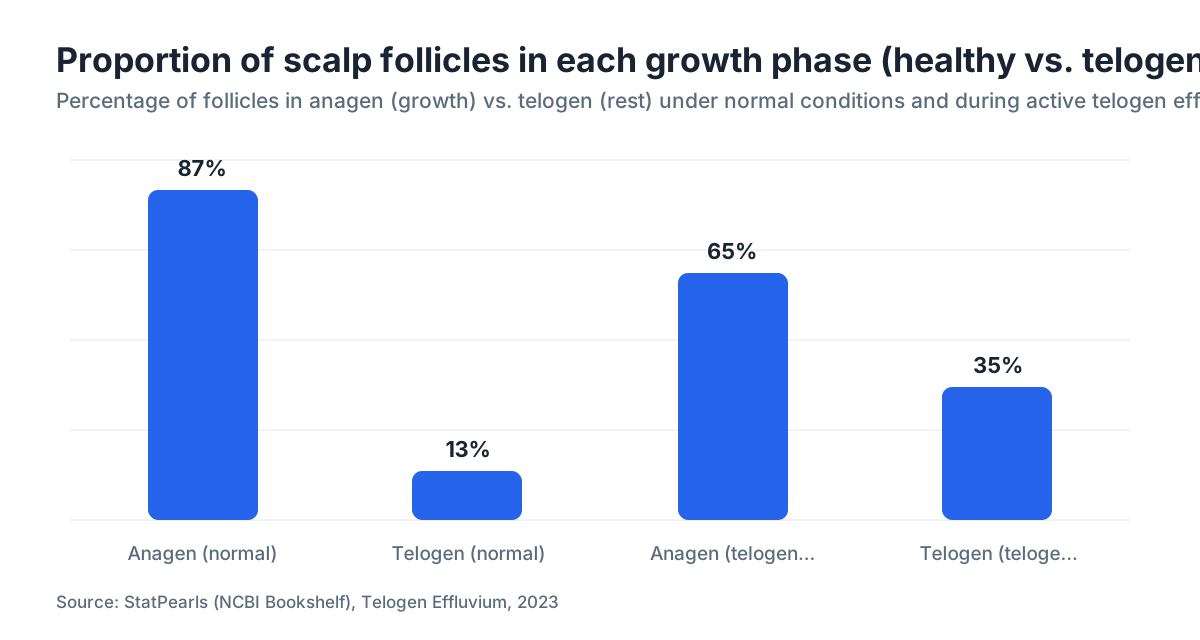
Normally, roughly 85 to 90 percent of your scalp hairs are in anagen (active growth) at any moment, and only about 10 to 15 percent sit in telogen [2]. A healthy scalp sheds around 50 to 100 hairs per day, which you barely notice. In telogen effluvium, that resting fraction can spike to 30 percent or higher, which means hundreds of hairs shed daily instead of dozens [1].
This is not pattern baldness. Pattern baldness is driven by genetics and the hormone DHT, and it permanently shrinks follicles over years. Telogen effluvium is a whole-scalp response to a stressor, and in almost every case the follicles themselves stay intact. They just need time to cycle back.
The shedding is diffuse, spread evenly across the scalp rather than concentrated at the temples or crown. That even pattern is one of the clearest clinical clues that you are dealing with telogen effluvium and not androgenetic alopecia or something else.
What are the phases of the hair growth cycle?
The scalp hair cycle has four phases, and telogen effluvium is what happens when a shock pushes too many follicles through them at once. Anagen is growth, catagen is transition, telogen is rest, and exogen is the actual shedding. Here is how each one works and why the timing matters.
Every follicle cycles independently:
Anagen (growth): The follicle actively produces a hair shaft. This phase lasts 2 to 7 years on the scalp, which is why scalp hair grows so much longer than body hair [10]. Its length is largely genetic, so some people grow hair to their knees and others top out at the shoulders.
Catagen (transition): A brief 2 to 3 week phase where the follicle shrinks and detaches from its blood supply. About 1 to 2 percent of follicles sit in catagen at any moment [10].
Telogen (rest): The hair rests in the follicle as a "club hair," held by a small anchor at the root. This phase lasts roughly 2 to 4 months. Normally 10 to 15 percent of hairs are here [1][2].
Exogen (shedding): The club hair releases and falls out. A new anagen hair starts growing underneath.
In telogen effluvium, a physiological shock convinces a large batch of anagen follicles to cut their growth short and jump straight into catagen and then telogen. Two to four months later, when those telogen hairs all hit exogen together, you see the sudden shedding that sends most people to a dermatologist.
That 2 to 4 month lag matters clinically. The shedding you see today was set off by something that happened 2 to 4 months ago, not last week [1]. That delay confuses a lot of people who cannot connect the loss to any recent cause.
What triggers telogen effluvium?
Almost any significant physical or psychological stressor can flip follicles into telogen early. The most common documented triggers are [1][3]:
| Trigger Category | Common Examples |
|---|---|
| Physical stress / illness | High fever, surgery, major infection, COVID-19 |
| Hormonal shifts | Postpartum period, stopping oral contraceptives, thyroid dysfunction |
| Nutritional deficiencies | Iron deficiency, protein malnutrition, zinc deficiency, crash dieting |
| Psychological stress | Severe emotional trauma, chronic high stress |
| Medications | Retinoids, anticoagulants, beta-blockers, lithium, some antidepressants |
| Scalp or skin disease | Seborrheic dermatitis, psoriasis affecting the scalp |
Postpartum telogen effluvium deserves a special mention because it is common and terrifying for new mothers who never saw it coming. During pregnancy, high estrogen extends anagen and suppresses normal shedding. After delivery, estrogen drops fast and all those follicles that were held in growth synchronize into telogen together [3]. Shedding usually peaks around 3 to 4 months postpartum and resolves by 12 months.
Iron deficiency is one of the most under-appreciated triggers in women of reproductive age. A serum ferritin below 30 ng/mL turns up often in women with telogen effluvium, and some dermatologists argue the threshold should sit higher, around 40 to 70 ng/mL, to support hair cycling [8]. The data here is genuinely mixed, but a full iron panel is almost always worth checking.
COVID-19 became a widely reported trigger after 2020. A 2021 study in The Lancet found that among COVID-19 survivors, hair loss was reported by roughly 22 percent of patients at 6-month follow-up [4]. That fits the classic 2 to 4 month lag from a major febrile illness.
For more on what else drives diffuse shedding, what causes hair loss covers the full picture.
What are the symptoms of telogen effluvium?
The main symptom is diffuse shedding: more hair than usual on the pillow, in the shower drain, on your brush. Most people notice it has turned bad within a few weeks, then grow more anxious as the weeks pile up.
A few specific features help pin it down:
The "club hair" sign. A shed telogen hair usually has a small white bulb-shaped root on the end. That bulb is the telogen-phase root. If you pull a shed hair and see a white bulb, that points to telogen effluvium. An anagen hair that breaks or gets yanked out usually has a dark pigmented root or no visible root at all.
The pull test. A dermatologist grasps 40 to 60 hairs and pulls gently. On a healthy scalp, fewer than 6 hairs come out. In active telogen effluvium, more than 6 club hairs release easily [1][3].
Diffuse thinning, not patchy loss. The scalp may look slightly thinner all over, most obviously along your part, but there are no bare patches and no receding front hairline (unless pattern baldness is also present).
No scalp inflammation, scaling, or scarring. This is not an inflammatory or scarring alopecia. Significant redness, scaling, or scalp pain points toward a different diagnosis.
Anxiety belongs on the symptom list too. The shedding gets dramatic enough that people photograph their shower drain or save shed hairs in bags to bring to appointments. That psychological weight is real and worth naming.
How is telogen effluvium diagnosed?
No single blood test confirms telogen effluvium. Diagnosis is clinical, meaning a dermatologist or trichologist reaches it by combining your history, a physical exam, and lab work to rule out other causes [3].
A thorough history is the most important step. Your doctor asks about the past 4 to 6 months: illness, surgery, childbirth, major stress, diet changes, new medications, big weight loss. The timeline of when shedding started relative to potential triggers is the puzzle worth solving.
Blood work typically includes:
- Complete blood count (to check for anemia)
- Serum ferritin and iron studies
- Thyroid stimulating hormone (TSH)
- Vitamin D and B12 (if clinically suspected)
- Sometimes sex hormone levels, including DHEA-S and prolactin in women with other symptoms
A scalp biopsy is rarely needed for straightforward cases. But when the diagnosis is uncertain, a 4mm punch biopsy can count the ratio of anagen to telogen follicles directly. In telogen effluvium, that ratio shifts noticeably toward telogen [3].
Dermoscopy (a handheld magnifier on the scalp) can show more telogen follicle openings and an absence of the miniaturized follicles you would see in pattern hair loss.
Telling telogen effluvium apart from early androgenetic alopecia can be genuinely tricky, and both are sometimes present at once. One tell: in pattern baldness, shedding is gradual and concentrated at the top of the scalp with visible miniaturization. In telogen effluvium, it is sudden, diffuse, and the remaining hairs are all the same caliber.
How long does telogen effluvium last?
Acute telogen effluvium, the common type, usually runs its course within 6 months of the trigger, and most people see noticeably less shedding within 3 to 6 months of recovering from or removing that trigger [1][3].
The full story has two phases: the shedding phase, which is what you see and panic about, and the regrowth phase, which is quieter and slower. Even after shedding stops, it takes 3 to 6 more months before regrown hairs are long enough to add visible density. So from trigger to looking normal again, you are often looking at about a year.
Chronic telogen effluvium is a different animal. It is defined as diffuse shedding that lasts more than 6 months [1]. It shows up more often in women, tends to fluctuate (better some months, worse others), and its trigger is often ongoing: chronic iron deficiency, an uncontrolled thyroid condition, or persistent nutritional gaps. Chronic cases call for finding and managing the underlying cause, more than waiting it out.
Some people with chronic telogen effluvium have no identifiable trigger at all. That frustrates patients and clinicians alike. Nobody has clean data on why some cases persist, but the leading idea is that even subtle, ongoing physiological stress can keep the cycle stuck.
One honest reassurance: even in chronic cases, the follicles are not being destroyed. Regrowth stays possible once the stressor is handled.
Does telogen effluvium cause permanent hair loss?
In the vast majority of cases, no. Telogen effluvium is a functional glitch, not a destructive one. The follicles stay viable, and once the triggering stressor clears, they resume normal cycling and grow new hairs [1][3].
The main exception is when telogen effluvium is severe and long enough to unmask or speed up underlying androgenetic alopecia. If someone carries a genetic predisposition to pattern hair loss, a big shedding episode can accelerate thinning that might otherwise have taken years to show. In that case the pattern loss is permanent, and the telogen effluvium was the event that made it obvious sooner.
That is one reason a proper diagnosis matters. If your shedding never fully resolves, or a dermatologist finds signs of miniaturization on dermoscopy or biopsy, it is worth evaluating whether finasteride or minoxidil for men fits a concurrent androgenetic component.
There is also a small subset of chronic cases where the cause is never found and hair never fully returns to its old density. That is real, and it would be dishonest to promise otherwise. But it is the exception, not the rule.
What treatments actually help telogen effluvium?
The honest answer: treating the trigger is the treatment. Telogen effluvium is a symptom of something else, and no topical or oral hair product fixes a nutritional deficiency, a hormonal imbalance, or the aftermath of a serious illness.
Here is what the evidence actually supports:
Address nutritional deficiencies. If iron, ferritin, or zinc are low, correct them. Iron supplementation in women with documented deficiency and telogen effluvium has shown benefit in some studies, though the evidence is not uniformly strong [3][5]. Work with a physician on the dose, because iron can cause GI side effects and excess iron is not harmless.
Treat thyroid disease if present. Hypothyroidism and hyperthyroidism both cause telogen effluvium on their own. Getting TSH into a normal range usually stops the shedding and allows regrowth [3].
Minoxidil. The FDA has approved topical minoxidil for androgenetic alopecia, not for telogen effluvium [6]. Some dermatologists use it off-label during the regrowth phase on the logic that it can nudge follicles back into anagen and is unlikely to hurt. Evidence for this specific use is thin. If you are considering it, read minoxidil side effects first, and know that stopping minoxidil abruptly can itself cause a temporary shed.
Reduce or remove the triggering medication. If a drug is the likely cause, talk to your prescriber about alternatives. Do not stop prescription medications on your own.
Nutrition. Adequate protein matters. Hair is roughly 95 percent keratin, a protein. Crash dieting or very low protein intake is a documented trigger [3]. Eating enough total calories and adequate protein (generally 0.8 to 1.2 grams per kilogram of body weight daily) supports regrowth.
A whole category of supplements gets marketed for shedding, including biotin, collagen, and botanical blends. Biotin deficiency is genuinely rare, and supplementation only helps if you are actually deficient. High-dose biotin can also skew thyroid and cardiac lab tests, worth knowing before bloodwork [7]. For an honest look at what supplements might help, hair loss supplements breaks it down.
If you want to make sense of your shedding before a dermatology appointment, the free AI hair analysis at MyHairline (/scan) can help you describe what you see and flag whether the pattern looks diffuse or concentrated, which shapes the conversation with your doctor.
Is telogen effluvium different in men and women?
The biology is identical, but the clinical picture shifts a bit by sex. Women get telogen effluvium more often because they face more frequent hormonal triggers, while men more often come in with an illness, surgery, or medication as the cause. The bigger difference is that men are more likely to have concurrent pattern baldness layered on top.
Women experience it more often, largely from pregnancy, postpartum, oral contraceptive use and discontinuation, perimenopause, and a higher rate of iron deficiency from menstruation [3]. Chronic telogen effluvium hits women in their 30s and 40s disproportionately.
Men have fewer hormonal triggers, so when a man shows up with diffuse shedding, the workup centers more on illness, surgery, nutrition, or medications.
In appearance, the diffuse thinning of telogen effluvium looks different from the receding hairline or crown thinning of typical male pattern baldness. When a man has both, the pattern baldness zones thin faster than the rest of the scalp, which helps a clinician spot the dual diagnosis.
Postpartum telogen effluvium is almost always self-limiting. In a review of postpartum women, the majority showed spontaneous recovery by 12 months with no treatment [8].
When should you see a doctor about hair shedding?
Not every shed hair needs a dermatology visit, but some situations do.
See a doctor if:
- Shedding is heavy and has lasted more than 3 months with no improving trend
- You cannot identify a plausible trigger from the past 2 to 4 months
- You notice patchy loss, bare patches, or asymmetric thinning (which points toward alopecia areata or other conditions)
- There is scalp redness, scaling, soreness, or visible inflammation
- You are losing eyebrow, eyelash, or body hair too
- Shedding started after a new medication and you want alternatives
- Your hair density is visibly reduced and not recovering after 6 months
A dermatologist is the right specialist. If your primary care physician is not taking it seriously or is only checking TSH and calling it done, asking for a referral to a board-certified dermatologist is entirely reasonable.
For context on how your shedding compares to androgenetic progression, the telogen effluvium overview covers the clinical picture dermatologists use. If you suspect your shedding ties into pattern hair loss, what causes hair loss helps frame that conversation.
Can you prevent telogen effluvium from happening again?
Prevention is mostly about reducing modifiable triggers, and it is only partly in your control.
You cannot prevent surgery, serious illness, or the postpartum period. But you can make your body nutritionally resilient heading into those stressors. Keeping ferritin, protein intake, and zinc at healthy levels reduces the size of the shed, even if it does not erase it.
Stress management matters too. There is reasonable evidence that sustained high cortisol can keep telogen effluvium going on its own, though the mechanism is not fully worked out [5].
If you are thinking about stopping an oral contraceptive, knowing that shedding can follow 2 to 4 months later is useful preparation. That is not a reason to avoid stopping, just a reason not to panic when it happens.
If you have had one episode and recovered, there is no guarantee it will not return with a future stressor. Some people are simply more susceptible. The most useful thing is knowing the pattern. Get seriously ill or go through a major stressor, then watch for increased shedding 2 to 3 months later, and you will recognize it for what it is instead of fearing the worst.
If pattern hair loss is also on your mind and you want to understand the drugs that target the DHT pathway, DHT blocker and finasteride and minoxidil are good starting points for that separate conversation. MyHairline's AI scan (/scan) can help you map your current pattern before you spend money on any treatment.
Sources
- StatPearls (NCBI Bookshelf), Telogen Effluvium
- American Academy of Dermatology (AAD), Hair Loss
- Journal of Clinical and Diagnostic Research, Telogen Effluvium - A Review (NCBI PMC)
- The Lancet, 6-month consequences of COVID-19 in patients discharged from hospital (Huang et al., 2021)
- NCBI PMC, Stress and the Hair Growth Cycle: Cortisol-Induced Hair Growth Disruption
- FDA, Drugs (approval of topical minoxidil for androgenetic alopecia)
- FDA, Medical Devices (biotin interference with lab tests)
- NCBI PMC, Hair Loss in Women (Herskovitz & Tosti, 2013)
- NCBI PMC, The Hair Cycle