TL;DR: No shampoo cures telogen effluvium. The condition clears when its trigger (illness, crash diet, stress, a postpartum hormone drop) goes away. What the right shampoo does is calm scalp inflammation, clear buildup around follicle openings, and cut breakage while regrowth happens. Ingredients worth using: ketoconazole, zinc pyrithione, caffeine. Skip harsh sulfates and heavy fragrance.
What is telogen effluvium and why does it cause so much shedding?
Telogen effluvium is temporary diffuse shedding that scares people badly. In a healthy scalp, about 85 to 90 percent of follicles are actively growing (anagen phase) at any given moment, and the rest are resting or shedding (telogen phase). A big physical or emotional stressor shoves a large share of growing follicles out of anagen early and into telogen all at once. Six to twelve weeks later, those follicles release their hairs together [1].
The numbers are startling. Normal shedding runs 50 to 100 hairs a day. In an active episode, daily shedding can top 300 hairs [1]. Most people first spot it in the shower drain, on a pillow, or clogging a brush.
Common triggers: childbirth (postpartum telogen effluvium usually peaks three to four months after delivery), rapid weight loss or crash dieting, major surgery, high fever or serious infection (COVID-19 included), thyroid problems, and iron deficiency [2]. Stress by itself can set it off. So can stopping oral contraceptives.
Here is the fact that frames the entire shampoo question: telogen effluvium is almost always self-limiting. Once the trigger clears, follicles cycle back into anagen and shedding slows. Most cases recover within six to nine months with no treatment at all [1]. A shampoo does not bend that timeline. What it can do is shield follicles from secondary damage while regrowth catches up, and that matters more than people expect.
For a full breakdown of triggers and the biology behind shedding, see telogen effluvium.
Can shampoo actually help telogen effluvium, or is it just marketing?
Honest answer: shampoo is a supporting player, never the star. No randomized trial has shown that any shampoo alone reverses telogen effluvium or shortens its natural course. Anyone selling you a bottle on that promise is stretching the truth.
The scalp environment still matters during recovery, though. Here is what a shampoo can honestly do:
-
Calm scalp inflammation. Low-grade chronic scalp inflammation, including seborrheic dermatitis, can pile onto follicle stress and shows up often in people already stressed enough to trigger shedding. Antifungal shampoos (ketoconazole, zinc pyrithione) cut the Malassezia yeast load that feeds that inflammation [3].
-
Clear sebum and product buildup around follicle openings. Clogged follicles don't recover faster on their own. A clarifying or salicylic acid shampoo once a week keeps the scalp surface clean without stripping it.
-
Reduce mechanical breakage. Over-dried, fragile telogen-phase hairs snap at the shaft before they ever regrow. A gentle, low-sulfate formula with some conditioning agents cuts the breakage that washing and detangling cause.
-
Deliver a few active ingredients. Caffeine shampoo has thin but real evidence (more below). Biotin-enriched shampoos have almost none for topical delivery.
So use a good shampoo, expect no miracle, and fix the trigger first. That order is the whole point.
Which shampoo ingredients have real evidence behind them for hair shedding?
This is where the honest answer gets messy, because evidence swings hard by ingredient.
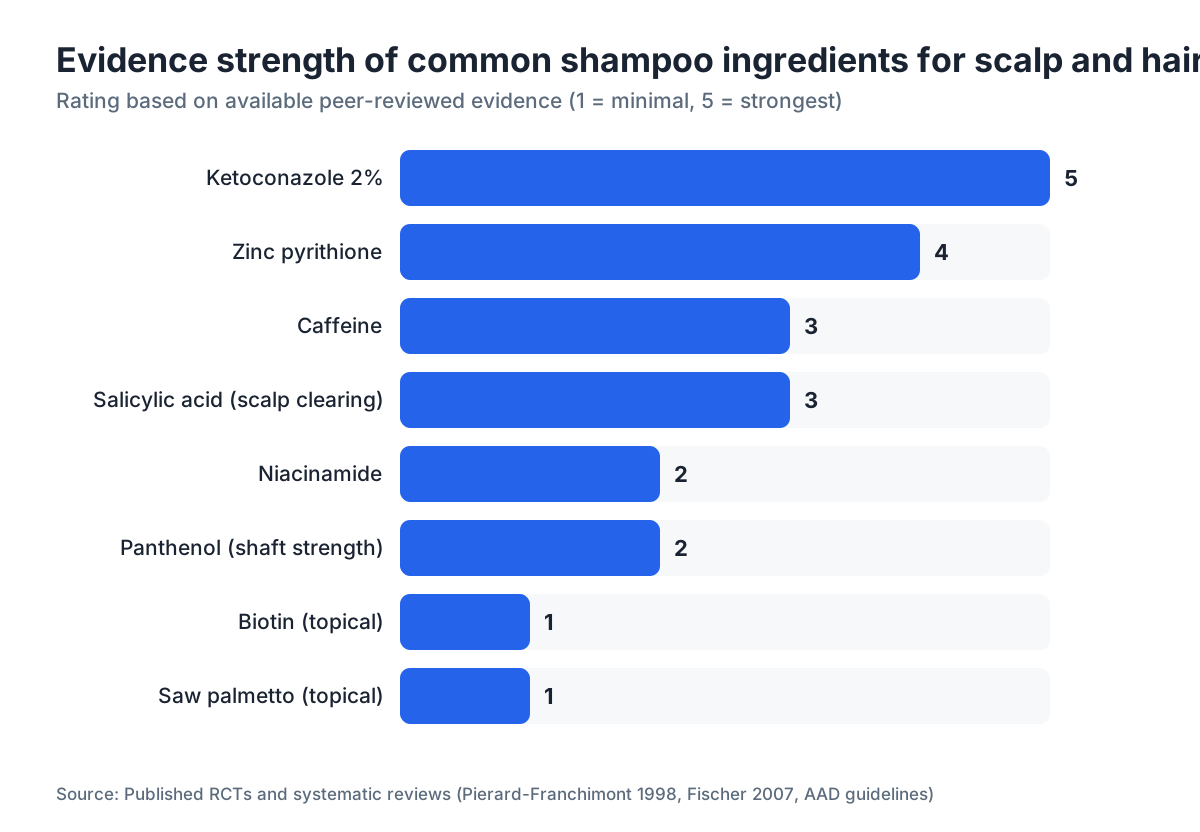
Ketoconazole The best-supported active for scalp health and hair retention. Ketoconazole 1% (over the counter) and 2% (prescription) is an antifungal with weak anti-androgen activity at the scalp. A 1998 randomized trial in the journal Dermatology found ketoconazole 2% shampoo used every 2 to 4 days produced hair density and shaft diameter gains comparable to 2% minoxidil in men with androgenetic alopecia [4]. That was androgenetic alopecia, not telogen effluvium. But its anti-inflammatory effect on the scalp is real, and it earns a spot for anyone whose shedding comes with flaking or seborrhea.
Zinc pyrithione Same idea as ketoconazole: it lowers Malassezia colonization, which dials back scalp inflammation. The American Academy of Dermatology lists zinc pyrithione shampoos as a first-line option for seborrheic dermatitis [5]. If your shedding arrived with an itchy, flaky scalp, use it two to three times a week.
Caffeine This one caught researchers off guard. A 2007 study in the International Journal of Dermatology found caffeine penetrated the hair follicle in vitro and blocked testosterone's inhibitory effect on follicle growth [6]. Small human trials since have shown modest but real density gains with regular use. The catch is contact time: caffeine needs at least two minutes on the scalp to penetrate, and almost nobody waits that long in the shower. If you use a caffeine shampoo, work it in and let it sit.
Biotin (topical) Biotin deficiency can cause hair loss, but it's genuinely rare in anyone eating a normal diet. And biotin molecules are too big to cross the scalp from a rinse-off product. Oral biotin might help if a blood test shows you're actually deficient. Biotin in shampoo is mostly a label claim. For more on supplements, see hair loss supplements.
Niacinamide and panthenol Niacinamide (vitamin B3) applied topically has some signal for scalp circulation and inflammation. Panthenol (provitamin B5) coats the shaft and cuts breakage. Neither regrows hair. Both make hair look healthier and feel less fragile while you wait.
Saw palmetto Some shampoos add saw palmetto as a natural DHT blocker. The topical evidence is thin. Oral saw palmetto has a little support in androgenetic alopecia and essentially none for telogen effluvium. For the real picture on DHT, see DHT blocker.
What shampoo ingredients should you avoid if you're experiencing telogen effluvium?
This list matters as much as the one above.
Sulfates (SLS and SLES) Sodium lauryl sulfate and sodium laureth sulfate clean well, but they can strip the scalp's natural lipid barrier, especially daily. A stripped, irritated scalp inflames more easily. Reach for sulfate-free or low-sulfate formulas during a shedding episode.
Fragrance Artificial fragrance is one of the most common contact allergens in cosmetics [9]. Scalp contact dermatitis from fragrance stacks inflammation on top of your shedding and drags out recovery. Any scalp sensitivity at all? Go fragrance-free or hypoallergenic.
High-heat drying right after washing Not an ingredient, but it belongs here. Telogen-phase hairs are mechanically weak. Blasting a wet, fragile scalp with a hot dryer adds physical stress. Air dry or use low heat.
Selenium sulfide (for everyday use) Selenium sulfide shampoos work well for seborrheic dermatitis but can irritate the scalp if overused. Use it only when you have an active flaky flare, and cap it at twice a week.
Anything promising "follicle stimulation" from the shampoo itself Claims like "activates dormant follicles" on a rinse-off product almost never have peer-reviewed backing. Keep your money.
How do ketoconazole, zinc pyrithione, and caffeine shampoos compare?
| Ingredient | Primary mechanism | Best evidence for | OTC available? | How often to use |
|---|---|---|---|---|
| Ketoconazole 1% | Antifungal, mild anti-androgen | Scalp health, seborrhea | Yes | 2-3x per week |
| Ketoconazole 2% | Same, stronger | Seborrheic dermatitis | Rx only | 2-3x per week |
| Zinc pyrithione | Antifungal, anti-inflammatory | Dandruff, seborrhea | Yes | 2-3x per week |
| Caffeine | Possible follicle stimulation | Hair density (limited RCT data) | Yes | Daily, leave 2+ min |
| Biotin (topical) | Shaft coating, marketing | Minimal topical evidence | Yes | N/A (not recommended) |
| Salicylic acid | Exfoliates scalp buildup | Scalp psoriasis, buildup | Yes | 1x per week |
For most people with telogen effluvium, the practical routine is simple: rotate a ketoconazole or zinc pyrithione shampoo two to three times a week with a gentle sulfate-free shampoo on the other wash days. No scalp inflammation to speak of? A caffeine-forward formula used daily is a fair choice.
How often should you wash your hair during a telogen effluvium episode?
This is one of the most anxiety-loaded questions for anyone losing hair. The reasoning goes: if washing makes hair fall out, wash less and lose less. That's a misconception, and it's worth correcting flat out.
Hairs that come out during washing were already in late telogen and ready to let go. Washing didn't cause it. Skipping wash days does not lower the total number of hairs you'll shed. It just stockpiles the shedding into your next wash, which looks far scarier in one session.
The American Academy of Dermatology says to wash based on scalp type, not hair loss status [5]. If your scalp gets oily within a day or two, washing every one to two days keeps sebum from pooling around follicle openings. If your scalp runs dry, every two to three days is fine.
Technique moves the needle more than frequency. Wash gently. No nails. Lukewarm water, not hot. Detangle wet hair with a wide-tooth comb and conditioner, working from the ends up, so you're not yanking fragile shafts.
Skipping washes to "save" hairs is a common anxious habit during telogen effluvium. It doesn't work, and a sebum-heavy scalp is a worse home for recovering follicles.
Does minoxidil shampoo or topical minoxidil do more than regular shampoo for telogen effluvium?
Minoxidil, the only FDA-approved topical hair loss drug, works mainly by stretching the anagen (growth) phase and increasing blood flow to follicles [7]. It's approved for androgenetic alopecia, not telogen effluvium.
Still, some dermatologists prescribe topical minoxidil off-label for people who have been shedding past six months, or whose telogen effluvium episode has exposed underlying androgenetic alopecia. The logic: minoxidil pushes more follicles into anagen, which can speed the visible regrowth phase even though it doesn't touch the telogen effluvium trigger itself.
One warning matters. Starting minoxidil often causes a temporary shedding spike in weeks two through eight as it forces resting follicles back into anagen. That's normal, and it's brutal for someone already watching hair leave. See minoxidil side effects for the full picture.
Minoxidil shampoos (not the 2% or 5% solution and foam, but shampoos claiming to contain minoxidil) are a murkier category. Contact time during a wash is tiny. Minoxidil needs several hours of sustained scalp contact to work. A rinse-off shampoo almost certainly can't deliver an effective dose. If you're going the minoxidil route, use the leave-on solution or foam. For more, see minoxidil for men or oral minoxidil.
What else do you actually need to fix telogen effluvium (beyond shampoo)?
Shampoo is the smallest lever you have. These matter more.
Find the trigger and fix it. This is the whole game. Iron low? Supplement iron. Thyroid off? Treat it. Crash-dieted? Bring calories back up gradually. A complete blood count, ferritin, TSH, and vitamin D cover the most common fixable causes. Ferritin below 30 ng/mL has been linked to hair shedding, though the exact cutoff is still debated [8].
Protein intake. Hair is keratin, and keratin is protein. People shedding from calorie restriction almost always under-eat protein. Rough guidance for hair health lands around 1 gram of protein per kilogram of body weight daily, though no dedicated trial tests this as a hair loss fix.
Patience. The average episode takes three to six months to peak and another three to six months to visibly clear after the trigger is gone. People quit (or blow hundreds on products) in month two, before biology has had time to work.
See a dermatologist if shedding runs past nine months or you spot pattern thinning. Chronic telogen effluvium and androgenetic alopecia can overlap. A dermatologist can do a pull test, trichoscopy, or scalp biopsy to confirm what's actually going on. What causes hair loss covers the full diagnostic map.
Want a baseline before you book an appointment? MyHairline's free AI hair scan (/scan) reads your hairline and density from photos so you have something to track against.
Are there shampoos dermatologists actually recommend for telogen effluvium?
Dermatologists don't have one go-to prescription shampoo for telogen effluvium, because shampoo isn't the primary treatment. What they recommend in practice looks like this: use a gentle, low-irritant shampoo as your daily base, add ketoconazole or zinc pyrithione if you have scalp inflammation or dandruff, and don't over-wash.
The AAD's seborrheic dermatitis guidance names over-the-counter shampoos with selenium sulfide, zinc pyrithione, or ketoconazole as first-line options for scalp seborrhea [5]. Those are the same reasonable picks for someone with telogen effluvium and a reactive scalp.
Ketoconazole shampoo (Nizoral at 1% OTC, prescription Extina or compounded 2%) comes up often in hair loss discussion because of that 1998 Dermatology trial showing density gains comparable to 2% minoxidil [4]. That study was small and ran only in androgenetic alopecia, so don't overgeneralize. The mechanism, reduced scalp inflammation plus a weak anti-androgen effect, is plausible for broader scalp health.
For scalp cleaning, dermatologists sometimes add a salicylic acid shampoo once a week to handle buildup, especially if you use styling products.
How long before you see regrowth after starting a better shampoo routine?
A new shampoo alone won't give you regrowth you can credit to the shampoo. Recovery from telogen effluvium follows the hair cycle no matter what you wash with.
Once the trigger clears, follicles slowly re-enter anagen. New hairs come in as short, fine regrowth at the scalp surface. Many people notice it first as the scalp feeling less bare, or as soft baby hairs near the hairline and part. This usually shows up around three to four months after the trigger is handled.
Full density recovery can take twelve to eighteen months from the start of regrowth [1]. If density isn't improving by twelve months, or if the shedding never really slowed, that's your cue to see a dermatologist for chronic telogen effluvium or coexisting androgenetic alopecia.
What a better routine actually changes: scalp comfort (within weeks), lower daily shedding if inflammation was a real contributor, and less mechanical breakage. None of that equals resolving the underlying condition. Track your shedding over weeks, not by staring at the drain every day. Daily counts feed anxiety more than they tell you anything.
Can the wrong shampoo make telogen effluvium worse?
Yes, in a few specific ways.
A shampoo that triggers scalp contact dermatitis (usually from fragrance, preservatives like methylisothiazolinone, or certain surfactants) lays an inflammatory layer over an already stressed scalp [9]. Follicle inflammation, whatever its source, doesn't help hair retention [3].
A harsh, stripping shampoo used daily can wreck the scalp's barrier, which raises sensitivity and water loss at the skin surface. Some people end up with a dry, reactive scalp from exactly this cycle.
Hot water during washing loosens hair more than lukewarm. It doesn't cause extra follicle loss, but it pulls more late-telogen hairs in one session, so the shed looks worse even when the weekly total is unchanged.
Heavy silicone conditioners applied straight to the scalp can block follicle openings if you don't rinse fully. Keep conditioner on mid-lengths and ends, off the scalp.
The good news: it's very hard to cause permanent follicle damage through shampoo choice alone. The wrong bottle can slow recovery or irritate the scalp, but switching to a better one reverses that within a few weeks.
Is there a difference in best shampoo approach between postpartum hair loss and other telogen effluvium types?
Postpartum telogen effluvium is the most common type, hitting an estimated 40 to 50 percent of women after delivery [2]. The trigger is the sharp drop in estrogen and progesterone after birth, which lets go of all the follicles pregnancy hormones had held in extended anagen. The shedding is often heavy and genuinely upsetting.
The shampoo approach is basically the same as for any telogen effluvium, with a few practical tweaks.
Postpartum scalp tends to run oilier thanks to hormonal swings, so a gentle but thorough cleansing shampoo every two days beats a very mild one every day. Zinc pyrithione helps if the hormone shift also brought dandruff.
Nursing mothers should check ingredient safety before using any medicated shampoo. Ketoconazole shampoo is generally considered low-risk since topical absorption is minimal and you rinse it off, but a prescribing dermatologist is the right source for individual guidance, not an article.
Postpartum telogen effluvium reliably clears on its own as estrogen normalizes, usually by six to twelve months postpartum. No shampoo speeds that hormonal reset.
The anxiety and the mirror hit are real. Beyond a sensible shampoo, the most useful moves are knowing this is temporary, getting ferritin and thyroid checked (pregnancy drains both), and eating enough protein through recovery.
Sources
- StatPearls, National Library of Medicine: Telogen Effluvium
- American Academy of Dermatology: Hair Loss Types and Causes
- Journal of Dermatological Science / PubMed Central: Malassezia and scalp inflammation
- Dermatology (journal): Ketoconazole 2% shampoo vs minoxidil 2% RCT (Pierard-Franchimont et al., 1998)
- American Academy of Dermatology: Seborrheic Dermatitis
- International Journal of Dermatology: Caffeine and hair follicle growth (Fischer et al., 2007)
- MedlinePlus, National Library of Medicine: Minoxidil Topical
- Journal of the American Academy of Dermatology: Iron deficiency and hair loss (Trost et al., 2006)
- PubMed Central, National Library of Medicine: Contact dermatitis from cosmetics and shampoo ingredients