

TL;DR: A board-certified dermatologist is the right first specialist for telogen effluvium. They can order the blood panel that finds the trigger, rule out androgenetic alopecia, and recommend treatment. Trichologists are an option for hair-focused counseling but cannot prescribe. Most people shed for 3 to 6 months; with the trigger removed, regrowth usually follows within 6 to 12 months.
What kind of doctor actually treats telogen effluvium?
The short answer is a board-certified dermatologist. Dermatologists train specifically in skin, hair, and nail disease, and hair loss is one of the most common reasons patients book with them. A general practitioner can start the process, ordering basic labs and ruling out obvious causes like thyroid disease or iron deficiency. But if the shedding does not resolve or the diagnosis is unclear, a derm is where you need to go.
The American Academy of Dermatology (AAD) lists hair loss, including telogen effluvium (TE), explicitly in its patient resource pages as a dermatologic condition [1]. That is not splitting hairs over credentials. It matters because diagnosing TE means telling it apart from androgenetic alopecia, alopecia areata, scarring alopecia, and other conditions that look similar at first glance. A dermatologist trained in trichoscopy (dermoscopy of the scalp) can do that without always needing a biopsy.
Endocrinologists come into the picture when TE is driven by a hormonal problem, such as hypothyroidism, polycystic ovary syndrome, or adrenal dysfunction. If your dermatologist finds a clear endocrine cause on labs, they will often co-manage with an endocrinologist rather than hand you off entirely. Gynecologists sometimes see postpartum TE, since it is one of the most predictable triggers in women. Rheumatologists get involved if lupus or another autoimmune disease is the underlying driver.
For a deeper look at what is actually happening in the follicle during a TE episode, the telogen effluvium guide on this site covers the biology and common triggers in detail.
Should I see a trichologist instead of a dermatologist?
For diagnosis and treatment, no. A trichologist specializes in the science of hair and scalp, but in the United States, trichology is not a licensed medical profession. Trichologists cannot order labs, cannot prescribe minoxidil or finasteride, cannot perform a scalp biopsy, and cannot rule out conditions that require blood work.
What a certified trichologist can do is spend more time on your scalp than a busy dermatologist often will. They are trained in hair microscopy, can analyze shedding patterns in detail, and some do trichoscopy. Many people find a trichologist useful after their medical workup is complete, particularly for nutritional guidance and product recommendations.
The Institute of Trichologists in the UK grants the most widely recognized international certification. In the US, the American Hair Loss Council certifies trichologists. Neither credential confers prescribing authority. If someone calling themselves a trichologist tries to sell you an expensive proprietary supplement protocol as the main treatment, that is worth questioning.
Start with a dermatologist. A trichologist can round out that care but should not replace the medical evaluation.
What tests does a specialist order for telogen effluvium?
The blood panel is where most diagnoses get solved, because TE almost always has an identifiable trigger. A good specialist does not guess. They test.
Here are the panels dermatologists most commonly order when TE is suspected:
| Test | What it detects | Reference range (typical) |
|---|---|---|
| Serum ferritin | Iron stores (low ferritin is a major TE driver) | >40 ng/mL often cited for hair; lab 'normal' can be as low as 12 ng/mL [2] |
| TSH | Thyroid dysfunction | 0.4 to 4.0 mIU/L |
| Free T3 / Free T4 | Active thyroid hormone levels | Lab-dependent |
| CBC | Anemia, infection | Lab-dependent |
| CMP | Metabolic function, zinc | Lab-dependent |
| Vitamin D (25-OH) | Deficiency linked to hair cycle disruption | 30 to 100 ng/mL |
| Testosterone / DHEA-S | Androgen excess (especially in women) | Age/sex-dependent |
| ANA (antinuclear antibody) | Autoimmune triggers including lupus | Negative |
| Prolactin | Hormonal imbalance | 2 to 29 ng/mL (women) |
The ferritin threshold deserves a note. Most labs flag anything above 12 ng/mL as normal, but a 2017 review in the Journal of the American Academy of Dermatology found that hair loss patients often have ferritin in the 12 to 40 ng/mL range, which is technically 'within range' but low enough to impair the hair cycle [2]. A good specialist knows this and does more than tell you 'your iron is fine' when your ferritin is 15.
A 60-second pull test in the office, where the doctor grasps about 60 hairs and pulls gently, is also standard. More than 6 hairs coming out suggests active shedding. Trichoscopy lets them look at follicle miniaturization under magnification, which helps separate TE from androgenetic alopecia.
Scalp biopsy is reserved for cases where the diagnosis is genuinely unclear after labs and dermoscopy. It is a minor in-office procedure under local anesthetic, but most straightforward TE cases do not need one.
Understanding what causes hair loss more broadly can help you walk into this appointment prepared to describe your timeline and possible triggers.
How do I find a good hair loss specialist near me?
The AAD's 'Find a Dermatologist' tool at aad.org lets you filter by specialty within dermatology, including hair disorders [6]. That is the cleanest starting point. When you call to book, ask directly whether the dermatologist sees patients for hair loss regularly. Some general dermatologists prefer to stay in their lane (cosmetics, acne, skin cancer) and will refer you internally to a colleague who focuses on hair.
Academic medical centers are worth the extra travel if you have access to one. Dermatology departments at major university hospitals usually have dedicated hair clinics staffed by faculty who publish research in this area. They see unusual presentations more often and stay current with the literature. The wait for an appointment runs longer, sometimes months, but for a chronic or complex case, the expertise is worth it.
For people in rural areas or with limited access, teledermatology has improved a lot. Several platforms let a board-certified dermatologist review photos of your scalp and shedding pattern and either provide a diagnosis or guide you to in-person testing. Quality varies. But for a textbook TE presentation in someone with an obvious recent trigger (major surgery, childbirth, severe illness), a telehealth consultation can move things faster than waiting three months for an in-person slot.
Avoid clinics that lead with a proprietary product line. If the first thing a provider wants to sell you is a $300/month supplement bundle, they are not prioritizing your diagnosis.
How much does a telogen effluvium specialist visit cost?
Costs vary widely depending on your insurance, location, and what testing gets ordered. Here is a realistic picture.
A new-patient dermatology visit typically runs $150 to $350 out of pocket if you are uninsured or paying cash, though in major metro areas that ceiling is higher [3]. Most insurance plans cover dermatology at the specialist copay rate, usually $30 to $80 per visit with in-network providers, as long as you have a referral if your plan requires one.
Labs are where costs climb. A full thyroid and iron panel processed through your insurance is usually covered, but the out-of-pocket exposure depends on your deductible. If you order everything on the list above without insurance, a commercial lab like Quest or LabCorp will charge $200 to $600 total, though direct-to-consumer pricing through platforms like Ulta Lab Tests or Walk-In Lab brings many of those panels into the $50 to $150 range for the full set.
Scalp biopsy, if needed, typically adds $200 to $500 to your bill at an in-network provider, though the pathology read is billed separately.
Trichologist fees are almost never covered by insurance. A one-hour initial consultation typically runs $150 to $300, with follow-ups at $75 to $150.
For most people, the full diagnostic workup (two derm visits plus labs) runs $400 to $800 without insurance and $100 to $300 with decent coverage.
What will a specialist actually prescribe for telogen effluvium?
Here is where expectations need calibrating: most TE resolves on its own once the trigger is removed. A specialist's job is to find and address the cause, not to prescribe something that reverses the shedding directly, because no drug does that reliably in acute TE.
That said, specialists do have treatment options depending on what the workup reveals.
Minoxidil is the most commonly recommended topical treatment. The FDA approved 2% topical minoxidil for women and 5% for men for androgenetic alopecia, not specifically for TE, but dermatologists prescribe it off-label for TE to support the hair cycle during recovery [4]. Some evidence suggests it shortens the shed-to-regrowth timeline. The minoxidil for men guide covers the evidence in detail. Oral minoxidil at low doses (0.625 to 2.5 mg/day for women, 2.5 to 5 mg/day for men) is increasingly used by hair-specialist dermatologists, particularly when topical minoxidil is poorly tolerated [11]. See the oral minoxidil overview for the current evidence.
Iron supplementation, when ferritin is confirmed low, is often the most important intervention, and a good specialist will titrate your dose and recheck ferritin at 3 to 6 months [9]. Supplementing iron without lab confirmation is not advised.
Finasteride is not a treatment for TE in most cases. TE is not driven by DHT the way androgenetic alopecia is. If a specialist finds concurrent androgenetic alopecia on top of a TE episode (which happens), they may discuss finasteride or a DHT blocker as part of a longer-term plan, but that is treating the underlying pattern loss, not the effluvium itself.
Nutritional support is real but often overprescribed. Vitamin D supplementation when levels are deficient makes sense. High-dose biotin as a hair supplement is heavily marketed but the evidence for it in non-biotin-deficient patients is weak. The hair loss supplements article reviews what the data actually shows.
How long does telogen effluvium last, and when should I go back to the specialist?
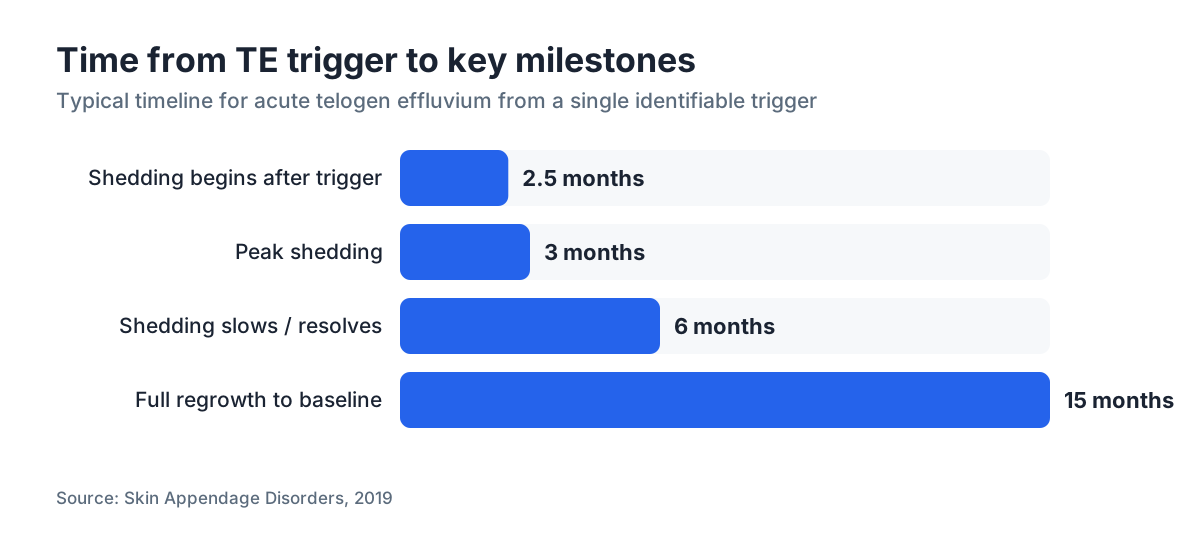
Acute TE, the kind triggered by a single event like surgery, childbirth, or a crash diet, typically peaks 2 to 3 months after the triggering event and then resolves over the next 3 to 6 months as follicles cycle back into anagen (the growth phase). Total regrowth to baseline density often takes 12 to 18 months from the trigger, not from when you first noticed shedding [5].
Chronic TE is different. It is defined as diffuse shedding lasting more than 6 months, and the triggers are often lower-grade and ongoing: persistent nutritional deficiency, chronic stress, subclinical thyroid disease, or fluctuating hormones. Chronic TE is harder to resolve and more likely to need sustained treatment.
Go back to your specialist (or seek a second opinion) if:
- Shedding has not started to slow after 6 months from the trigger
- You have completed the standard blood panel and nothing was found, yet shedding continues
- You notice hairline recession or thinning at the crown, which suggests androgenetic alopecia may be co-occurring
- Regrowth has started but seems patchy or uneven, which could point to alopecia areata
One useful data point: a 2019 study in Skin Appendage Disorders followed TE patients prospectively and found that 44% had a concurrent diagnosis of female-pattern hair loss that had been missed on initial presentation [5]. That is a common reason why 'TE' does not resolve as expected.
What questions should I ask my telogen effluvium specialist?
Walking into a hair loss appointment prepared makes a real difference, because even a good derm only gets 15 to 20 minutes with you. These are the questions worth asking directly.
-
Can you confirm this is TE and not androgenetic alopecia, or do I have both? The answer shapes the entire treatment plan.
-
What do my lab results actually mean for hair specifically? Labs read as 'normal' can still be hair-limiting, particularly ferritin and vitamin D.
-
Should I start minoxidil now or wait to see if shedding resolves on its own? There is no universal right answer. It depends on how long you have been shedding and whether you are also showing signs of pattern loss.
-
How will I know if I am improving? Ask for specific markers: pull test results, daily shed count benchmarks, or a follow-up trichoscopy.
-
When should I be concerned enough to come back sooner? Get a number. 'Come back if it gets worse' is not actionable.
-
Is there anything I am doing that could be making this worse? Products, heat styling, tight hairstyles, and certain supplements (like excess vitamin A or selenium) can worsen shedding.
Bring a rough timeline: when did shedding start, what major stressors or health events happened in the 3 to 6 months before it started, any medications begun or stopped, any significant weight changes. A one-page written timeline is genuinely useful and often surfaces the trigger faster than verbal recall alone.
Can a primary care doctor handle telogen effluvium, or do I need a specialist?
A good primary care physician can handle a large share of uncomplicated TE cases. They can order the full blood panel, spot an obvious trigger, treat iron deficiency or thyroid disease, and give sound reassurance that acute TE resolves on its own. For a postpartum woman or someone recovering from a serious illness with obvious timing, a specialist referral is often not needed.
You need a dermatologist referral when:
- The diagnosis is uncertain
- The blood panel is normal and shedding persists past 6 months
- There is concern for androgenetic alopecia, alopecia areata, or a scarring condition
- You want trichoscopy or a scalp biopsy
- Your primary care physician is not comfortable making hair-specific ferritin or vitamin D recommendations
The practical barrier is often access. In many areas, a dermatologist appointment takes 4 to 12 weeks. In that gap, your GP can start the lab workup so results are ready when you see the specialist, which saves a full visit cycle.
If you want a starting point before any appointment, the free AI hair scan at MyHairline can analyze your shedding pattern from photos and give you a structured summary of what a specialist is likely to look for. It is not a diagnosis, but it helps you arrive at that first appointment knowing the right questions.
Is telogen effluvium ever confused with androgenetic alopecia, and does it matter?
Yes, and it matters a lot, because the treatment path diverges completely.
Androgenetic alopecia (AGA) miniaturizes follicles over years, driven by DHT sensitivity. It causes patterned thinning: the classic M-shaped hairline recession in men, or diffuse thinning at the crown and part line in women. TE produces diffuse shedding across the whole scalp, often with no obvious patterning, and in a classic acute case the follicles themselves are not miniaturizing.
The overlap is common. A person with underlying AGA (which they may not have noticed) can develop TE on top of it. The AGA acts as a sensitizing condition that makes the scalp react more dramatically to a trigger. In these cases, treating only the TE leaves the AGA progressing silently.
Trichoscopy is the clinical tool that separates them. Miniaturized follicles on dermoscopy point toward AGA. A high ratio of telogen to anagen follicles without miniaturization points toward TE. A scalp biopsy with a horizontal section can confirm the diagnosis when dermoscopy is inconclusive.
For men, a receding hairline that seems to speed up during a TE episode often reveals that both processes are happening. A specialist who only addresses the TE and sends you home will miss the AGA. That is one of the most common complaint patterns in online hair loss communities, and it is avoidable with a thorough workup.
The combination of finasteride and minoxidil is relevant if AGA is confirmed alongside TE, but that is a decision for a prescribing physician based on your specific lab and clinical picture.
What red flags mean I need to see a specialist urgently, not in a few months?
Most TE is not a medical emergency. But some presentations deserve faster action.
See a dermatologist (or your GP urgently, with a derm referral) if you notice:
-
Complete bald patches or coin-sized areas of total hair loss. This pattern suggests alopecia areata, not TE, and early treatment improves outcomes [8].
-
Scalp pain, burning, itching, or visible scaling alongside shedding. Inflammatory scalp conditions, including seborrheic dermatitis, lichen planopilaris, and frontal fibrosing alopecia, can drive shedding and cause permanent loss if untreated.
-
Scarring or shiny patches on the scalp. Scarring alopecias destroy follicles permanently. They need diagnosis fast.
-
Shedding that began suddenly and is very heavy (hundreds of hairs per day over weeks) without an identifiable trigger 2 to 3 months prior.
-
Associated symptoms like significant fatigue, weight change, cold intolerance, joint pain, or facial swelling. These can point to thyroid disease, lupus, or other systemic illness driving the hair loss.
The AAD recommends seeing a board-certified dermatologist any time hair loss is causing distress or affecting quality of life, without waiting for an arbitrary severity threshold [1]. That is a reasonable standard. You do not need to lose 50% of your hair before a specialist visit is 'justified'.
Sources
- American Academy of Dermatology, Hair Loss overview
- Journal of the American Academy of Dermatology, 'The role of iron in hair loss' review
- Healthcare Bluebook, dermatology visit cost benchmarks
- FDA, minoxidil drug label (topical)
- Skin Appendage Disorders, 2019 prospective TE study
- AAD, Find a Dermatologist tool
- National Institutes of Health, MedlinePlus, Telogen effluvium
- National Institute of Arthritis and Musculoskeletal and Skin Diseases, Alopecia areata
- National Heart, Lung, and Blood Institute, Iron-deficiency anemia
- American Thyroid Association, Hypothyroidism patient information
- Journal of Clinical and Aesthetic Dermatology, oral minoxidil for hair loss review