
TL;DR: Finasteride (1 mg/day oral) is the best-evidenced DHT blocker for androgenetic alopecia, reducing scalp DHT by roughly 60-70% and showing hair regrowth or stabilization in about 83-90% of men in clinical trials. Dutasteride blocks more DHT but carries a heavier side-effect profile. Topical options and supplements exist but have far weaker evidence. No DHT blocker is a cure.
What is a DHT blocker and how does it work?
DHT (dihydrotestosterone) is the androgen most responsible for shrinking hair follicles in people with genetic hair loss. An enzyme called 5-alpha reductase converts testosterone into DHT inside the scalp's dermal papilla cells. Over years, DHT binds to androgen receptors in those cells and shortens the growth cycle of each hair, producing progressively thinner, shorter strands until the follicle stops producing visible hair altogether. A DHT blocker is any compound that either inhibits 5-alpha reductase (reducing how much DHT is made) or blocks DHT from binding to its receptor.
The distinction matters because 5-alpha reductase has two main subtypes, Type I and Type II. Type II is the dominant form in scalp follicles. Type I is more active in sebaceous glands and the liver. Finasteride selectively inhibits Type II. Dutasteride inhibits both Type I and Type II, which is why it suppresses more total DHT. Saw palmetto and a handful of other plant compounds are claimed to act on both subtypes, but the mechanism is far less studied and the effect size is much smaller.
Understanding what causes hair loss beyond just DHT is worth doing before you spend money, because DHT-driven androgenetic alopecia is only one cause of shedding. If your loss is from stress, thyroid problems, or telogen effluvium, a DHT blocker will not help.
Which DHT blockers actually have clinical evidence behind them?
Here is an honest ranking by strength of evidence:
| DHT Blocker | Mechanism | DHT Reduction | Evidence Level | FDA Approved for Hair Loss? |
|---|---|---|---|---|
| Finasteride 1 mg oral | Type II 5-AR inhibitor | ~60-70% scalp DHT [1] | Multiple RCTs, 5-year data | Yes (men, AGA) |
| Dutasteride 0.5 mg oral | Type I + II 5-AR inhibitor | ~90% scalp DHT [2] | Multiple RCTs | No (off-label) |
| Topical finasteride 0.25% | Type II 5-AR inhibitor, local | ~30-40% scalp DHT [3] | Phase II/III trials | No (off-label) |
| Topical minoxidil (indirect) | Vasodilator, not a DHT blocker | None directly | Extensive RCTs | Yes (AGA) |
| Saw palmetto | Weak 5-AR inhibition | Small, poorly quantified | Small, low-quality RCTs | No |
| Ketoconazole 2% shampoo | Possible anti-androgenic effect | Unknown | 1 small RCT vs minoxidil [4] | No |
| Pumpkin seed oil | Speculated 5-AR inhibition | Unknown | 1 small RCT [5] | No |
Finasteride sits at the top for one simple reason. It has the largest body of randomized, placebo-controlled trial data, a clearly defined mechanism, and FDA approval specifically for androgenetic alopecia in men. The 2-year registration trial published in the Journal of the American Academy of Dermatology found that 83% of men taking finasteride maintained or increased their hair count versus 28% on placebo [1].
Dutasteride wins on the pure DHT-suppression number. A key RCT published in the Journal of the American Academy of Dermatology found it superior to finasteride on hair count at 24 weeks [2]. The tradeoff is a longer half-life (roughly 5 weeks versus 6-8 hours for finasteride), which means side effects, if they occur, take longer to clear after stopping. It is also not FDA-approved for hair loss in the US, though it is approved in South Korea and Japan for that indication.
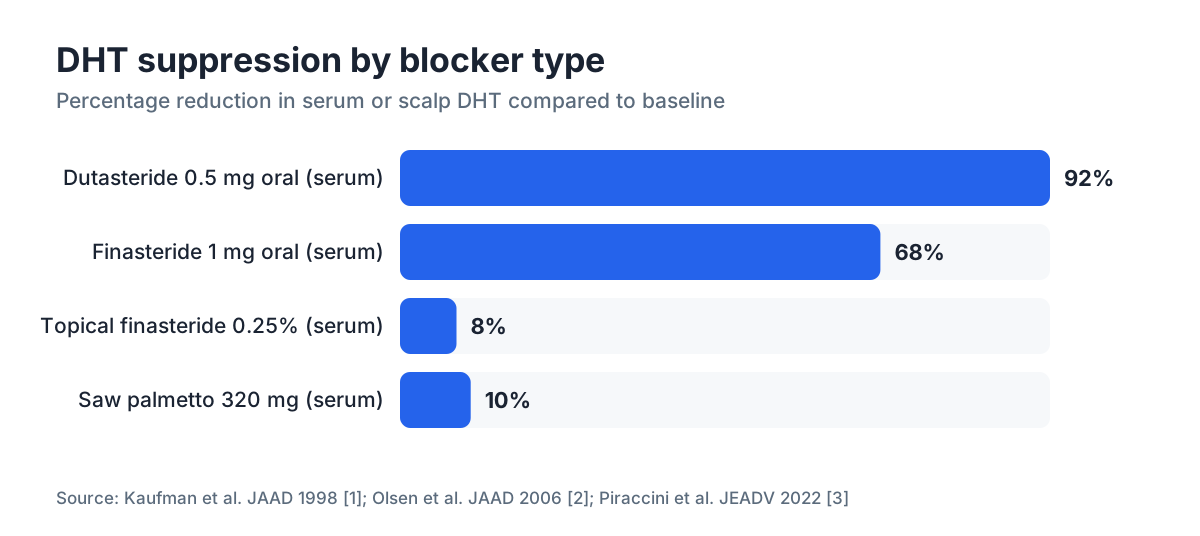
Topical finasteride is interesting because it delivers the drug directly to scalp tissue while producing far lower serum DHT reduction (around 7-8% in some studies versus 70% for oral finasteride) [3]. That could matter if you're worried about systemic sexual side effects. Evidence is building, but it's newer, and the long-term data just isn't there yet the way it is for oral finasteride.
Everything below those three is weaker by a wide margin. That doesn't mean saw palmetto or ketoconazole shampoo can't be part of a reasonable, low-risk routine. It means their effect sizes are small enough that you should not expect visible results, and you should not skip a proven treatment in favor of them.
How effective is finasteride as a DHT blocker?
Finasteride 1 mg daily is the most studied oral DHT blocker for male pattern hair loss. In the two large 2-year trials that supported its FDA approval, about 83% of men treated with finasteride showed no further loss or measurable regrowth, compared to 28% on placebo [1]. A 5-year open-label extension of one of those studies found continued benefit: 90% of men maintained hair counts at year 5, and about 65% showed an increase from baseline.
The FDA label states that finasteride works specifically for male androgenetic alopecia at the vertex and anterior mid-scalp. Results at the temples are more modest and less consistent, which is a real limitation if your primary concern is a receding hairline.
For women: finasteride is FDA-approved for men only. It is teratogenic in pregnancy, meaning it can cause birth defects if a pregnant woman is exposed. Some dermatologists prescribe it off-label to postmenopausal women, but this is not a first-line recommendation and requires a conversation with a physician.
You can read a full breakdown of dosing, timelines, and what to do if you experience side effects in the dedicated finasteride article.
How does dutasteride compare to finasteride for blocking DHT?
Dutasteride 0.5 mg daily suppresses serum DHT by roughly 90-95% compared to about 70% for finasteride [2]. On paper that sounds decisively better. In practice, the clinical difference in hair count improvement between the two drugs is real but moderate, and the safety-profile difference is where most decisions end up getting made.
A head-to-head RCT comparing dutasteride 0.5 mg to finasteride 1 mg over 24 weeks found statistically greater hair counts with dutasteride, and the difference held up at 1 year in subsequent analyses [2]. The American Academy of Dermatology's clinical practice guidelines acknowledge dutasteride as an option for men with androgenetic alopecia, though they note it is used off-label in the US [6].
The side-effect profile for both drugs includes sexual side effects (decreased libido, erectile dysfunction, reduced ejaculate volume) in roughly 2-4% of men in trials, though post-marketing and longer-term surveys report higher rates. Because dutasteride's half-life is so long (approximately 5 weeks), any side effects that do appear persist after stopping the drug for much longer than with finasteride. That is a real practical concern, more than a theoretical one.
If someone is already taking finasteride and seeing good response, there is usually no compelling reason to switch to dutasteride. If finasteride hasn't produced visible results after 12-18 months, dutasteride is a reasonable next step to discuss with a dermatologist.
Do topical DHT blockers work as well as oral ones?
Topical finasteride is the most clinically supported topical DHT blocker. It reduces scalp DHT locally while limiting how much drug enters systemic circulation. A Phase III trial published in 2019 (Piraccini et al.) found that topical finasteride 0.25% solution applied once daily produced similar hair count improvements to oral finasteride 1 mg over 24 weeks, with roughly 80-90% lower serum DHT suppression [3]. That lower systemic exposure is the main reason people choose it.
The catch: it's not FDA-approved and it's typically compounded by specialty pharmacies, which introduces variability in formulation, potency, and cost. Prices run anywhere from $30 to $80+ per month depending on the compounding pharmacy. Quality control is not the same as a mass-manufactured approved drug.
Ketoconazole 2% shampoo (prescription-strength in the US) has one older, small RCT from 1998 suggesting it performed comparably to 2% minoxidil for hair density after 6 months [4]. That single study is cited constantly, but it hasn't been replicated at scale, and the effect size was modest. Most dermatologists use it as an adjunct, not a standalone treatment.
Topical minoxidil is sometimes listed under DHT blockers in consumer content. That's misleading. Minoxidil for men works as a vasodilator and potassium channel opener. It doesn't reduce DHT at all. It just helps existing follicles grow hair more effectively. It's often combined with DHT blockers for that reason, which is covered in more detail in the finasteride and minoxidil overview.
Are natural or OTC DHT blockers like saw palmetto worth it?
Saw palmetto is the most studied natural DHT blocker. It's derived from the berry of Serenoa repens and is thought to weakly inhibit 5-alpha reductase, though the exact mechanism and potency are not well characterized in human hair-follicle tissue.
The best available trial is a small 2002 RCT that compared saw palmetto 320 mg twice daily to finasteride 1 mg daily in 38 men with AGA. After 21 months, 68% of the finasteride group showed improved hair growth versus 38% in the saw palmetto group [7]. That study is underpowered, has no placebo arm, and has not been replicated at meaningful scale. Calling saw palmetto a "natural alternative" to finasteride based on this is not honest.
Pumpkin seed oil has a similarly thin evidence base. One 2014 RCT of 76 men found a 40% increase in hair count after 24 weeks compared to placebo, a statistically significant result [5]. Interesting, but it's one small study, and the effect size in absolute hair counts was not large.
Biotin, zinc, and other supplements marketed as DHT blockers are largely unsupported by direct clinical evidence for androgenetic alopecia, though correcting actual deficiencies (like proven low ferritin or zinc deficiency) can reduce shedding from nutritional causes. A fuller look at what the evidence says for supplements is in the hair loss supplements article.
The honest verdict on natural options: none have the evidence to replace finasteride or dutasteride if you have real androgenetic alopecia and want to stop the loss. They're low-risk additions, not replacements. If you're philosophically opposed to pharmaceuticals or your hair loss is mild and early, trying saw palmetto is reasonable, but go in with realistic expectations.
What are the side effects of DHT blockers?
This is the question that stops most people from starting. Let's be direct about what the data actually says.
For oral finasteride, the clinical trials report sexual side effects (decreased libido, erectile dysfunction, decreased ejaculate volume) in roughly 2-4% of men, versus about 1% in placebo groups [1]. Most of these resolved after stopping the drug in trials. Post-marketing case series and patient surveys have reported higher rates, and a subset of men describe persistent effects after discontinuation (sometimes called post-finasteride syndrome). The FDA added a label update in 2012 noting that these side effects may persist [8]. The data on post-finasteride syndrome prevalence is genuinely uncertain, the studies vary widely in methodology, and no controlled prospective trial has clearly defined its incidence [12].
For dutasteride, the side-effect profile is similar in clinical trials. The longer half-life is the main practical difference, as effects take longer to reverse after stopping.
For topical finasteride, the lower systemic absorption means far lower serum DHT suppression, and early trial data suggests a lower rate of systemic side effects, though the studies are shorter and smaller than the oral finasteride literature [3].
Saw palmetto's known side effects are gastrointestinal upset at higher doses. It has antiplatelet properties in some studies, which matters if you're on blood thinners.
Nobody should be making this decision based on internet forums alone. A real conversation with a dermatologist about your personal health history is worth doing before starting any 5-alpha reductase inhibitor. If you want to understand the minoxidil side effects profile by comparison, that's a separate and generally milder picture.
How long does it take for a DHT blocker to show results?
Expect to wait 3 to 6 months before you see any change at all, and 12 months before you get a fair assessment of whether the treatment is working for you.
Hair follicles operate on a cycle of growth (anagen), transition (catagen), and rest (telogen). Finasteride slows and eventually reverses the miniaturization process, but it can only affect hairs as they enter new growth cycles. That biological reality is why the timeline feels so slow compared to, say, treating an infection.
Some people notice a brief shedding increase in the first few months of starting a DHT blocker. This is not the drug failing. It's often resting hairs being pushed out by new growth, a phenomenon similar to the minoxidil shed. It usually resolves within 2-3 months.
At 12 months on finasteride: roughly 83-90% of men have maintained or improved hair count [1]. At 2 years: those numbers hold, and for many people, modest regrowth has become more visible.
At 5 years: the extension trial showed that men who stopped finasteride returned to pre-treatment hair loss levels within 12 months, meaning the drug needs to be taken long-term to maintain its effects [1]. This is perhaps the most underappreciated fact about DHT blockers. They are maintenance treatments, not a short course.
Can women use DHT blockers?
This is more complicated than the male picture and comes with important safety caveats.
Finasteride is FDA-approved only for men. It is contraindicated in pregnancy under the current PLLR labeling system (formerly Pregnancy Category X) because it can cause abnormalities in male fetal genitalia [8]. Premenopausal women who could become pregnant should not take it or handle crushed tablets.
For postmenopausal women, some dermatologists prescribe finasteride 1-2.5 mg daily off-label for female pattern hair loss. A small number of published case series and open-label studies show benefit, but there are no large RCTs in women comparable to the male data. A 2016 Cochrane review of treatments for female pattern hair loss concluded there was insufficient high-quality evidence to support most options, finasteride included [11].
Dutasteride is similarly off-label in women and similarly contraindicated in pregnancy.
Spironolactone is an androgen receptor blocker (not a 5-AR inhibitor, so it works differently) that is more commonly prescribed off-label for women with female pattern hair loss. It doesn't reduce DHT production, but it blocks the receptor DHT binds to. The American Academy of Dermatology clinical guidelines include it as an option for women, though it also requires careful medical supervision [6].
Saw palmetto is sometimes used by women as a gentler option, but the evidence in female pattern hair loss specifically is even thinner than in men.
If you're a woman dealing with hair loss, the diagnostic workup matters a lot because causes are more heterogeneous than in men. Rule out thyroid disease, iron deficiency, and hormonal causes before jumping to any DHT-related treatment.
Should you combine a DHT blocker with minoxidil?
Combining finasteride with minoxidil is probably the most evidence-backed two-drug approach available for male androgenetic alopecia.
The logic makes sense mechanistically. Finasteride attacks the upstream hormonal cause by reducing DHT, while minoxidil works at the follicle level to extend the anagen phase and increase blood flow to the scalp. They don't interact pharmacologically in any meaningful negative way.
A 2015 study published in Dermatology and Therapy comparing finasteride alone, minoxidil alone, and the combination found that the combination group had significantly greater hair density improvement at 12 months than either drug alone [9]. The combination doesn't work for everyone, but the general principle is well supported.
The practical question is sequencing. Many dermatologists start patients on one drug and add the second if the first alone isn't sufficient after 12 months. Others start both together immediately, particularly if the loss is already significant. There's no single right answer, and the decision depends on how aggressive your loss is and your tolerance for side effects and cost.
The finasteride and minoxidil overview covers this combination in much more detail, including dosing and what happens when you add oral minoxidil to the mix.
If you're trying to figure out where you stand before deciding on treatment, a free AI hair analysis at MyHairline can help you map your current loss pattern against Norwood stages, which is a useful starting point for any conversation with a dermatologist.
When should you consider a hair transplant instead of or alongside DHT blockers?
DHT blockers and hair transplants are not competing choices. They're often used together.
A hair transplant moves DHT-resistant follicles from the back and sides of the scalp (the donor zone) to areas of loss. Those transplanted follicles keep their DHT resistance in their new location, which is why transplanted hair tends to be permanent. But the native follicles in the recipient zone are still subject to DHT-driven miniaturization. If you get a transplant without taking a DHT blocker, you may continue losing your original hair around the transplanted grafts, creating an unnatural pattern over time.
Most hair restoration surgeons recommend that patients be on finasteride (or dutasteride) before and after a transplant to stabilize the non-transplanted hair. Some surgeons won't operate on younger patients with rapidly progressing loss unless they're committed to medical therapy, precisely because the final loss pattern isn't established yet.
The right time to start thinking about a transplant is generally when medical treatment (DHT blockers with or without minoxidil) has stabilized your loss, your loss pattern is advanced enough that medical therapy alone won't restore the density you want, and you're a good donor candidate. That's a conversation for a board-certified dermatologist or hair restoration surgeon, not a consultation center with a financial interest in getting you on the table quickly.
What does the FDA actually say about DHT blockers?
The FDA has approved two 5-alpha reductase inhibitors: finasteride and dutasteride. Their approvals and labeled indications differ in important ways.
Finasteride at 1 mg (brand name Propecia, now widely available as generic) is FDA-approved specifically for androgenetic alopecia in men. The approval is for the vertex and anterior mid-scalp region in men 18-41 years old, which is the age range studied in the registration trials [8]. It is not approved for women.
Finasteride at 5 mg (brand name Proscar) is approved for benign prostatic hyperplasia (BPH), a different indication entirely. Some men use this and cut pills to approximate a 1 mg daily dose, which is dramatically cheaper than the hair-loss-labeled 1 mg product. This is off-label use, and the dosing imprecision from cutting pills is a real consideration.
Dutasteride 0.5 mg (brand name Avodart) is FDA-approved only for BPH in the US. Its use for hair loss here is entirely off-label, though it is approved for AGA in South Korea and Japan.
The FDA's 2012 label update for finasteride added information about sexual dysfunction side effects that may persist after discontinuation [8]. This was a meaningful label change and worth reading if you're considering the drug.
No over-the-counter supplement marketed as a "DHT blocker" has FDA approval for treating hair loss. They are sold as dietary supplements under DSHEA (Dietary Supplement Health and Education Act), which means no pre-market efficacy approval is required [10].
Sources
- Kaufman KD et al., Journal of the American Academy of Dermatology, 1998 (finasteride 2-year trial)
- Olsen EA et al., Journal of the American Academy of Dermatology, 2006 (dutasteride vs finasteride RCT)
- Piraccini BM et al., Journal of the European Academy of Dermatology and Venereology (JEADV), 2022 (topical finasteride Phase III)
- Pierard-Franchimont C et al., Dermatology, 1998 (ketoconazole vs minoxidil RCT)
- Cho YH et al., Evidence-Based Complementary and Alternative Medicine, 2014 (pumpkin seed oil RCT)
- American Academy of Dermatology, Clinical Guidelines for Androgenetic Alopecia
- Prager N et al., Journal of Alternative and Complementary Medicine, 2002 (saw palmetto vs finasteride)
- FDA, Propecia (finasteride) prescribing information and label updates
- Hu R et al., Dermatology and Therapy, 2015 (finasteride + minoxidil combination study)
- FDA, Dietary Supplements Overview (DSHEA)
- van Zuuren EJ et al., Cochrane Database of Systematic Reviews, 2016 (interventions for female pattern hair loss)
- Traish AM et al., Sexual Medicine Reviews, 2015 (post-finasteride syndrome review)