

TL;DR: Female alopecia has several proven treatments depending on type. FDA-approved 2% and 5% minoxidil work for androgenetic alopecia. Alopecia areata responds to corticosteroids, and the JAK inhibitor baricitinib was FDA-approved for severe cases in 2022. No treatment cures the underlying condition, but most women see meaningful regrowth with the right protocol.
What is female alopecia and how many women does it affect?
Alopecia is simply the medical term for hair loss. In women it covers several distinct conditions that look different, feel different, and respond to completely different treatments. That distinction matters because women who self-treat with the wrong product often waste months before finding something that actually helps.
The most common type is female pattern hair loss (FPHL), also called androgenetic alopecia. It affects roughly 40% of women by age 50, and up to 55% by age 70 [1]. Unlike men, women with FPHL typically lose density across the top of the scalp in a "Christmas tree" pattern rather than a receding frontal hairline. If you want to understand what drives it biologically, the overview on what causes hair loss is worth reading.
Alopecia areata is an autoimmune condition where the immune system attacks hair follicles. It affects about 2% of the global population at some point in life [2]. In women it often appears as one or more smooth, round bald patches. When it involves the face, particularly eyebrows and eyelashes, it is called alopecia areata on the face. Total scalp loss is alopecia totalis; loss of all body hair is alopecia universalis.
Two other types show up often in women. Telogen effluvium is diffuse shedding triggered by physical or emotional stress, hormonal shifts, or nutritional deficiency. It usually resolves on its own once the trigger is removed, but it can be frightening. Read more about the timeline and causes in the telogen effluvium guide. Traction alopecia and central centrifugal cicatricial alopecia (CCCA) are more common in Black women and involve scarring if caught late, making early treatment especially important [3].
What causes alopecia areata in females specifically?
Alopecia areata in women is an autoimmune disease. The immune system misidentifies hair follicle cells as foreign and launches a T-cell attack against them. Follicles get damaged but not permanently destroyed, which is why regrowth is possible [2].
Genetics load the gun. First-degree relatives of people with alopecia areata carry a meaningfully higher lifetime risk, and genome-wide association studies have identified over 14 chromosomal regions linked to the disease [4]. But genes alone do not decide whether someone develops it.
For women specifically, hormonal fluctuations appear to modulate immune activity. Onset or flare-ups often coincide with pregnancy, postpartum recovery, perimenopause, or thyroid dysfunction. Thyroid autoimmunity in particular co-occurs with alopecia areata at rates far above chance: one review in the Journal of the American Academy of Dermatology found thyroid disease in 8-28% of alopecia areata patients depending on the population studied [4]. So any workup for alopecia areata in women should include thyroid antibodies, more than TSH.
Stress is real but overrated as a standalone cause. It can trip a flare in someone already genetically susceptible. It does not conjure alopecia areata in people without the underlying immune predisposition.
How is female alopecia diagnosed before treatment starts?
Treatment without diagnosis is guessing. A board-certified dermatologist can usually name the alopecia type from the pattern and a pull test alone, but bloodwork matters when the cause is unclear.
A standard workup for women with diffuse or patchy hair loss typically includes complete blood count, ferritin (more than total iron), thyroid-stimulating hormone with free T4, thyroid antibodies (anti-TPO), DHEA-S, total and free testosterone, prolactin, and sometimes a scalp biopsy [1]. Ferritin is the one most often missed by primary care doctors. Serum ferritin below 30 ng/mL has been associated with telogen effluvium, and many labs flag deficiency only at levels well below that [5].
Dermoscopy, a magnified look at the scalp through a handheld lens, lets the dermatologist see follicle density, miniaturization, and the exclamation-mark hairs characteristic of active alopecia areata without needing a biopsy. Many academic dermatology centers now use trichoscopy software to track progress over time.
If you want a preliminary picture before your appointment, the free AI hair scan at MyHairline can map your pattern and flag characteristics consistent with different alopecia types. It does not replace a dermatologist for diagnosis.
What are the FDA-approved treatments for female androgenetic alopecia?
Topical minoxidil is the only FDA-approved drug specifically indicated for female pattern hair loss. The 2% solution was approved for women in 1991; the 5% foam followed. The FDA label for the 5% foam says it is "for use once daily" in women, while the 2% solution is labeled for twice daily application [6].
Minoxidil does not block DHT. It prolongs the anagen (growth) phase and widens blood vessels around the follicle. In randomized trials, 5% foam produced statistically significant increases in non-vellus target area hair count compared with placebo at 24 weeks [6]. Most women see stabilization first, then modest regrowth over 4-6 months. Stop minoxidil and you shed the hair it was maintaining, usually within 3-6 months. It is a long-term commitment.
Common side effects include scalp irritation and, with the solution, facial hypertrichosis (unwanted hair on the face and forehead) from the propylene glycol vehicle dripping. The foam largely avoids that because it dries faster. See the full breakdown of risks in the minoxidil side effects guide.
Oral minoxidil at low doses (0.25-2.5 mg/day) has grown fast in clinical use for women, though it is currently off-label. A 2021 study in JAAD found low-dose oral minoxidil effective for female pattern hair loss with a favorable safety profile, though fluid retention and hypertrichosis remain dose-dependent concerns [7]. More detail on the oral route is in the oral minoxidil article.
| Treatment | FDA status (women) | Typical dose | Time to see results |
|---|---|---|---|
| Topical minoxidil 2% | Approved | 1 mL twice daily | 4-6 months |
| Topical minoxidil 5% foam | Approved | Half-cap once daily | 4-6 months |
| Oral minoxidil | Off-label | 0.25-2.5 mg/day | 3-6 months |
| Finasteride | Off-label (postmenopausal) | 1-2.5 mg/day | 6-12 months |
| Spironolactone | Off-label | 100-200 mg/day | 6-12 months |
| Baricitinib | Approved (alopecia areata) | 2 or 4 mg/day | 3-6 months |
Does finasteride work for women with hair loss?
Finasteride is FDA-approved for androgenetic alopecia in men, not women. Dermatologists still prescribe it off-label to postmenopausal women, and some evidence supports that.
Finasteride blocks 5-alpha reductase type 2, cutting the conversion of testosterone to DHT. DHT miniaturizes androgen-sensitive follicles in both men and women. The catch for women of childbearing age is serious: finasteride is a teratogen classified as FDA Pregnancy Category X. It can cause genital abnormalities in a male fetus, so it must not be taken by women who are pregnant or may become pregnant [8]. Even handling crushed tablets carries a warning.
For postmenopausal women, several small randomized controlled trials show benefit. A 2012 RCT in the Journal of the American Academy of Dermatology found statistically significant hair density improvement with 1 mg/day finasteride over 12 months in postmenopausal women with FPHL [8]. Doses used clinically range from 1 mg to 5 mg, though the risk-benefit math above 2.5 mg in women is less studied.
Spironolactone is the more commonly used antiandrogen for premenopausal women with FPHL. It is an aldosterone antagonist that also blocks androgen receptors at the follicle. Doses of 100-200 mg/day are typical. Evidence comes mostly from retrospective studies and small RCTs rather than large phase III trials, but it is widely used and generally well tolerated apart from menstrual irregularities. For more on how DHT-blocking drugs work mechanically, the DHT blocker article explains the pathway clearly.
What treatments work for alopecia areata in females?
Alopecia areata needs a different treatment framework from androgenetic alopecia because the problem is immune-driven, not hormonal.
For limited patchy disease, intralesional corticosteroid injections remain the first-line treatment recommended by the American Academy of Dermatology. Triamcinolone acetonide, typically 5-10 mg/mL, is injected directly into bald patches every 4-6 weeks. The AAD guideline states injections "are the most effective treatment for limited alopecia areata" [3]. Regrowth often appears within 4-8 weeks of the first injection. The downside: injections hurt and require clinic visits.
Topical steroids (clobetasol propionate) are used when injections are not feasible, particularly for children or patients with extensive disease. Evidence for topical steroids alone is weaker than for injections.
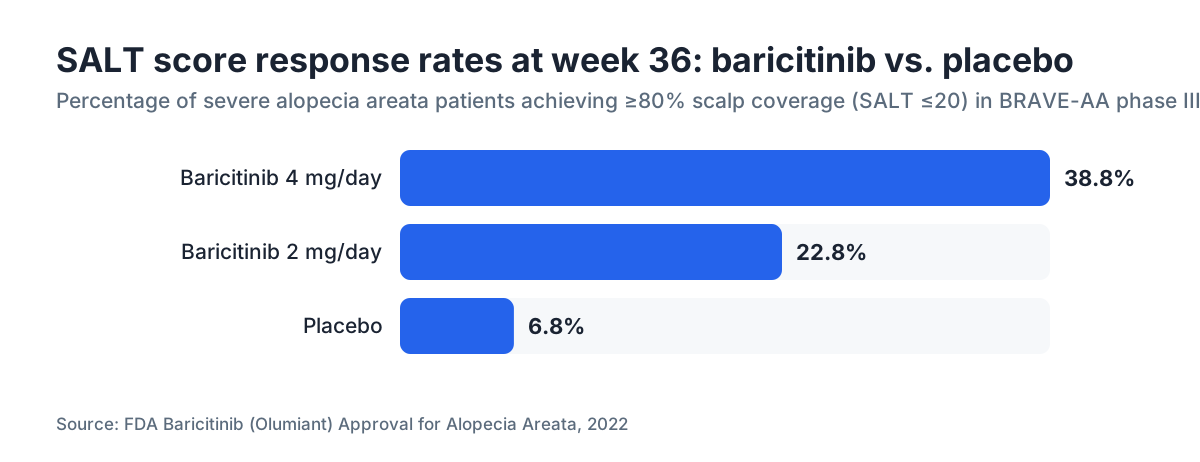
For severe, extensive, or fast-progressing alopecia areata, the picture shifted in 2022 when the FDA approved baricitinib (Olumiant, 2 mg and 4 mg) for severe alopecia areata in adults. That made baricitinib the first systemic drug approved specifically for alopecia areata. In the BRAVE-AA1 and BRAVE-AA2 phase III trials, 38.8% of patients on 4 mg baricitinib reached a SALT score of 20 or less (at least 80% scalp coverage) at week 36, compared with 6.8% on placebo [9].
Ritlecitinib (Litfulo), another JAK inhibitor, got FDA approval in 2023 for severe alopecia areata in patients 12 and older, the first approval covering adolescents. A 50 mg once-daily dose produced a SALT 20 response in 23% of patients versus 1.6% for placebo at week 24 in the ALLEGRO trial [9].
Both drugs carry boxed warnings about serious infections, malignancy risk, and thrombosis from their shared JAK inhibitor class. These are not mild drugs. Patients need regular monitoring and honest conversations about risk before starting.
How is alopecia areata on the face treated?
Alopecia areata on the face, meaning loss of eyebrows and eyelashes, is one of the harder presentations emotionally because it is visible and tough to conceal. Treatment follows the same principles as scalp disease with a few practical tweaks.
For eyebrows, intralesional triamcinolone injections are commonly used at lower concentrations (2.5-5 mg/mL) to reduce the risk of skin atrophy in thin periorbital tissue. Bimatoprost, originally an eye-pressure drop later approved under the brand Latisse for eyelash hypotrichosis, is sometimes used off-label to support eyelash regrowth, though evidence for alopecia areata specifically is limited.
Systemic JAK inhibitors like baricitinib and ritlecitinib do produce eyebrow and eyelash regrowth in clinical trials, and for women with both scalp and facial alopecia areata, systemic treatment may be the most practical single approach. In the BRAVE-AA2 trial, eyebrow and eyelash scores improved significantly in the 4 mg baricitinib arm [9].
Cosmetic options (microblading, brow makeup, lash extensions) are not treatments, but they matter for quality of life while medical therapy catches up. Dermatologists who specialize in alopecia areata understand this and most will discuss both.
What role do hormones and thyroid health play in female hair loss treatment?
You cannot treat female alopecia well without checking the hormonal environment. This is where many women get stuck: their dermatologist hands them minoxidil, it helps a little, and no one has measured ferritin or thyroid antibodies.
Hypothyroidism slows the hair cycle across the whole scalp, producing diffuse telogen effluvium. Correcting hypothyroidism with levothyroxine is the treatment for that hair loss. Stacking minoxidil on top of an untreated thyroid problem is inefficient.
Polycystic ovary syndrome (PCOS) raises androgen levels, which speeds up female pattern hair loss in susceptible women. Treating PCOS (often with combined oral contraceptives, metformin, or spironolactone) addresses both the hormonal dysregulation and the hair loss at once.
Postpartum hair loss is almost always telogen effluvium triggered by the sharp drop in estrogen after delivery. It is self-limiting in most women, resolving by 12 months postpartum. Minoxidil is generally not recommended during breastfeeding due to insufficient safety data.
Iron deficiency without anemia is probably the most underappreciated reversible cause of female hair loss. A serum ferritin below 30 ng/mL in a woman with diffuse shedding warrants iron supplementation before or alongside other treatment. Some dermatologists aim for ferritin above 70 ng/mL in women with active telogen effluvium, though the evidence for that specific threshold is observational rather than from RCTs [5].
Are there non-drug treatments worth considering for women with alopecia?
Platelet-rich plasma (PRP) has built a real evidence base over the past decade. The procedure draws the patient's blood, spins it to concentrate platelets and growth factors, and injects it into the scalp. A 2019 systematic review in Dermatologic Surgery found PRP statistically improved hair density and thickness in androgenetic alopecia patients [10]. Results are not permanent and sessions every 3-6 months are usually needed, which makes cost add up fast ($500-2,000 per session depending on practice).
Low-level laser therapy (LLLT) devices, sold as laser combs and caps, are FDA-cleared (not FDA-approved as drugs) for promoting hair growth. Clearance means the device is substantially equivalent to an existing device, not that large RCTs proved it works. The evidence is modest but positive: a 2014 RCT published in Lasers in Surgery and Medicine found a significant increase in hair density with a 655 nm laser comb versus sham device at 26 weeks [11]. Reasonable as an add-on, not a standalone treatment.
Hair transplant surgery is an option for women with stable androgenetic alopecia who have not responded well enough to medical therapy, but patient selection is harder than in men. Women usually have diffuse loss rather than a well-defined stable donor zone, which limits candidacy. A thorough explanation of who is and is not a good candidate is in the hair transplant guide. Women with active alopecia areata should not pursue transplant because the autoimmune attack will destroy transplanted follicles.
Nutritional supplements marketed for hair growth are mostly unevidenced or underproven. Biotin is the most overhyped. Unless a woman is truly biotin-deficient (rare outside of specific gastrointestinal conditions), high-dose biotin supplementation does not produce meaningful regrowth. It does interfere with thyroid lab results, which is clinically relevant. The evidence picture for various supplements is covered honestly in the hair loss supplements article.
How much do female alopecia treatments cost and what does insurance cover?
Cost swings enormously by treatment type and whether insurance applies.
Topical minoxidil 2% solution is available as a generic over the counter. A month's supply costs roughly $8-20 at most pharmacies. Brand-name 5% foam (Rogaine) runs $25-45/month. Generic 5% foam is cheaper still.
Oral minoxidil off-label prescriptions typically cost $10-40/month for generic tablets at the doses used for hair loss, though telehealth services vary.
Spironolactone generics are inexpensive, often under $30/month. Finasteride generics run $10-30/month.
Baricitinib (Olumiant) for severe alopecia areata carries a list price of roughly $2,700-3,200/month, though manufacturer copay cards and insurance can cut that a lot. Most major commercial insurance plans cover it for the approved severe alopecia areata indication after prior authorization. Medicare Part D coverage varies by plan [9].
PRP sessions cost $500-2,000 per session out of pocket; virtually no insurance covers it.
Hair transplant surgery for women is almost never covered by insurance. FUT and FUE procedures in the United States typically range from $4,000 to $15,000 total depending on the number of grafts and the practice [10].
Most prescription treatments for hair loss are considered cosmetic by insurers, which means even finasteride and spironolactone may require out-of-pocket payment or an appeal. Women who get a clear androgenetic alopecia diagnosis in writing from a dermatologist have the best shot at prior authorization when a medical indication can be argued.
What is the most practical treatment plan for a woman just starting out?
Start with diagnosis, not a product. See a dermatologist and get the bloodwork described above. Treating the wrong type of alopecia is a common and expensive mistake.
For female pattern hair loss confirmed by a dermatologist, the first step for most women is 5% minoxidil foam once daily. It has the strongest evidence, is FDA-approved, is cheap, and tolerability is good. Then check whether ferritin, thyroid, and iron levels are optimal. If they are not, correct those deficiencies in parallel.
If you have PCOS or other signs of hyperandrogenism and you are premenopausal, your dermatologist may add spironolactone 100-200 mg/day. If you are postmenopausal, finasteride 1 mg/day is a reasonable discussion, weighing the modest evidence against any relevant cardiovascular history.
For alopecia areata: one or two small patches means start with intralesional steroid injections and give them 3-4 months. If disease is extensive or moving fast, a referral to a dermatologist who prescribes JAK inhibitors is warranted. Baricitinib and ritlecitinib are genuinely different from anything available before 2022 for severe alopecia areata.
Tracking matters. Take photos in consistent lighting every 4-6 weeks. Hair loss progress is slow and easy to misread without objective data. If you want an AI-assisted way to track your pattern over time before or between dermatologist visits, MyHairline's free scan can give you a baseline to compare against. Still, nothing replaces consistent follow-up with a dermatologist who can adjust the plan based on what they see.
Combining finasteride and minoxidil is sometimes used in postmenopausal women with FPHL resistant to minoxidil alone, mirroring what works well in men.
Sources
- American Academy of Dermatology, Hair Loss in Women
- National Alopecia Areata Foundation, About Alopecia Areata
- American Academy of Dermatology, Alopecia Areata: Diagnosis and Treatment Guidelines
- Petukhova L et al., Nature Genetics, Genome-wide association study in alopecia areata implicates both innate and adaptive immunity
- Trost LB et al., Journal of the American Academy of Dermatology, The diagnosis and treatment of iron deficiency and its potential relationship to hair loss
- FDA, Minoxidil Topical Solution and Foam Drug Label
- Randolph M and Tosti A, Journal of the American Academy of Dermatology, Oral minoxidil treatment for hair loss: a review of efficacy and safety
- FDA, Finasteride Drug Label (Propecia/Proscar)
- FDA, Baricitinib (Olumiant) Approval for Alopecia Areata, 2022
- Leavitt M et al., Lasers in Surgery and Medicine, HairMax LaserComb laser phototherapy device to treat male and female pattern hair loss