

TL;DR: About 16% of men aged 18-29 have moderate to extensive hair loss, rising to roughly 53% by their 50s and around 80% by their 70s. These figures come from the largest population study on androgenetic alopecia. Genetics drive the timeline, but effective treatments exist at every stage if you catch it early enough.
What percentage of men go bald, and at what age does it start?
The most-cited numbers come from a 1998 study by Norwood published in the Journal of the American Academy of Dermatology, plus a larger 2004 population survey by Rhodes et al. conducted in Framingham, Massachusetts. Together they give the clearest picture we have of how male pattern baldness progresses with age. [1][2]
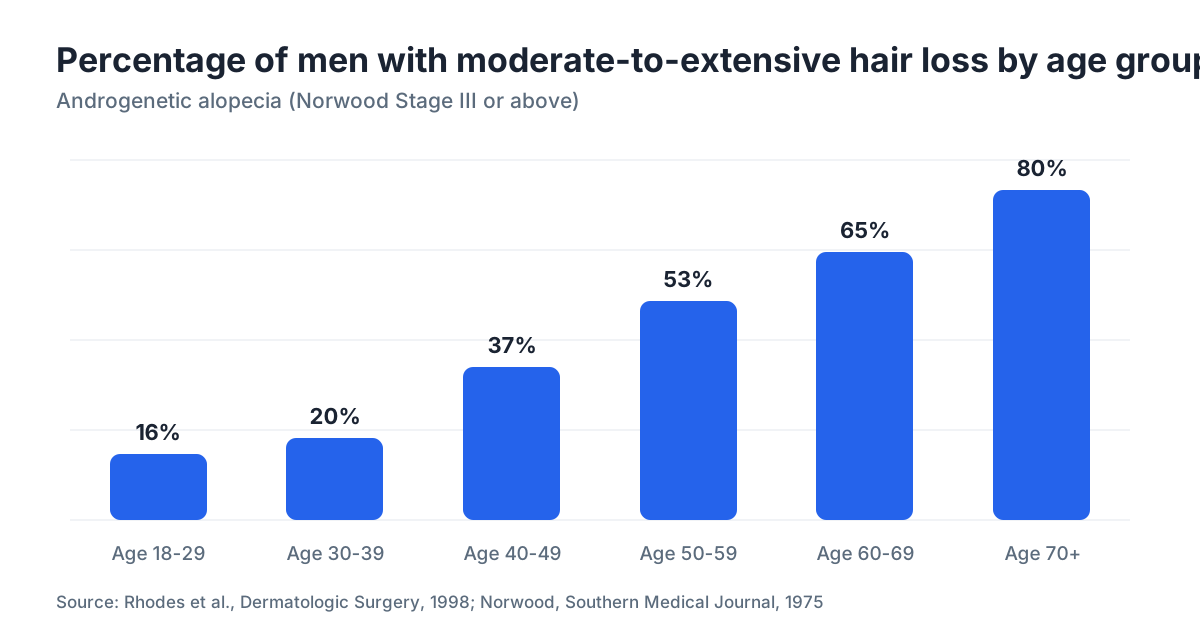
Here is what the data actually shows:
| Age group | % with moderate-to-extensive hair loss |
|---|---|
| 18-29 | ~16% |
| 30-39 | ~20% |
| 40-49 | ~37% |
| 50-59 | ~53% |
| 60-69 | ~65% |
| 70+ | ~80% |
A few things to know about these numbers. They measure moderate to extensive loss, so men with very early thinning (Norwood Stage II, a barely-visible recession) are not counted. Count everyone with any detectable thinning and the percentages climb at every age. The Framingham data also leaned on self-report for some measures, so there is modest uncertainty in the younger brackets. [2]
The short version: hair loss is common, and it starts earlier than most men expect. One in six men in their twenties already has noticeable loss.
How does male pattern baldness progress decade by decade?
Your twenties are when androgenetic alopecia (AGA) first shows up for a meaningful minority of men. The classic sign is a receding hairline at the temples, sometimes called a maturing hairline, though "maturing" can mislead because for some men it just keeps going. Work by Hamilton in 1951 and Norwood's later revisions established that roughly 25% of men begin losing hair before age 21. [1]
By your thirties, the hairline recession often speeds up and crown thinning may open a second front. This is when many men first notice the problem, because the two areas can start to merge. The 30-39 bracket sits around 20% in moderate-to-extensive categories, but that figure understates diffuse early thinning that shows up more clearly in photos or harsh lighting.
Forty to fifty is where the statistics jump hard. The percentage with significant loss goes from roughly 20% to 37% inside that single decade. [2] Testosterone-to-DHT conversion has been running for twenty-plus years by now, and follicles that were only miniaturizing in your thirties may be close to permanently inactive.
Past sixty, most men who were going to lose hair have lost most of it. New loss slows not because biology relents, but because there is less hair left to shed. By the mid-seventies, about 4 in 5 men have significant baldness. [1]
For women reading this: female pattern hair loss exists too, though it presents differently (diffuse thinning at the crown, rarely a fully bald scalp). The statistics above are specific to men.
What causes male pattern baldness in the first place?
The short answer is genetics plus dihydrotestosterone (DHT). [3] DHT is a potent androgen converted from testosterone by an enzyme called 5-alpha reductase. In men who inherit the relevant sensitivity, DHT binds to receptors in scalp follicles and shrinks them over years. Each hair grows thinner and shorter until the follicle stops producing visible hair.
The gene most associated with this sensitivity sits on the X chromosome, which is why the old advice to check your maternal grandfather's hairline has some truth to it. But inheritance is polygenic. Dozens of genes contribute. A 2017 genome-wide association study published in PLOS Genetics identified 287 independent genetic signals tied to male pattern baldness. [4] So "look at your mom's dad" is a rough heuristic, not a reliable prediction.
Non-genetic factors can speed the timeline. Chronic stress, nutritional deficiencies (especially iron and protein), and some medications can push hair into a shedding phase called telogen effluvium. This is different from AGA but can happen on top of it, making the loss look worse or faster. What causes hair loss is a broader topic worth reading if your loss seems sudden or patchy rather than gradual.
DHT is the main target of the two FDA-approved treatments for AGA. A DHT blocker like finasteride reduces DHT in the scalp by about 60-70%, which is why it works for most men who use it consistently.
What is the Norwood scale and how do the baldness statistics map onto it?
The Norwood-Hamilton scale is the standard classification system for male pattern baldness. It runs from Stage I (no meaningful recession) to Stage VII (only a horseshoe rim of hair remaining). Researchers use it to count how many men fall into each category in a given population. [1]
Stages I-II are early and often subtle. Stages III-IV mean clear temple recession and possibly some crown thinning. Stages V-VII are advanced, with the front and crown joining into a large bald area.
The 16% figure for men in their twenties refers specifically to Stage III or beyond. About 8-9% of men under 30 are already at Stage IV or higher, which is significant enough that most people around them would notice. [1]
Your Norwood stage also predicts how well treatments work. Stage II-III men who start finasteride or minoxidil for men have better outcomes than Stage VI men because they still have plenty of miniaturizing follicles to rescue. Stage VII men are unlikely to see much regrowth from medication alone and may be better candidates for a hair transplant. That is not a rule, but it is the honest clinical reality.
One practical note: self-staging with a mirror is unreliable. A photo taken from directly above in good lighting, compared against the Norwood chart, is more accurate. Better still is a scalp assessment by a dermatologist.
Does baldness run in families, and can you predict your future hairline?
Yes, AGA is strongly heritable. Twin studies estimate heritability at 80% or above, meaning genetics explain the large majority of who goes bald and roughly when. [5] The polygenic nature of it makes precise prediction impossible with current tools.
Direct-to-consumer genetic tests claim to predict your baldness risk, but their accuracy is limited. A 2021 study in Nature Communications found that polygenic scores for AGA explained roughly 8-11% of the variance in hair loss severity, which is meaningful at a population level but not very useful for predicting any individual's fate. [6] You can carry the high-risk genotype and keep a full head of hair into your seventies, or the reverse.
Family history is still the best rough predictor available. If your father, maternal grandfather, and brothers all have significant loss, your odds are higher. If none of them do, they are lower. That is about as precise as the current science gets for individuals.
A few things you cannot predict from family history: how fast the loss will progress, whether it will stop at Stage III or keep going to Stage VI, and how you will respond to treatment. Two men with identical genetics and identical Norwood staging at age 30 can have very different trajectories.
Are baldness rates increasing, or is this just better awareness?
This is genuinely hard to answer. There is no large-scale longitudinal study tracking AGA incidence over decades with consistent methodology, so comparing baldness rates in 1980 to baldness rates today is not something the published literature does reliably.
What we do know is that some factors linked to hair loss have changed. Chronic stress, poor sleep, and nutritional deficiencies are more common in industrialized populations than fifty years ago. Some medications that can trigger shedding are prescribed more often. Obesity raises androgens in ways that may affect hair loss. Whether any of this has shifted the age-specific rates of AGA meaningfully is unknown.
There is also a real chance that apparent increases in young men's hair loss anxiety reflect social media exposure rather than a true epidemiological shift. Daily content about hair loss treatments on TikTok and Instagram raises awareness and concern. It does not change follicle biology.
The honest answer: nobody has good data on trends over time. The best numbers we have are still the Norwood and Rhodes datasets, which are now decades old. New large-scale epidemiological work on AGA prevalence is overdue.
What do the statistics mean for when you should start treating hair loss?
The data on timing is fairly clear: earlier is better. Finasteride and minoxidil work by preserving existing follicles, not by regrowing hair that has been gone for years. A follicle dormant for five or more years is unlikely to respond to either treatment. [7][8]
The FDA approved finasteride 1mg (Propecia) for male pattern hair loss in 1997. Clinical trial data showed it maintained or improved hair in about 83-90% of men over two years, with roughly 66% showing actual regrowth. [7] Those numbers drop when you look at men with advanced loss. The trials mostly enrolled men with Stage II-IV Norwood, not Stage VI-VII.
Minoxidil, applied topically, was the first FDA-approved hair loss treatment (1988, later made OTC). It works through a different mechanism, increasing blood flow and extending the anagen (growth) phase of the hair cycle. The FDA-approved concentration for men is 5%. [8] You can read more about minoxidil for men, including what results actually look like over time.
The practical implication of the statistics above: if you are 22 and in the 16% with early-stage AGA, you have the best possible window to intervene. Wait until your forties, when you are likely to be in a much worse Norwood stage, and the same treatments will do less. That is not a scare tactic. It is just how the biology works.
Want a quick sense of where you stand? MyHairline's free AI scan (/scan) can stage your hairline from a photo and flag whether your pattern looks like early AGA, diffuse thinning, or something else. It is not a diagnosis, but it can tell you whether talking to a dermatologist is worth your time.
What is the difference between receding hairline statistics and full baldness statistics?
These two things get conflated constantly, and it matters. A receding hairline is Stage II-III on the Norwood scale. Full or near-full baldness is Stage VI-VII. The percentages at each are very different.
Among men aged 18-29, roughly 25-30% have some detectable hairline recession if you look carefully, but only about 16% have moderate-to-extensive loss (Stage III or above), and only a small fraction have advanced baldness. [1][2]
The trajectory from early recession to full baldness is not inevitable. Some men stabilize at Stage III for decades. Others progress to Stage VI within ten years. There is no reliable clinical test that tells you which path you are on. DHT sensitivity, follicle density, and genetic factors all interact in ways medicine cannot yet fully untangle.
For a closer look at what early recession actually looks like and how to tell it from normal hairline maturation, see our guide on receding hairline. The difference matters because treatment decisions at Stage II are different from decisions at Stage V.
Do lifestyle factors affect when or how fast baldness happens?
Genetics set the ceiling, but lifestyle can shift timing and severity at the margins. Here is what has reasonable evidence behind it.
Stress. Severe psychological stress can trigger telogen effluvium, a temporary shedding episode where up to 70% of hairs shift into the resting phase at once. [9] This is not the same as AGA, but if you already have AGA and hit a major stressor, you can lose more hair faster than you otherwise would. The telogen effluvium article covers this in detail.
Nutrition. Iron deficiency is the most studied nutritional contributor to hair loss in women, but it matters in men too. Severe protein restriction can also speed up shedding. Normal diet variations probably do not move the needle much on AGA specifically, but deficiencies can worsen diffuse thinning. Hair loss supplements covers what is worth taking and what is overpriced.
Smoking. A 2007 study in Archives of Dermatology found that smokers had significantly higher rates of moderate-to-severe AGA than nonsmokers after controlling for age and family history. The proposed mechanism involves reduced scalp microcirculation. [10] This is one of the few modifiable risk factors with actual data behind it.
Creatine. One study suggests creatine supplementation may raise DHT levels. The evidence is thin and contested. You can read the full breakdown in does creatine cause hair loss if this is a concern for you.
Scalp tension, hats, helmets: these do not cause AGA. No credible evidence supports it.
What are the most effective treatments for the stages where men are most likely to lose hair?
Three options have the best evidence: finasteride, minoxidil, and hair transplant surgery. Everything else sits in a lower tier.
Finasteride 1mg daily is the most effective single medical treatment for AGA in men. Long-term data (up to five years in clinical trials) shows roughly 90% of men maintain or improve their hair count compared to placebo. [7] It does not work for women with AGA and carries a small but real risk of sexual side effects. Read the full breakdown at finasteride.
Minoxidil works differently and can be combined with finasteride for additive effect. The combination of finasteride and minoxidil outperforms either alone in clinical comparisons. Topical 5% minoxidil applied twice daily is the standard. Oral minoxidil at low doses (0.25mg to 5mg) has emerged as an alternative with a different side effect profile. Minoxidil side effects covers what to actually watch for.
Hair transplant surgery is a permanent option for men with stable loss and enough donor hair density. Follicular Unit Extraction (FUE) is the current standard. Costs in the US typically run $4,000-$15,000 depending on the number of grafts and the clinic. Hair transplant has a full breakdown of candidacy, cost, and realistic outcomes.
The honest framing: medication slows and partially reverses AGA in most men who start early. Transplants address what is already gone. You may need both across a lifetime of hair loss management. There is no cure, and any product claiming otherwise is not being straight with you.
How does baldness affect men psychologically, and how common is that?
Hair loss carries a real psychological weight that clinical literature underreports. A 1992 study published in the Journal of the American Academy of Dermatology found that men with AGA reported lower self-esteem, increased social anxiety, and reduced quality of life scores compared to men without hair loss, with the effect growing at higher Norwood stages. [11]
Men do adapt. Studies that follow the same men over time tend to find that distress peaks around the point loss first becomes noticeable, then eases as men adjust, especially those who accept the change or take action (through treatment or shaving). The distress is real, but it is not permanent for most people.
Younger men in their twenties tend to report higher distress per unit of hair loss than older men, which makes sense given social and romantic contexts. The 16% of men in their twenties who already have noticeable AGA are dealing with something that feels early, unfair, and out of place among their peers, even if it is statistically not that unusual.
If hair loss is significantly affecting your mood or behavior, a dermatologist is the right first stop, because treatment options may actually help. A therapist who works with body image issues can also be useful, particularly if the distress feels disproportionate to the loss itself.
Do ethnicity or race affect male baldness rates?
Yes, the epidemiology varies across populations. A 2001 study in the Journal of Investigative Dermatology found that AGA prevalence and severity differ substantially between ethnic groups. [12]
Men of European descent have the highest rates of AGA, and the figures in the Norwood and Rhodes data reflect primarily white men. Men of East Asian descent have somewhat lower rates and tend to develop AGA later on average. Men of African descent appear to have lower rates of AGA than European men but are more prone to traction alopecia from styling practices. South Asian men have rates roughly comparable to European men.
These are population-level tendencies, not individual predictions. The genetic variants driving AGA susceptibility show different frequencies across ancestral populations, which is why the differences exist. A 2021 study in Nature Communications found that some polygenic risk variants are substantially more common in European-ancestry populations than in East Asian ones. [6]
So the age-specific statistics above, which come mainly from studies of predominantly white American populations, may overstate the risk for men of East Asian descent and understate traction-related loss for men with African ancestry who use certain hairstyles.
Sources
- Norwood OT. Male pattern baldness: classification and incidence. Southern Medical Journal, 1975
- Rhodes T et al. Prevalence of male pattern hair loss in 18-49-year-old men. Dermatologic Surgery, 1998
- American Academy of Dermatology Association. Hair loss: who gets and causes
- Hagenaars SP et al. Genetic prediction of male pattern baldness. PLOS Genetics, 2017
- Nyholt DR et al. Genetic basis of male pattern baldness. Journal of Investigative Dermatology, 2003
- Pirastu N et al. Genetic analyses identify the causes of baldness. Nature Communications, 2021
- Kaufman KD et al. Finasteride in the treatment of men with androgenetic alopecia. Journal of the American Academy of Dermatology, 1998
- U.S. Food and Drug Administration. Drug approvals and databases
- Harrison S, Sinclair R. Telogen effluvium. Clinical and Experimental Dermatology, 2002
- Su LH, Chen TH. Association of androgenetic alopecia with smoking. Archives of Dermatology, 2007
- Cash TF. The psychological effects of androgenetic alopecia in men. Journal of the American Academy of Dermatology, 1992
- Setty LR. Hair patterns of the scalp of white and Negro males. Journal of Investigative Dermatology, 2001