TL;DR: Minoxidil's most common adverse effects are scalp irritation, contact dermatitis, and a temporary shedding surge in the first 2-8 weeks. Serious effects like low blood pressure, fluid retention, and tachycardia are rare with topical use but more relevant with oral minoxidil. Most people tolerate the topical form well; the oral form demands more caution.
What are the most common adverse effects of minoxidil?
Scalp irritation is number one. After that comes unwanted hair growth in places you didn't apply it, and a temporary shed that panics almost everyone who experiences it.
The FDA-approved labeling for Rogaine (minoxidil 2% and 5% topical solution) lists the most frequently reported adverse reactions as itching, skin rash, contact dermatitis, and local skin irritation [1]. These aren't rare edge cases. In the placebo-controlled trials submitted to the FDA for the 5% foam, scalp pruritus (itching) occurred in roughly 7% of active users versus 3% of placebo users [1]. That gap tells you some of the irritation is genuinely drug-related, more than the act of applying something to the scalp.
Hypertrichosis, unwanted hair growth on areas beyond the scalp, is the next most reported issue. The mechanism is simple. Minoxidil is a potent vasodilator and hair-growth stimulant, and it doesn't care whether you applied it on purpose to a particular follicle or not. Touching your forehead with damp hands after application is enough. Studies in women using the 2% solution found hypertrichosis in roughly 3-5% of subjects over 32 weeks [2]. With the 5% solution the rate runs higher.
Here are the most commonly reported topical minoxidil adverse effects and their approximate incidence from controlled trial data.
| Adverse Effect | Approximate Incidence (topical 5%) | Notes |
|---|---|---|
| Scalp pruritus/irritation | 7% | Some due to propylene glycol vehicle |
| Contact dermatitis | 1-3% | Often the vehicle, not minoxidil itself |
| Hypertrichosis (facial/body) | 3-5% | Higher with 5% vs 2% |
| Temporary shedding (telogen effluvium) | Very common, ~10-15% report it | Usually resolves by week 8-12 |
| Scalp flaking/dryness | Common | Often vehicle-related |
| Systemic effects (headache, dizziness) | Rare with topical | More common oral |
For a broader overview of side effects organized by type, minoxidil side effects covers each category in more depth.
Why does minoxidil cause initial hair shedding and is it permanent?
The shedding is not permanent. Full stop.
What's happening is a forced synchronization of the hair cycle. Minoxidil pushes resting telogen hairs into the active anagen (growth) phase, but to do that, the follicle first has to shed the old hair. The result is a visible increase in shedding, typically starting 2-6 weeks after you begin and peaking around week 4-8 [3].
This is the same phenomenon as telogen effluvium, a temporary disruption in hair cycling. The difference here is it's drug-induced and almost always self-limiting. Most people see shedding normalize by week 8-12, and the new anagen hairs begin to appear. The trouble is the timeline. A lot of people quit exactly when persistence would have paid off.
If shedding continues past 12 weeks or turns severe, see a dermatologist to rule out other causes. But the shed itself is not a sign the drug is failing. It is, counterintuitively, a sign it's working.
The shedding is one of the most Googled concerns about this drug, and one of the most misunderstood. Nobody should stop minoxidil in the first 12 weeks based on shedding alone unless something else concerning is happening.
Can minoxidil lower your blood pressure or affect your heart?
Context matters enormously here. Oral minoxidil was originally developed as an antihypertensive drug. The hair-growing effect was a discovered side effect. So yes, minoxidil is pharmacologically capable of lowering blood pressure and causing cardiovascular effects. The real question is whether topical application at hair-loss doses does this.
For topical minoxidil at the standard 1 mL twice-daily dose (the 2% solution delivers about 20 mg/day applied, the 5% about 50 mg/day applied), systemic absorption is low. Studies measuring plasma minoxidil after topical application find levels ranging from undetectable to roughly 1-4 nanograms per milliliter, well below therapeutically active antihypertensive concentrations [1]. The FDA label notes that average serum levels after topical application are less than 1% of levels achieved with oral antihypertensive doses [1].
That said, the FDA label for topical minoxidil does include warnings about fluid retention, pericardial effusion, and cardiac compromise in patients with pre-existing cardiovascular conditions [1]. Those warnings are there because the effects are pharmacologically possible and have been reported, not because they're expected in a healthy 32-year-old applying foam to a thinning crown.
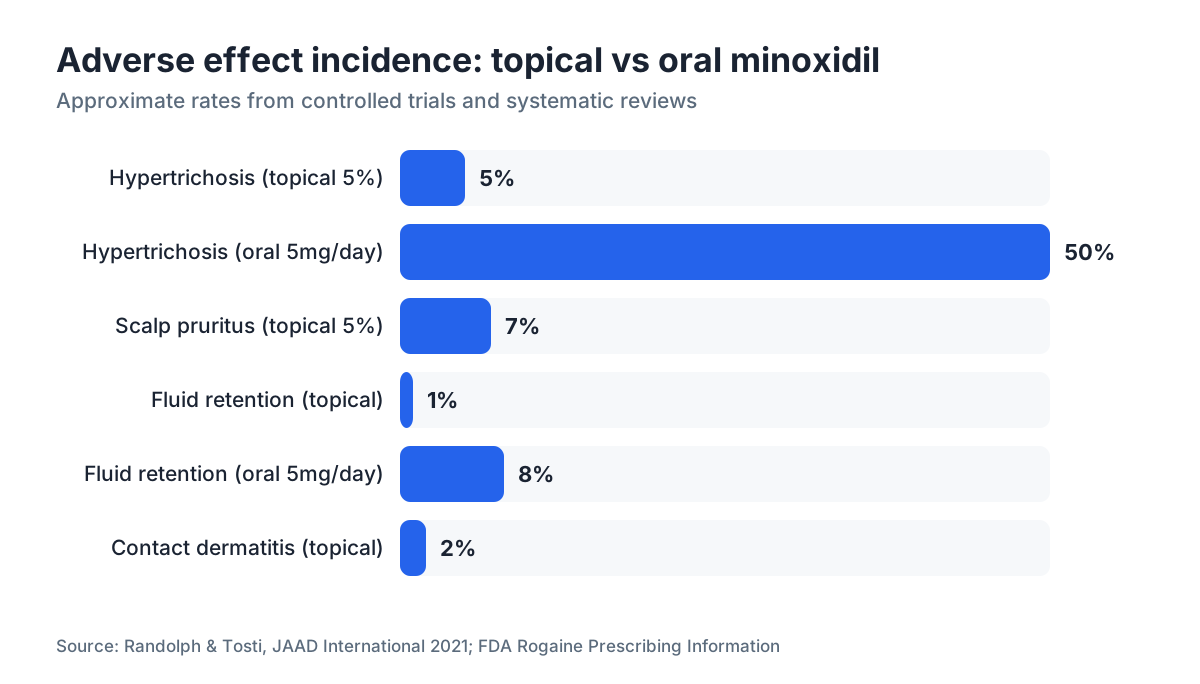
Oral minoxidil is a different conversation entirely. At doses of 0.625 mg to 5 mg per day (the range dermatologists use off-label for hair loss), the cardiovascular effects are real and need monitoring. A 2021 review in JAAD International analyzed oral minoxidil for hair loss and found fluid retention in a meaningful subset of patients, particularly at doses above 2.5 mg/day, along with hypertrichosis and tachycardia [4]. Anyone considering oral minoxidil should have blood pressure checked before and during use. More detail on those tradeoffs is in oral minoxidil.
People with hypertension already on blood pressure medications, those with heart failure, or those with renal disease should talk to their doctor before starting either form.
What is contact dermatitis from minoxidil and who gets it?
Contact dermatitis from minoxidil solutions deserves its own section because many people who think they're reacting to minoxidil are actually reacting to propylene glycol, the solvent used in the liquid formulations.
Propylene glycol is a known contact allergen in a subset of the population. The foam formulations (like Rogaine 5% foam) were developed without propylene glycol, partly to address this. In patch-test studies of people with scalp dermatitis from minoxidil solutions, a substantial portion react to propylene glycol rather than minoxidil itself [5]. Switching from the solution to the foam resolves symptoms in many of these patients.
True allergic contact dermatitis to minoxidil itself exists but is less common. It shows up as redness, swelling, itching, and sometimes blistering at the application site. If you switch to the propylene glycol-free foam and still react, that points to true minoxidil sensitivity.
Irritant contact dermatitis (not allergic, just irritated skin) is more common still. It can come from over-applying or not letting the scalp dry between applications.
If you have significant scalp sensitivity, a patch test on a small area for 24-48 hours before full application makes sense. Dermatologists can also do formal patch testing if you need to pin down the allergen.
Does minoxidil cause unwanted facial or body hair growth?
Yes, and this is one of the most frequently cited reasons people stop the drug, especially women.
Hypertrichosis from minoxidil is both a topical spread effect and a potential systemic one. On the scalp, the drug can migrate to the forehead, temples, and cheeks through skin contact or by touching your face. Even without direct contact, some systemic absorption occurs, and minoxidil stimulates growth in vellus follicles (the fine, light hairs on the face and body) that happen to be sensitive to the drug.
Women using the 2% solution for female pattern hair loss in a 32-week FDA registration trial reported facial hypertrichosis in about 3-5% of cases [2]. With the 5% formulation, rates run higher. Reported sites include the cheeks, upper lip, forehead, and arms.
Application technique cuts the risk considerably. Apply to a dry scalp. Avoid touching treated areas until fully dry. Wash your hands immediately after application. Don't apply within 4 hours of bedtime, which reduces pillow transfer to the face.
If hypertrichosis develops, it reverses. It typically resolves within 1-6 months of stopping minoxidil. It does not represent permanent follicle activation.
Are there serious or rare adverse effects people should know about?
Most of the serious adverse effects in minoxidil's prescribing history come from its oral antihypertensive use at doses of 10-40 mg per day. Those doses are dramatically higher than anything used for hair loss. Still, a few serious effects have been reported or are theoretically possible even with topical use.
Fluid retention and edema: Minoxidil causes sodium and water retention. At topical doses in healthy individuals, this is rarely clinically significant. In people with renal impairment or heart failure, even small amounts of systemically absorbed minoxidil could tip the balance.
Pericardial effusion: This is a known complication of high-dose oral minoxidil therapy for hypertension and is listed in the FDA label as a warning even for the topical product [1]. It's rare at topical doses, but reported cases exist in the literature. The FDA label states minoxidil is not intended for frontal baldness or a receding hairline, partly because the larger surface-area application would increase absorption [1].
Tachycardia: Minoxidil causes reflex tachycardia. In the oral antihypertensive trials, this happened often enough that patients were co-prescribed beta-blockers. With topical use and the low systemic levels achieved, tachycardia is uncommon but not impossible.
Allergic reactions: Systemic allergic reactions to topical minoxidil are very rare but reported, including urticaria and angioedema [10].
Scalp irritation leading to increased absorption: Damaged, inflamed, or abraded scalp skin absorbs minoxidil at higher rates. People with active scalp psoriasis, seborrheic dermatitis, or scalp wounds should know their systemic exposure may run higher than normal.
The FDA label specifically warns against use on inflamed, irritated, or sunburned scalp for this reason [1].
If you're comparing minoxidil's risk profile to finasteride, the cardiovascular cautions favor minoxidil but the sexual side effect picture reverses: finasteride carries the sexual dysfunction concerns, minoxidil does not.
Are adverse effects different for women versus men?
The adverse effect profile is broadly similar, but a few differences matter.
Hypertrichosis is a bigger clinical problem for women. Men who apply minoxidil to the scalp and get some facial hair spread are usually less bothered. For women, unwanted facial hair is often a dealbreaker. That's why the 2% formulation is specifically approved for women and the 5% was historically reserved for men, though this line has blurred in practice. The AAD's clinical practice guidelines note that the 5% formulation is associated with higher rates of hypertrichosis in women [6].
The shedding phase can also be more distressing for women, partly because female pattern hair loss typically affects a more diffuse area, so the shed looks more visible.
For men worried specifically about topical minoxidil, minoxidil for men covers dosing, application, and what to realistically expect.
Pregnancy is an absolute contraindication. Minoxidil is FDA Pregnancy Category C. It's teratogenic in animals at higher doses and should not be used during pregnancy [1]. Women who are pregnant or trying to conceive should not use minoxidil.
Breastfeeding is also a contraindication. Minoxidil is excreted in breast milk.
How do oral minoxidil adverse effects compare to topical?
Oral minoxidil for hair loss is increasingly used by dermatologists off-label. The doses are low (typically 0.625 mg to 5 mg per day compared to 10-40 mg for hypertension), but the systemic exposure is categorically higher than with topical use.
A 2021 review in JAAD International analyzed studies of low-dose oral minoxidil for androgenetic alopecia and found these adverse effects most frequently reported: hypertrichosis (affecting up to 80% of patients in some cohorts at higher doses), fluid retention (lower limb edema in roughly 6-10% at doses above 2.5 mg), headache, and postural hypotension [4]. Tachycardia was also reported, though infrequently at the lower doses used for hair loss.
The fluid retention finding is clinically meaningful. The same review named fluid retention, predominantly lower limb edema, as the most common serious adverse effect reported, at a frequency of roughly 6% at doses of 5 mg/day [4]. That's not a rare signal.
This doesn't make oral minoxidil unsafe. For many people, including those who find topical application inconvenient or who have scalp sensitivity to the vehicle, the pill is a reasonable option with appropriate monitoring. But the tradeoff is real systemic drug exposure.
People with hypertension, those already on antihypertensives, and people with cardiac or renal disease should have a physician involved before taking oral minoxidil. For everyone else, baseline blood pressure and a brief cardiovascular history are reasonable starting points.
The comparison between the two forms is worth mapping clearly:
| Effect | Topical Minoxidil | Oral Minoxidil (0.625-5 mg/day) |
|---|---|---|
| Hypertrichosis | 3-5% (facial spread) | Up to 80% at higher doses |
| Fluid retention/edema | Rare | 6-10% at 5 mg/day |
| Hypotension | Rare | Uncommon but possible |
| Tachycardia | Very rare | Occasionally reported |
| Scalp irritation | 7% | Not applicable |
| Contact dermatitis | 1-3% | Not applicable |
| Temporary shedding | Common | Common |
More on the specific experience with oral pills at oral minoxidil.
What happens to adverse effects if you stop minoxidil?
Most adverse effects resolve after stopping. So does the benefit, and the timeline on both matters.
Hypertrichosis typically resolves within 1-6 months of stopping. Contact dermatitis clears within days to weeks once exposure ends. Fluid retention from oral minoxidil resolves relatively quickly. Scalp irritation clears up promptly.
The harder reality: any hair regrowth gained from minoxidil begins to reverse within 3-6 months of stopping [9]. Minoxidil is a maintenance drug, not a one-time fix. The follicles it was stimulating revert to their underlying genetic programming. This isn't an adverse effect of the drug as such, but it's a predictable consequence of stopping that every user deserves to understand upfront.
This is also why many people who respond well combine minoxidil with a finasteride and minoxidil regimen, since finasteride targets the hormonal driver of loss rather than just stimulating the follicle.
If someone is having an active allergic reaction, they should stop immediately and seek care. But stopping minoxidil over minor irritation without trying the foam formulation or adjusting application technique is often premature.
Who should not use minoxidil at all?
Clear contraindications exist for both forms.
Absolute contraindications for topical minoxidil per the FDA label include allergy or hypersensitivity to minoxidil or any component of the formulation, and use during pregnancy [1]. The label also states the product is not intended for people under 18 years of age.
Clinically, dermatologists add caution for patients with significant cardiovascular disease (particularly heart failure), renal failure, liver disease affecting drug metabolism, pheochromocytoma (a rare adrenal tumor, because minoxidil's blood pressure effects become unpredictable), and scalp conditions that badly impair the skin barrier.
For oral minoxidil, the contraindication list expands to include pheochromocytoma as an absolute contraindication, and relative contraindications include any condition requiring tightly controlled blood pressure.
People on nitrates (used for angina) should be careful with oral minoxidil. The combination can cause severe hypotension.
If your pattern of hair loss is caused by something other than androgenetic alopecia, minoxidil may not be the right tool anyway. Understanding what causes hair loss before starting treatment matters, because some causes respond poorly to minoxidil and well to other interventions.
How can you reduce minoxidil's adverse effects without stopping treatment?
Several practical steps cut the burden of side effects without abandoning the treatment.
For scalp irritation and contact dermatitis: switch from the solution to the foam. The foam lacks propylene glycol, which drives a large share of irritation reactions. If the foam still irritates, take a short break (5-7 days), let the scalp recover, and restart at once-daily dosing before building back to twice daily.
For hypertrichosis: tighten your application technique. Apply to a completely dry scalp. Use the dropper or measured dose. Don't glob on extra product thinking more is better. Let the area dry fully (20-30 minutes) before touching your face or hair. Wash hands immediately. Avoid applying near bedtime without covering your pillow.
For shedding: don't change anything. The shedding phase is temporary. The only intervention is patience. If shedding is severe or persists past 12 weeks, see a dermatologist.
For oral minoxidil fluid retention: reduce sodium intake, ask whether your dose can be lowered, and discuss with your prescribing physician whether a diuretic (often spironolactone, which has its own hair-loss benefits in women) is appropriate.
For scalp dryness and flaking: use a gentle, fragrance-free shampoo. Some people find applying minoxidil to a slightly damp (not wet) scalp reduces irritation, though this marginally reduces absorption too.
If you want to track how your scalp is responding over time, tools like the free AI hair analysis at MyHairline can help you see changes objectively rather than guessing from memory.
For those wondering whether the whole adverse effect burden is worth it compared to alternatives, comparing minoxidil with a DHT blocker like finasteride is the right next question.
Does minoxidil cause sexual side effects or affect hormones?
No. This is one of the clearest differences between minoxidil and finasteride.
Minoxidil has no known effect on androgens. It doesn't inhibit 5-alpha reductase, doesn't block dihydrotestosterone, and doesn't affect testosterone or estrogen levels [11]. There is no established mechanism by which minoxidil would cause sexual dysfunction, reduced libido, or fertility problems.
The sexual side effects associated with hair loss treatment belong to finasteride and its cousin dutasteride, which work by reducing DHT, a hormone with effects beyond the scalp.
Some users report sexual side effects they attribute to minoxidil on forums and in surveys. The clinical data doesn't support minoxidil as the pharmacological cause, but placebo and nocebo effects in hair loss treatment are real. If someone reads that minoxidil causes sexual dysfunction and then experiences it, that doesn't automatically mean the drug caused it.
If sexual side effects are a primary concern for you, minoxidil is the option that doesn't carry that risk. Finasteride is the one that does, with reported sexual dysfunction in roughly 1.3-3.8% of clinical trial participants [7]. That's the honest comparison to hold in mind.
What does a realistic timeline of minoxidil side effects look like?
Knowing when side effects tend to appear and when they typically resolve helps people make informed decisions rather than quitting early or ignoring genuine warning signs.
Weeks 1-4: Most people go through a transition period. Scalp irritation, dryness, and flaking are common, particularly with the solution. The propylene glycol vehicle causes a noticeable drying effect on many scalps in the first few weeks.
Weeks 2-8: This is when the shedding surge typically appears and peaks. It's alarming but expected. Hair counts may look worse before they look better.
Weeks 4-16: If hypertrichosis is going to appear, it usually shows up in this window. The forehead and cheek areas are the first place to notice it.
Months 3-6: Most adverse effects have either resolved or stabilized. Scalp irritation often eases as the skin adapts. Hypertrichosis, if present, is usually at its plateau.
Months 6-12: Benefits, if they're coming, start showing. Hair counts in clinical trials typically show measurable improvement by month 4-6, with further gains through 12 months [3].
Beyond 12 months: Continued use maintains results. Stopping reverses gains. Side effects in long-term users tend to be stable and manageable rather than progressive.
For people weighing whether the result justifies the commitment against more definitive options like a hair transplant, the 12-month timeline for seeing real topical results is a fair benchmark. Transplants cost far more but aren't subject to ongoing compliance.
Sources
- FDA, Rogaine (Minoxidil Topical Solution and Foam) Prescribing Information
- DeVillez RL et al. Androgenetic alopecia in the female. Archives of Dermatology, 1994
- Olsen EA et al. A randomized clinical trial of 5% topical minoxidil versus 2% topical minoxidil. Journal of the American Academy of Dermatology, 2002
- Randolph M, Tosti A. Oral minoxidil treatment for hair loss: A review of efficacy and safety. JAAD International, 2021
- Friedman ES et al. Propylene glycol contact dermatitis in minoxidil users. Contact Dermatitis, 1994
- American Academy of Dermatology, Clinical Guidelines for Androgenetic Alopecia
- Finasteride (Propecia) FDA-approved prescribing information, Merck
- Rittmaster RS. Finasteride. New England Journal of Medicine, 1994
- Blume-Peytavi U et al. S1 Guideline for diagnostic evaluation in androgenetic alopecia. British Journal of Dermatology, 2011
- FDA, Drug Safety Communications and MedWatch
- Gupta AK, Charrette A. The efficacy and safety of 5-alpha-reductase inhibitors in androgenetic alopecia. Journal of Dermatology, 2014