
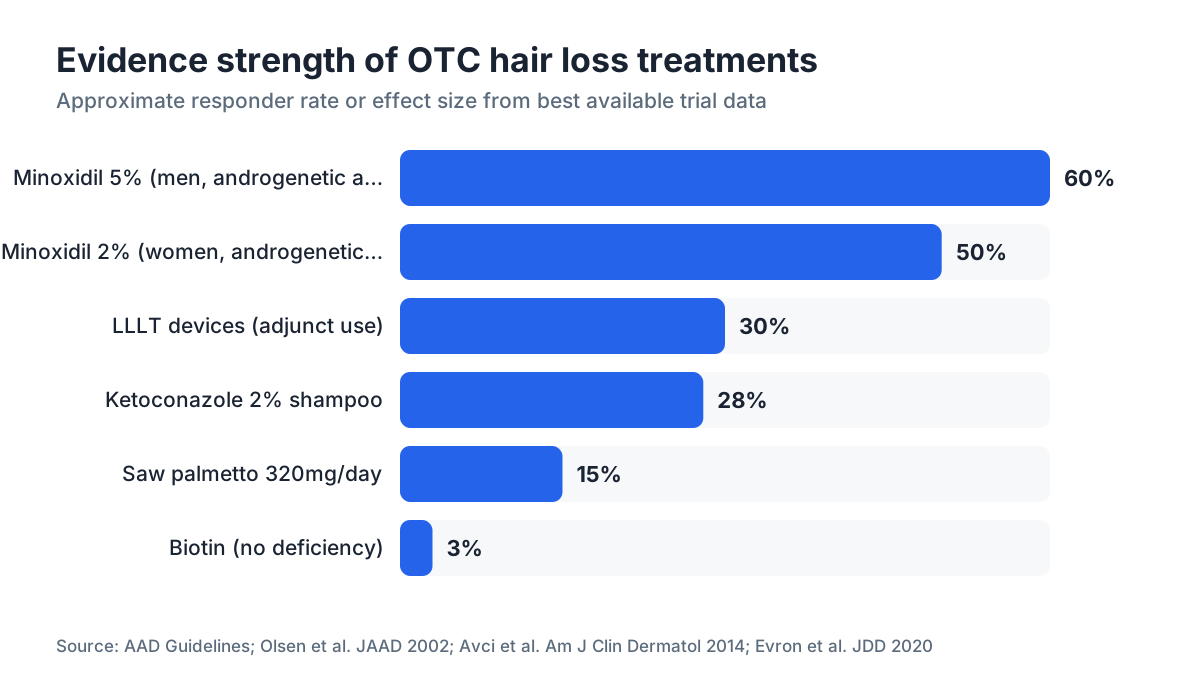
TL;DR: Minoxidil (2% or 5%) is the only FDA-approved over-the-counter treatment for alopecia. It works best for androgenetic alopecia and produces visible results in 4 to 6 months for about 60% of users. Ketoconazole shampoo, supplements like biotin and saw palmetto, and anti-inflammatory shampoos are widely used add-ons, but none have the same level of evidence behind them.
What does 'alopecia' actually mean, and which type can OTC products treat?
Alopecia is just the medical word for hair loss. It covers a wide spectrum: androgenetic alopecia (pattern baldness), alopecia areata (an autoimmune condition causing patchy loss), telogen effluvium (diffuse shedding after stress or illness), traction alopecia (mechanical damage from tight styling), and scarring alopecias that permanently destroy follicles. That distinction matters enormously before you spend money.
Over-the-counter treatments have meaningful evidence for androgenetic alopecia. They have very limited, inconsistent evidence for alopecia areata. They have almost no proven role in scarring alopecias, and many of those conditions actually get worse if treatment is delayed. If you have smooth, shiny patches with no follicle openings visible, or if your scalp is tender and inflamed, see a dermatologist before buying anything off a shelf.
For pattern hair loss, the picture is more hopeful. The follicles are miniaturized but still alive, which means topical treatments have something to work with. To understand what causes hair loss at a biological level, including the DHT pathway that drives androgenetic alopecia, that background makes the mechanism of every OTC product below easier to evaluate.
What is the only FDA-approved OTC treatment for hair loss?
Minoxidil. Full stop. The FDA approved topical minoxidil for over-the-counter sale in 1996, and it remains the single OTC product with a formal FDA approval for hair regrowth [1]. Everything else you see marketed as a hair loss treatment is either a cosmetic, a dietary supplement, or a device that sidesteps the drug approval process entirely.
Minoxidil was originally developed as an oral blood pressure medication in the 1970s. Hypertrichosis (unwanted hair growth) appeared as a side effect. Researchers ran with that observation, and by 1988 the FDA had approved a prescription 2% solution under the brand name Rogaine. The OTC switch to 2% for women and 5% for men happened in 1996 and 1998 respectively [1].
The mechanism is still not completely understood, which is an honest thing to admit. The leading theory is that minoxidil opens potassium channels in follicle cells, prolonging the anagen (growth) phase and improving blood flow to the follicle. It doesn't block DHT, so it doesn't address the root hormonal cause of androgenetic alopecia. That's why many clinicians combine it with finasteride in men who are candidates.
For a full breakdown of how the medication works and what to expect, the minoxidil for men guide covers dosing, foam versus solution, and application technique in detail.
How well does minoxidil actually work, and how long does it take?
The most cited trial is a 48-week, double-blind, randomized study of 5% topical minoxidil versus 2% and placebo in men with androgenetic alopecia. At 48 weeks, 5% minoxidil produced about 45% more hair regrowth than 2%, and both beat placebo by a wide margin [2]. The American Academy of Dermatology gives minoxidil a Grade A recommendation for androgenetic alopecia in both men and women, meaning there is consistent, high-quality evidence supporting its use [3].
About 60% of men who use 5% minoxidil correctly see meaningful regrowth or stabilization. The other 40% see little to no benefit, and nobody can reliably predict in advance who falls into which group. Four months is the minimum time before you can honestly evaluate results. Six months gives a clearer picture. Shedding in the first 4 to 8 weeks is normal and expected, caused by minoxidil pushing resting hairs into a new growth cycle.
Results are not permanent. Stop using minoxidil, and any hair you regained typically sheds within 3 to 6 months. This is lifelong treatment, not a course.
For women, the FDA-approved dose is 2% solution applied twice daily, or 5% foam once daily. The 5% foam was approved for women in 2014. Trial data for women show roughly 19 to 20 non-vellus hairs per square centimeter gained at one year versus placebo [3].
If you want to understand the possible downsides before committing, read about minoxidil side effects, particularly scalp irritation, unwanted facial hair in women, and the initial shedding phase.
What OTC minoxidil products are available, and how do they differ?
Generic minoxidil has been available since the mid-2000s and costs a fraction of the Rogaine brand. The active ingredient is identical. The difference is in the vehicle (the liquid or foam base that carries minoxidil to the scalp).
| Product type | Concentration | Application | Avg monthly cost (USD) |
|---|---|---|---|
| Minoxidil solution 2% | 2% | Twice daily | $8 to $15 |
| Minoxidil solution 5% | 5% | Twice daily | $10 to $20 |
| Minoxidil foam 5% | 5% | Once daily | $20 to $35 |
| Branded Rogaine foam 5% | 5% | Once daily | $35 to $55 |
Solution contains propylene glycol, which causes scalp irritation in a meaningful minority of users. Foam is propylene glycol-free, which is why it's often recommended for people who develop itching or flaking with the solution. The foam also dries faster, which matters if you have longer hair. Efficacy looks comparable between foam and solution at the same concentration, though direct head-to-head trial data are limited.
The 5% concentration outperforms 2% in men, and the FDA label for men specifies 5%. For women, the FDA-labeled dose is 2% solution twice daily or 5% foam once daily. Using 5% solution in women is common in clinical practice but is technically off-label.
Does ketoconazole shampoo help with hair loss?
Ketoconazole shampoo (1% OTC concentration, like Nizoral A-D) is not FDA-approved for hair loss. It's approved as an antifungal for dandruff and seborrheic dermatitis. But it shows up in almost every hair loss conversation, and there is actual trial data behind it.
A randomized trial published in the Journal of Dermatology compared 2% ketoconazole shampoo (prescription strength) to 2% minoxidil solution in men with androgenetic alopecia. Both groups showed similar increases in hair density over 6 months [4]. The working theory is that ketoconazole reduces scalp inflammation and has a mild anti-androgenic effect at the follicle level.
The 1% OTC version is weaker than the 2% studied in most trials. Realistically, it's a reasonable scalp health addition, not a replacement for minoxidil. Most dermatologists who recommend it suggest using it 2 to 3 times per week, leaving it on the scalp for several minutes before rinsing. It costs $10 to $20 for a bottle that lasts weeks.
If dandruff or seborrheic dermatitis is contributing to your hair loss (which it can, through chronic scalp inflammation), ketoconazole shampoo addresses an actual underlying issue. That's probably where its value is most reliable.
What about saw palmetto, biotin, and other OTC supplements for hair loss?
Supplements sit in an awkward regulatory position: they don't need FDA approval to be sold, and the companies behind them don't need to prove they work. The FDA only acts after a product causes harm. That doesn't mean all supplements are useless, but it means you should look for evidence before spending money.
Saw palmetto is the supplement with the most relevant mechanism for androgenetic alopecia. It inhibits 5-alpha reductase, the enzyme that converts testosterone to DHT. A 2020 systematic review in the Journal of Drugs in Dermatology identified saw palmetto as the most studied botanical for hair loss, with modest evidence of benefit at 320 mg/day, though the study quality was generally low [5]. Think of it as a very weak, unregulated cousin to finasteride. Probably some effect. Much smaller than finasteride. If you're curious about how DHT blockers work and compare, that's a useful companion read.
Biotin is everywhere in the hair growth supplement market. The evidence for it in people without a biotin deficiency is essentially nonexistent. Biotin deficiency is rare in people eating a normal diet, and supplementing beyond sufficiency doesn't grow extra hair. The AAD's guidance on supplements for hair loss notes that biotin supplementation is generally not recommended unless deficiency is confirmed [3]. High-dose biotin also interferes with thyroid and cardiac laboratory tests, which is a real clinical problem [6].
Marine protein supplements (like Viviscal, which contains shark cartilage and mollusk powder) have a small number of industry-funded randomized trials showing modest improvements in hair counts. The evidence is weak but at least exists. Iron supplementation is genuinely useful if serum ferritin is low (common in women with hair loss), but supplementing iron when levels are normal carries its own risks.
For a deeper look at what the evidence actually says for each supplement category, the hair loss supplements article goes ingredient by ingredient.
The honest summary: supplements are unlikely to replace minoxidil for androgenetic alopecia. They may fill gaps caused by nutritional deficiency. Spending $80 a month on supplement stacks is probably not your best first move.
Can OTC treatments help with alopecia areata specifically?
Alopecia areata is an autoimmune condition where the immune system attacks hair follicles. The patches it causes look different from pattern hair loss: smooth, well-defined, often round, with exclamation-mark hairs at the edges. This matters because the mechanism is completely different, and OTC treatments designed for androgenetic alopecia have a different and much weaker role here.
Minoxidil is sometimes used as an adjunct in alopecia areata, and it has shown modest benefit in some small studies, but it does not address the immune attack on the follicle [3]. The AAD's clinical guidelines for alopecia areata center on corticosteroid injections, topical corticosteroids, and (more recently) JAK inhibitors like baricitinib, which require a prescription [12]. Baricitinib received FDA approval specifically for severe alopecia areata in 2022, the first systemic drug approved for the condition.
Over-the-counter options for alopecia areata are genuinely limited. Topical minoxidil may help some hairs regrow during remission. Anthralin cream (available OTC or by prescription depending on strength) is sometimes used. But if you have alopecia areata, OTC products are unlikely to be enough, and delaying prescription treatment for months while testing supplements is a real risk to your follicle health.
See a board-certified dermatologist. This type of alopecia has treatments that work; the barrier is not access to information but access to appropriate care.
What about low-level laser therapy (LLLT) devices for hair loss?
Low-level laser therapy devices, sold as combs, helmets, and caps, are FDA-cleared (not approved) for hair loss. That's a meaningful distinction. FDA clearance via the 510(k) pathway means the device was shown to be substantially equivalent to a predicate device and safe, not that it was proven effective in clinical trials [8].
The evidence base for LLLT is real but modest. A 2014 meta-analysis in the American Journal of Clinical Dermatology found statistically significant improvements in hair density with LLLT versus sham devices [9]. Effect sizes were generally smaller than minoxidil. The devices cost $200 to $800 or more, which makes the cost-per-result math hard to justify next to a $15 bottle of generic minoxidil.
Who might genuinely benefit: people who can't tolerate topical minoxidil, want an additive approach on top of minoxidil, or prefer a non-chemical option. The side effect profile is minimal. The main problem is cost and the 20 to 30 minute per-session time commitment, typically required 3 times per week.
If you're weighing all your options before committing to any product or device, the free AI hair analysis at MyHairline can give you a baseline picture of your current hairline and help you track whether what you're doing is actually working over time.
How does OTC minoxidil compare to prescription finasteride?
This is the comparison most men with androgenetic alopecia eventually ask. They work differently, target different parts of the problem, and are often most effective used together.
Minoxidil (OTC) improves blood flow to follicles and extends the growth phase. It doesn't touch DHT. Finasteride (prescription, oral) blocks the 5-alpha reductase enzyme and reduces scalp DHT by roughly 60 to 70%. It attacks the hormonal cause. A 5-year randomized trial found finasteride 1mg/day maintained or increased hair count in 90% of men versus 25% in the placebo group [10].
Finasteride is not OTC in the United States. It requires a prescription. For women of childbearing potential, it is generally contraindicated because of the risk of fetal harm. So for women, minoxidil is essentially the primary proven option in the OTC or easily-accessible category.
Combining minoxidil with finasteride produces better results than either alone for most men with androgenetic alopecia. If that combination interests you, the finasteride and minoxidil article covers the trial data and practical considerations. And the standalone finasteride guide goes deep on mechanism, side effects, and the data on sexual side effects that some men experience.
For men with a receding hairline specifically, the combination approach tends to show the most meaningful long-term results. Pattern loss at the hairline is described in the receding hairline guide if you want to understand where you sit on the spectrum.
What is telogen effluvium, and do OTC treatments help?
Telogen effluvium is diffuse shedding that happens 2 to 4 months after a physiological stressor: illness, surgery, rapid weight loss, childbirth, or extreme psychological stress. The shedding looks alarming (handfuls in the shower, on pillows) but the follicles are intact and the condition is usually self-limiting.
OTC treatments have a limited role here. If the trigger is removed and nutrition is adequate, telogen effluvium typically resolves in 3 to 6 months without treatment [see /blog/telogen-effluvium]. Minoxidil is sometimes used to speed up regrowth, but the evidence for this specific use is weaker than for androgenetic alopecia.
What actually helps: addressing the underlying trigger, ensuring adequate protein intake (hair is mostly keratin), correcting iron or ferritin deficiency if lab tests confirm it. Scalp massage has a small amount of evidence behind it for improving blood flow and may speed recovery marginally. Supplements marketed for telogen effluvium are largely unproven.
If shedding is severe, persists beyond 6 months, or you're not sure what triggered it, a blood panel including ferritin, thyroid (TSH), and CBC is a reasonable starting point before assuming it will self-resolve.
How do you pick the right OTC treatment for your situation?
The honest decision framework looks like this: identify what type of hair loss you have, then match the treatment to the mechanism.
If you have androgenetic alopecia (gradual thinning at the crown or temples, family history of pattern baldness), 5% minoxidil foam or solution is the starting point. Add ketoconazole shampoo 2 to 3 times per week for scalp health. If you want to see whether adding a DHT blocker makes sense and you're male, look into finasteride with your doctor.
If you have patchy, round smooth areas, see a dermatologist before buying anything. Don't spend three months on minoxidil hoping alopecia areata resolves.
If you've had a stressful event in the last 6 months and your hair is shedding diffusely, fix the trigger, check your labs, eat enough protein. OTC products are unlikely to meaningfully speed recovery.
If you've had tight hairstyles for years and your hairline is pulling back, the answer isn't a product. It's changing the hairstyle. Traction alopecia that has gone on too long can become permanent.
Track changes. Take photographs in the same lighting every 8 to 12 weeks. Minoxidil changes are subtle and slow, and you will not notice them without a reference point.
When do OTC treatments stop being enough, and what comes next?
OTC treatments are a starting point, not a ceiling. There are situations where they are genuinely insufficient and waiting around is a mistake.
Significant hair loss that has progressed past Norwood stage 3 or 4 in men often responds only partially to minoxidil, because too many follicles have already miniaturized or been lost. At that point, finasteride, prescription topical minoxidil at higher concentrations, PRP (platelet-rich plasma) injections, or hair transplant surgery enter the conversation.
Alopecia areata that covers more than a small area needs prescription treatment, as described above. Scarring alopecias need a biopsy and appropriate immunosuppression, not a shelf product.
A hair transplant is a permanent surgical option for androgenetic alopecia where the donor area still has plenty of healthy hair. It doesn't stop ongoing loss, which is why most surgeons require medical management (minoxidil and/or finasteride) to continue alongside it.
MyHairline's free AI hair scan (/scan) can help you understand where your hair loss sits right now and whether what you're doing is showing any measurable effect, which is a reasonable first step before escalating to prescriptions or procedures.
The earlier you act, the more options you have. Follicles don't grow back once they're gone. Most people who look back on managing hair loss wish they'd started something earlier, even an imperfect something.
Sources
- FDA, Minoxidil OTC drug label history
- Olsen EA et al., Journal of the American Academy of Dermatology, 2002: 5% vs 2% minoxidil randomized trial
- American Academy of Dermatology, Hair loss: diagnosis and treatment guidelines
- Piérard-Franchimont C et al., Journal of Dermatology, 1998: ketoconazole vs minoxidil for androgenetic alopecia
- U.S. Food and Drug Administration, safety communication on biotin interference with lab tests
- FDA, Premarket Notification 510(k) overview
- Avci P et al., American Journal of Clinical Dermatology, 2014: meta-analysis of LLLT for hair loss
- Kaufman KD et al., Journal of the American Academy of Dermatology, 1998: 5-year finasteride trial in men
- National Alopecia Areata Foundation, treatment overview