
TL;DR: The most evidence-backed home treatments for alopecia are topical minoxidil (5% for men, 2-5% for women), low-level laser therapy devices, and, for androgenetic alopecia, finasteride if prescribed. Most popular home remedies like onion juice and rosemary oil have very limited trial data. Alopecia areata requires a doctor; androgenetic alopecia is the type most responsive to at-home treatment.
What type of alopecia do you actually have, and why does it matter?
The word alopecia just means hair loss. It covers a dozen distinct conditions, and the right treatment depends almost entirely on which one you have. Treating them all the same way is the single biggest mistake people make before spending money.
Androgenetic alopecia (AGA) is by far the most common type. It's pattern baldness driven by dihydrotestosterone (DHT) slowly miniaturizing hair follicles. Men get it as a receding hairline or crown thinning, women usually as diffuse thinning at the part. This is the type that responds best to at-home treatment, because the follicles are still alive, just suppressed.
Alopecia areata is an autoimmune disease. The immune system attacks the hair follicle and leaves smooth, circular bald patches. You can't fix an autoimmune attack with minoxidil or a DHT blocker. A dermatologist needs to confirm the diagnosis and usually prescribe steroids, JAK inhibitors, or immunotherapy. Home remedies are not enough here.
Telogen effluvium is temporary, stress-driven shedding where too many follicles shift into the resting phase at once. It often clears on its own within 3 to 6 months once the trigger (illness, surgery, childbirth, severe diet) is removed. Home treatment mostly means fixing the root cause and eating enough.
Scarring alopecias like lichen planopilaris destroy the follicle permanently. No home treatment reverses that. At all.
Not sure what you have? A free AI photo scan like the one at MyHairline can give you a first-pass read on your pattern, which tells you whether a dermatologist visit is urgent or whether AGA home treatment is a reasonable start. It doesn't replace a real diagnosis. The rest of this article focuses on androgenetic alopecia, because that's where home treatment has actual clinical evidence behind it.
Does minoxidil work at home, and how do you use it correctly?
Minoxidil is the only topical hair loss treatment with FDA approval, and for AGA it's the strongest over-the-counter option you have. The FDA approved 2% minoxidil for men in 1988, then 5% in 1997; the 2% and 5% formulations for women followed [1]. You don't need a prescription for topical minoxidil in the US.
How it works is still partly debated. The main mechanism is vasodilation around the follicle, which shortens the shedding (telogen) phase and lengthens active growth (anagen). It does not block DHT, which is why it treats the symptom rather than the cause of androgenetic alopecia.
For men, the 5% foam or solution is standard. For women, 2% solution or 5% foam (used once daily instead of twice) are both approved options [1]. Apply it to a dry scalp, not the hair, and let it absorb for at least 4 hours before washing.
Results take time. Most studies show meaningful regrowth at 16 to 24 weeks, with peak effect around 12 months [2]. Stop using it and whatever regrowth you gained reverses within 3 to 6 months. That's not a side effect. That's just how the drug works.
A common early experience is increased shedding in weeks 2 through 8. It's real, it's documented, and it's temporary. The follicles are transitioning cycles. It is not a sign the treatment is failing. See our full breakdown of minoxidil side effects if that worries you.
One practical note. Scalp irritation is more common with the propylene glycol-based solution than with the foam. If your scalp gets red or itchy, switching to the foam often fixes it. Read the minoxidil for men guide for dose specifics and what to realistically expect month by month.
How well does minoxidil actually work? (The real numbers)
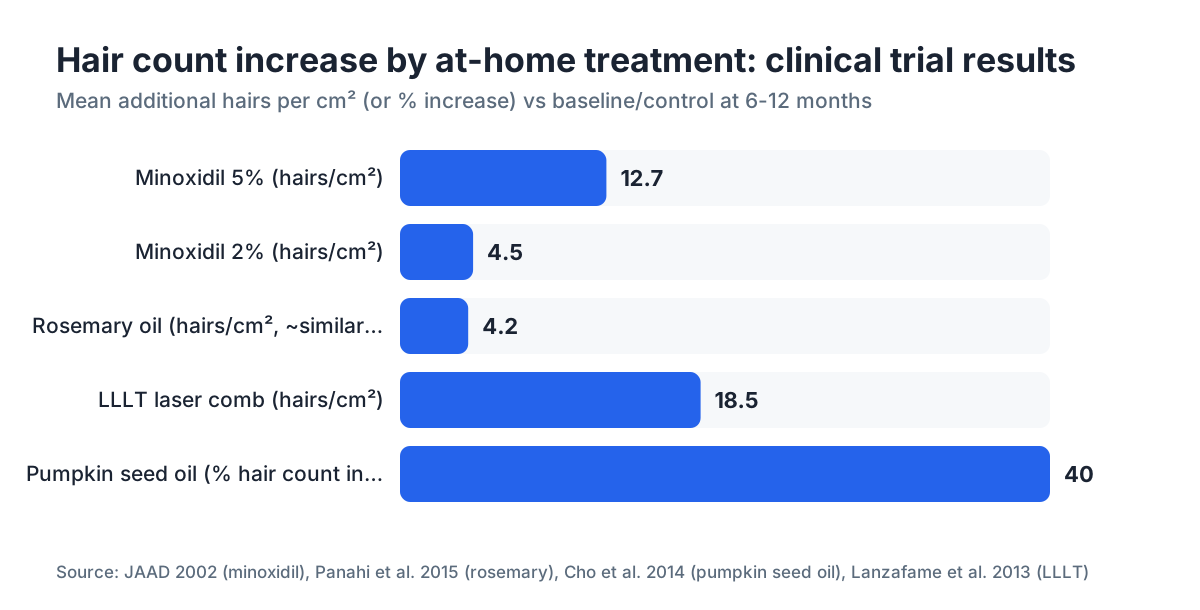
A 48-week randomized controlled trial published in the Journal of the American Academy of Dermatology found that 5% topical minoxidil solution produced a mean increase of 12.7 non-vellus hairs per cm² in the vertex, compared to 4.5 hairs/cm² for the 2% group [2]. That's a real effect. It's not a dramatic transformation for most people.
About 40% of men using 5% minoxidil for one year see what researchers call "moderate to dense" regrowth. Another 40% see stabilization, meaning they stop losing more hair. Around 15 to 20% don't respond well. Nobody has good data on who will be a non-responder before they try it.
For women, a 48-week trial found 5% foam used once daily was non-inferior to 2% solution used twice daily, with a better scalp-tolerance profile [3].
The combination of minoxidil and finasteride beats either alone. A 2021 study in Dermatology and Therapy found the combination produced significantly greater hair count increases than finasteride or minoxidil on its own [4]. If you want maximum effect from at-home treatment, that combination is where the evidence points, though finasteride requires a prescription. See the finasteride and minoxidil comparison for details.
Can finasteride be part of an at-home regimen?
Technically yes, though finasteride requires a prescription in the US. Once you have one from a telehealth provider or your doctor, you're taking it at home like any other daily pill.
Finasteride 1mg works by inhibiting the type II 5-alpha reductase enzyme, which converts testosterone into DHT. Scalp DHT levels drop roughly 60-70% with daily 1mg dosing [5]. For men with AGA, that means the main driver of follicle miniaturization is meaningfully suppressed.
A two-year randomized trial in men aged 18 to 41 found 83% of finasteride users maintained or increased hair count versus 28% on placebo [5]. That's a wide gap.
Finasteride is not approved for women of childbearing potential because of the risk of fetal genital abnormalities. Postmenopausal women are sometimes prescribed it off-label. Read our full finasteride article for the sexual side effect data, what the evidence actually says about post-finasteride syndrome, and how to have a real conversation with your doctor about the trade-offs.
For men who want to address DHT through diet or supplements rather than medication, see the DHT blocker article. Saw palmetto, pumpkin seed oil, and green tea extract all show some DHT inhibition in small studies, but none has evidence anywhere near finasteride's scale.
What do home remedies actually do? (Rosemary oil, onion juice, and others)
People really want home remedies to work. A few have more than zero evidence behind them.
Rosemary oil is the one that gets cited most. A 2015 randomized trial published in SKINmed compared 2% minoxidil solution to rosemary oil applied twice daily for 6 months in 100 patients with androgenetic alopecia [6]. Both groups showed similar hair count increases at 6 months, and rosemary oil caused significantly less scalp itching. The study was small and unblinded. It's interesting, not settled. The proposed mechanism is better scalp circulation and mild anti-inflammatory effects. If you want to try it, dilute a few drops (2-3%) in a carrier oil like jojoba and massage it in. Low risk.
Onion juice has one small RCT from 2002 showing significantly better regrowth than tap water in alopecia areata patients (the autoimmune type) [7]. The study had 38 patients total. The effect was real in that tiny sample. Nobody has replicated it at meaningful scale. If you have alopecia areata, this is nowhere near sufficient treatment. If you want to try it as an add-on, the only barrier is the smell.
Pumpkin seed oil: a 2014 randomized, placebo-controlled trial in 76 men with AGA found a 40% hair count increase over 24 weeks versus 10% in the placebo group [8]. This is one of the better-designed supplement studies, and pumpkin seed oil does appear to have some 5-alpha reductase inhibitory effect. It also comes as a capsule, which is easier than the topical version.
Castor oil, biotin, caffeine shampoos, and most "hair growth serums" have either no RCT evidence or weak in-vitro data that doesn't translate to real scalp results. Biotin deficiency can cause hair loss, but if you're not deficient, taking more biotin doesn't regrow hair. Check the hair loss supplements article for a full breakdown by ingredient.
So: rosemary oil and pumpkin seed oil have the best evidence among home remedies, but their effect size is smaller than minoxidil's and the trials are small. They're reasonable low-cost experiments. They're not substitutes for proven treatments.
Do laser therapy devices (LLLT) work at home?
Low-level laser therapy (LLLT), also called photobiomodulation, uses red or near-infrared light (usually 630-670 nm) to stimulate follicle metabolism. Several devices, including HairMax laser combs and some FDA-cleared helmets, are cleared by the FDA as 510(k) devices for hair growth promotion in AGA [9].
FDA clearance through the 510(k) pathway means the device was shown to be substantially equivalent to a legally marketed predicate device. It does not mean the device was proven to work in trials to the same standard as a drug. That's a real distinction, and worth knowing before you spend.
There are actual trials, though. A 2014 sham-controlled study in 128 men and 141 women found statistically significant increases in terminal hair density with a 9-beam laser comb [9]. The gain was modest: about 17-20 more hairs per cm² versus baseline. Not transformative, but real.
Devices run $200 to $800. Sessions are 15 to 30 minutes, 3 times a week. It takes 4 to 6 months to see results. It's safe, has no systemic side effects, and the evidence is good enough that many dermatologists consider it a reasonable add-on to minoxidil, not a standalone fix.
If budget is tight, buy minoxidil first. Add LLLT once you've got that foundation in place.
What at-home scalp care actually supports hair growth?
Scalp health is real, even though the wellness industry wildly overstates it. A few things genuinely matter.
Scalp massage has one small human trial. A 2016 study in the journal ePlasty found that 4 minutes of standardized scalp massage daily for 24 weeks increased hair thickness in 9 healthy Japanese men [10]. The proposed mechanism is mechanical stretching of dermal papilla cells. The study is tiny. The finding is biologically plausible. Daily scalp massage costs nothing and takes 4 minutes, so the risk-reward math is easy.
Dandruff and seborrheic dermatitis create chronic scalp inflammation that may worsen AGA in susceptible people. Treating it with a ketoconazole 1% or 2% shampoo (2% requires a prescription in the US) has some evidence for modest hair retention benefits in AGA on top of its anti-dandruff effect [11]. If your scalp is oily, itchy, or flaky, address it.
DHT accumulates in sebum, so some researchers think regular scalp washing reduces local DHT load. There's no strong RCT evidence for that specific mechanism, but keeping the scalp clean is sensible anyway.
Heat, tight hairstyles, and chemical treatments cause mechanical and traction damage that thins density without being true alopecia. If you're shedding, ease off these while you assess your baseline.
What doesn't matter much: the specific brand of shampoo, whether it's sulfate-free, and most "scalp detox" protocols. The scalp is skin. Clean it gently, don't irritate it, treat any dermatitis you find.
Does diet and nutrition affect hair loss at home?
Nutritional deficiencies can absolutely cause or worsen hair shedding. That's well established. The harder question is whether optimizing nutrition in a non-deficient person produces real regrowth. The evidence there is weaker.
Iron deficiency is the nutrient shortfall most often linked to hair loss, especially in premenopausal women. Serum ferritin below 30 ng/mL is associated with increased shedding in several observational studies, though causality is debated [12]. Get a ferritin test from your doctor before supplementing iron. Iron toxicity is real.
Vitamin D deficiency has been tied to alopecia areata and AGA in cross-sectional studies. A 2019 review in Dermatology and Therapy found significantly lower vitamin D levels in AGA patients compared to controls [12]. Supplementing to correct a deficiency makes sense. Megadosing without testing doesn't.
Zinc deficiency causes diffuse shedding. Protein deficiency causes shedding (hair is roughly 95% keratin). Crash diets and very low calorie intakes reliably trigger telogen effluvium. See the what causes hair loss article for a full look at triggers.
For most people eating a varied diet, more protein or specific superfoods won't regrow lost hair. But if there's any chance you're low in iron, vitamin D, or zinc, testing and correcting those is cheap compared to most treatments and could make a real difference.
What's the honest at-home treatment plan by alopecia type?
Here's how I'd actually approach this as a patient doing research.
For androgenetic alopecia (male pattern baldness or female pattern hair loss): start with topical minoxidil 5% (men) or 2-5% (women). Use it consistently for at least 6 months before you judge results. If you're a man and willing to deal with a prescription, adding finasteride meaningfully improves outcomes. Add a scalp massage habit. Treat any seborrheic dermatitis. If you have budget for an LLLT device after 6 months, it's a reasonable addition.
For telogen effluvium: the treatment is mostly finding and removing the trigger. Make sure your diet covers protein and iron. Give it 3 to 6 months. Minoxidil can speed regrowth but isn't required.
For alopecia areata: see a dermatologist. Home remedies are not adequate treatment. Mild, patchy cases sometimes clear on their own, but the autoimmune process needs monitoring. The FDA approved baricitinib (a JAK inhibitor) for severe alopecia areata in 2022, which requires a prescription [13]. Intralesional steroid injections are a first-line clinical treatment.
For scarring alopecia: dermatologist, not home treatment. The goal is stopping the inflammation before more follicles die. You cannot regrow hair in scarred tissue.
Not sure where you fall? MyHairline's free AI scan can read your pattern from a photo and help you decide whether a dermatologist visit is the right next step or whether you're clearly in AGA territory where home treatment is a reasonable first move.
What doesn't work (and is a waste of money)?
The hair loss market is overrun with products that don't work. Here's what I'd skip.
Biotin supplements if you're not deficient. Biotin deficiency is rare unless you eat large amounts of raw egg whites or have certain metabolic conditions. Supplementing biotin in a non-deficient person has no clinical evidence for regrowth, yet biotin products dominate the Amazon bestseller list. They're cheap, so the waste is small. Just don't expect results.
Kerastase, Nioxin, and similar "salon system" shampoos. They create a cleaner scalp and can make thin hair look fuller thanks to thickening agents. They do not regrow hair. They cost 5 to 15 times more than drugstore shampoo for that effect.
PRP (platelet-rich plasma) at sketchy clinics. Done properly by a trained provider, PRP has genuine evidence for AGA. But home "PRP kits" or micro-needling with random serums sold online are not the same thing. The clinical results come from properly processed plasma injected into the scalp under sterile conditions.
Stem cell serums and exosome topicals. The in-vitro data is genuinely interesting. The human clinical evidence is early and thin. These products cost $100 to $400 per bottle. Not ready for a confident recommendation.
Hair growth "systems" that bundle several weak-evidence products together and charge $80 to $200 a month. The math only works if you believe stacking weak ingredients somehow creates a strong effect. It doesn't.
If you're going to spend money on hair loss, spend it on minoxidil first. Everything else is secondary.
When should you see a doctor instead of treating at home?
Home treatment is reasonable when you're clearly dealing with androgenetic alopecia (gradual, patterned thinning with no other symptoms) and you want to try the established options before paying for a specialist.
See a dermatologist when the hair loss is rapid or diffuse rather than patterned. When there's itching, pain, or scaling on the scalp. When the patches are perfectly smooth and circular (possible alopecia areata). When you've used minoxidil consistently for 12 months with no stabilization. When you've noticed eyebrow, eyelash, or body hair loss alongside scalp loss. When you're a woman with significant hair loss and haven't ruled out hormonal causes like thyroid disease, PCOS, or low ferritin.
A dermatologist will look at the scalp with a dermatoscope, often pull a hair count, and may order blood work. That 30-minute appointment can clarify what type of alopecia you have and whether home treatment fits, which is worth more than a year of trying the wrong remedies.
The American Academy of Dermatology's alopecia areata guidance states directly that "most people with alopecia areata need treatment from a board-certified dermatologist" [13]. That's not boilerplate. Autoimmune hair loss really does need clinical management.
Sources
- FDA, Rogaine (minoxidil) labeling and approval history
- Olsen EA et al., Journal of the American Academy of Dermatology, 2002 — 5% vs 2% minoxidil in men
- Blume-Peytavi U et al., Journal of the American Academy of Dermatology, 2011 — 5% foam vs 2% solution in women
- Hu R et al., Dermatology and Therapy, 2021 — combination finasteride and minoxidil vs monotherapy
- Kaufman KD et al., Journal of the American Academy of Dermatology, 1998 — finasteride 1mg two-year RCT
- Panahi Y et al., SKINmed, 2015 — rosemary oil vs 2% minoxidil RCT
- Sharquie KE and Al-Obaidi HK, Journal of Dermatology, 2002 — onion juice in alopecia areata
- Cho YH et al., Evidence-Based Complementary and Alternative Medicine, 2014 — pumpkin seed oil RCT in men
- Lanzafame RJ et al., Lasers in Surgery and Medicine, 2013 — LLLT sham-controlled trial
- Koyama T et al., ePlasty, 2016 — scalp massage and hair thickness
- Piérard-Franchimont C et al., Dermatology, 1998 — ketoconazole shampoo and hair loss
- Almohanna HM et al., Dermatology and Therapy, 2019 — vitamins/minerals and hair loss review
- American Academy of Dermatology, Alopecia Areata: Diagnosis and Treatment