
TL;DR: DHT blockers (finasteride, dutasteride, saw palmetto) address the hormonal root cause of androgenetic alopecia. Biotin treats hair loss only if you're genuinely deficient, which is rare. Taking them together isn't harmful, but for most people the DHT blocker does the heavy lifting. Evidence for biotin in non-deficient adults is thin.
What does a DHT blocker actually do to your hair?
DHT, dihydrotestosterone, is a potent androgen made when the enzyme 5-alpha reductase converts testosterone. In people genetically sensitive to it, DHT binds to receptors in hair follicles and gradually miniaturizes them. The hairs get thinner, shorter, and eventually stop growing entirely. That process is androgenetic alopecia, the most common cause of hair loss in both men and women [1].
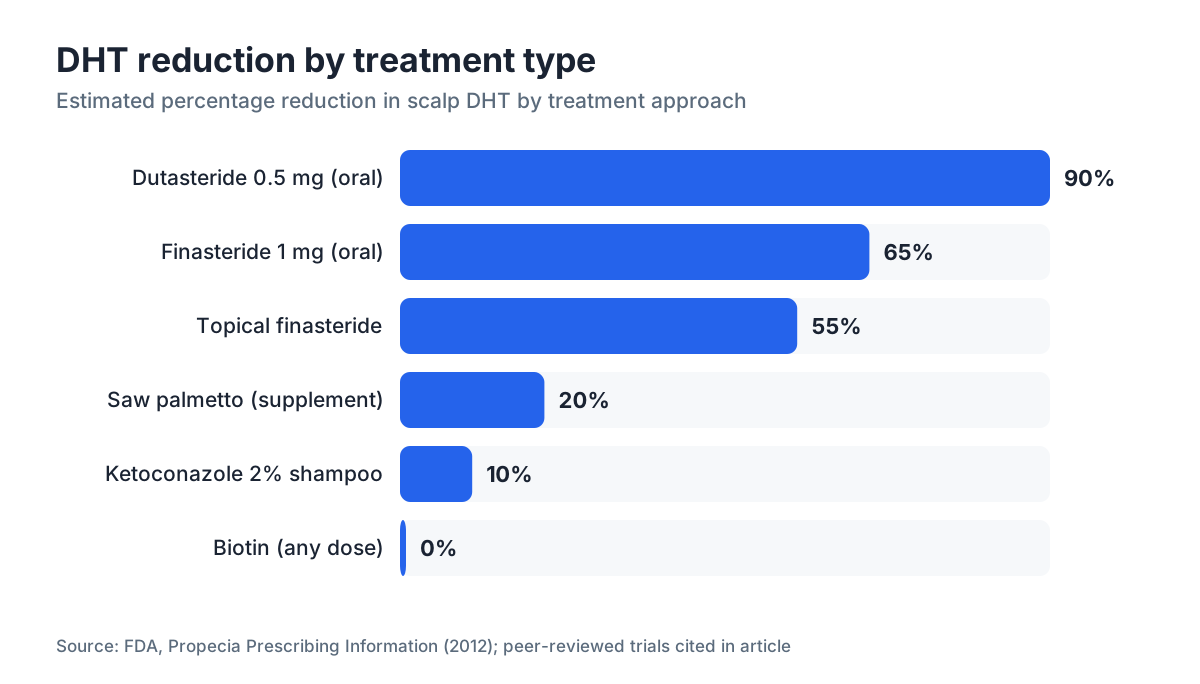
DHT blockers interrupt that chain. Finasteride blocks type II 5-alpha reductase and lowers scalp DHT by roughly 60-70% [2]. Dutasteride blocks both type I and type II isoenzymes and cuts DHT by around 90% [2]. Prescription drugs work. Saw palmetto and other plant-based ingredients marketed as natural DHT blockers have much smaller, less consistent effects in trials, and the data is thinner.
The FDA approved finasteride 1 mg (Propecia) for male-pattern hair loss in 1997 [2]. Dutasteride has FDA approval for benign prostatic hyperplasia but is used off-label for hair loss. Neither is approved for women of childbearing age because of teratogenic risk. If you want the full clinical picture on finasteride, the finasteride overview covers dosing, side effects, and the data behind it.
The point is: DHT blockers work at the hormonal level. They slow or stop the miniaturization process. They do not regrow hair that is already gone, at least not reliably. Early intervention matters enormously.
What does biotin actually do for hair?
Biotin (vitamin B7) is a water-soluble vitamin the body uses to metabolize fatty acids, amino acids, and glucose. Hair follicles need those metabolic processes to function. That much is true.
But here is where marketing and biology diverge sharply. True biotin deficiency causes hair loss, brittle nails, and skin rash [3]. Supplementing biotin in genuinely deficient people can reverse that hair loss. The FDA has acknowledged that biotin can interfere with lab tests for thyroid function and troponin (a cardiac marker), which tells you it does something biochemically active [4].
The problem is that true biotin deficiency is uncommon in healthy adults eating a mixed diet. Eggs, meat, nuts, and legumes provide plenty. A 2017 review in Skin Appendage Disorders searched the literature and found no randomized controlled trials showing biotin supplementation improves hair growth in non-deficient patients [5]. The studies that exist are either in deficient populations or are manufacturer-sponsored with poor methodology.
So if your hair is falling out because of DHT-mediated miniaturization, biotin is not going to fix that. Taking 5,000 mcg or 10,000 mcg a day is not doing more than eating eggs. For a broader look at which supplements have any real evidence behind them, the hair loss supplements article breaks down the data honestly.
Biotin is cheap, widely available, and low-risk. That combination makes it easy to market and hard to argue against even when the evidence is thin. That's essentially the story.
Is it safe to take a DHT blocker and biotin together?
Yes, there is no known pharmacological interaction between biotin and finasteride or dutasteride [6]. They work through entirely different mechanisms. Finasteride is metabolized by CYP3A4 liver enzymes; biotin doesn't meaningfully interfere with that pathway.
The one practical concern is the lab test issue. The FDA issued a safety communication in 2019 warning that high-dose biotin supplementation can cause falsely high or falsely low results on immunoassay-based blood tests [4]. If you're taking finasteride and your doctor orders a PSA (prostate-specific antigen) test, or if you ever need cardiac enzyme tests in an emergency, high biotin could distort those results. The FDA recommendation is to stop biotin supplements at least 72 hours before bloodwork.
Beyond that specific caveat, the combination is fine. The risk profile of finasteride itself is the more important thing to understand before you start: sexual side effects occur in roughly 2-4% of men in clinical trials [2], and those numbers are contested in some patient communities. Read the full picture before committing.
Do any studies show biotin plus a DHT blocker works better than a DHT blocker alone?
No study has directly tested that combination, as of mid-2025. That absence of data is itself informative.
There are a handful of small trials looking at combination supplement products that include saw palmetto (a mild DHT blocker), biotin, and other ingredients. A 2020 randomized trial published in JNHA tested a multi-ingredient supplement against placebo in men and women with thinning hair and found modest improvements in hair count and thickness at 6 months [7]. But those products contain 10 to 15 ingredients, so attributing the effect to any single one is impossible.
The honest summary: nobody has good data on biotin plus a pharmaceutical DHT blocker as a specific combination. The closest thing is general knowledge that finasteride works well on its own, and that biotin at normal doses doesn't interfere with it. If you want to add biotin because you're worried about deficiency or because the cost is low, that's a reasonable personal call. Expecting it to meaningfully add to finasteride's efficacy isn't supported by evidence.
Finasteride plus minoxidil, on the other hand, does have combination trial data. That pairing is covered in finasteride and minoxidil if you want to compare approaches.
What about DHT-blocking shampoos that also contain biotin?
Walk into any pharmacy and you'll find a dozen shampoos claiming to block DHT and add biotin in one bottle. The marketing is aggressive. The evidence is mixed at best.
Ketoconazole shampoo, used 2-3 times per week, has the best evidence for a topical DHT-adjacent effect among over-the-counter options. A study published in the Journal of Dermatology found ketoconazole 2% shampoo increased hair density in a small trial [8]. The mechanism isn't purely DHT blockade but it likely has some anti-androgenic effect at the scalp. The 2% prescription version exists; the 1% over-the-counter version (Nizoral) is weaker.
Biotin in a shampoo is probably inert for hair growth. The biotin molecule doesn't penetrate the hair shaft to do anything useful, and the follicles get their nutrition from blood supply, not from topical application. Rinsing biotin off your scalp is not the same as having adequate serum biotin levels. Shampoo manufacturers know this. They put it on the label anyway.
If you have a genuinely oily, flaky scalp alongside hair thinning, a ketoconazole shampoo is worth trying as a low-cost adjunct. The biotin in the same bottle is likely a marketing add-on. Buy the two things separately and save money.
How do you know if you're actually biotin deficient?
Ask your doctor for a serum biotin test. Normal plasma biotin levels are roughly 200-1200 pg/mL [3]. Below that range, deficiency symptoms including hair thinning can occur.
People at higher risk of deficiency include those who eat large amounts of raw egg whites (avidin in raw egg whites binds biotin and blocks absorption), people with biotinidase deficiency (a rare genetic condition), people on long-term anticonvulsants, and people with severe malnutrition or chronic alcoholism [3].
Most people reading this article are not in those categories. If you're eating normally and your hair is falling out, the cause is far more likely to be androgenetic alopecia, telogen effluvium from stress or illness, or thyroid dysfunction than biotin deficiency. Telogen effluvium is worth understanding because it's commonly mistaken for permanent pattern loss and often resolves on its own.
Getting a blood panel that includes ferritin, thyroid (TSH), and biotin makes sense before spending money on anything. Low ferritin is actually a common and treatable driver of hair shedding, and it's underdiagnosed.
What are the most effective DHT blockers, and how do they compare?
Here's an honest comparison of the main options:
| Treatment | Mechanism | DHT reduction | Evidence level | FDA-approved for hair loss |
|---|---|---|---|---|
| Finasteride 1 mg | 5-alpha reductase type II inhibitor | ~60-70% | Strong (multiple RCTs) | Yes (men) |
| Dutasteride 0.5 mg | 5-alpha reductase type I and II inhibitor | ~90% | Strong (multiple RCTs) | No (off-label) |
| Ketoconazole 2% shampoo | Antifungal, weak anti-androgenic | Modest | Limited, one main trial | No |
| Saw palmetto | 5-alpha reductase inhibitor (partial) | Modest, variable | Weak (small trials) | No |
| Topical finasteride | Same as oral, local delivery | Comparable scalp reduction | Growing evidence | No (being reviewed) |
Finasteride has 25-plus years of data behind it. A 5-year study found that 90% of men taking finasteride 1 mg maintained or increased hair count versus continued loss in placebo groups [2]. That study still anchors most prescribing decisions today. Dutasteride likely works better on hair regrowth metrics in head-to-head trials but carries the same category of side-effect risk and isn't FDA-cleared for this use.
For women with androgenetic alopecia, the options are different. Spironolactone is commonly used off-label as an androgen blocker. Minoxidil remains the first-line FDA-approved treatment for women. The receding hairline article covers how pattern loss presents differently in women versus men.
Should you take biotin if you're already on finasteride?
Honestly, probably not necessary, but it's not going to hurt you at normal doses.
If you're taking finasteride and eating a reasonably varied diet, your biotin levels are almost certainly fine. The typical dietary adequate intake for adults is 30 mcg per day [3], and a single egg provides around 10 mcg. Most adults hit the target easily.
Where I'd push back on supplement stacking: the more pills you're taking, the more it costs, and the harder it is to figure out what's actually working if something goes wrong. Keep your protocol simple. Finasteride addresses the root hormonal cause. If you want to add something, minoxidil has far better evidence as a hair-growth adjunct than biotin does. Read minoxidil for men for the full picture on how it works alongside finasteride.
If you genuinely suspect deficiency, get tested first. Spending money on high-dose biotin supplements when you're replete is just expensive urine. The body excretes excess water-soluble vitamins, so you're not storing it or getting extra benefit from megadoses.
What natural DHT blockers exist and do any of them actually work?
Saw palmetto is the most studied natural option. It comes from the berry of Serenoa repens. Some trials show it inhibits 5-alpha reductase in vitro. Human hair trial data is limited: a 2002 study in the Journal of Alternative and Complementary Medicine found saw palmetto improved hair growth in a small group of men versus placebo [9], but the sample was tiny (26 men) and the trial was not powered to draw firm conclusions.
Pumpkin seed oil showed promise in a 2014 randomized trial in Evidence-Based Complementary and Alternative Medicine: 24 weeks of supplementation produced a 40% increase in hair count versus 10% in placebo [10]. Interesting, but that's one small trial and the mechanism isn't well understood.
Other ingredients marketed as natural DHT blockers include beta-sitosterol, pygeum, and reishi mushroom extract. The evidence for each is either animal data or very small human studies. None have been tested in rigorous trials comparable to the finasteride literature.
For a full breakdown of natural DHT blocker options and what the research actually shows, the dht blocker article goes deeper on each ingredient. The honest answer is that natural options are safer in terms of side effects but meaningfully less effective than pharmaceutical options for most people.
For people worried about finasteride side effects, that trade-off is worth knowing. It's not a free lunch either way.
When should someone consider moving beyond supplements to medical treatment?
If your hair loss is progressing and you can see visible thinning or a receding hairline in photos taken 12 months apart, supplements alone are unlikely to reverse that. That's the honest line.
Androgenetic alopecia is progressive. Every month you wait, more follicles miniaturize. Finasteride and dutasteride preserve what you have and can regrow some hair, but they can't resurrect a dead follicle. The earlier you start pharmaceutical treatment, the more you're protecting. This is the thing dermatologists will tell you that supplement marketing never does.
If you're in the early stages and want a starting assessment without a doctor's appointment, tools like the free AI hair analysis at MyHairline can help you identify your Norwood stage and give you a baseline picture of where you stand. That's not a substitute for a dermatologist, but it's a useful first step.
For people who are significantly advanced (Norwood 5-7), medical treatment may preserve what remains but transplant surgery becomes the option for actual restoration. The hair transplant article covers what that actually costs and what to expect from results.
The what causes hair loss piece is worth reading if you're not sure whether your shedding is pattern-related or something else. Diagnosis before treatment is always the right order.
What's the right daily routine if you're using a DHT blocker with biotin?
If you've decided to combine a DHT blocker with biotin, here's a practical protocol based on the evidence:
Finasteride 1 mg daily is the cornerstone if you're a man with androgenetic alopecia and no contraindications. Take it at the same time each day. It takes 3-6 months to see meaningful results, and you need to stay on it indefinitely to maintain them. Stopping reverses the benefit within 12 months.
Biotin at 30-100 mcg daily from diet or a low-dose supplement is adequate for maintenance if you're not deficient. If you want to take a supplement, a B-complex vitamin that includes biotin makes more sense than a standalone 5,000 or 10,000 mcg megadose. There's no clinical evidence that megadoses do more for hair than RDA-level intake in non-deficient people.
Remember the lab test warning: stop biotin at least 72 hours before any blood draw, particularly PSA or thyroid tests [4].
If you add minoxidil as a topical adjunct, you're now on the combination that has the best available evidence for male pattern hair loss. Biotin still doesn't add proven value in that stack, but it's not causing harm at normal doses.
Any side effects from finasteride, including sexual dysfunction or mood changes, should prompt a conversation with your prescribing doctor. Don't stop abruptly without medical guidance. Check minoxidil side effects if you're adding topical minoxidil and want to know what to watch for.
Does biotin interfere with any hair loss medications or tests?
The main drug-test interaction is already covered above, but it's important enough to repeat clearly. High-dose biotin supplements, typically at levels of 5,000 mcg and above, can cause false results in immunoassay-based laboratory tests. The FDA warned about this in a formal safety communication in 2019 [4].
The specific tests at risk include TSH (thyroid-stimulating hormone), free T4, troponin (used to diagnose heart attacks), and some PSA assays. For someone taking finasteride, a distorted PSA reading could complicate prostate monitoring. The fix is simple: stop the supplement several days before any blood draw and tell your lab you've been taking high-dose biotin.
Direct drug-drug interaction between biotin and finasteride or minoxidil: none documented in the standard interaction databases [6]. Biotin doesn't affect the pharmacokinetics of either drug in any meaningful way. The combination is pharmacologically safe; the lab test issue is the only real flag.
If you're on anticonvulsants like carbamazepine or valproic acid, those medications can deplete biotin over time [3], which is one genuine situation where supplementation might be medically indicated for hair health.
Sources
- American Academy of Dermatology, Hair loss types: Androgenetic alopecia
- NIH Office of Dietary Supplements, Biotin Fact Sheet for Health Professionals
- Skin Appendage Disorders (2017), Biotin review by Patel et al.
- NIH National Library of Medicine, LiverTox database
- Journal of Nutrition Health & Aging (2020), Ablon G. Multi-ingredient supplement trial
- Journal of Dermatology (1998), Piérard-Franchimont et al., ketoconazole shampoo trial
- Journal of Alternative and Complementary Medicine (2002), Prager et al., saw palmetto for androgenetic alopecia
- Evidence-Based Complementary and Alternative Medicine (2014), Cho et al., pumpkin seed oil for hair growth
- NIH PubMed, van der Merwe et al. (2009), creatine supplementation and DHT