

TL;DR: No over-the-counter product called a 'DHT extreme blocker' has clinical proof behind it. Finasteride, a prescription drug, blocks roughly 60-70% of scalp DHT and is the standard treatment. Dutasteride blocks more, around 90%. Saw palmetto and other supplements show weak, inconsistent results. If you're losing hair to DHT, prescription options are the only ones with real evidence.
What is DHT and why does it cause hair loss?
DHT stands for dihydrotestosterone. It's a hormone made when an enzyme called 5-alpha reductase converts testosterone into a stronger androgen. In most of your body, DHT isn't a problem. In hair follicles that carry a certain genetic sensitivity, it is.
When DHT binds to androgen receptors in those susceptible follicles, the follicle miniaturizes over years. The hair shaft gets thinner, the growth phase (anagen) shortens, and eventually the follicle stops producing visible hair. That process is androgenetic alopecia, the most common cause of hair loss in both men and women [1].
The scalp has higher 5-alpha reductase activity than other skin sites, which is part of why the top of your head thins long before your chest or arms. Vertex and frontal scalp areas hold the most androgen-receptor-dense follicles, which maps almost perfectly to the Norwood progression you see in men. You can read more about the underlying biology in our guide to what causes hair loss.
The key number: scalp DHT in men with androgenetic alopecia runs roughly two to three times higher than in men without the condition, according to research in the Journal of Investigative Dermatology [2]. That's why reducing DHT is the logical treatment target, and why the whole category of DHT blockers exists.
What does 'DHT extreme blocker' actually mean?
Short answer: it's a marketing phrase, not a medical category.
Search for 'DHT extreme blocker' and you'll find shampoos, supplements, and capsules sold under names like DHT Extreme, Ultra DHT Blocker, and similar variations. None of these are FDA-approved drugs. They're sold as dietary supplements, which means the manufacturer does not have to prove efficacy before selling the product [3]. The FDA can act after the fact if a product turns out to be unsafe or mislabeled, but there's no pre-market clinical trial requirement.
The ingredients typically include saw palmetto, pumpkin seed oil, zinc, biotin, nettle root, and beta-sitosterol. Some add green tea extract or pygeum bark. The theory is that these compounds inhibit 5-alpha reductase the same way finasteride does. The theory isn't crazy. Saw palmetto does show some 5-alpha reductase inhibitory activity in test tubes. The problem: in-vitro activity rarely translates to meaningful results in humans at typical supplement doses.
If a company calls its product an 'extreme' blocker, that's a red flag. Superlative marketing and weak evidence tend to travel together. Read the dht blocker literature honestly and the potency hierarchy runs like this: dutasteride, then finasteride, then a long drop-off to supplements with marginal or unproven effects.
How much DHT do different blockers actually reduce?
This is where the data gets concrete and the supplement industry looks bad.
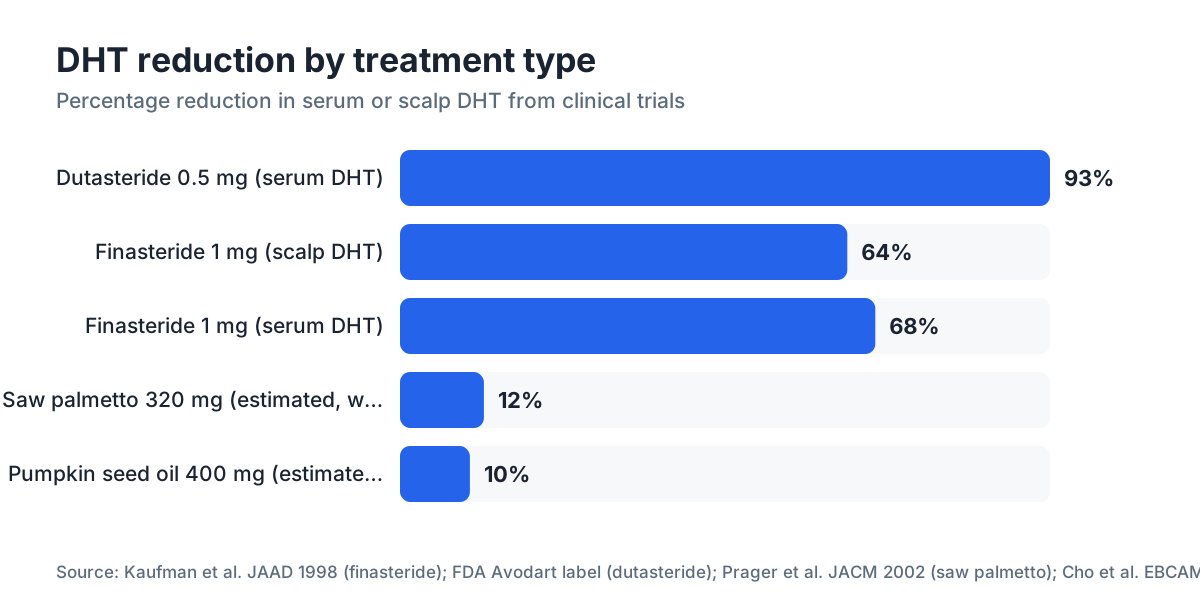
Finasteride 1 mg daily inhibits the Type II isoform of 5-alpha reductase. A major clinical trial in the Journal of the American Academy of Dermatology found it cuts scalp DHT by about 64% and serum DHT by about 68% after 42 days [4]. That same trial showed statistically significant increases in hair count at 12 months versus placebo.
Dutasteride 0.5 mg daily inhibits both Type I and Type II isoforms. Studies show it cuts serum DHT by around 90-95% [5]. It's approved in the US for benign prostatic hyperplasia, not hair loss, though dermatologists prescribe it off-label for androgenetic alopecia and it's approved for that indication in South Korea and Japan.
Saw palmetto is the best-studied natural option. A small randomized controlled trial in the Journal of Alternative and Complementary Medicine in 2002 found that 38% of men taking saw palmetto (320 mg daily) improved versus 6% on placebo [6]. That sounds promising until you look at the sample size (26 men) and how 'improvement' was measured. A 2020 review in Dermatology and Therapy concluded the evidence for saw palmetto in hair loss is 'preliminary' and that larger, well-controlled trials are needed before any firm conclusions can be drawn.
Pumpkin seed oil got attention after a 2014 randomized, double-blind, placebo-controlled trial in Evidence-Based Complementary and Alternative Medicine showed a 40% increase in hair count after 24 weeks in 76 men [7]. That's a decent design for a supplement trial. But 76 men is still small, and the absolute hair count difference between groups was modest.
Here's the practical summary: no supplement comes close to the DHT reduction that finasteride or dutasteride delivers. The 'extreme blocker' framing implies pharmaceutical-level potency. None of these products deliver that.
| Treatment | DHT Reduction | Evidence Level | Approval Status |
|---|---|---|---|
| Dutasteride 0.5 mg | ~90-95% serum | Multiple RCTs | FDA: BPH only; off-label for AGA |
| Finasteride 1 mg | ~60-70% scalp | Multiple RCTs | FDA-approved for male AGA |
| Saw palmetto 320 mg | Unknown % (weak) | Small RCTs, inconsistent | Dietary supplement |
| Pumpkin seed oil | Unknown % | 1 small RCT | Dietary supplement |
| Biotin | None on DHT | No DHT effect | Dietary supplement |
Does finasteride work better than any supplement DHT blocker?
Yes, and it's not a close comparison.
The original finasteride trials (the Finasteride Male Pattern Hair Loss Study Group) enrolled 1,553 men across multiple studies and showed statistically significant hair count improvements over 24 months compared to placebo, with roughly 83% of men maintaining or increasing hair count at two years [4]. That's the kind of data that earns FDA approval.
No supplement sold as a 'DHT extreme blocker' has anything close to that evidence base. The largest saw palmetto hair loss trial in recent years had fewer than 100 participants. Most supplement trials have no randomization, no placebo control, or no objective hair count measurement at all.
Finasteride does carry real side effects: sexual dysfunction (decreased libido, erectile dysfunction, ejaculatory disorders) reported in roughly 3.8% of men in placebo-controlled trials, versus 2.1% on placebo [4]. Those numbers come from the original clinical trials, not advocacy groups, and they matter when you're weighing options. Our guide to finasteride covers the full side effect picture and what the post-finasteride syndrome debate actually says.
The practical question isn't whether finasteride beats supplements (it does), it's whether the side effect profile is worth it for your situation. That's a conversation to have with a dermatologist or urologist, not a supplement label.
Are DHT-blocking shampoos worth buying?
Probably not for DHT reduction specifically, though some might help scalp health.
Ketoconazole shampoo is the one exception worth mentioning. A small 1998 study in the journal Dermatology found that 2% ketoconazole shampoo produced hair density improvements comparable to 2% minoxidil in men with androgenetic alopecia [8]. The proposed mechanism isn't pure DHT blockade but anti-inflammatory and antifungal effects that may lower scalp DHT indirectly. The study was small and hasn't been repeated with the rigor of the minoxidil trials, so treat it as interesting, not settled.
Shampoos marketed explicitly as 'DHT blockers' (with saw palmetto, pumpkin seed, or caffeine) sit on your scalp for maybe two minutes per wash. Absorption of active compounds in that window is minimal. There's no published clinical trial showing that a DHT-blocking shampoo meaningfully reduces follicular DHT in humans. Zero.
If you want a topical with real evidence, minoxidil is the answer. It doesn't block DHT, but it extends the anagen phase and improves follicular blood flow. You can read the specifics in our minoxidil for men guide. Paired with finasteride, the two attack hair loss from different angles, and the combination has more evidence than either alone.
What do real reviews of DHT extreme blocker products say?
Read 'DHT extreme blocker reviews' across Amazon, Reddit, and hair loss forums and one pattern keeps showing up: users who see results tend to combine these supplements with other treatments (minoxidil, finasteride, dietary changes), which makes it impossible to credit any improvement to the supplement itself.
Negative reviews usually note no change in shedding after 3-6 months. Positive reviews often land in the first few weeks, which is almost certainly placebo effect or normal shedding variation, since hair cycles run in months, not weeks.
The Reddit communities r/Hairloss and r/tressless, which lean heavily toward people who've tried everything, consistently report that no over-the-counter DHT blocker produced results they could confidently pin on the product. The same communities have long positive threads about finasteride and dutasteride.
None of this is scientific evidence. But when the community consensus matches the clinical trial data pointing away from supplements, that's worth noting.
Can women use DHT blockers for hair loss?
Women can, under medical supervision, but the options are narrower and the evidence is thinner.
Finasteride is not FDA-approved for female pattern hair loss. Studies in postmenopausal women have shown mixed results. A randomized trial in the Journal of the American Academy of Dermatology found finasteride 1 mg daily was not more effective than placebo in postmenopausal women [9]. Higher doses (2.5-5 mg) look more promising in some retrospective analyses, but that's off-label use.
Spironolactone is the most commonly prescribed anti-androgen for women with androgenetic alopecia in the US. It's not a 5-alpha reductase inhibitor. It blocks androgen receptors and lowers adrenal androgen production. It's used off-label for hair loss, and the evidence quality is moderate.
Finasteride and dutasteride are teratogenic. Any woman who is or might become pregnant should not take either drug. This is a hard contraindication, not a precaution [5].
For women eyeing over-the-counter DHT-blocker supplements, the evidence is even thinner than for men. Most of the small supplement trials enrolled only men. If you're a woman with significant hair loss, a proper hormonal workup (DHEA-S, free testosterone, TSH, ferritin) beats buying supplements as a first step. Hair loss in women has more varied causes than in men, and some cases aren't androgen-driven at all. Our telogen effluvium article covers the non-hormonal causes that often get misattributed to DHT.
What ingredients should you actually look for in a DHT-targeting supplement?
If you want to try a supplement approach alongside (not instead of) medical treatment, here's what has at least some human clinical evidence.
Saw palmetto at 320 mg daily is the best-studied option. Look for a liposterolic extract standardized to 85-95% fatty acids and sterols, which is what the clinical trials used. Generic 'saw palmetto powder' capsules at low doses don't match the trial formulation.
Pumpkin seed oil at 400 mg daily is the dose used in the 2014 RCT [7]. Some products pair it with saw palmetto.
Zinc helps regulate 5-alpha reductase. Zinc deficiency is linked to hair loss, and correcting a deficiency can help, but taking more than you need doesn't add any benefit [10]. If you eat a varied diet, you're probably not zinc-deficient.
Biotin is in almost every hair supplement sold. It helps if you have a genuine biotin deficiency (rare) but has no effect on DHT whatsoever. It also interferes with thyroid and cardiac lab tests at high doses [11]. If you're taking biotin before blood work, tell your doctor.
The honest summary: even the best supplement stack won't give you 60% DHT reduction. If you're at an early Norwood stage and not ready for prescription medication, a supplement with saw palmetto and pumpkin seed oil might be a reasonable holding position while you think through your options. Just don't expect 'extreme' blocking of anything.
How do you know if your hair loss is actually DHT-driven?
The pattern matters more than a blood test.
Androgenetic alopecia follows specific templates: the Norwood scale in men (temple recession and vertex thinning), and the Ludwig scale in women (diffuse crown thinning with a preserved frontal hairline). If your loss matches these patterns and you have family history on either side, it's almost certainly DHT-driven [1].
Serum DHT levels aren't much use for diagnosing androgenetic alopecia. The condition is driven by follicular sensitivity to DHT, not necessarily by above-normal blood levels. Two men with identical serum DHT can have completely different hair loss trajectories based on their androgen receptor gene variations.
A dermatologist can often diagnose androgenetic alopecia by visual exam and dermoscopy. Trichoscopy showing miniaturized hairs, hair diameter variability, and empty follicles is characteristic. A scalp biopsy is the gold standard for ambiguous cases.
If your loss is sudden, diffuse, or tied to a major stressor, illness, or dietary change, you may be dealing with telogen effluvium instead. That condition doesn't respond to DHT blockers at all because it isn't androgen-mediated. Taking a DHT-blocking supplement for telogen effluvium is money spent on the wrong problem.
For a quick read on where your hairline sits right now, you can get a free analysis at MyHairline's AI scan, which takes a photo of your hairline and gives you a Norwood staging estimate. It won't replace a dermatologist, but it's a useful starting point.
What about combining a DHT blocker with minoxidil?
This is the most evidence-backed non-surgical approach to androgenetic alopecia and the combination most dermatologists actually recommend.
Minoxidil doesn't block DHT. It works through a different mechanism: it prolongs the anagen phase, increases follicular size, and improves blood flow to the scalp. So it addresses the downstream damage from DHT without lowering DHT itself. Finasteride attacks the cause; minoxidil manages the consequences. Together they cover more ground than either does alone.
A 2015 study in Dermatologic Therapy compared finasteride alone, minoxidil alone, and the combination in 450 men with androgenetic alopecia. The combination group showed significantly greater hair density improvements at 12 months than either monotherapy [12]. Our finasteride and minoxidil guide goes deep on how to run that combination in practice.
If you're asking specifically about supplements plus minoxidil: there's no clinical trial testing that pairing, and the mechanism doesn't suggest any added benefit beyond what minoxidil does on its own. You'd be spending more money for unproven upside.
A note on cost: generic finasteride runs roughly $10-25 per month. Minoxidil 5% solution or foam is around $10-20 per month OTC. A 'DHT extreme blocker' supplement often costs $30-60 per month. The supplement is more expensive and has weaker evidence. That math is hard to ignore.
When is a hair transplant the better conversation to have?
If follicles in the affected areas are completely gone, no DHT blocker helps. Dead follicles don't respond to finasteride or saw palmetto. This is where surgery comes in.
Hair transplants (FUE or FUT) move DHT-resistant follicles from the back and sides of the scalp to the thinning areas. Those donor follicles keep their resistance in the new location, so they tend to keep growing. But transplanted hair doesn't stop future loss in the surrounding native follicles, which is why most surgeons still recommend finasteride post-transplant to protect the existing hair.
Transplants aren't a replacement for DHT blockers. They're a reconstruction tool once enough follicles have been lost. The right time to consider one is when you're at an advanced Norwood stage (typically 4 and above) and medication has slowed but not reversed your loss. Our hair transplant guide covers what the procedure actually involves, what it costs, and how to vet surgeons.
For anyone earlier in the process, particularly Norwood 1-3 with a receding hairline, medication is almost always tried first. The follicles are still there. The goal is to keep them.
What are the risks of taking DHT blockers long-term?
For prescription 5-alpha reductase inhibitors, the risks are documented and real.
Finasteride: the FDA label lists sexual side effects (decreased libido, erectile dysfunction, ejaculatory disorder) in roughly 3.8% of men in clinical trials [4]. There's ongoing debate about post-finasteride syndrome, a reported cluster of persistent sexual and cognitive symptoms after stopping the drug. The FDA added a warning about this in 2012. The incidence of persistent effects is unclear; estimates range widely and the evidence base is contested. Anyone starting finasteride should discuss this with their prescribing doctor.
Dutasteride carries similar sexual side effect risks and has a longer half-life (about 5 weeks vs. roughly 6-8 hours for finasteride), so effects take longer to clear if you stop.
Both drugs are teratogenic and should never be handled by pregnant women in crushed or broken form. Men taking either drug are generally advised to avoid fathering children during treatment or to discuss the risks with a fertility specialist [5].
For supplements sold as 'DHT extreme blockers,' the risk profile is different. Saw palmetto is generally well-tolerated at 320 mg daily. The most commonly reported side effects are mild GI upset. Rare case reports of liver injury and pancreatitis exist, though causality is hard to establish [13]. The main risk is probably spending money on something that doesn't work rather than a direct health harm.
If you're curious whether creatine causes hair loss through a DHT mechanism, that's a related question with its own nuances worth reading separately.
Sources
- American Academy of Dermatology, Hair Loss Overview
- Dallob AL et al., Journal of Investigative Dermatology, 1994
- FDA, Dietary Supplements Overview
- Kaufman KD et al., Journal of the American Academy of Dermatology, 1998, Finasteride Male Pattern Hair Loss Study Group
- FDA, Avodart (dutasteride) Prescribing Information
- Prager N et al., Journal of Alternative and Complementary Medicine, 2002
- Cho YH et al., Evidence-Based Complementary and Alternative Medicine, 2014
- Piérard-Franchimont C et al., Dermatology, 1998
- Price VH et al., Journal of the American Academy of Dermatology, 2000
- Almohanna HM et al., Dermatology and Therapy, 2019
- FDA, Biotin Interference with Laboratory Tests Safety Communication
- Hu R et al., Dermatologic Therapy, 2015
- LiverTox, National Institutes of Health, Saw Palmetto