

TL;DR: Telogen effluvium is diffuse shedding triggered by a stressor (illness, diet, stress) and usually reverses within 3 to 6 months once the trigger is gone. Male pattern baldness follows a temple-and-crown pattern, is driven by DHT, and is permanent without treatment. The two can run at the same time, which is what makes them hard to tell apart.
Why is it so hard to tell telogen effluvium from male pattern baldness?
Both dump alarming amounts of hair into your shower drain. Both can start in your 20s and 30s, the same window when male pattern baldness usually kicks off. And because they can run at the same time in the same head, even dermatologists sometimes need a scalp biopsy to be sure.
The confusion makes sense. Telogen effluvium (TE) is a disruption of the hair cycle: something stresses your body, a larger-than-normal share of follicles shift into the resting (telogen) phase all at once, and roughly 2 to 4 months later those hairs shed in a sudden wave [1]. Male pattern baldness (androgenetic alopecia, or AGA) runs on a different mechanism entirely. Dihydrotestosterone (DHT) slowly miniaturizes vulnerable follicles until they stop making visible hair, following the map laid out by the Norwood scale [2].
The reason both look like "too much hair in the drain" is that in the early weeks of AGA, the miniaturizing follicles shed their current hairs before pushing out thinner, shorter ones. So the overlap is real, not a trick of the eye. Getting the diagnosis right matters a lot, because the treatments are almost opposite in urgency. TE mostly needs time and the trigger gone. AGA needs long-term medication or a hair transplant to stop permanent loss.
What does the shedding pattern look like with each condition?
The pattern of where hair falls is the single most useful clue you can read at home. TE sheds evenly from every zone of the scalp. AGA sheds in a map: temples and crown first, the back and sides spared.
With telogen effluvium, shedding is diffuse. Run your fingers through your hair at the nape, the temples, the crown, and the sides, and you lose similar amounts from each. In severe cases you may shed eyebrow, eyelash, and body hair too. The scalp itself looks normal when you part the hair, at least early on. A review in the Journal of the American Academy of Dermatology described it plainly: "telogen effluvium presents with diffuse hair shedding without a distinctive pattern" [3].
Male pattern baldness almost never spreads evenly. It follows geometry. Temples recede first and the crown thins, while the occipital and parietal fringe at the back and sides stays dense. That is no accident. The follicles at the back of the scalp carry less androgen receptor density, so DHT barely touches them [2]. If you can draw a clean line between the full areas and the thinning ones, that pattern points hard at AGA.
Here is a test worth more than most clinic gadgets. Pull up photos of yourself from 1 to 3 years back. If your hairline has clearly moved backward or a round bald spot is forming at the crown, that is patterned loss. If the hairline looks the same but everything reads thinner, that fits TE. This comparison beats any single bedside test.
How much daily hair shedding is normal, and when is it a red flag?
The American Academy of Dermatology puts normal shedding at 50 to 100 hairs a day [4]. Some sources stretch it to 150. Consistently above 200 a day is where most dermatologists start hunting for a cause.
The pull test is the standard bedside screen. Grab 40 to 60 hairs between your thumb and forefinger near the scalp, pull gently, and count what comes loose. More than 6 hairs (roughly 10% of the bundle) counts as a positive pull test, a sign of shedding beyond the normal rate [3]. In active TE, the pull test is often strongly positive across the whole scalp. In AGA, it tends to be positive only at the temples and crown, and negative or weak at the back.
Timing separates them too. TE produces a sudden, obvious jump: you go from a handful of hairs to a clogged drain catch in a few weeks. AGA shedding stays steadier and slower, and many men notice the thinning pattern before they ever notice the volume coming out.
What are the main causes of each condition?
TE always has a trigger. The trigger happens, and about 8 to 12 weeks later (the length of the telogen phase) the hair falls. AGA has one driver: inherited sensitivity to DHT. That single difference shapes everything about how you treat each one.
Triggers documented in peer-reviewed literature include [1][3]:
- High fever or acute illness (including post-COVID-19 infection, which drove a surge of TE cases after 2020)
- Crash dieting or protein deficiency (iron, ferritin, and zinc shortfalls are especially common)
- Major surgery or general anesthesia
- Childbirth (postpartum telogen effluvium affects roughly 40 to 50% of women in the months after delivery)
- Thyroid dysfunction, both under and over active
- Psychological stress, though this is a weaker and harder-to-measure trigger than the metabolic ones
- Starting or stopping certain medications, including oral contraceptives
Male pattern baldness runs on genetics. About 80% of the risk is hereditary, though the genetics are polygenic and the old "look at your maternal grandfather" rule is an oversimplification [2]. DHT binds to androgen receptors in vulnerable follicles and shrinks them over years, producing finer and finer vellus hairs until the follicle goes dormant. The what causes hair loss article walks through the full mechanism.
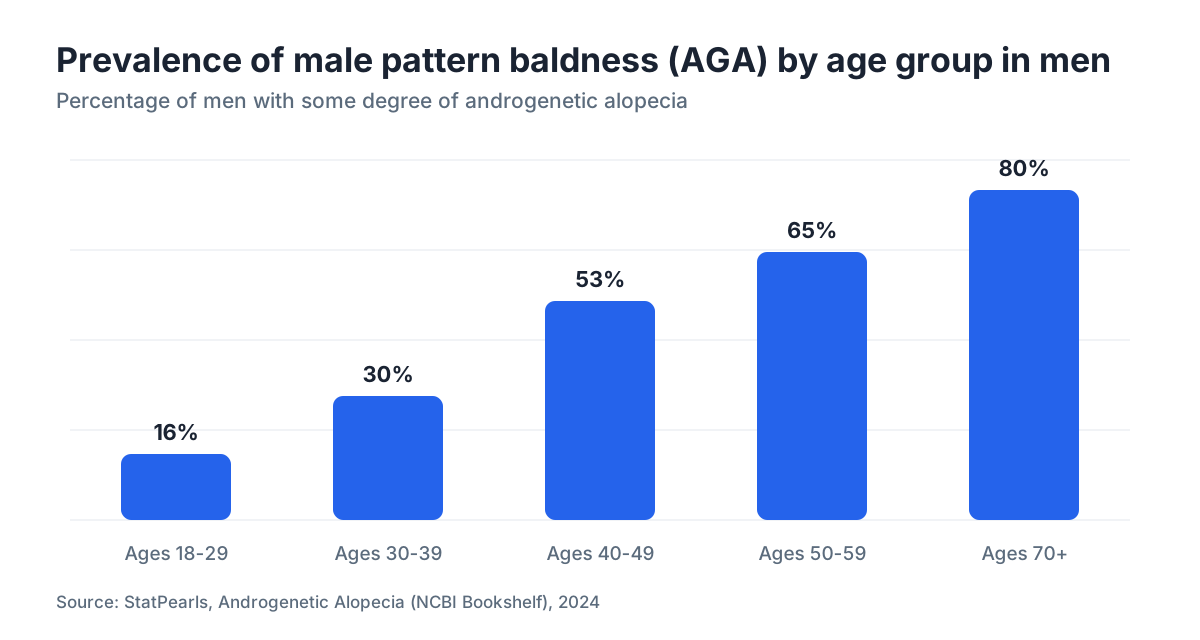
Age behaves differently for each. AGA prevalence climbs steadily: roughly 16% of men aged 18 to 29 have some AGA, about 53% by ages 40 to 49, and over 80% by age 70 [2]. TE can strike at any age and shows up just as often in younger adults, because illness, crash diets, and hard training hit young people too.
What does a dermatologist actually look for when diagnosing these conditions?
A board-certified dermatologist reads three things: your history, your scalp under magnification, and sometimes blood work or a biopsy. History alone often settles it. A clear stressor followed by diffuse shedding 8 to 12 weeks later is textbook TE. No stressor plus a creeping temple-crown pattern is AGA.
The questions come first. Any illnesses, surgeries, diet changes, new medications, or major life events in the past 3 to 6 months? That timeline does most of the diagnostic work.
Dermoscopy (a handheld magnifier with polarized light) lets the clinician measure hair shaft diameter. In AGA, the giveaway is follicular miniaturization: more than 20% of hairs show diameter variation, some clearly thinner than their neighbors in the same patch [5]. In TE, the remaining hairs stay uniform in caliber, because TE changes how many hairs grow, not how thick each follicle's output is.
Blood tests rule out fixable causes. A typical panel covers thyroid-stimulating hormone (TSH), complete blood count, ferritin, and sometimes vitamin D, zinc, and sex hormones. Ferritin below about 40 ng/mL has been tied to TE in some studies, though the threshold is argued over [11]. A low ferritin or off TSH does not rule out AGA running alongside it.
A scalp biopsy is the gold standard when the picture stays murky. A 4mm punch from an affected area, cut in horizontal sections, counts the ratio of anagen (growing) to telogen hairs and detects miniaturization [10]. It is rarely needed just to sort TE from AGA, but it earns its place when both seem likely or the hair is not behaving as expected [5].
Want a faster first read before booking a clinic visit? The free AI scan at MyHairline analyzes your hairline photos and flags whether the pattern looks diffuse (leaning TE) or follows a Norwood-type spread (leaning AGA), which helps you walk in asking sharper questions.
Can you have both telogen effluvium and male pattern baldness at the same time?
Yes, and it happens more than people expect. A man can carry mild Norwood 2 or 3 loss for years without clocking it, then a stressor stacks a wave of diffuse TE on top and suddenly the shedding looks catastrophic.
AGA moves slowly and quietly. Then he gets COVID-19, or starts an aggressive cut, and the TE shedding piles onto the existing thinning until it feels dramatic and frightening.
Clinicians call it "telogen effluvium superimposed on androgenetic alopecia." The TE is usually what drags the person into the office, but the AGA underneath is what keeps going if nobody treats it. Separating them matters: the TE will likely resolve on its own once the trigger clears, while the AGA needs its own plan, whether that is finasteride, minoxidil for men, or eventually a hair transplant.
A 2013 review in the International Journal of Dermatology reported that concurrent AGA and TE turned up in a meaningful share of patients presenting with hair loss, especially men aged 25 to 45 [6]. Nobody has clean prevalence numbers, but hair loss specialists see the combination all the time.
How long does each condition last, and will the hair grow back?
This is the question people actually lose sleep over. Acute TE grows back. AGA does not, not without treatment.
Acute TE usually resolves within 3 to 6 months of the trigger clearing [1][3]. Most shed hair returns because the follicle itself is undamaged. You lost hairs, not follicles, and those hairs cycle back. Regrowth starts as short, fine hairs (you may spot a "halo" of 1 to 2 inch stubs around the hairline), and full recovery usually takes 6 to 12 months from the shedding peak. Chronic TE, meaning more than 6 months, is less predictable and sometimes needs a deeper workup.
Male pattern baldness does not reverse on its own. Miniaturization is progressive, and once a follicle has sat dormant long enough, medication may not bring it back. That is the whole asymmetry. TE is temporary and recoverable. AGA is permanent unless you step in. Starting a DHT blocker like finasteride sooner rather than later saves more follicles, because you cannot regrow a dead one, only hold onto the ones still working [7].
Minoxidil can modestly regrow AGA hair, but its main job is stretching the growth phase and keeping follicles producing. Stop using it and any gain reverses within months. Finasteride goes after the DHT pathway itself. How the two work together is covered in the finasteride and minoxidil article.
Are there simple at-home tests to help distinguish the two?
A few self-checks help, though none replaces a dermatologist for anything genuinely worrying you. All of them come down to one idea: TE is symmetric and time-bound, AGA is patterned and progressive.
The scalp part test. Part your hair down the middle under good light and photograph it. Repeat monthly. In AGA the part line at the crown widens over months. In pure TE the part may read thinner overall but stays symmetric and does not concentrate at the crown.
The timeline review. Map your shedding against life events. TE trails a stressor by roughly 8 to 12 weeks. If you can name the event (surgery in March, heavy shedding starting in May), that lines up with TE. Gradual shedding with no findable trigger leans AGA.
Photograph your hairline from the same angle and light every 2 to 3 months. An unchanged hairline with diffuse thinning is TE. A receding hairline or widening crown spot is AGA. The receding hairline article breaks down the Norwood stages with visuals.
The hair root test. Collect 20 to 30 shed hairs from your pillow or shower and look at the root ends under a magnifier or macro phone camera. Telogen hairs carry a small white club-shaped bulb, which is normal. A mix of thin miniaturized hairs alongside normal ones in the same batch points to AGA miniaturization.
How is telogen effluvium treated compared to male pattern baldness treatment?
The two treatment paths barely overlap. TE treatment means finding and fixing the trigger. AGA treatment means long-term medication that fights DHT.
For TE: low ferritin gets iron under medical supervision. Off thyroid gets treated with your endocrinologist. Restrictive diet gets adequate protein back (at least 0.8g per kg of body weight per day per standard dietary guidance [8]). Most dermatologists steer away from aggressive intervention aimed at TE itself, because the hair returns once the body stabilizes. Minoxidil sometimes gets used to shorten recovery, but the trial evidence for TE specifically is thin, and the minoxidil side effects are worth reading before you start.
For AGA, the FDA has cleared two treatments backed by solid trials: topical minoxidil (2% and 5% solutions, approved for men since 1988) and oral finasteride 1mg (approved in 1997) [7][9]. A five-year finasteride study found that 48% of men on 1mg gained hair count over baseline and only 6% lost more, against 83% losing hair in the placebo group [7]. That gap is real and it holds up.
Low-dose oral minoxidil (0.625mg to 2.5mg daily) has gone off-label mainstream for AGA lately, and the early data look good, though it lacks the long-term depth of the topical version. The oral minoxidil article lays out the evidence and the risks.
The hair loss supplements aisle is mostly unsupported for AGA, though fixing a genuine deficiency (iron, zinc, vitamin D) can help TE-driven loss.
For advanced AGA where miniaturized follicles are already gone, medication cannot rebuild what is lost. That is where surgery comes in, and the hair transplant overview explains what is actually realistic.
When should you see a doctor instead of waiting it out?
Most acute TE starts improving on its own within 3 to 6 months. Waiting is reasonable if you can point to a clear, resolved trigger and the loss is diffuse rather than patterned. But some signs mean stop waiting and book the appointment.
See a dermatologist sooner if:
- Shedding has stayed heavy for more than 6 months with no improvement
- You see clear patterned thinning at the temples or crown alongside the shedding (that flags AGA, and the follicles are still salvageable now)
- You have other symptoms pointing to a systemic cause: fatigue, weight change, cold intolerance, or irregular periods in women
- The pull test stays strongly positive at both the back and front of the scalp after 3 months
- You are a man under 30 with rapid, patterned loss, because early-onset AGA can move fast and responds best to early treatment
For AGA, time is the whole game. The FDA label for finasteride states the drug "works best in men who have not yet lost a large amount of hair" [7]. Waiting years to treat AGA while hoping the shedding is just stress-driven TE is the most common regret men describe on hair loss forums, and the clinical logic backs it: no medication rescues a dead follicle.
A side-by-side comparison of telogen effluvium and male pattern baldness
The table pulls together the features that matter most for telling the two apart.
| Feature | Telogen Effluvium | Male Pattern Baldness (AGA) |
|---|---|---|
| Shedding pattern | Diffuse, all-over scalp | Temples and crown first |
| Hair shaft caliber | Uniform | Variable (miniaturized thin hairs present) |
| Identifiable trigger | Usually yes (illness, diet, stress) | No single trigger; genetic plus DHT |
| Onset | Sudden, 8 to 12 weeks after trigger | Gradual, over months to years |
| Pull test result | Positive over whole scalp | Positive at temples/crown only |
| Scalp appearance | Normal | May see widened part, bare areas |
| Reversibility | Usually yes, 3 to 6 months | No, without ongoing treatment |
| Age pattern | Any age | Rising prevalence with age |
| Best first-line treatment | Address trigger, correct deficiencies | Finasteride, minoxidil |
| Family history relevant? | No | Yes, strongly |
Think of it this way. TE is your body hitting pause on hair growth because it has bigger problems to solve. AGA is your follicles slowly losing a fight against your own hormones. One is a temporary alarm. The other is structural.
Sources
- StatPearls (NCBI Bookshelf), Telogen Effluvium
- StatPearls (NCBI Bookshelf), Androgenetic Alopecia
- Journal of the American Academy of Dermatology, Shapiro & Wiseman 2000 (TE review)
- American Academy of Dermatology Association, Hair Loss: Causes
- Journal of the American Academy of Dermatology, Olsen et al., Guidelines of care for AGA, 2011
- International Journal of Dermatology, Sinclair 2013, Chronic telogen effluvium
- U.S. Food and Drug Administration, Propecia (finasteride) prescribing information
- National Institutes of Health, Office of Dietary Supplements
- U.S. Food and Drug Administration, Rogaine (minoxidil) drug approval history
- PubMed, van Neste D, 2004, Contrast-enhanced phototrichogram study of androgenetic alopecia
- PubMed, Rushton DH, 2002, Nutritional factors and hair loss
- American Academy of Dermatology Association, Diagnosing and treating hair loss